Thick, glossy cranberry apple chutney has a way of stealing the whole plate. The cranberries break down just enough to coat the apples, the raisins plump up in the spiced syrup, and the finished chutney lands somewhere between jam and relish with a sharp-sweet edge that cuts through rich food beautifully. It belongs next to turkey and pork, but it’s just as good spooned over a block of cream cheese with crackers or tucked into a sandwich the next day.
This version works because the fruit goes into a boiling vinegar-sugar base, not the other way around. That gives the chutney a head start on texture and keeps the onions, ginger, and spices from tasting raw. The apples hold some shape, the cranberries burst into the sauce, and the brown sugar brings a deeper sweetness than white sugar would. You end up with a condiment that tastes balanced instead of one-note.
Below, I’ve included the little details that matter most: how to keep the chutney thick without scorching it, which apples hold up best, and a few smart swaps if you want to adjust the heat or make it ahead for a holiday spread.
The cranberries broke down into this thick, jammy sauce and the apples stayed tender instead of turning mushy. I served it with pork chops and it tasted like I’d simmered it all afternoon.
Save this cranberry apple chutney for the holiday table, because that sweet-tart, spoonable texture is perfect with turkey, pork, and cheese boards.
The Key to Chutney That Thickens Instead of Turning Watery
The mistake that ruins most fruit chutneys is rushing the last simmer. Cranberries need time to pop, apples need time to soften, and the liquid needs time to reduce until it clings to a spoon. If you pull it off the heat while it still looks loose, it will seem thin in the pot and only set up a little after chilling. You want the bubbles to slow down and the mixture to look glossy, with the fruit suspended in a syrupy base.
The onion and ginger also matter more than they look on paper. They get a short head start in the hot vinegar mixture so their sharpness softens before the fruit goes in. That keeps the chutney from tasting raw or harsh. Stir often once the fruit is added, especially near the end, because the natural sugars can catch on the bottom of the pan.
What Each Ingredient Is Doing in This Chutney
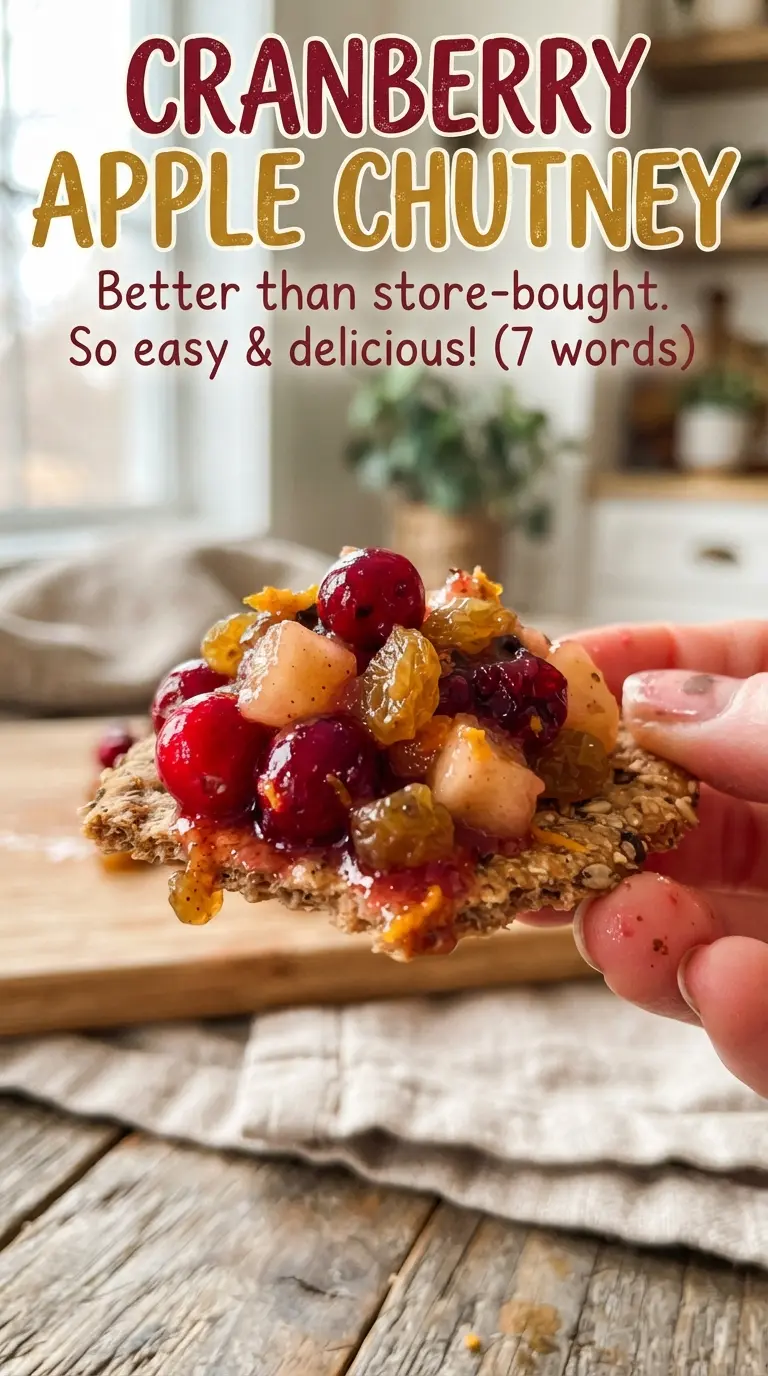
- Fresh cranberries — These are the backbone of the chutney. They burst as they cook and give you that tart, jewel-like texture that dried cranberries can’t copy. Frozen cranberries work too; use them straight from the freezer and expect a minute or two more on the stove.
- Apples — They add body and a little sweetness, but the real job is texture. Choose a firm apple like Granny Smith, Honeycrisp, or Pink Lady so the pieces hold their shape instead of dissolving. Soft apples turn the whole chutney mushy.
- Golden raisins — They round out the tartness and help the sauce taste fuller. Regular raisins work in a pinch, but golden raisins stay lighter and blend better with the apple and cranberry flavor.
- Apple cider vinegar — This is what makes the chutney wake up. It gives the sweetness something to push against, and it keeps the finished condiment bright enough to stand up next to rich foods. Don’t swap in distilled white vinegar here; it tastes too blunt.
- Brown sugar — Packed brown sugar brings depth and a molasses note that white sugar can’t match. If you only have white sugar, the chutney will still work, but it will taste sharper and a little less rounded.
- Ginger, cinnamon, cloves, and red pepper flakes — This is the warming spine of the recipe. The ginger lifts the fruit, the cinnamon and cloves deepen it, and the pepper flakes keep the sweetness from flattening out. If you want a milder chutney, cut the pepper flakes in half before you reduce anything else.
Building the Chutney So the Fruit Stays Bright and the Sauce Stays Glossy
Starting with the Syrup Base
Bring the brown sugar, vinegar, and water to a full boil before anything else goes in. That first boil dissolves the sugar completely and gives the chutney a clean, even base instead of a grainy one. Once the onion, ginger, and spices go in, the liquid should smell sharp, warm, and a little sweet. If the heat is too low here, the onion will just sit in the pot instead of softening into the syrup.
Softening the Aromatics
Simmer the onion, ginger, cinnamon, cloves, red pepper flakes, and salt for about five minutes. You’re not trying to brown them; you’re giving them time to lose their raw edge. The onion should look translucent and the liquid should take on a deeper color. If it starts evaporating too fast, lower the heat, because you still need enough liquid left for the fruit.
Cooking the Fruit to a Jammy Finish
Stir in the cranberries, apples, and raisins, then keep the heat at a steady simmer. The cranberries will start popping after a few minutes, and that’s your sign the thickening has begun. Stir often as the mixture reduces, scraping the bottom and corners of the pan so the sugar doesn’t scorch. The chutney is done when the apples are tender, most of the cranberries have burst, and the sauce mounds slightly on a spoon instead of running off like syrup.
Cooling for the Final Set
Turn the chutney into a bowl or jar and let it cool completely before refrigerating. It thickens a lot as it cools, which is why judging it straight from the stove can be misleading. If it seems loose while hot, don’t panic and keep boiling it hard; that usually makes the edges too thick before the center is ready. Patience gives you that thick, spoonable texture you want on the plate.
Three Ways to Adjust It Without Losing the Balance
Make It Less Sweet
Cut the brown sugar back by 2 to 3 tablespoons if you want a sharper chutney for serving with pork or rich cheese. The tradeoff is a brighter, less jammy finish, so let the fruit cook until it thickens on its own instead of relying on the sugar to do all the work.
Make It Spicier
Increase the red pepper flakes to 1/2 teaspoon for more heat, or add a pinch of cayenne if you want a cleaner burn. The heat sits quietly behind the fruit, so it won’t overwhelm the chutney unless you push it hard.
Make It Vegan and Gluten-Free for the Whole Table
This recipe is naturally vegan and gluten-free as written, which is part of why it’s such an easy holiday side. Just check that your vinegar and spices are pure, then serve it as-is with roasted meats, crackers, or a cheese board.
Storage and Reheating
- Refrigerator: Store in a covered jar or container for up to 2 weeks. It thickens more as it chills, so don’t judge the final texture while it’s still warm.
- Freezer: It freezes well for up to 3 months. Leave a little headspace in the container because the fruit mixture will expand slightly as it freezes.
- Reheating: Warm only what you need over low heat or in short bursts in the microwave. Don’t boil it hard again or the apples can collapse and the chutney can turn pasty instead of spoonable.
Questions I Get Asked About This Chutney
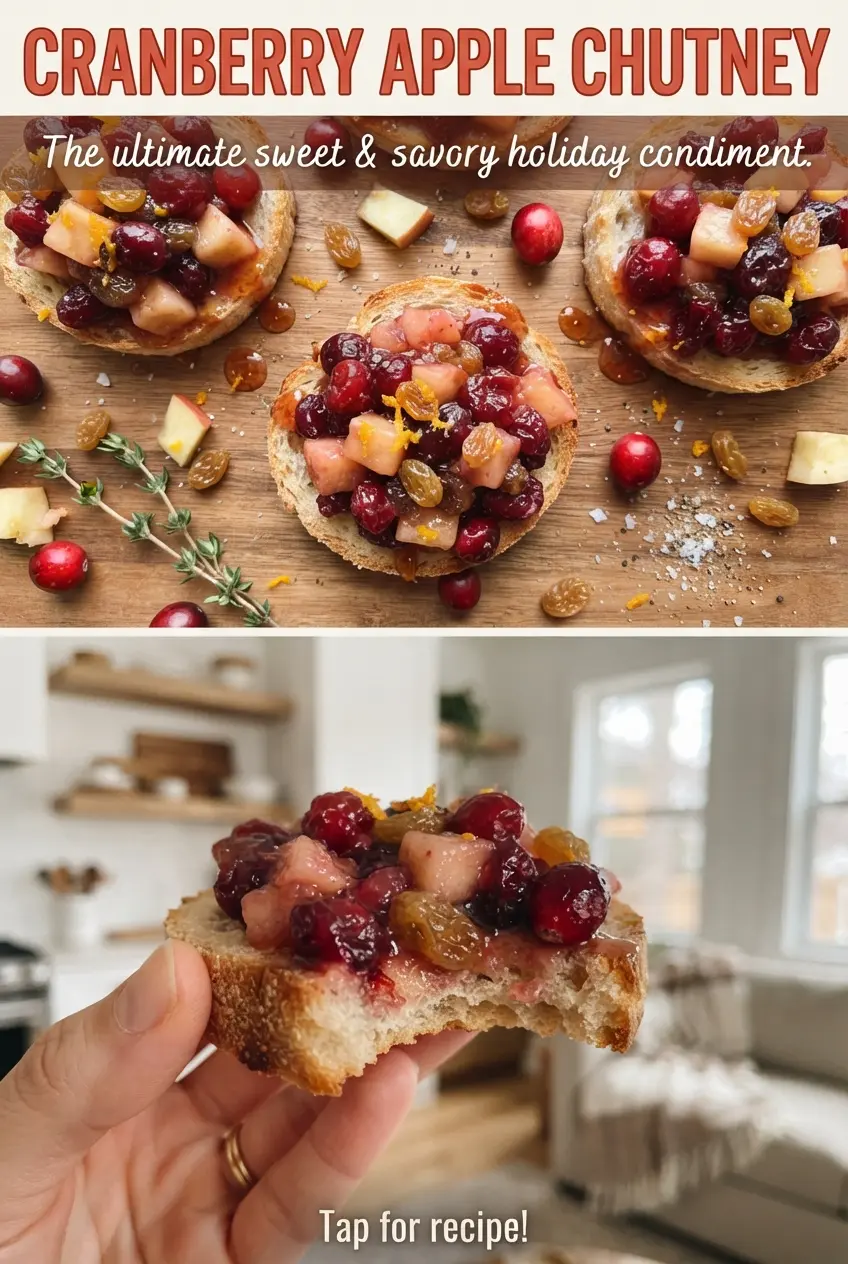
Cranberry Apple Chutney
Ingredients
Equipment
Method
- Combine brown sugar, apple cider vinegar, and water in a Dutch oven and bring to a boil over medium-high heat, until the mixture is actively bubbling. Visual cue: you should see steady bubbles across the surface.
- Add red onion, fresh ginger, ground cinnamon, ground cloves, red pepper flakes, and salt to the boiling mixture. Simmer for 5 minutes, stirring occasionally, so the onions soften and spices bloom.
- Stir in fresh cranberries, apples, and golden raisins. Keep the mixture at a gentle simmer, then return to a steady bubbling level if needed.
- Simmer for 20-25 minutes, stirring often, until the chutney is thick and jammy. Visual cue: it should mound slightly on a spoon and look glossy, not watery.
- Cool the cranberry apple chutney completely before refrigerating. Visual cue: it should thicken further as it cools.
- Refrigerate until chilled, then serve with turkey, pork, or on a cheese board. Visual cue: the chutney should hold shape and look chunky and spiced.