Golden seared chicken stuffed with brie, spinach, and cranberry sauce turns into one of those dinners that looks a lot fancier than the effort it takes. The chicken stays juicy, the cheese goes soft and luxurious, and the cranberry filling brings just enough sweet-tart bite to keep every forkful interesting. When the sauce hits the plate, it ties everything together with a glossy finish that tastes like it took much longer than 40 minutes.
This version works because the filling is balanced instead of overloaded. The spinach adds just enough structure so the brie doesn’t all run out at once, and the cranberry sauce gets split between the pocket and the skillet so you get flavor inside the chicken and in the pan sauce. Searing first gives you color and keeps the chicken from tasting flat after baking. Then the quick finish in the oven cooks it through without drying it out.
Below, I’ll walk through the part that matters most: how to cut the pocket without slicing straight through the breast, how to keep the filling in place, and how to build the sauce from the browned bits left in the pan.
The brie stayed creamy, the cranberry sauce didn’t leak out, and the pan sauce at the end made it taste like something from a restaurant. Even the leftovers reheated well the next day.
Save this cranberry brie stuffed chicken for a skillet dinner with a creamy filling and a glossy cranberry-balsamic pan sauce.
The Pocket Matters More Than the Stuffing
The biggest mistake with stuffed chicken is cutting the pocket too aggressively. If you slice all the way through, the filling has nowhere to stay and the brie melts out onto the pan instead of staying inside the breast where it belongs. A deep side pocket gives you space for the filling without weakening the chicken so much that it falls apart during searing.
Brie needs a little protection in this recipe. The spinach acts like a buffer, and the cranberry sauce keeps the cheese from becoming one-note rich. Don’t overload each breast; a modest amount of filling melts and settles neatly, while too much turns into a leak before the chicken is cooked through. Toothpicks are not optional here — they hold the seam closed long enough for the oven to finish the job.
What Each Ingredient Is Actually Doing in This Dish
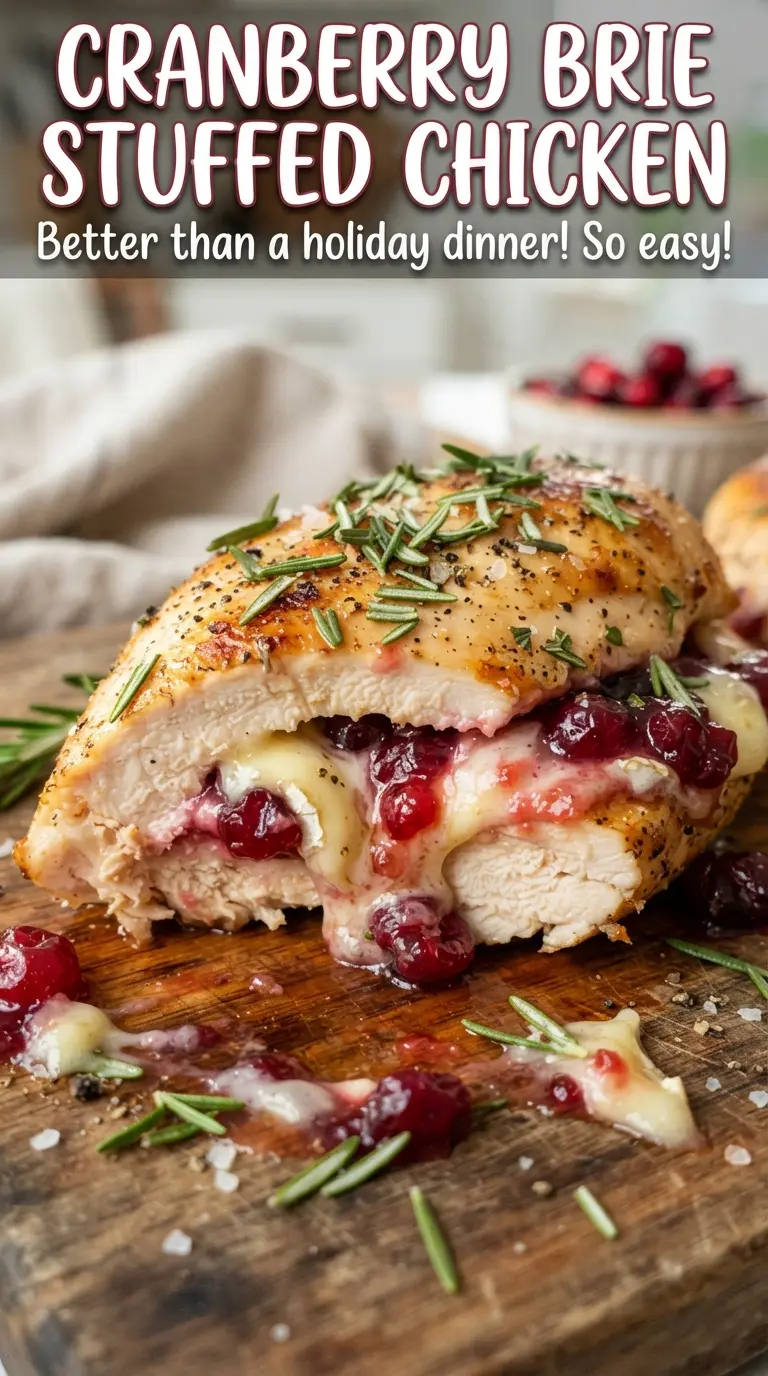
- Chicken breasts — Boneless, skinless breasts give you a clean pocket for stuffing and a fast cook time. Try to pick pieces that are similar in size so they finish together. If one breast is much thicker, give it a light pound on the thicker end so it cooks evenly.
- Brie — This is the part that makes the center feel rich and melty. A soft rind is fine to leave on; it helps the cheese hold together a bit as it melts. Camembert works in a pinch, but it tastes a little sharper and less buttery.
- Whole berry cranberry sauce — The whole berries keep the filling from turning mushy and give the sauce some texture. Smooth jelly will work, but it won’t give you the same little bursts of tart fruit inside the chicken or in the pan sauce. If your cranberry sauce is very thick, stir it first so it spreads more evenly.
- Baby spinach — It adds color, a little moisture control, and just enough green to cut through the richness. Use it raw; it wilts under the heat of the chicken and cheese. Kale is too tough here unless you blanch it first.
- Balsamic vinegar and honey — These sharpen and round out the sauce. The balsamic keeps it from tasting flat, and the honey softens the cranberry’s tart edge. Don’t skip either one unless your cranberry sauce is already very sweet.
- Fresh rosemary — Rosemary gives the sauce a woodsy note that plays well with brie. Use fresh if you can, because dried rosemary can taste dusty and harsh in a quick pan sauce. Chop it finely so it doesn’t clump.
Getting the Sear, Bake, and Pan Sauce to Work Together
Seasoning and Stuffing the Chicken
Start by cutting a deep pocket along the side of each breast, then season the outside well with salt, pepper, garlic powder, and thyme. The seasoning on the outside matters because the filling won’t season the whole piece of chicken for you. Spoon in the spinach, brie, and cranberry sauce, then close each breast with toothpicks so the seam stays shut in the pan. If the filling is bulging out before it even hits the skillet, take a little out now; overcrowding only makes cleanup messier later.
Building Color Before the Oven
Use a hot oven-safe skillet and let the chicken sear until the first side turns a deep golden color before flipping. If the pan isn’t hot enough, the chicken will pale and steam instead of browning, and you’ll lose the flavor that makes the sauce taste deeper later. Three to four minutes per side is the sweet spot here. You’re not cooking it through on the stovetop; you’re building the crust that carries the whole dish.
Finishing in the Oven Without Drying It Out
Move the skillet to the oven and bake until the chicken reaches 165°F in the thickest part. Pulling it at temperature matters more than the clock because chicken breasts can go from juicy to chalky fast once they’re overcooked. Let it rest for a minute or two before you start the sauce so the juices stay in the meat instead of flooding the pan when you cut into it.
Turning the Pan Drippings Into Sauce
After the chicken comes out, add the broth, remaining cranberry sauce, honey, balsamic vinegar, and rosemary straight into the skillet. Scrape up the browned bits from the bottom as the sauce simmers; that’s where the roasted chicken flavor lives. Cook it for about three minutes, just until it looks glossy and lightly thickened. If it reduces too far, add a splash more broth instead of letting it get sticky.
How to Adapt This for Different Tables and Different Pantries
Gluten-Free and Naturally Wheat-Free
This recipe is already naturally gluten-free as written, as long as your chicken broth is certified gluten-free. That makes it an easy dinner when you need something that feels a little special without changing the ingredient list much at all.
Dairy-Free Version
Swap the brie for a dairy-free melting cheese, but expect a firmer, less creamy center. You’ll still get the cranberry-chicken pairing and the pan sauce, but the filling won’t have the same soft, buttery melt that brie gives you.
Using Chicken Thighs Instead of Breasts
Boneless thighs work if you butterfly and roll them around the filling rather than trying to cut a classic pocket. The result is richer and more forgiving, but you won’t get the same neat sliced-open presentation. Bake until the thighs are cooked through and the juices run clear.
Making It Ahead
You can stuff and season the chicken a few hours ahead, then keep it covered in the fridge until dinner time. Wait to sear and bake it until you’re ready to serve so the coating stays crisp and the filling doesn’t leak as the chicken sits.
Storage and Reheating
- Refrigerator: Store leftovers in an airtight container for up to 3 days. The brie will set up as it chills, but it softens again when reheated.
- Freezer: It freezes, but the cheese texture changes a bit after thawing. If you freeze it, wrap the cooked chicken tightly and thaw overnight in the fridge before reheating.
- Reheating: Reheat covered in a 325°F oven until warmed through. The microwave works in a pinch, but it can push the brie out of the pocket and make the chicken rubbery.
Answers to the Questions Worth Asking

Cranberry Brie Stuffed Chicken
Ingredients
Equipment
Method
- Preheat oven to 400F so it’s hot when the skillet goes in. Confirm the oven rack is in the middle for even baking.
- Cut a deep pocket into the side of each chicken breast, keeping the bottom intact. Pat the exterior dry so the seasoning sticks.
- Season the outside of each chicken breast with salt, black pepper, garlic powder, and dried thyme. Rub evenly so the surface looks speckled.
- Stuff each pocket with baby spinach, brie, and 1 tablespoon cranberry sauce. Close the opening by securing with toothpicks, keeping the filling from spilling.
- Heat olive oil in a hot oven-safe cast iron skillet until shimmering. Sear the chicken for 3-4 minutes per side until golden, with visible browning on the surface.
- Transfer the skillet to the oven and bake 15-18 minutes at 400F until the chicken reaches 165F. The juices should run clear when the thickest part is tested.
- Remove chicken from the skillet and add chicken broth, remaining cranberry sauce, honey, balsamic vinegar, and fresh rosemary. Simmer for 3 minutes, stirring until the sauce looks glossy and lightly thickened.
- Spoon the sauce over the chicken right before serving. Aim to cover the browned tops so the cranberry and rosemary sauce clings.