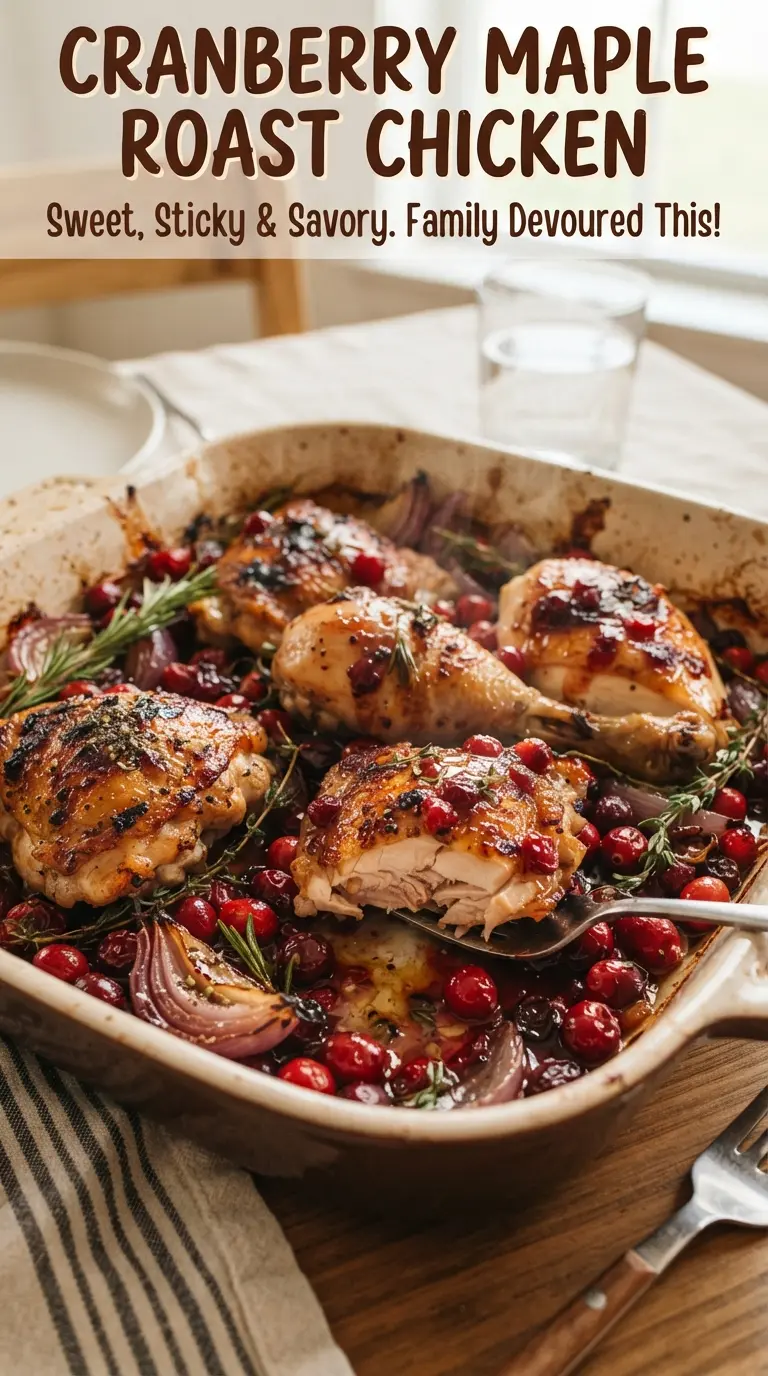
Bronzed roast chicken with cranberry maple glaze earns its place at the center of the table because the skin turns lacquered and crisp while the pan juices slide into a glossy sauce that tastes sharper and richer than plain pan drippings. The cranberries burst just enough in the oven to tint everything ruby red, and the orange, rosemary, and Dijon keep the sweetness from tipping one-note.
The trick here is timing. The chicken gets a head start in the oven so the skin can brown before the glaze goes on, which keeps the maple from burning. Butter under and over the skin carries the rosemary flavor deep into the meat and helps the breast stay juicy while the thighs finish. The onion, garlic, and broth underneath do double duty: they perfume the bird and give you enough liquid to turn the roasted cranberries into a proper sauce.
Below, you’ll find the small details that make this roast work on the first try, plus a few smart ways to change it up without losing the balance of sweet, tart, and savory.
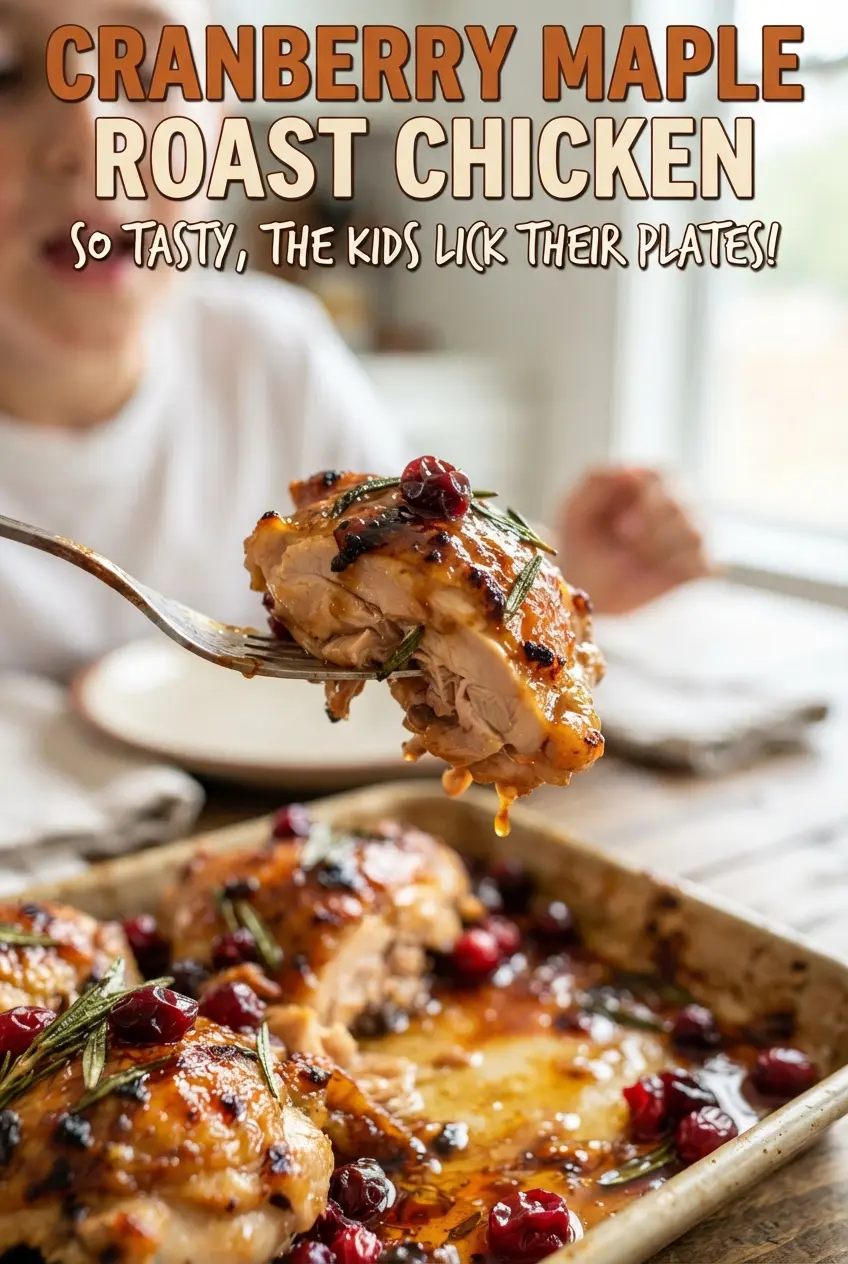
The glaze thickened beautifully in the pan, and the cranberries burst just enough to make a tart sauce that wasn’t too sweet. The chicken skin stayed crisp even after I spooned the juices over the top.
Save this Cranberry Maple Roast Chicken for a glazed roast with crisp skin and a tart cranberry pan sauce.
The Trick to Keeping Maple Glaze Glossy Instead of Burned
Maple syrup starts to darken fast once it’s exposed to high heat, which is why the glaze goes on after the chicken has already browned for a while. That first roast gives you color from the skin itself, not from the sugar in the glaze. Once the maple and Dijon hit the bird, the oven has just enough time left to tighten the coating without turning it bitter.
- Butter — Softened butter mixed with rosemary is what keeps the meat from tasting flat. It also helps the skin brown evenly. Cold butter won’t spread under the skin well, so let it come fully to room temperature before mixing.
- Fresh rosemary — Fresh is worth using here because dried rosemary can taste dusty in a short roast. Chop it finely so it disperses through the butter instead of clumping.
- Orange — The orange halves steam inside the cavity and perfume the meat from the inside out. Lemon works in a pinch, but it gives a sharper finish and less of that round citrus sweetness.
- Dijon mustard — Dijon pulls the glaze back from sugary and helps it cling to the skin. Yellow mustard won’t give the same depth or emulsified texture.
- Fresh cranberries — Fresh berries burst into the pan sauce and keep their tartness, which balances the maple. Frozen cranberries can work straight from the freezer, but don’t thaw them first or they’ll get mushy before the glaze finishes.
What Each Ingredient Is Actually Doing in This Recipe
- Primary ingredient (the star) — Quality matters most. Choose the best you can find.
- Cooking medium (oil, butter, or broth) — This carries flavors and prevents dryness.
- Seasonings (salt, pepper, spices, herbs) — Layer flavors so nothing overpowers. Build depth gradually.
- Aromatics (garlic, onion, herbs) — Cook with fat to bloom flavors. Become the foundation.
- Supporting ingredients — Complement the main ingredient without overpowering it.
- Sauce or liquid (if applicable) — Brings flavors together. Balance richness with acid.
- Acid (lemon, vinegar, wine, or other) — Brightens and prevents flat-tasting results.
- Final finish (garnish, glaze, or sauce) — Prevents one-dimensional taste and adds visual appeal.
Getting the Bird Brown Before the Glaze Goes On
Seasoning Under and Over the Skin
Pat the chicken dry first. If the skin is damp, it steams before it browns. Work the rosemary butter under the skin over the breast and thighs, then rub any extra over the outside so the skin cooks with a thin, flavorful fat layer. Salt and pepper go inside and out because the cavity seasoning does more than you’d think once the bird starts heating.
Roasting the Chicken in Stages
The first 50 minutes are about building color and cooking the bird through the thickest parts. Set the chicken over the onion wedges so air can move around it and the bottom doesn’t sit in a puddle. If the skin is pale at this point, don’t rush the glaze step; the final roast is there to finish the sauce and deepen the color, not rescue an under-roasted bird.
Brushing on the Maple Glaze
Whisk the maple syrup and Dijon together until smooth, then brush on only half at first. Add the cranberries and broth to the pan before the final roast so the berries have liquid to burst into instead of scorching on dry pan metal. Brush with the remaining glaze near the end; that last coat gives the skin its shine without overcooking the sugar.
Resting Before You Carve
Pull the chicken when the thigh reads 165F and let it rest for 15 minutes. That pause matters because the juices settle back into the meat instead of running across the cutting board. The sauce in the pan will also thicken slightly as it cools, which makes spooning it over the sliced chicken much easier.
What to Change When You Want a Different Finish
Make It Dairy-Free
Swap the butter for olive oil or a plant-based butter with a neutral flavor. Olive oil gives you a slightly less rich finish and a more savory roast edge, while plant butter keeps the texture closest to the original. You’ll still get good browning, but the herb flavor won’t carry quite as deeply under the skin.
Use Chicken Pieces Instead of a Whole Bird
Bone-in thighs and drumsticks work best because they can roast long enough for the glaze to concentrate without drying out. Cut the first roast down to about 25 minutes, then add the glaze and cranberries for another 20 to 25 minutes. Breasts cook faster and need closer watching, or the glaze will be done before the meat is.
Make It Less Sweet
Cut the maple syrup back by a couple of tablespoons and add a little more Dijon. That keeps the glaze glossy but pushes it toward tangy rather than dessert-sweet. If you like a sharper pan sauce, add an extra splash of chicken broth at the end and spoon it over the carved meat while it’s still hot.
Storage and Reheating
- Refrigerator: Store leftovers in an airtight container for up to 4 days. The skin softens in the fridge, but the meat stays flavorful.
- Freezer: The carved chicken freezes well for up to 2 months. Freeze the meat and sauce separately if you can, because the cranberries get softer after thawing.
- Reheating: Reheat covered in a 325F oven with a splash of broth until hot. Microwaving works for a quick lunch, but it won’t bring back the skin. For the best texture, reheat the meat gently and spoon the sauce over after warming.
Answers to the Questions Worth Asking
Cranberry Maple Roast Chicken
Ingredients
Equipment
Method
- Preheat the oven to 425°F so it reaches a strong roasting heat before the chicken goes in. Place a roasting pan or Dutch oven inside while it heats for better browning.
- Season the chicken inside and out with salt and pepper, then rub the butter mixed with rosemary under and over the skin. Press gently so the herb butter clings to the surface for lacquered browning.
- Stuff the cavity with orange halves and garlic, then set the chicken in a roasting pan with the onion wedges around it. Arrange the onion so it sits in the pan juices during roasting.
- Roast the chicken for 50 minutes, watching for a deepening golden color on the skin. Continue without basting so the skin sets before glazing.
- Whisk the maple syrup and Dijon mustard, then brush half of the glaze over the chicken. Look for a glossy coating as it hits the hot skin.
- Add the cranberries and chicken broth to the pan, then tuck them around the chicken. You should see the cranberries start to burst and the liquid simmer immediately.
- Roast 25–30 minutes more, brushing with the remaining glaze, until the thigh reaches 165°F. The skin should look caramel-golden and the pan sauce should thicken slightly.
- Rest the chicken for 15 minutes before carving. This lets the juices settle so the meat stays moist.
- Carve the chicken and spoon the cranberry pan sauce over the top. Serve warm with the pan juices spooned over the slices.