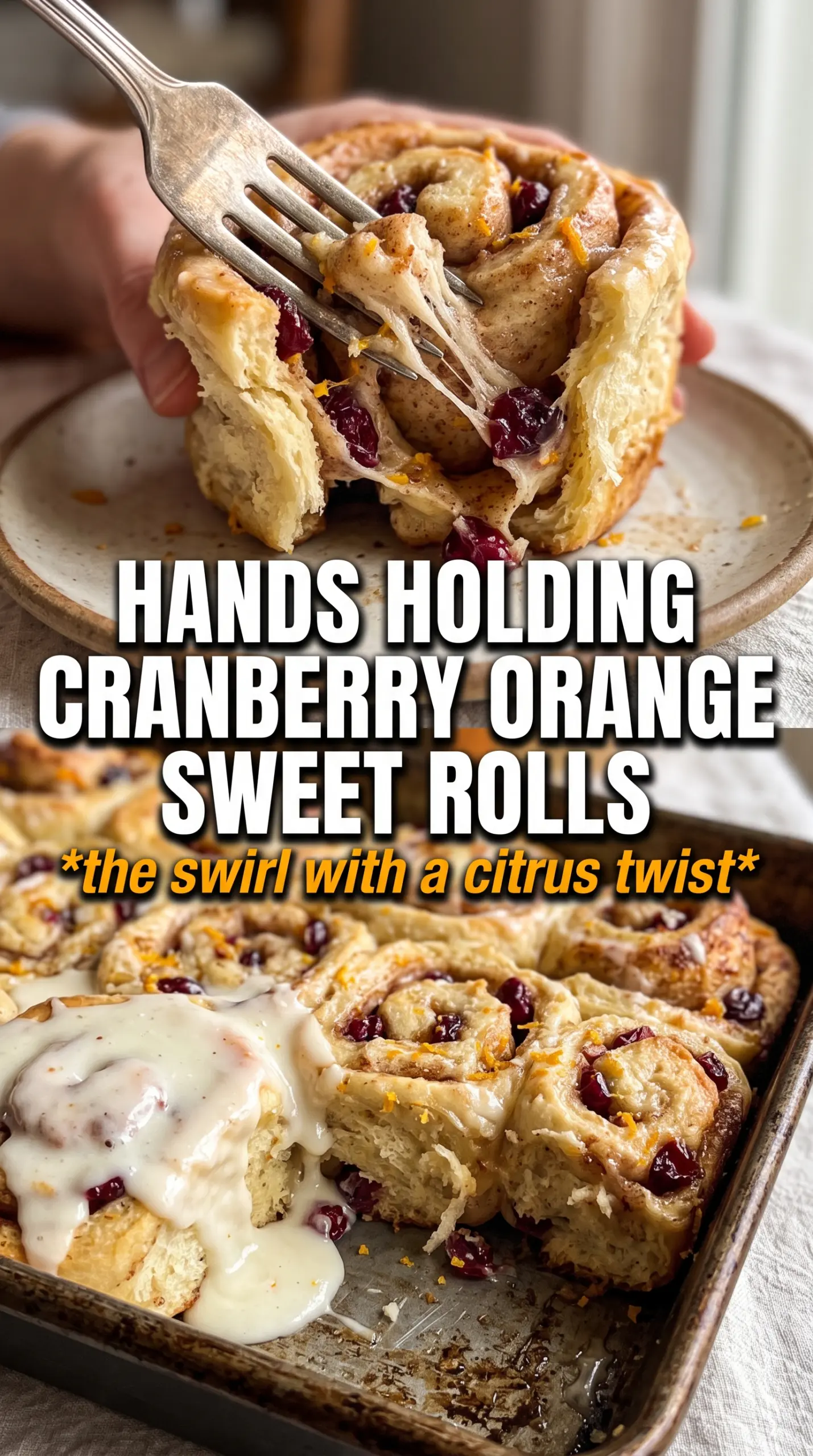
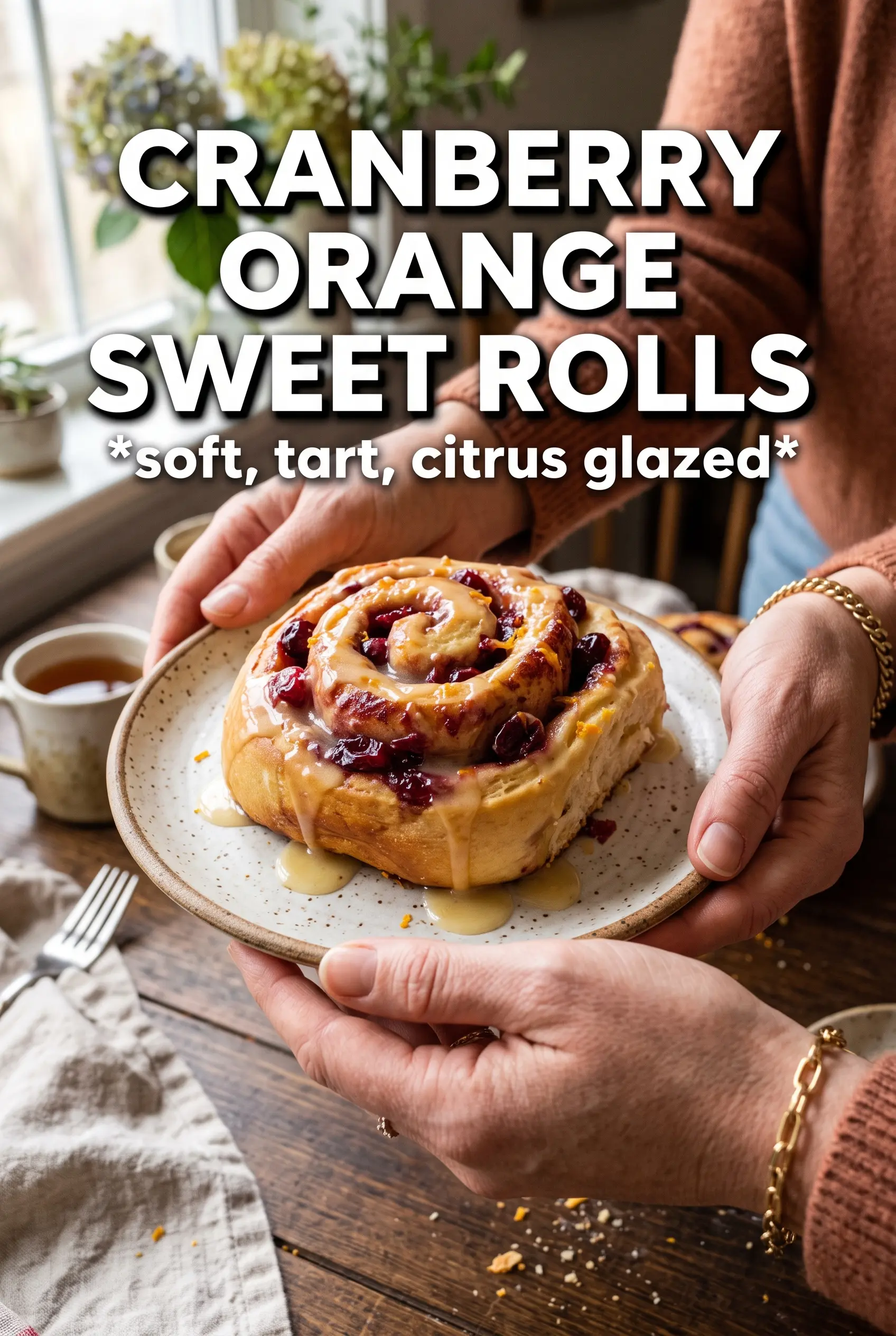
Cranberry orange sweet rolls bake up soft and pillowy with a bright, jammy filling that cuts through the richness of the dough. The orange zest runs through every bite, and the cream cheese glaze settles into the swirls instead of just sitting on top. What you get is a pan of rolls that taste fresh and bakery-worthy without needing any fancy shaping or special equipment.
This version works because the cranberries are cooked down before they go into the dough, which keeps the filling from leaking out and turning the rolls soggy. The orange juice and zest get used in both the filling and the glaze, so the citrus flavor stays present all the way through instead of disappearing after the first bite. I also like that the dough is enriched with butter, milk, and eggs, which gives the rolls a tender crumb that still holds the filling well.
Below, I’ve included the timing cue that matters most when you’re working with fruit-filled rolls, plus a few smart swaps if you need to adapt the batch. If you’ve ever had sweet rolls unravel in the oven or lose their filling on the pan, this method keeps things neat.
The cranberry filling thickened up perfectly, and the rolls stayed neat instead of bursting open in the oven. My glaze picked up just enough orange to make the whole pan taste bright, not heavy.
Save these cranberry orange sweet rolls for a breakfast that tastes fresh, tangy, and bakery-soft from the first swirl to the last bite.
The Part That Keeps Cranberry Rolls From Leaking Out
Fruit-filled sweet rolls usually fail in one of two ways: the filling is too wet, or the dough is rolled loosely enough that the spiral opens in the oven. Both problems show up fast with cranberries because they release a lot of juice as they heat. Cooking the cranberries with sugar and orange first turns that liquid into a thick, spreadable filling that stays put.
The other piece that matters is how tight you roll the log before slicing. You want tension without stretching the dough so thin that it tears. A snug roll gives you clean spirals and keeps the jammy filling tucked inside, which means the rolls rise upward instead of spilling sideways onto the pan.
- Cranberries — Fresh or frozen both work here. Frozen cranberries are fine straight from the freezer, and they often break down a little faster, but the filling still needs to be cooked until glossy and thick. Chop them first so you don’t end up with big bursts of juice in one spot.
- Orange zest — This carries the real orange flavor. Orange juice adds brightness, but zest gives the perfume that makes these rolls taste like more than cranberry jam in dough.
- Softened butter — Use proper room-temperature butter for the filling so it spreads in a thin, even layer. Melted butter will run and pool, which makes the filling slip.
- Cream cheese — This is what gives the glaze body. A powdered sugar glaze alone would disappear into the rolls; cream cheese clings to the swirls and gives you that tangy finish.
What Each Ingredient Is Actually Doing in This Recipe
- Primary ingredient (the star) — Quality matters most. Choose the best you can find.
- Cooking medium (oil, butter, or broth) — This carries flavors and prevents dryness.
- Seasonings (salt, pepper, spices, herbs) — Layer flavors so nothing overpowers. Build depth gradually.
- Aromatics (garlic, onion, herbs) — Cook with fat to bloom flavors. Become the foundation.
- Supporting ingredients — Complement the main ingredient without overpowering it.
- Sauce or liquid (if applicable) — Brings flavors together. Balance richness with acid.
- Acid (lemon, vinegar, wine, or other) — Brightens and prevents flat-tasting results.
- Final finish (garnish, glaze, or sauce) — Prevents one-dimensional taste and adds visual appeal.
How to Build the Swirls So They Bake Tall, Not Flat
Activating the Yeast and Mixing the Dough
Start with warm milk that feels like bath water, not hot enough to sting your finger. Stir in the yeast and sugar, then let it sit until foamy so you know the yeast is alive before you commit the rest of the ingredients. Once the eggs, butter, vanilla, flour, salt, and orange zest go in, knead until the dough turns smooth and elastic; the dough should feel soft and a little tacky, not sticky enough to cling to every surface. If it feels dry early on, hold back on extra flour until the kneading starts to bring it together.
Cooking the Cranberry Filling
Cook the cranberries with the sugar, orange juice, and zest until the berries burst and the mixture turns glossy and jam-like. The filling should mound on a spoon instead of running off it. If you skip this step and use raw cranberries, they’ll release liquid in the oven and leave you with soggy centers and a messy pan. Let the filling cool completely before spreading it on the dough, or the butter layer underneath will soften too fast.
Rolling, Cutting, and Proofing
Roll the dough into an even rectangle and spread the softened butter all the way to the edges. Add the cooled cranberry filling in a thin layer, then roll from the long side with steady pressure so the spiral stays tight. Use a sharp knife or unflavored dental floss to cut 12 even rolls; a sawing motion squashes the layers and pushes the filling out. After they’re in the pan, let them rise until they look puffy and touch each other at the edges.
Baking and Glazing
Bake at 375°F until the tops are deeply golden and the centers are set, about 22 to 25 minutes. If the tops brown too quickly, cover the pan loosely with foil for the last few minutes. Whisk the glaze until smooth, then drizzle it over warm rolls so it melts into the swirls without disappearing completely. If the rolls are piping hot, wait a few minutes first or the glaze will run right off the pan.
Three Ways to Make These Rolls Fit Your Kitchen
Dairy-Free Version
Swap the milk for an unsweetened non-dairy milk and use a plant-based butter in both the dough and filling. The rolls will still bake up soft, though the glaze will be a little less tangy unless you add an extra teaspoon of orange juice to balance it.
Make-Ahead Overnight Rolls
After shaping the rolls and placing them in the pan, cover and refrigerate overnight instead of doing the second rise at room temperature. In the morning, let them sit out until they look puffy before baking. This slows the schedule without hurting the texture, and the chilled dough is actually easier to bake straight from a tidy, cold pan.
Gluten-Free Note
A 1:1 gluten-free flour blend designed for yeast doughs is the only swap worth trying here, and even then the texture will be a little less stretchy. The dough may need a slightly shorter knead and a gentler hand when rolling because gluten-free dough tears more easily.
Extra-Bright Orange Finish
Add a little more zest to the glaze if you want the orange to lead instead of just supporting the cranberry. That gives the rolls a sharper, fresher top note and helps the glaze stand out against the sweet dough.
Storage and Reheating
- Refrigerator: Store covered for up to 4 days. The rolls stay soft, though the glaze will sink in a little more after the first day.
- Freezer: Freeze baked rolls without the glaze, tightly wrapped, for up to 2 months. Thaw overnight in the fridge and glaze after warming.
- Reheating: Warm individual rolls in the microwave for 15 to 20 seconds or cover a pan loosely and reheat in a 300°F oven until just warmed through. Don’t overheat them or the dough dries out before the center gets soft again.
Questions I Get Asked About This Recipe
Cranberry Orange Sweet Rolls
Ingredients
Equipment
Method
- Warm the milk, sprinkle in the yeast, and let stand until foamy, about 5 minutes, while you set up the rest of the ingredients (no temperature beyond warm).
- Combine warm milk mixture with sugar, melted butter, eggs, vanilla, orange zest, flour, and salt, then knead until smooth and elastic, kneading for 8 minutes at a steady rhythm with visible dough strength forming.
- Place dough in a lightly greased bowl, cover, and rise for 1 hour at warm room temperature (until doubled in size with a puffy, airy look).
- Simmer chopped cranberries, sugar, orange zest, and orange juice until jammy, 10 to 15 minutes, stirring often so juices thicken and cling to the spoon.
- Cool the cranberry filling completely so it spreads without melting the dough.
- Roll the dough into a rectangle, then spread softened butter over the surface in an even layer.
- Spread the cooled cranberry filling over the butter, leaving a small border, so the filling reaches the edges of the future swirl.
- Roll the dough tightly into a log, using gentle pressure to form a compact spiral with distinct layers.
- Cut the log into 12 rolls and place them cut-side up on a sheet pan.
- Cover and rise for 45 minutes at warm room temperature until noticeably puffy and touching slightly at the edges.
- Bake at 375°F for 22 to 25 minutes, until the tops are golden and the centers look set with light browning.
- Beat the cream cheese, powdered sugar, orange juice, and orange zest until smooth, then drizzle generously over warm rolls so the glaze melts slightly and settles into the ridges.


