Cranberry sauce with orange and cinnamon lands with that sharp-sweet balance that makes people go back for a second spoonful before the turkey even hits the plate. The berries cook down into a glossy, spoonable sauce with just enough texture left to feel homemade, and the orange keeps it bright instead of heavy.
What makes this version worth keeping is the layering of flavor. Orange juice goes in with the sugar and spices at the start, so the sauce cooks in a fragrant syrup instead of plain water. The cinnamon sticks steep as the berries burst, which gives the sauce warmth without turning it muddy or overly spiced. Stirring in the zest at the end keeps the citrus aroma fresh.
If you’ve only ever had canned cranberry sauce, this one tastes like the better, brighter version you hoped for. A little patience while it chills makes the texture set up beautifully, and there’s a small trick in the process below that keeps the citrus and cinnamon from disappearing into the background.
The sauce thickened up perfectly as it cooled, and the orange zest at the end kept it from tasting flat. I made it the day before, and the cinnamon came through even better the next day.
Save this cranberry sauce with orange and cinnamon for a bright, make-ahead side that sets up thick and glossy.
Why Cranberries Need the Right Balance of Heat and Sugar
Cranberries start out stubborn. If the heat is too low, they sit there without fully bursting and you end up with a thin, sharp sauce. If the heat is too aggressive, the liquid reduces before the berries finish cooking, and the sauce can turn paste-like before it ever gets a chance to thicken naturally.
The sweet spot is a steady simmer after the sugar dissolves and the berries go in. That gives the skins time to split, the pectin time to do its job, and the orange juice time to mellow the tartness without making the sauce taste like marmalade.
- Boiling the sugar with the liquid first creates a syrup that coats the berries as they cook.
- Letting the cranberries burst on their own gives you a better texture than mashing them early.
- Cooling matters because cranberry sauce thickens noticeably as it comes down from the heat.
What Each Ingredient Is Actually Doing In This Sauce
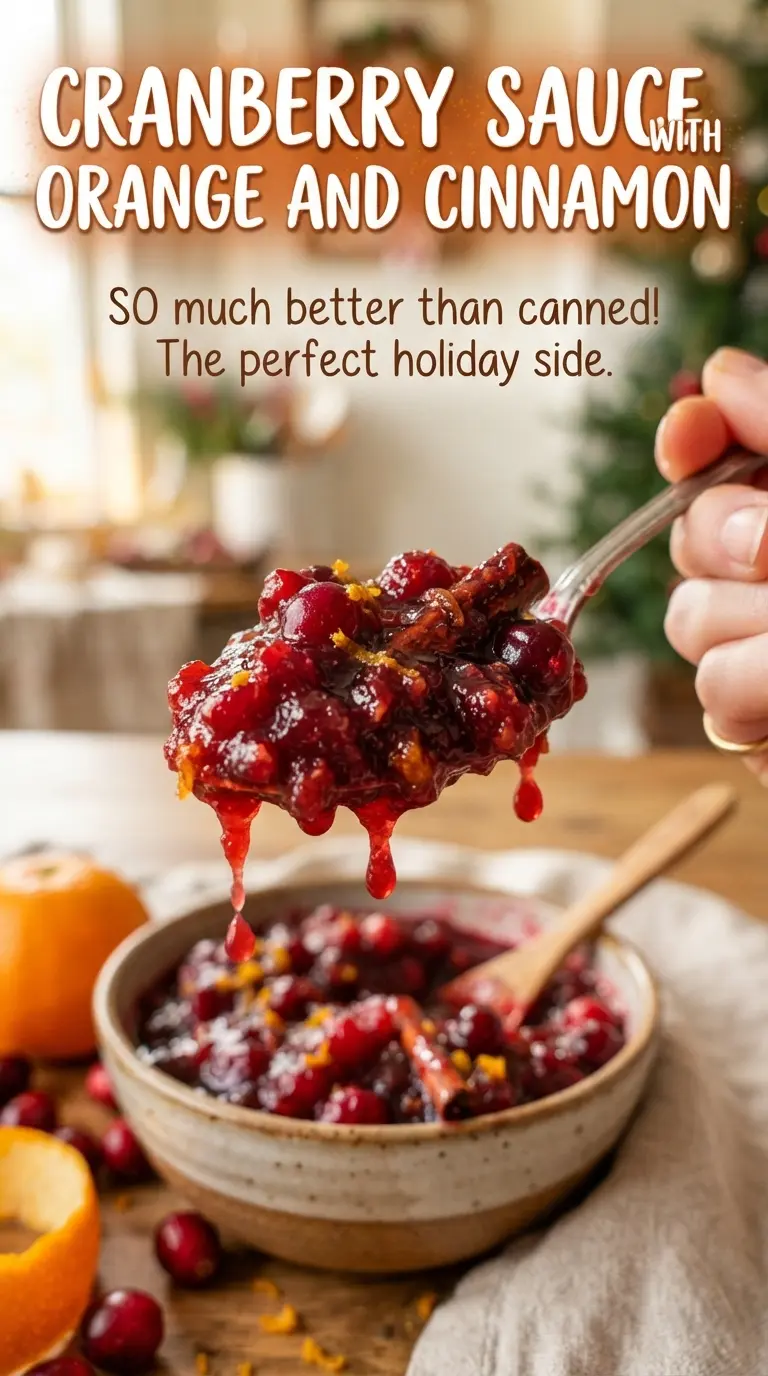
- Fresh cranberries bring the tart backbone and the natural pectin that helps the sauce set. Frozen cranberries work too, and you don’t even need to thaw them first.
- Orange juice softens the cranberries’ sharp edge and adds body. Fresh-squeezed is best here because the flavor is clean and bright, but bottled juice works in a pinch.
- Cinnamon sticks steep slowly and add warmth without leaving gritty spice behind. Keep them in while the sauce cools if you want a deeper cinnamon note, then fish them out before chilling.
- Ground cinnamon gives the first hit of spice right away, while the sticks build the background flavor.
- Orange zest goes in at the end so the oils stay fragrant instead of cooking off.
Cooking the Berries Until the Sauce Sets
Building the Syrup First
Start by combining the sugar, orange juice, water, cinnamon sticks, ground cinnamon, and salt in the saucepan. Bring it all to a boil so the sugar fully dissolves before the cranberries go in. If you add the berries too early, the sauce can stay grainy and the fruit won’t cook evenly.
Letting the Cranberries Burst
Once the liquid is boiling, add the cranberries and keep the mixture at a steady simmer for 10 to 12 minutes. You should hear the berries pop and see the sauce turn thick and glossy as the skins split. Stir now and then, but don’t crush the berries unless you want a much smoother sauce.
Finishing With Zest and Spice
Take the pan off the heat and stir in the orange zest right away. Leave the cinnamon sticks in while the sauce cools so they keep steeping, then remove them before chilling. The sauce should look a little loose in the pan; it firms up as it chills, and that’s what gives you that spoonable finish instead of jam.
How to Adapt It When You Need a Different Finish
Make it smoother and more sauce-like
Cook the cranberries a couple minutes longer and stir more often so more berries collapse. If you want an even silkier texture, press the finished sauce through a fine mesh sieve before chilling. You lose some of the rustic texture, but you get a cleaner spoonable sauce for people who don’t love whole berry pieces.
Use frozen cranberries without changing the method
Frozen cranberries go straight into the pan from the freezer. The sauce may take a minute or two longer to return to a simmer, but the flavor and texture stay on track. Don’t thaw them first, or they can turn soft before they even hit the heat.
Make it dairy-free, gluten-free, and naturally vegetarian
This recipe already fits those needs as written, which is part of why it’s such an easy side dish to bring to a mixed table. If you change anything, keep the orange juice and cinnamon in place so the sauce still has enough depth without needing butter or other enrichments.
Adjust the sweetness for a tarter finish
Drop the sugar by a couple tablespoons if you like cranberry sauce with more bite. The sauce will still set, but the orange and cinnamon will read a little brighter and less dessert-like. Go too low, though, and the berries can taste sharp instead of balanced.
Storage and Reheating
- Refrigerator: Store in a covered container for up to 1 week. It will continue to thicken after the first day.
- Freezer: Freezes well for up to 2 months. Thaw overnight in the fridge and stir after thawing to bring back the texture.
- Reheating: Cranberry sauce is usually best served cold or at room temperature. If you want it warm, heat it gently over low heat with a splash of water so it loosens without scorching on the bottom.
Answers to the Questions Worth Asking
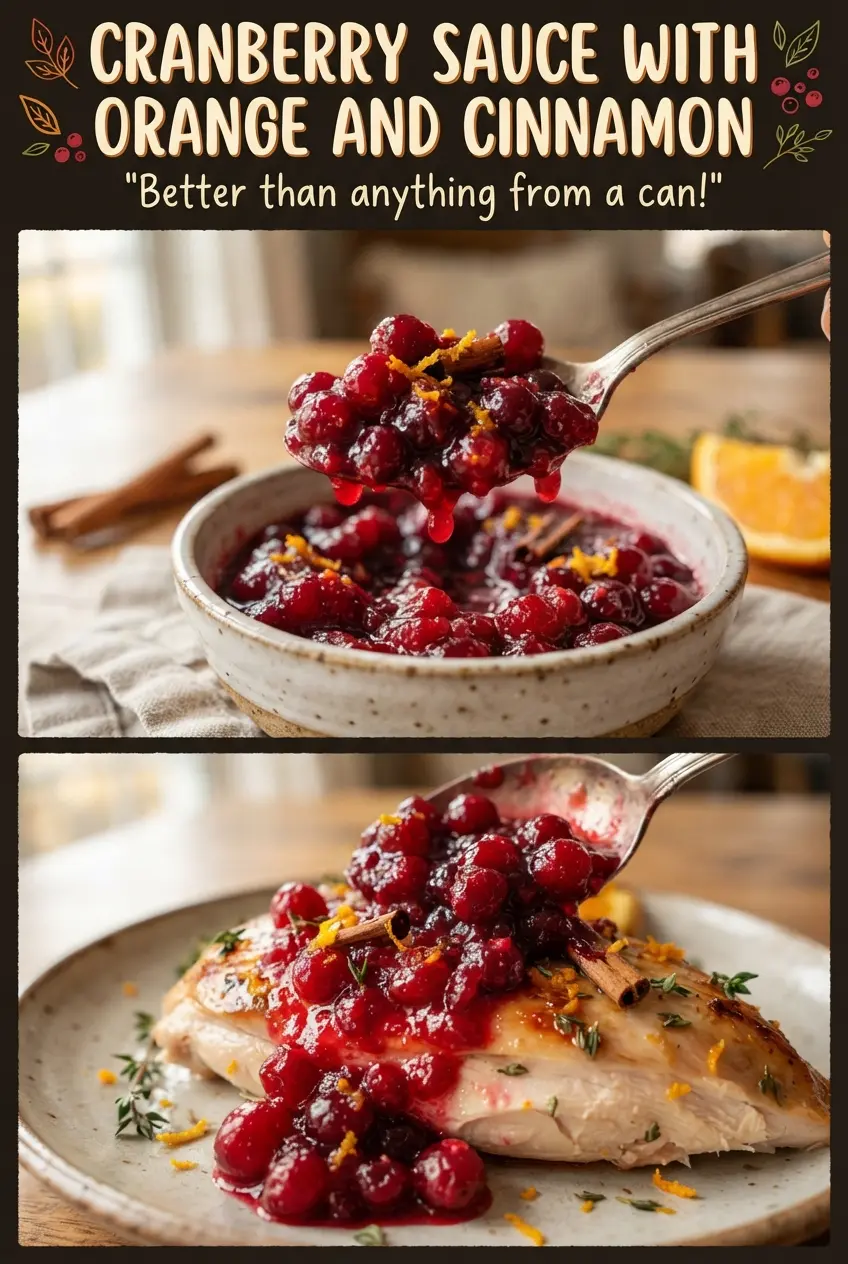
Cranberry Sauce with Orange and Cinnamon
Ingredients
Equipment
Method
- Combine sugar, orange juice, water, cinnamon sticks, ground cinnamon, and salt in a saucepan and bring to a boil. Visual cue: the mixture should rapidly bubble across the surface.
- Add fresh cranberries and simmer for 10-12 minutes until the berries burst. Visual cue: you should see skins split and sauce thicken slightly around them.
- Remove the saucepan from the heat and stir in orange zest. Visual cue: the sauce will look brighter and more fragrant as the zest disperses.
- Leave the cinnamon sticks in as it cools for extra spice, then remove. Visual cue: the cinnamon sticks stay submerged and are pulled out once the sauce has cooled.
- Chill the cranberry sauce before serving. Visual cue: it will thicken to a spoonable, sliceable texture when cold.