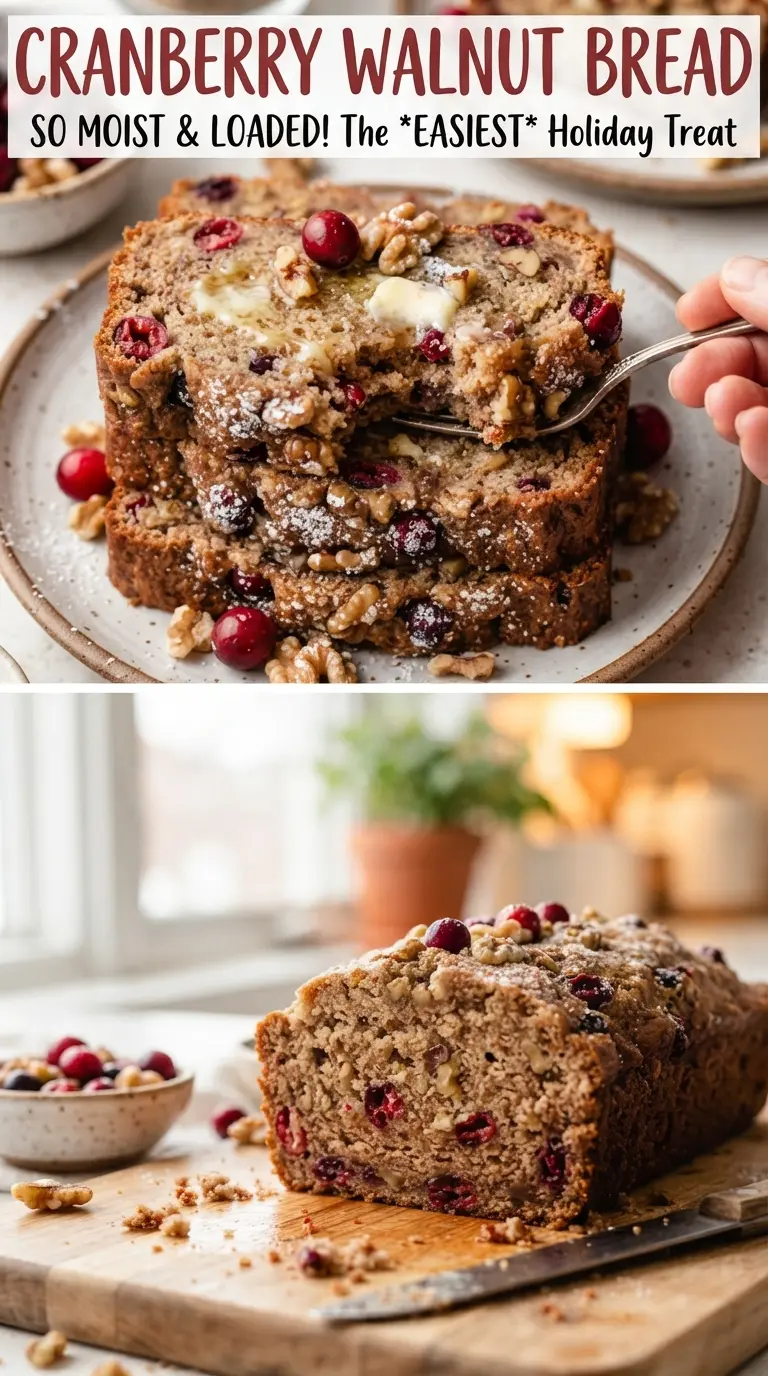
Cranberry walnut bread bakes up with a tender crumb, a crackly golden top, and those sharp little bursts of cranberry that keep each slice from feeling heavy. The orange zest and juice don’t just add flavor; they brighten the whole loaf and keep the sweetness in check, while toasted walnuts bring enough depth to make this feel more like a bakery loaf than a basic quick bread.
What makes this version work is the balance. The batter stays thick, so the fruit and nuts don’t sink, and the orange is used in two places so the citrus comes through without tasting perfumed. I like chopping the cranberries instead of folding them in whole, because it gives you a cleaner slice and more even distribution all the way through the loaf.
Below, I’ve included the small details that matter most: how to keep the bread from turning dense, why toasted walnuts are worth the minute of extra effort, and what to do if you’re using frozen cranberries straight from the freezer.
The crumb stayed moist for days, and chopping the cranberries kept the loaf from falling apart when I sliced it. The orange and toasted walnuts were such a good combination.
Save this cranberry walnut bread for the next time you want a bright, bakery-style quick bread with orange zest and toasted walnuts.
The mistake that makes cranberry quick bread dense
Most quick breads get heavy because the batter is overmixed after the flour goes in. Once the dry ingredients meet the wet, gluten starts building fast, and a few extra strokes can turn a tender loaf into something tight and chewy. Stir just until the flour disappears, then stop. The batter should look a little rough, not silky.
The other trap is moisture balance. Cranberries bring a lot of juice as they bake, and if the batter starts out too loose, the center can turn gummy before the top sets. That’s why this loaf uses a fairly classic quick-bread ratio and gets folded gently at the end. You want enough structure to hold the fruit and nuts, but not so much flour that the bread turns dry.
- Orange zest — This is where the loaf gets its brightest flavor. The zest carries the citrus oils, so don’t skip it even though the juice is already in the batter.
- Orange juice — It adds acid and liquid at the same time, which helps the bread rise and keeps the crumb soft. Fresh-squeezed is nice, but bottled juice works fine here.
- Cranberries — Fresh or frozen both work. Chop them roughly so the tart bursts spread through every slice instead of sinking to the bottom in big pockets.
- Walnuts — Toasting them first gives the loaf a deeper, less bitter nuttiness. If you’re in a hurry, raw walnuts will still work, but the flavor won’t be as full.
What Each Ingredient Is Actually Doing in This Recipe
- Primary ingredient (the star) — Quality matters most. Choose the best you can find.
- Cooking medium (oil, butter, or broth) — This carries flavors and prevents dryness.
- Seasonings (salt, pepper, spices, herbs) — Layer flavors so nothing overpowers. Build depth gradually.
- Aromatics (garlic, onion, herbs) — Cook with fat to bloom flavors. Become the foundation.
- Supporting ingredients — Complement the main ingredient without overpowering it.
- Sauce or liquid (if applicable) — Brings flavors together. Balance richness with acid.
- Acid (lemon, vinegar, wine, or other) — Brightens and prevents flat-tasting results.
- Final finish (garnish, glaze, or sauce) — Prevents one-dimensional taste and adds visual appeal.
How to keep the loaf tender from bowl to pan
Mixing the Dry Base
Whisk the flour, sugar, baking powder, baking soda, salt, and orange zest together until the zest is evenly distributed and the mixture smells citrusy. Rubbing the zest into the sugar with your fingers helps release even more oil, which gives the loaf a stronger orange backbone. If the zest clumps in one spot, you’ll get uneven flavor.
Bringing the Wet Ingredients Together
Whisk the orange juice, egg, melted butter, and vanilla until the egg is fully broken up and the mixture looks smooth. Let the butter cool slightly before adding it so it doesn’t scramble the egg. The wet mixture should look glossy, not separated.
The Gentle Fold
Pour the wet ingredients into the dry and stir just until the flour streaks disappear. A few dry pockets are fine because the cranberries and walnuts will finish the job as you fold them in. If you keep stirring after that point, the loaf gets springy and tight instead of tender.
Baking to the Center
Spread the batter into a greased and lined 9×5-inch loaf pan and bake until the top is deeply golden and a toothpick comes out clean or with a few moist crumbs. Start checking at 55 minutes, but don’t pull it too early just because the edges look done. Quick bread can look set on top while the center is still wet, especially with fruit in the batter.
Cooling Before the First Slice
Let the loaf rest in the pan for 10 minutes, then move it to a rack and wait until it’s fully cool before cutting. If you slice too soon, the crumb compresses and the cranberries can drag through the loaf. A cooled loaf gives you cleaner slices and a better texture.
What to change when you need a different version
Make it dairy-free
Swap the melted butter for an equal amount of neutral oil or melted dairy-free butter. Oil gives the loaf a slightly softer crumb and keeps it moist a little longer, while dairy-free butter keeps the flavor closer to the original. The texture stays close either way.
Use dried cranberries when fresh aren’t available
Dried cranberries work, but they need help or they’ll taste chewy and a little flat. Soak them in a few tablespoons of orange juice for 10 minutes, then drain well before folding them in. The loaf will be sweeter and less tart, with smaller bursts of fruit.
Make it nut-free
Leave out the walnuts and add the same amount of extra cranberries or chopped pumpkin seeds. You lose the toasty crunch, but the bread still slices cleanly and keeps its structure. Pumpkin seeds bring a similar bite without the nut allergy concern.
Storage and Reheating
- Refrigerator: Store tightly wrapped for up to 5 days. The crumb stays moist, but the walnuts soften a bit after the first day.
- Freezer: This loaf freezes well. Wrap slices or the whole cooled loaf in plastic, then foil, and freeze for up to 3 months.
- Reheating: Warm slices at room temperature, in a toaster oven, or for a few seconds in the microwave. Don’t overheat it or the crumb turns dry and the cranberries get tough.
Answers to the questions worth asking
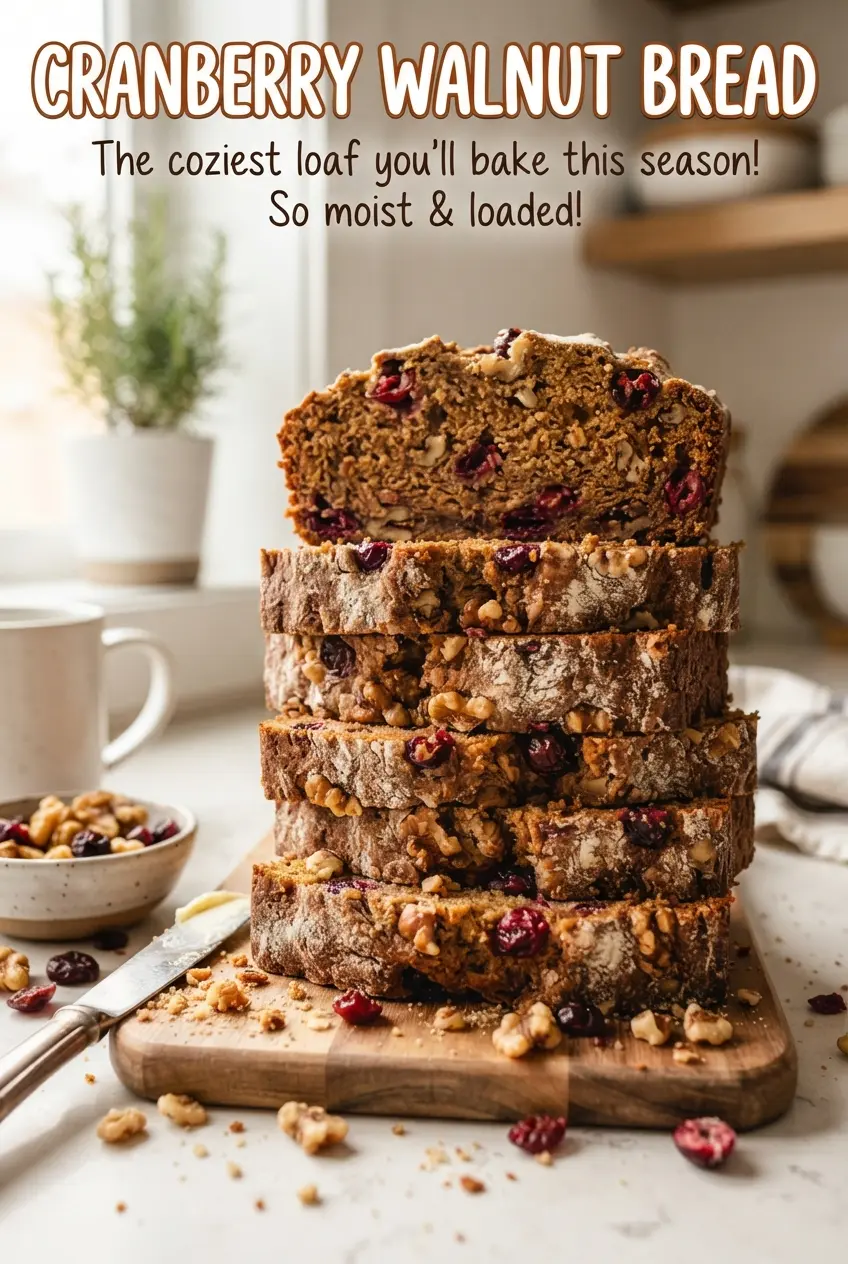
Cranberry Walnut Bread
Ingredients
Equipment
Method
- Preheat your oven to 350°F, then grease and line a 9x5-inch loaf pan.
- Whisk all-purpose flour, sugar, baking powder, baking soda, salt, and orange zest until evenly combined and no dry pockets remain.
- Whisk orange juice, large egg, melted butter, and vanilla extract until smooth and fully blended.
- Stir the wet mixture into the dry mixture just until moistened; keep the batter slightly lumpy to stay tender.
- Fold in roughly chopped cranberries and toasted chopped walnuts, then spread the batter into the loaf pan.
- Bake at 350°F for 55-60 minutes, until the loaf is golden and a toothpick comes out clean.
- Cool for 10 minutes in the pan, then move the bread to a rack to cool fully before slicing.