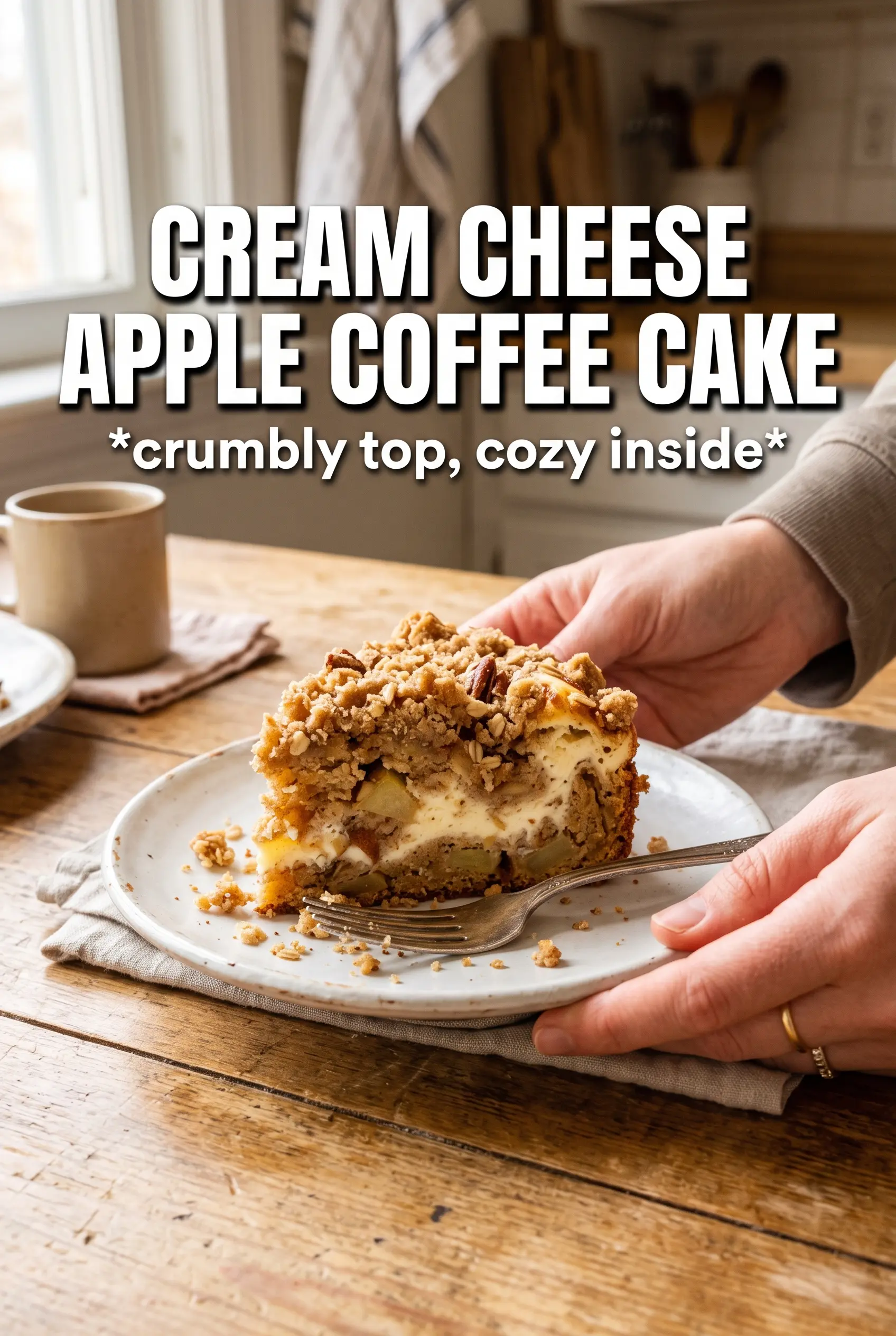
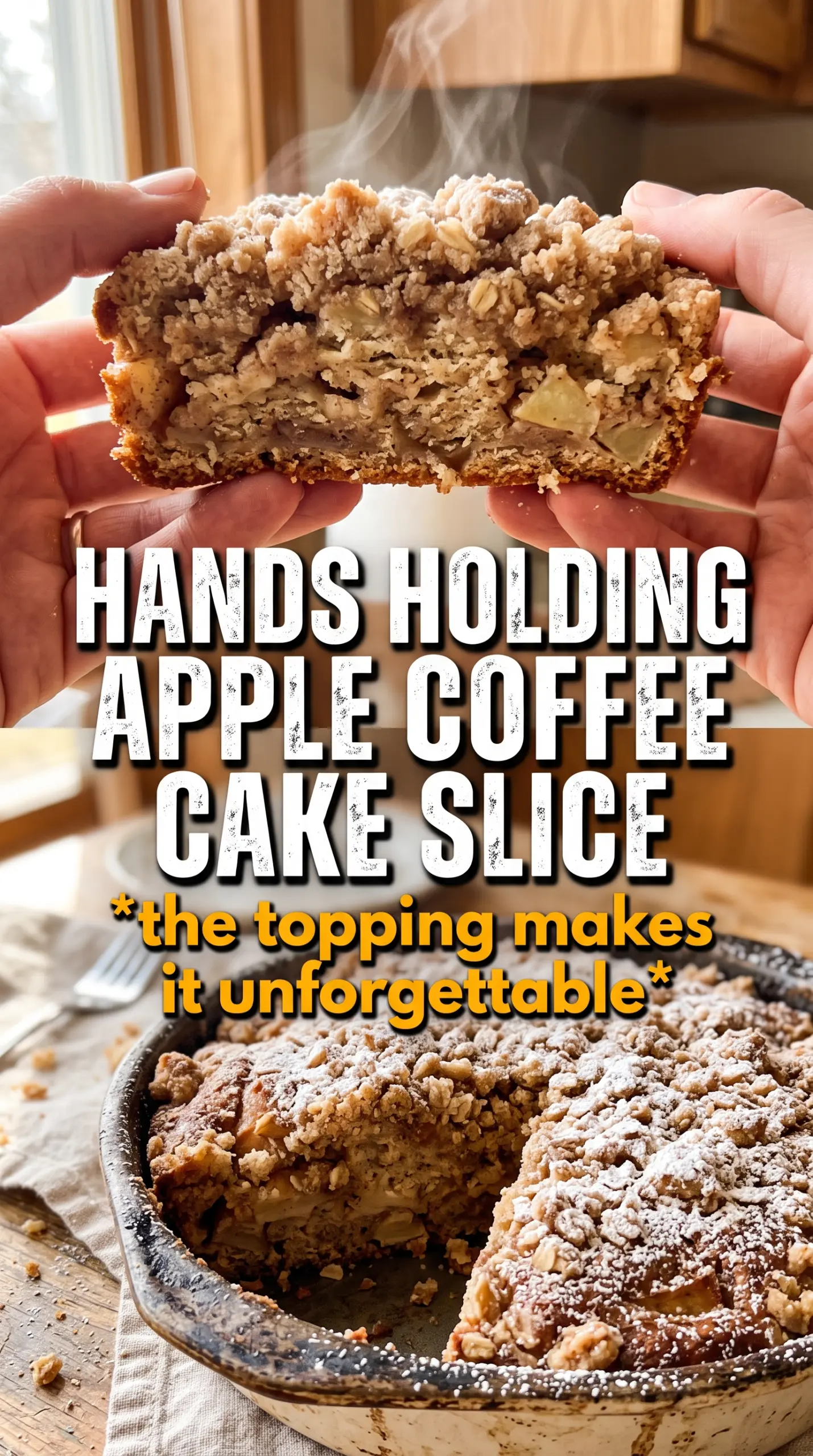
Cream Cheese Apple Coffee Cake bakes up with a tender crumb, a tangy cheesecake layer, and cinnamon apples tucked between a buttery cake and a crisp streusel top. Every slice has a little bit of everything: soft cake, jammy fruit, and that cool, creamy middle that keeps people coming back for a second piece before the first one is gone.
What makes this version work is the balance. Sour cream keeps the cake moist without making it heavy, while the cream cheese layer stays smooth because it’s beaten until there are no lumps before it ever goes into the pan. The apples are tossed with a little sugar and cinnamon so they soften just enough in the oven, instead of drying out or staying sharp and raw.
If you’ve had coffee cakes turn soggy in the center or lose their layers, the method below fixes both problems. I’ve also included the small details that keep the streusel crumbly and the cream cheese layer from sinking into the batter.
The cream cheese layer stayed separate instead of disappearing into the cake, and the apples turned soft and spiced without making the middle wet. I got clean slices after letting it cool, which never happens with my coffee cakes.
Save this Cream Cheese Apple Coffee Cake for a breakfast bake with a thick streusel top, tender crumb, and a creamy center.
The Layer That Wants to Sink, and How to Stop It
The cream cheese filling is heavier than the cake batter, so the whole dessert depends on how you layer it. If you spoon it on top in big dollops and leave it there, it can sink into the batter and blur the layers. Spread the base batter first, then add the cream cheese mixture in gentle patches and smooth it just enough that it settles into an even sheet without dragging all the way down.
The other place people lose the structure is with the apples. Wet fruit releases steam, and steam softens the center of the cake before the edges have time to set. Dice the apples small, toss them with the cinnamon and sugar right before they go on, and don’t pile them into one thick mound. An even layer bakes through cleanly and keeps the crumb from turning dense under the fruit.
What the Butter, Sour Cream, and Cream Cheese Are Each Doing
- Butter — Softened butter in the cake gives you a light, even crumb when it’s beaten with the sugar until fluffy. Cold butter belongs only in the streusel, where it creates those crisp, sandy crumbs that bake into a crunchy top.
- Sour cream — This is what keeps the cake moist and a little tangy without making it heavy. Plain Greek yogurt works in a pinch, but it’s usually thicker and a touch sharper, so the texture comes out slightly tighter.
- Cream cheese — Full-fat cream cheese gives the filling that smooth, rich middle that defines the cake. Low-fat cream cheese can work, but it’s looser and more likely to bake up thin, so the layer won’t hold as neatly.
- Apples — Use apples that hold their shape, like Granny Smith, Honeycrisp, or a mix of tart and sweet. Very soft apples turn to mush and can make the center wet instead of juicy.
- Brown sugar in the streusel — Brown sugar helps the topping bake into little caramelized clusters instead of dry crumbs. If you pack it tightly when measuring, you’ll get a heavier topping, so keep it loose and level.
How the Pan Layers Bake Into Clean Slices
Building the Streusel First
Start with the streusel so the cold butter stays cold while you build the rest of the cake. Work it in with a fork or your fingertips until the mixture looks like coarse crumbs with a few pea-sized bits left; that mix of sizes is what gives the top crunch. If it turns into paste, the butter got too warm, and the topping will bake flat instead of crumbly.
Whipping the Batter Until It Looks Light
Beat the butter and sugar until the mixture turns pale and fluffy before adding the eggs. That step traps air and gives the cake lift, which matters because the cream cheese layer and apples add weight. Once the dry ingredients and sour cream go in, stop mixing as soon as the batter looks smooth; overmixing makes the cake tough and tight.
Layering Without Dragging the Filling Down
Spread the batter evenly in the greased pan, then dollop the cream cheese mixture across the surface and smooth it gently with an offset spatula or the back of a spoon. Don’t press all the way through the batter or you’ll mix the layers together. Add the apples next, then finish with the streusel so the top bakes into a crisp lid over the soft center.
Knowing When It’s Done
Bake until the top is deep golden and the center only gives a slight wobble when you nudge the pan. A toothpick should come out mostly clean from the cake portion, but a little moisture from the cream cheese layer is normal. If the top browns too quickly before the center sets, tent it loosely with foil for the last 10 to 15 minutes.
How to Adapt This for Different Kitchens and Different Moods
Use Greek yogurt instead of sour cream
Plain full-fat Greek yogurt works well if that’s what you have. It keeps the cake moist, but it adds a little more tang and can make the crumb slightly tighter than sour cream. Use the same amount and stir it in just like the recipe calls for.
Make it gluten-free with a 1:1 baking blend
A good cup-for-cup gluten-free flour blend can replace the all-purpose flour here. The cake will be a little more delicate, so let it cool fully before slicing or the layers can crumble. I’d avoid blends with gritty rice flour texture if possible.
Swap the apples for pears
Firm pears work in the same amount and give the cake a softer, floral sweetness. They break down a little faster than apples, so cut them into slightly larger dice if you want distinct pieces in the finished cake. The spice still carries the whole thing.
Storage and Reheating
- Refrigerator: Store covered for up to 5 days. The streusel softens a little, but the cake stays moist.
- Freezer: Freeze individual slices tightly wrapped for up to 2 months. Thaw in the fridge so the cream cheese layer doesn’t weep.
- Reheating: Warm slices in a 300F oven or a toaster oven for 8 to 10 minutes. The microwave works, but it softens the topping and can make the filling a little loose.