Creamy beef and shells lands in that sweet spot between comforting and practical: a skillet full of tender pasta, savory ground beef, and a tomato-cream sauce that clings to every shell instead of pooling at the bottom of the pan. The cheddar melts into the sauce and gives it that orange, velvety finish that makes people come back for one more scoop.
What makes this version work is the way the pasta cooks right in the broth and tomatoes, so it picks up flavor from the start instead of tasting separately boiled. The cream goes in after the shells are tender, which keeps the sauce smooth and prevents it from turning greasy or splitting. A little smoked paprika deepens the beefy flavor, and Rotel adds just enough sharpness and heat to keep the dish from tasting flat.
Below you’ll find the small details that matter here: when to cover the pan, why the cheese should go in off the heat, and how to keep the sauce thick without overcooking the shells.
The sauce thickened up perfectly and the shells stayed tender without turning mushy. My husband went back for seconds and asked if I could make it again next week.
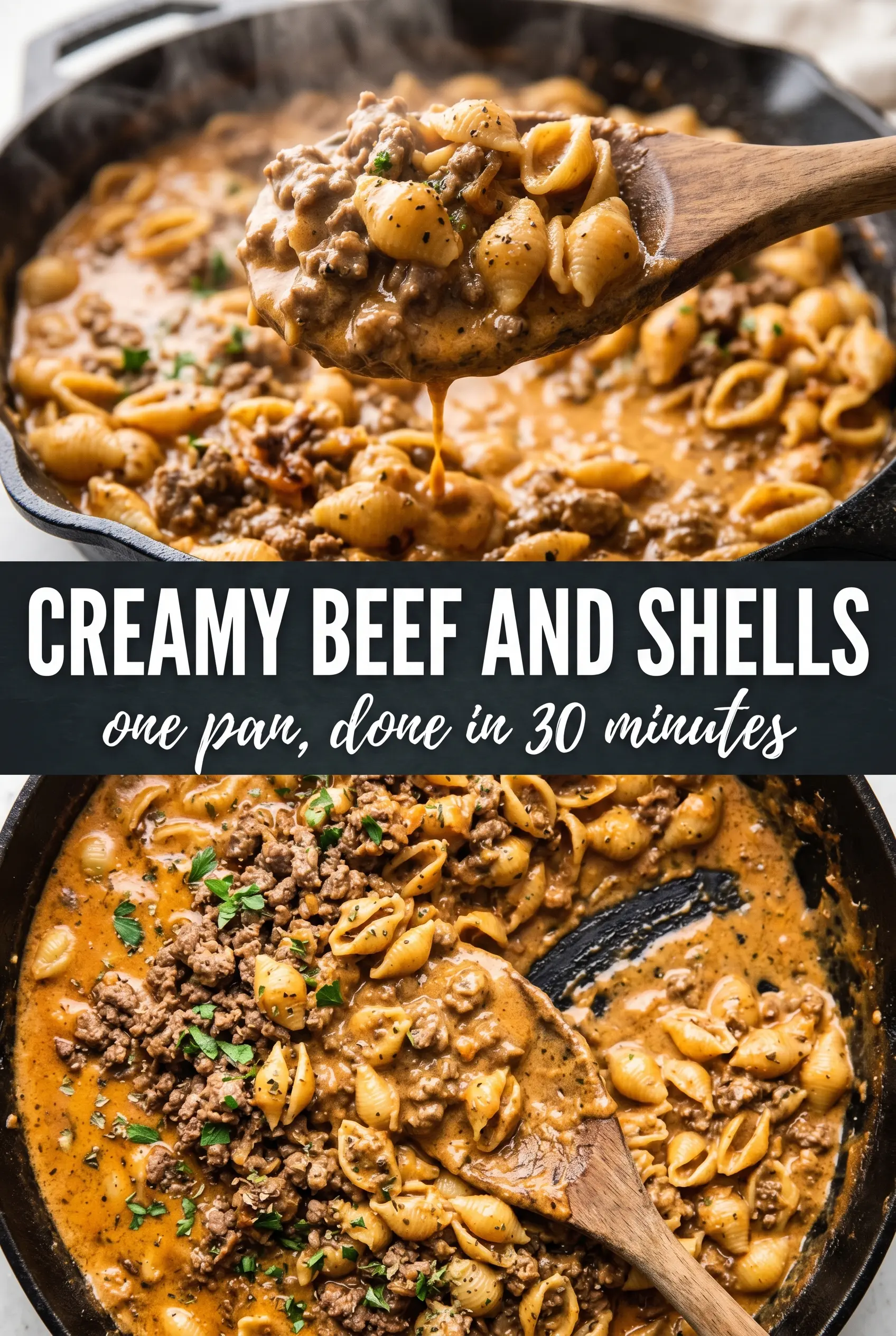
Creamy Beef and Shells is the kind of one-pan comfort dinner that coats every shell in sauce and melts cheddar right into the skillet.
The Reason the Pasta Cooks Right in the Sauce Instead of Going Mushy
Cooking the shells directly in the broth and tomatoes does two jobs at once. The pasta absorbs seasoned liquid as it softens, and the starch it releases helps thicken the sauce without flour or extra steps. The key is keeping the pan at a steady simmer after the boil; a hard boil drives off liquid too fast and leaves you with shells that are underdone in the center and sauce that looks broken around the edges.
The other thing that matters is the ratio of liquid to pasta. There should be enough to keep the shells moving early on, but not so much that they swim until the end. If the pan looks dry before the pasta is tender, add a splash of broth. If it looks too loose when the shells are done, uncover the pan and give it a few extra minutes before the cream goes in.
What the Beef, Tomatoes, and Cheese Each Bring to the Pan

- Ground beef — Use an 85/15 or 90/10 blend if you can. You want enough fat for flavor, but too much grease will make the sauce feel slick. If you use a fattier blend, drain the excess after browning so the tomatoes and cream can do their job.
- Rotel tomatoes — This is where the dish gets its mild heat and a little edge. Regular diced tomatoes will work, but you’ll lose some of that lively bite. If you need a gentler version, use plain diced tomatoes and add a pinch of cayenne only if you want it.
- Heavy cream — This gives the sauce its body and keeps it from tasting sharp once the tomatoes and cheddar are in the mix. Half-and-half can work in a pinch, but the sauce will be thinner and less plush. Add it after the pasta is tender so it warms through instead of reducing too aggressively.
- Sharp cheddar — Freshly shredded cheese melts smoother than bagged cheese, which often has anti-caking starch that can make the sauce grainy. Stir it in off the heat. High heat is the fastest way to get a stringy, split mess instead of a glossy finish.
- Smoked paprika and Italian seasoning — These small additions make the sauce taste built, not dumped together. The paprika adds depth without making it smoky in a barbecue way, and the Italian seasoning rounds out the tomatoes with herbs that make sense in a creamy skillet pasta.
Building the Skillet So the Sauce Stays Smooth
Browning the Beef Properly
Start with a hot skillet and break the beef into small pieces as it cooks. You want browned edges, not pale, steamed meat, because that fond at the bottom of the pan becomes part of the sauce. Drain off excess fat before moving on, but leave a thin coating in the skillet so the onion has something to cook in.
Softening the Onion and Garlic
Add the onion after the beef is browned and cook it until it turns translucent and a little sweet around the edges. Garlic only needs about a minute; any longer and it starts to taste sharp instead of fragrant. If the pan looks dry here, add a spoonful of beef fat or a splash of broth so the garlic doesn’t scorch.
Simmering the Shells in the Sauce Base
Once the pasta and liquids go in, stir well and scrape the bottom so nothing sticks. Bring everything to a boil, then lower the heat and cover the pan. The shells should move gently under the lid, not slam around in a hard boil; that’s how you keep them tender while the liquid reduces to a creamy sauce.
Finishing with Cream and Cheddar
When the shells are tender and most of the liquid is gone, stir in the cream and let it simmer uncovered for a couple of minutes. The sauce should look glossy and slightly thick before the cheese goes in. Pull the pan off the heat, add the cheddar, and stir until it melts completely; that last step is what gives you the smooth, clingy finish instead of a greasy layer on top.
How to Make This Skillet Dinner Fit What You Have on Hand
Make it a little lighter
Use lean ground beef and swap the heavy cream for half-and-half. The sauce will be a touch thinner and less rich, but it still clings well if you let it simmer uncovered for an extra minute or two before adding the cheese.
Gluten-free version
Use a sturdy gluten-free shell pasta and watch it closely, because it can go from tender to soft faster than wheat pasta. Keep the liquid at a gentle simmer and test a shell a minute early so you catch it before it breaks apart.
Milder tomato flavor
If Rotel is too punchy for your table, replace it with another can of diced tomatoes and add a small pinch of red pepper flakes only if you want heat. The sauce will taste softer and a little less bright, but still rich and satisfying.
Storage and Reheating
- Refrigerator: Store in an airtight container for up to 4 days. The sauce thickens as it chills, so it will look denser the next day.
- Freezer: It freezes, but the cream and cheese can change texture a bit after thawing. Freeze in portioned containers for up to 2 months if you don’t mind a slightly less silky sauce.
- Reheating: Reheat gently on the stove or in the microwave with a splash of broth or milk. High heat is the mistake here; it can make the sauce separate and turn the pasta soft before the center is warmed through.
Questions I Get Asked About This Recipe
Creamy Beef and Shells
Ingredients
Equipment
Method
- Heat a large deep skillet over medium-high heat and brown the ground beef, breaking it apart until no longer pink, then drain excess fat.
- Add the diced onion and cook for 3 minutes until softened, then add the minced garlic and cook 1 more minute.
- Add the uncooked shells, beef broth, diced tomatoes, Rotel, Italian seasoning, smoked paprika, salt, and black pepper, then stir to combine.
- Bring to a boil, reduce heat to medium-low, cover, and cook for 12–15 minutes until the pasta is tender and most liquid is absorbed.
- Stir in the heavy cream and simmer uncovered for 2–3 minutes until the sauce thickens.
- Remove from heat and stir in the shredded sharp cheddar until fully melted, then serve immediately.