Silky butternut squash sauce clings to every little ridge of the gnocchi, and the sausage keeps the bowl from tipping into something too sweet or too soft. The crispy sage on top does more than look pretty; it gives each bite a sharp, earthy snap that cuts through the cream and parmesan.
What makes this version work is the layering. The sausage browns first, which leaves seasoned fat in the pan for the sage and garlic. Then the squash puree gets loosened with cream and finished with parmesan, so the sauce turns glossy instead of heavy. The gnocchi goes straight into that sauce while it’s still hot, which helps it absorb flavor instead of sitting in a separate puddle.
Below, you’ll find the small details that keep the sauce smooth, the sage crisp, and the gnocchi from turning mushy. Those are the parts that make this dish feel restaurant-level without adding extra work.
The sauce turned out velvety and coated the gnocchi perfectly, and the crispy sage on top made it taste like something from a nice little Italian place.
Save this creamy butternut squash gnocchi with sausage and sage for the night you want a fast dinner with a rich sauce and crispy sage on top.
The Trick to Keeping the Sauce Silky Instead of Grainy
The biggest mistake in a squash cream sauce is rushing the heat. Parmesan can turn sandy if it goes into a sauce that’s boiling hard, and cream can look split if it’s cooked too aggressively after the puree goes in. Keep the sauce at a gentle simmer, not a bubble, and stir as the cheese melts so everything emulsifies into one smooth pan sauce.
Roasted butternut squash puree already has enough sweetness and body, which means you don’t need flour or extra thickeners. If your puree is very loose, let it simmer a minute or two longer before adding the parmesan. If it’s thick enough to hold a spoon trail, you’re in the right place.
What Each Ingredient Is Actually Doing Here

- Potato gnocchi — These cook fast and bring their own soft, pillowy texture, which is exactly what you want against the rich sauce. Shelf-stable or refrigerated gnocchi both work well here; just cook until they float and don’t overboil them or they’ll get waterlogged.
- Italian sausage — This is the salty, savory backbone of the dish. Mild sausage keeps the sauce balanced, while hot sausage adds more heat than the red pepper flakes alone. Remove the casings so it browns in small crumbles and distributes evenly through the pan.
- Butternut squash puree — Roasted puree has deeper flavor than canned squash or plain steamed squash. If you use canned puree, it still works, but the sauce will taste a little flatter, so lean harder on the sage, nutmeg, and parmesan.
- Heavy cream — This gives the sauce its body and keeps the squash from tasting pasty. Half-and-half can work in a pinch, but the sauce will be thinner and less lush, so simmer it a little longer before adding the cheese.
- Sage leaves — Frying them in butter turns them crisp and aromatic, and that texture is part of the dish. Don’t skip this step and toss them in raw; the finished bowl loses that sharp, fragrant contrast.
- Parmesan — Use finely grated parmesan if you can. It melts faster and more smoothly than a coarse shred, which helps the sauce stay glossy instead of clumpy.
Building the Pan Sauce Without Overcooking the Gnocchi
Brown the sausage first
Cook the sausage in a large skillet over medium-high heat until it’s deeply browned in spots and no longer pink. You want some crispy edges here, because those browned bits flavor the sauce later. Drain off excess fat, but leave the skillet as-is; that coating of fond is part of the base. If the sausage steams instead of browns, the pan is too crowded or not hot enough.
Fry the sage in the butter
Add the butter and sage leaves to the same skillet and let the leaves sizzle until they darken slightly and look crisp, usually just a minute or two. Pull them out as soon as they crisp; they go from perfect to burnt fast. The butter should smell nutty, not brown and acrid. If the butter foams too hard, lower the heat before the sage goes in.
Bring the squash and cream together
Stir in the garlic for about a minute, just until fragrant, then add the butternut squash puree and cream. The garlic should smell sweet, not sharp, before the puree goes in. Once the sauce is combined, keep it at a gentle simmer and stir until it looks smooth and unified. If it starts to separate, the heat is too high, so pull the pan back for a moment and stir until it comes back together.
Finish with cheese, gnocchi, and sausage
Add the parmesan, nutmeg, and red pepper flakes and stir until the sauce thickens slightly and turns glossy. Cook the gnocchi separately, then slide it straight into the sauce while it’s still hot so it can absorb the flavor. Return the sausage and toss everything together until each piece is coated. The final texture should be creamy and spoonable, not stiff; if it tightens too much, loosen it with a splash of the gnocchi cooking water.
How to Adapt This for a Lighter Bowl, a Gluten-Free Dinner, or a Little More Heat
Use turkey sausage for a lighter version
Turkey sausage works well if you want something a little leaner, but it won’t leave as much rendered fat in the pan. Add an extra teaspoon of butter if needed so the sage fries properly and the garlic doesn’t stick. The flavor stays savory, just a touch less rich.
Make it gluten-free with certified gluten-free gnocchi
Many gnocchi brands already happen to be gluten-free, but check the package because not all of them are. The sauce itself is naturally gluten-free, so this swap is straightforward and doesn’t change the texture of the dish much. Cook the gnocchi just until it floats, since gluten-free versions can soften faster.
Turn up the heat with hot sausage and extra red pepper flakes
This is the easiest way to make the dish feel a little sharper and less sweet. Use hot Italian sausage and increase the red pepper flakes by another pinch or two. The cream will smooth out the heat, but the finish will linger more on the tongue.
Skip the sausage for a vegetarian skillet
Leave out the sausage and add extra sage, a handful of sautéed mushrooms, or toasted walnuts for more depth. You’ll lose some of the salty richness, so taste carefully and season the sauce a bit more assertively with parmesan and salt. The result is still cozy and satisfying, just more squash-forward.
Storage and Reheating
- Refrigerator: Store in an airtight container for up to 3 days. The sauce will thicken as it chills and the gnocchi will soften a little.
- Freezer: I don’t recommend freezing the finished dish. Cream sauces can separate and gnocchi turns noticeably softer after thawing.
- Reheating: Warm gently in a skillet over low heat with a splash of cream or milk to loosen the sauce. High heat is the fastest way to break the sauce and make the gnocchi tough on the outside.
Questions I Get Asked About This Recipe
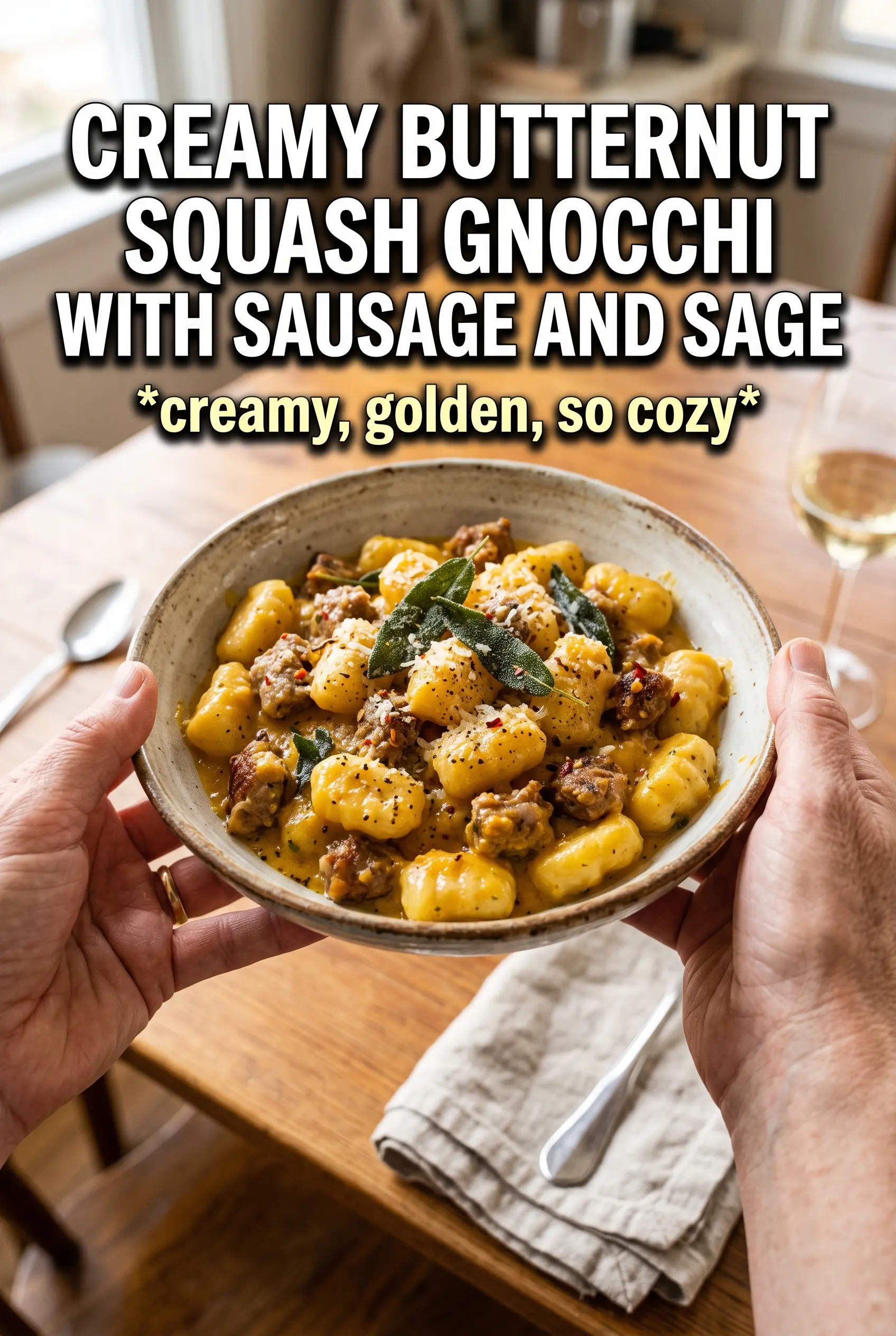
Creamy Butternut Squash Gnocchi With Sausage And Sage
Ingredients
Equipment
Method
- Heat a large skillet over medium-high heat, then brown the Italian sausage until cooked through, about 6–8 minutes. Drain off excess fat and set the sausage aside.
- In the same skillet, melt the unsalted butter over medium heat, then fry the fresh sage leaves until crisp and fragrant, about 30–60 seconds per side. Remove to a paper towel-lined plate and set aside.
- Add the minced garlic to the skillet and sauté for 1 minute. Stir in the butternut squash puree and heavy cream, then bring to a gentle simmer.
- Add the grated parmesan, nutmeg, and red pepper flakes, then simmer for 5 minutes, stirring often, until smooth and creamy. Keep the heat at a steady low simmer so it doesn’t separate.
- Cook the potato gnocchi according to the package instructions, then add the cooked gnocchi directly to the sauce. Toss to coat so the sauce clings to the gnocchi.
- Return the sausage to the skillet and toss everything together until hot and evenly distributed. Season with salt and pepper to taste.
- Top with crispy sage leaves and extra parmesan before serving.