Creamy butternut squash pasta gets its comfort-food pull from a sauce that tastes rich without feeling heavy, and this version earns its spot because the squash turns silky instead of muddy. The sausage brings enough salt and spice to keep every bite interesting, while the spinach folds in at the end so the pasta still feels fresh and balanced. It’s the kind of dinner that looks like you worked longer than you did.
What makes this one work is the order. Browning the sausage first leaves behind flavor in the pan, and that same pan becomes the base for the onion, garlic, and squash sauce. The pasta water matters here too; it loosens the sauce just enough to coat the noodles instead of sitting on top of them. Parmesan is the last piece that pulls everything together, so the sauce stays smooth instead of grainy.
Below you’ll find the small details that keep the sauce creamy, the best swaps if you need them, and the one reheating trick that keeps the leftovers from drying out.
The sauce turned out silky and clung to the rigatoni instead of pooling at the bottom. I loved that the spinach wilted right into the pasta and the sausage kept every bite from tasting too sweet.
Save this creamy butternut squash pasta with sausage and spinach for a cozy skillet dinner with a velvety sauce and plenty of savory parmesan flavor.
The Trick Is Keeping the Squash Sauce Creamy, Not Gluey
Butternut squash puree can go from silky to thick and pasty fast if it’s cooked too hard or left too reduced before the pasta goes in. The fix is simple: build the sauce gently, then use the pasta water as your adjustment tool at the end. That starchy water helps the sauce cling to the noodles and keeps the cream from feeling heavy or separate.
The other place this dish can stumble is the cheese. If the heat is too high when the parmesan goes in, it can turn gritty instead of melting smoothly. Pull the pan back to a low simmer, stir until the sauce looks glossy, and only then add the pasta. That small pause is what gives you a restaurant-style finish without any fuss.
What Each Ingredient Is Actually Doing In This Dish
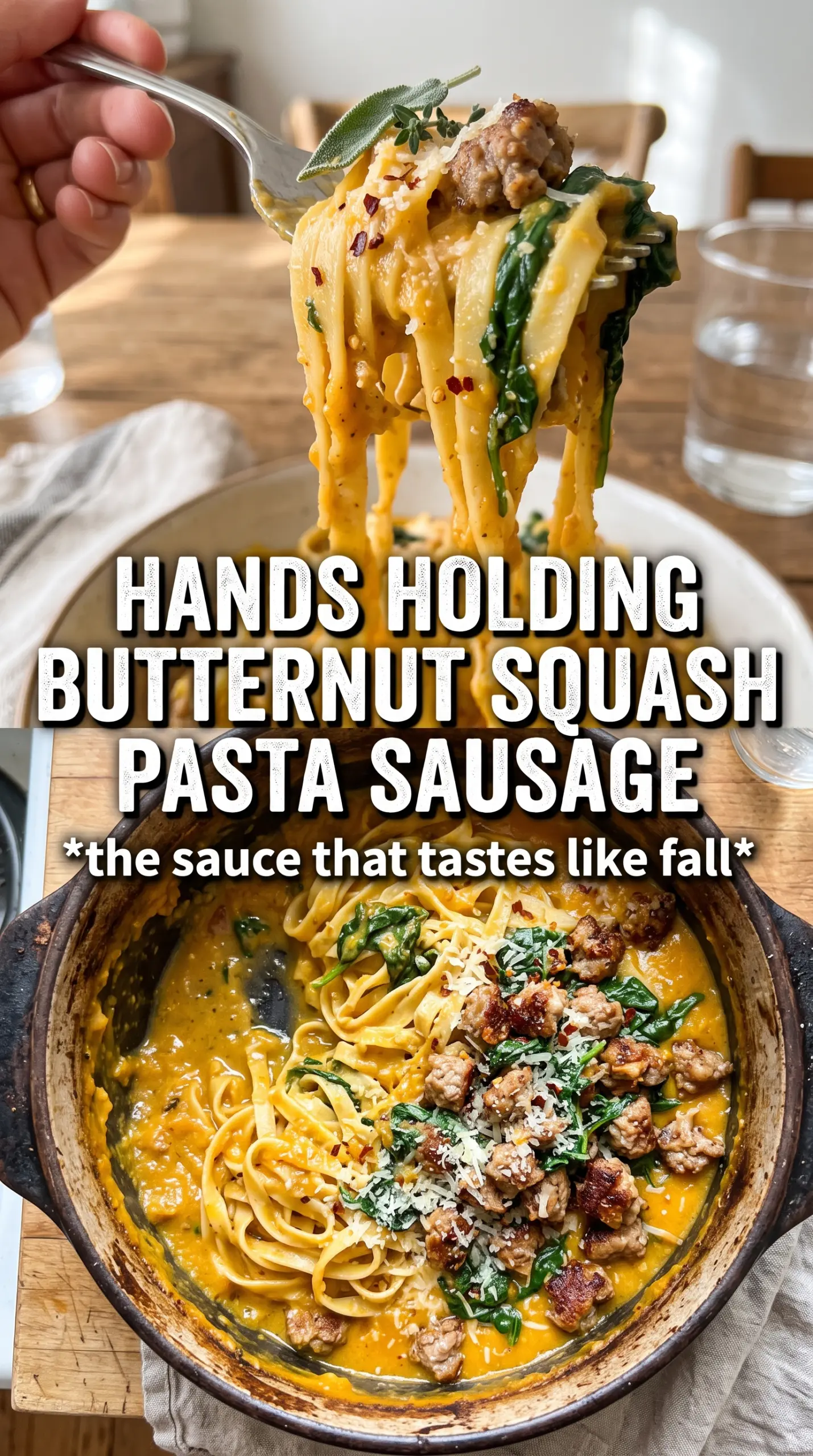
- Butternut squash puree — This is the base of the sauce, so use a smooth puree with no big stringy bits. Homemade or canned both work, but it needs to be thick enough to coat a spoon without being stiff. If your puree seems watery, simmer it for a minute or two before adding the cream.
- Italian sausage — This is where the depth comes from. Mild sausage gives you a softer, rounder sauce; hot sausage adds enough heat that you can ease up on the red pepper flakes. If you’re using turkey sausage, keep an eye on the pan because it dries out faster than pork.
- Heavy cream — Cream softens the squash and gives the sauce its plush texture. Half-and-half can work in a pinch, but the sauce will be thinner and a little less stable when you add the cheese. Use the real cream if you want the smoothest result.
- Parmesan — Grate it fresh if you can. Pre-grated cheese often has anti-caking starches that can make the sauce less smooth. Stir it in off a boil so it melts into the sauce instead of clumping.
- Pasta cooking water — Don’t skip it. It’s what helps the sauce loosen without getting watered down. Start with a splash, toss, and only add more if the pasta still looks tight or dry.
- Baby spinach — Add it at the very end so it wilts in the heat of the pasta and sauce. If it goes in too early, it disappears into a dull green tangle and loses its fresh bite.
Building The Pan Sauce In The Right Order
Brown The Sausage First
Cook the sausage in a large skillet until the pieces are deeply browned and no longer pink. Those browned bits stuck to the bottom are part of the sauce, so don’t rush this stage or crowd the pan too much. If there’s a lot of grease, drain off the excess before you move on; too much fat can make the final sauce slick instead of creamy.
Soften The Onion, Then Wake Up The Garlic
Use the same skillet so the onion picks up all the sausage flavor left behind. Cook it until it turns soft and translucent, not browned, then add the garlic and Italian seasoning for just long enough to smell fragrant. If the garlic starts to color fast, the pan is too hot and it can turn bitter before the sauce even starts.
Turn The Squash And Cream Into Sauce
Stir in the squash puree and cream and keep the heat low enough that the mixture simmers gently. You want the sauce to look smooth and thickened, with tiny bubbles around the edge rather than a rolling boil. Add the nutmeg and red pepper flakes here so they bloom into the sauce instead of tasting sharp at the end.
Finish With Pasta, Water, And Spinach
Add the drained pasta and a little reserved pasta water, then toss until every piece is coated. The spinach goes in last and should wilt from the heat of the pan in a minute or two. Return the sausage, taste for salt and pepper, and stop as soon as everything looks glossy and evenly coated; overcooking at this point is how the sauce tightens up and turns stodgy.
How To Adapt This For A Different Pantry
Make It Gluten-Free Without Changing The Sauce
Swap in your favorite gluten-free rigatoni or penne and cook it just to al dente. Gluten-free pasta tends to soften fast after it’s drained, so toss it with the sauce right away and keep a little extra pasta water nearby in case it tightens up.
Skip The Meat And Keep The Comfort
Use plant-based sausage or leave the sausage out and add sautéed mushrooms for a deeper, more savory bite. Without the sausage, the sauce tastes a little sweeter and lighter, so add an extra pinch of salt and a bit more red pepper flakes to keep the flavor balanced.
Use Half-And-Half For A Lighter Finish
Half-and-half will work if that’s what you have, but the sauce won’t be as plush and it may need a little extra pasta water to stay silky. Keep the heat low and avoid boiling after the cheese goes in, since a thinner dairy base can separate more easily.
Storage And Reheating
- Refrigerator: Store in an airtight container for up to 4 days. The sauce thickens as it sits, so it may look a little tight straight from the fridge.
- Freezer: This freezes, but the cream sauce softens a bit after thawing. Freeze in portions for up to 2 months and thaw overnight in the refrigerator for the best texture.
- Reheating: Warm it gently in a skillet over low heat with a splash of water, milk, or broth. High heat is the fastest way to make the sauce separate, and the pasta will go from just tender to mushy before you notice.
Answers To The Questions Worth Asking
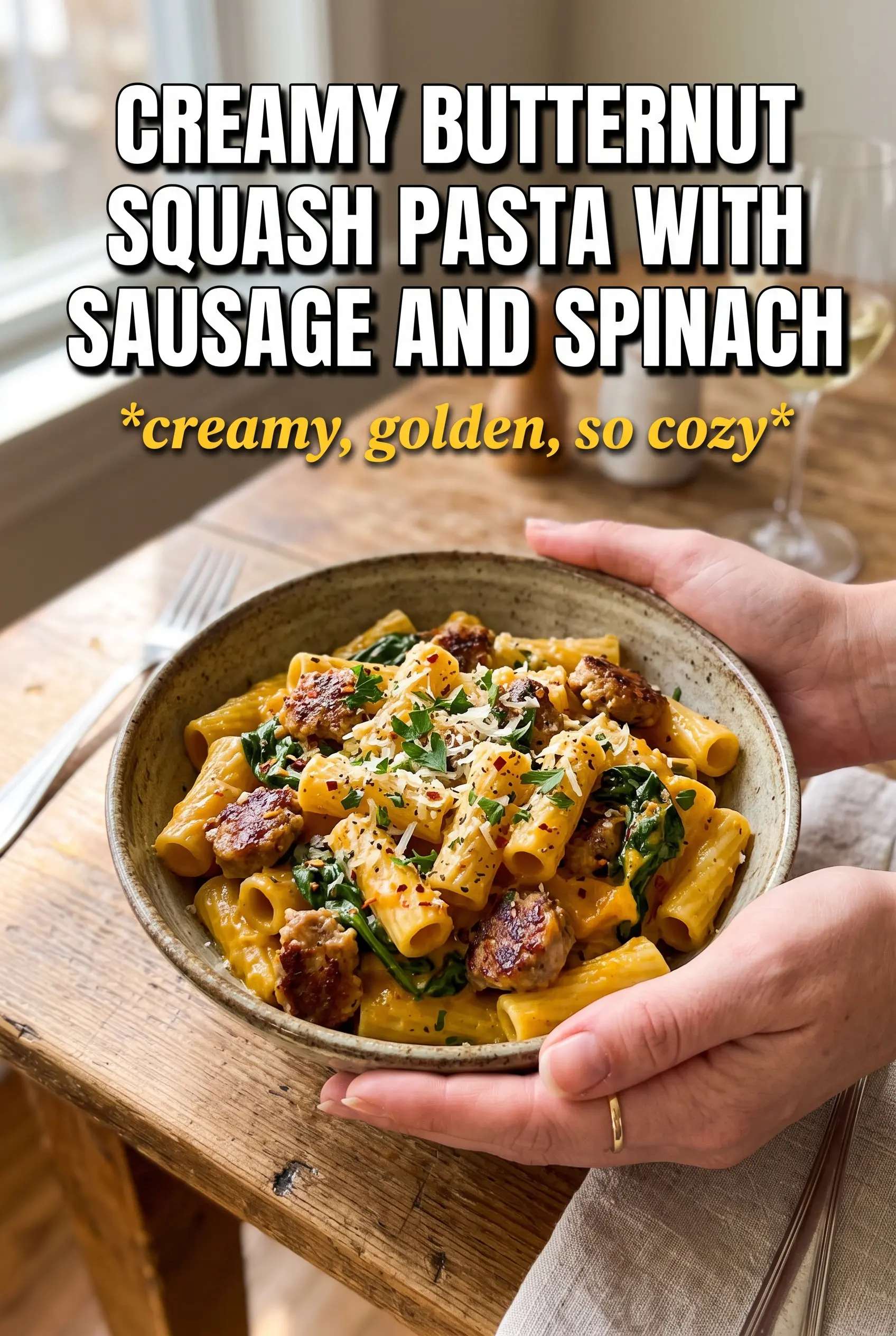
Creamy Butternut Squash Pasta With Sausage And Spinach
Ingredients
Equipment
Method
- Bring a large pot of salted water to a boil, then cook rigatoni or penne until al dente, 8 to 10 minutes with frequent stirring. Visually check for tender pasta with a firm center.
- Before draining, reserve 1/2 cup pasta cooking water, then drain the pasta. Make sure you have the water measured before the colander goes in.
- Brown Italian sausage in a large skillet over medium-high heat until crumbled and browned, 8 to 10 minutes. You should see rendered fat and fully browned bits.
- Drain the excess fat from the skillet, then set the sausage aside. Keep the browned sausage ready to return to the pan.
- Sauté onion in the same skillet over medium heat until softened, about 4 minutes. Look for translucent edges and gentle browning.
- Add garlic and Italian seasoning and cook until fragrant, about 2 minutes. Stop when the garlic smells strong and turns light golden.
- Add butternut squash puree and heavy cream, then stir to combine and evenly color the sauce. Scrape the bottom so nothing sticks.
- Stir in nutmeg and red pepper flakes, then simmer the sauce until slightly thickened, 5 minutes. You should see small bubbles across the surface.
- Reduce heat to low, add parmesan, and stir until smooth, 2 to 3 minutes. The sauce should look glossy with no grainy cheese bits.
- Toss the cooked pasta into the sauce along with reserved pasta cooking water, stirring to coat. The pasta should look evenly slicked with cream sauce.
- Add baby spinach and toss just until wilted, 1 to 2 minutes. Stop when the spinach turns bright green and no longer looks raw.
- Return browned sausage to the pan and stir to distribute throughout. Season with salt and pepper to taste, then serve immediately.