Rigatoni coated in ranch cream sauce has a way of disappearing fast, especially when the sauce clings to every tube and catches bits of shredded chicken, sharp cheddar, and crisp bacon in the same bite. This version stays rich without turning heavy or greasy, and the sauce settles into a thick, glossy coating instead of pooling at the bottom of the bowl.
The trick is keeping the sauce on a gentle simmer and letting the ranch seasoning bloom before the cheese goes in. Heavy cream and chicken broth give you enough body and flavor without making the dish feel one-note, while a little reserved pasta water helps the sauce relax if it tightens up after the cheese melts. Using a sturdy pasta like rigatoni or penne matters here because those ridges and hollow centers hold onto the sauce better than long noodles.
Below, I’ll show you where this dish usually goes sideways, which swaps actually work, and how to keep leftovers creamy instead of dry.
The sauce clung to the rigatoni perfectly and didn’t break when I added the cheese. My husband went back for seconds before I even sat down.
Creamy Chicken Bacon Ranch Pasta belongs on your save list for the nights when you want a thick, cheesy sauce and zero fuss.
The Sauce Breaks When the Heat Is Too High
This is the kind of pasta that turns grainy when the cheese gets rushed. The cream and broth need time to come together first, and the cheese should melt in over a low flame so it blends into the sauce instead of tightening into oily clumps. If the pot is bubbling hard when the cheddar goes in, pull it off the heat for a minute before stirring.
The pasta matters too. Rigatoni and penne hold the sauce inside and around the edges, which gives you a better bite than a noodle that slips clean. Reserving a little pasta water before draining gives you insurance at the end; that starchy water helps the sauce stay silky if it thickens too much once the cheese and chicken go back in.
What Each Ingredient Is Actually Doing in This Dish

- Rigatoni or penne — Short pasta with ridges gives the sauce something to grab. Use a sturdy shape here; delicate pasta gets lost in a heavy cream sauce and won’t hold up as well when you toss everything together.
- Heavy cream — This is the body of the sauce, and there isn’t a substitute that behaves quite the same. Half-and-half can work in a pinch, but the sauce will be thinner and less luxurious, so let it reduce a little longer before adding cheese.
- Chicken broth — It keeps the sauce from tasting flat and gives the cream some savory backbone. Store-bought broth is fine, but use one you’d actually sip; a weak broth makes the whole dish taste muted.
- Ranch seasoning — This is where the ranch flavor comes from without having to build it from scratch. Add it after the cream starts to simmer so the herbs and garlic have a chance to hydrate and spread through the sauce instead of clumping in one spot.
- Sharp cheddar and parmesan — Cheddar gives the sauce its melt and body, while parmesan adds salt and a little edge. Shred the cheddar yourself if you can, because pre-shredded cheese often carries anti-caking starches that make the sauce less smooth.
- Bacon — Save it for the end so it stays crisp. If you stir it into the hot sauce too early, the texture disappears and the bacon fat bleeds into the cream instead of giving you those salty crunchy bites on top.
- Shredded chicken — Rotisserie chicken makes this fast, and leftover roasted chicken works just as well. Chop or shred it into small pieces so it spreads through the pasta instead of sitting in big dry chunks.
Building the Pasta So the Sauce Stays Thick and Creamy
Cooking the Pasta to a True Al Dente
Salt the boiling water well, then cook the rigatoni until it still has a little firmness in the center. It will finish cooking in the sauce, and if you take it all the way to soft in the pot, it turns mushy by the time dinner hits the table. Before draining, scoop out at least half a cup of pasta water; that small step saves you if the sauce gets too tight later.
Starting the Sauce in the Same Pot
After the pasta comes out, use the same pot for the sauce. The little bit of starch left behind helps everything cling, and the garlic picks up flavor from the residual warmth without burning. Keep the heat at medium and watch the garlic closely; if it turns brown, it will taste bitter and you’ll notice it in every bite.
Melting the Cheese Without Breaking It
Once the cream and broth have simmered and the ranch seasoning has thickened the base a little, add the cheese in handfuls and stir until each addition melts before adding more. This keeps the sauce smooth instead of stringy or oily. If it starts looking greasy, the heat is too high, so move the pot off the burner and stir until it comes back together.
Finishing with Chicken and Bacon
Toss the drained pasta and shredded chicken into the sauce and coat everything thoroughly. Add a splash of reserved pasta water only if the sauce feels too thick to move across the pot; you want it creamy and clingy, not soupy. Bacon goes on last, along with the chives, so the top stays crisp and fresh against the rich sauce.
Three Ways to Make This Work for Your Table
Make It Gluten-Free
Use your favorite gluten-free short pasta and cook it just to al dente, because it can turn soft faster than regular wheat pasta once it sits in the hot sauce. The sauce itself is naturally gluten-free as long as your ranch seasoning and broth are certified gluten-free.
Skip the Bacon Without Losing the Savory Edge
If you want a pork-free version, leave out the bacon and add an extra handful of parmesan plus a pinch of smoked paprika. You won’t get the same crisp finish, but the dish still lands with enough salt and depth to stand on its own.
Lighten It Slightly Without Ruining the Sauce
You can swap part of the heavy cream for half-and-half, but don’t replace all of it. The sauce will be thinner and needs a longer simmer before the cheese goes in, and it won’t have quite the same glossy finish. If you go this route, keep the heat low and add the pasta water only at the very end.
Use Rotisserie Chicken for Speed
Rotisserie chicken is the easiest shortcut here, and it fits the sauce well because it’s already seasoned and tender. Pull it into small shreds and add it at the end so it warms through without drying out.
Storage and Reheating
- Refrigerator: Store leftovers in an airtight container for up to 4 days. The sauce will thicken as it chills, which is normal.
- Freezer: It can be frozen, but the cream sauce may separate a little after thawing. For the best texture, freeze only if you need to and expect a softer sauce when it comes back up to temperature.
- Reheating: Warm it gently on the stove or in the microwave with a splash of broth or milk. High heat dries out the chicken and makes the cheese sauce look broken before it has a chance to loosen.
Answers to the Questions Worth Asking
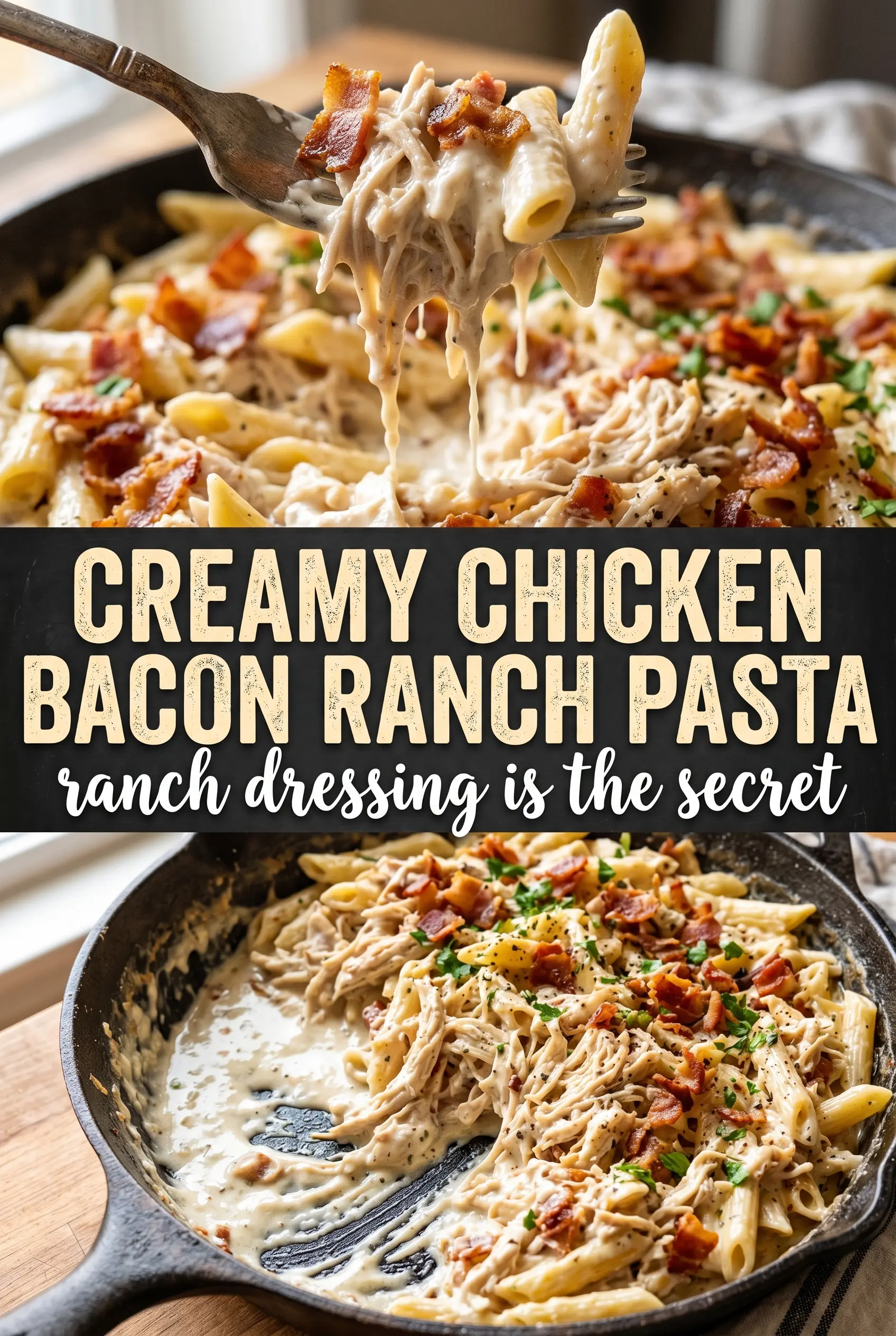
Creamy Chicken Bacon Ranch Pasta
Ingredients
Equipment
Method
- Bring a pot of salted water to a boil and cook the rigatoni or penne until al dente. Reserve 1/2 cup pasta water, then drain the pasta.
- In the same pot over medium heat, sauté the minced garlic for 1 minute. Add the heavy cream and chicken broth and bring the mixture to a simmer.
- Stir in the ranch seasoning mix and simmer for 3–4 minutes until slightly thickened. Keep the heat at a gentle simmer so the sauce stays smooth.
- Add the shredded sharp cheddar and grated parmesan and stir until fully melted into the sauce. Adjust with salt and black pepper to taste if needed.
- Return the drained pasta to the pot with the shredded chicken and toss to coat. Add reserved pasta water as needed to loosen the sauce and fully coat the pasta.
- Top with the crumbled bacon and fresh chives, then serve immediately. For extra crunch, add a few more bacon crumbles over the top right before eating.