Golden seared chicken breasts in a garlic Parmesan cream sauce hit that sweet spot between comfort food and practical weeknight cooking. The chicken stays juicy, the sauce turns glossy and spoon-coating, and the whole skillet tastes like it took more effort than it did.
The trick is building flavor in layers. Season the chicken well before it ever touches the pan, get a real sear on both sides, then use the same skillet for the sauce so every browned bit melts into the cream. Parmesan goes in after the liquid has had a minute to settle, which keeps the sauce smooth instead of grainy. A little white wine adds brightness, but broth works when that’s what you have on hand.
Below you’ll find the simple timing that keeps the chicken tender, the best way to avoid a broken cream sauce, and a few swaps that still give you a rich, garlicky result.
The sauce thickened up perfectly and the chicken stayed juicy. I used broth instead of wine and it still had that rich garlic Parmesan flavor my husband kept going back for.
Save this creamy garlic Parmesan chicken for the nights when you want a rich skillet dinner with a sauce that actually clings to every bite.
The Sear Is What Keeps the Sauce Worth Eating
The biggest mistake with creamy skillet chicken is rushing the chicken and then trying to save it with the sauce. If the pan never gets hot enough to brown the meat, you lose the deep savory base that makes this dish taste layered instead of flat. A good sear gives you color on the outside and leaves the center juicy, which matters because the chicken finishes in the sauce, not under high heat.
Don’t crowd the pan. Each breast needs room or it will steam, and steaming is how you end up with pale chicken and watery pan juices. If your skillet is small, cook in batches and keep the browned chicken on a plate while you build the sauce.
What Each Ingredient Is Actually Doing in This Dish
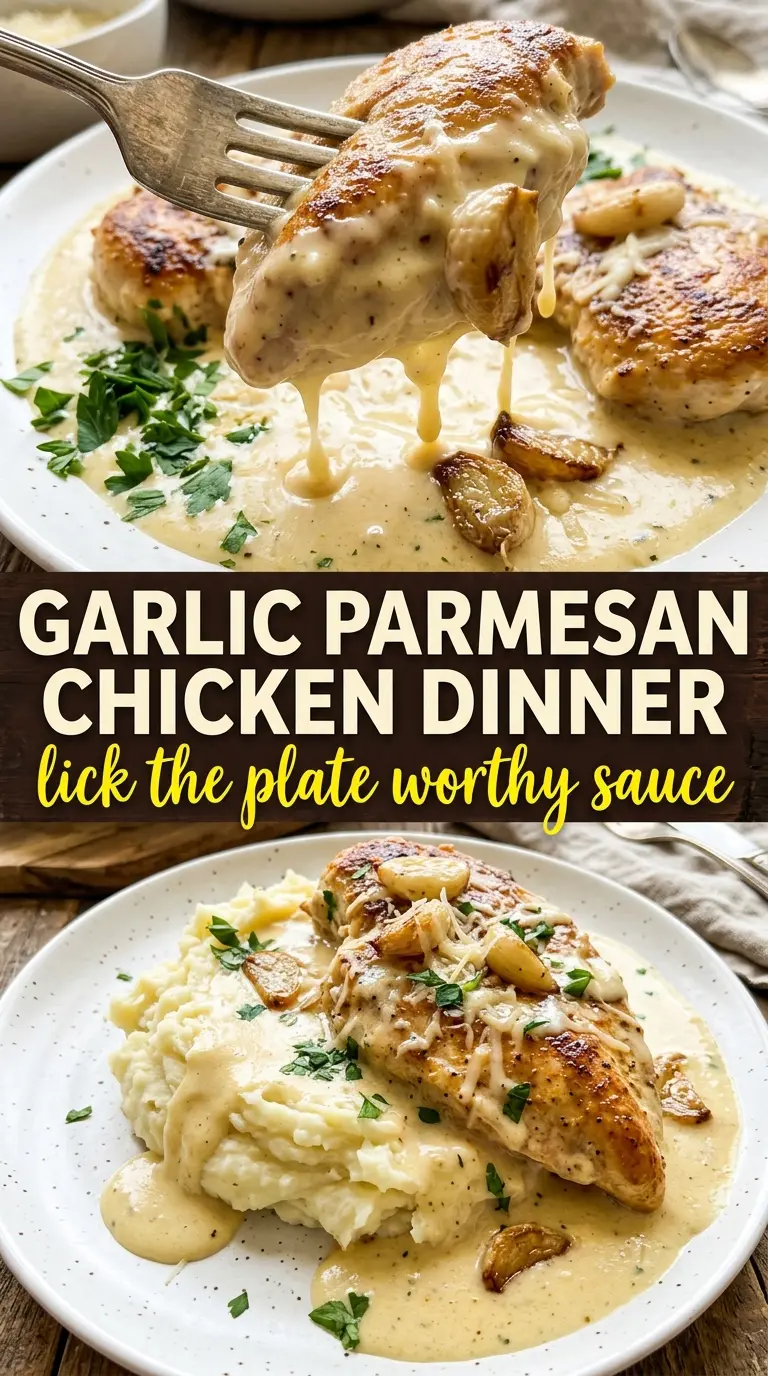
- Chicken breasts — Boneless, skinless breasts work well here because they cook fast and slice cleanly. If yours are thick on one end, pound them to an even thickness so they finish at the same time instead of drying out at the edges.
- Heavy cream — This is what gives the sauce its body and velvet texture. Half-and-half will work in a pinch, but the sauce will be thinner and more likely to reduce too far before the chicken returns to the pan.
- Freshly grated Parmesan — Fresh cheese melts smoothly and gives you that salty, nutty finish without a gritty texture. Pre-grated Parmesan often has anti-caking agents that can make the sauce feel sandy or keep it from thickening properly.
- White wine or chicken broth — Wine adds a sharper edge that wakes up the cream, while broth gives you a rounder, more purely savory sauce. Use broth if you don’t keep wine around, but don’t skip the deglazing step; that’s where a lot of the flavor comes from.
- Garlic — Six cloves sounds bold, and it should. Garlic softens in butter and picks up the browned bits from the pan, which keeps it sweet instead of harsh.
Building the Sauce So It Stays Smooth and Glossy
Season and Sear the Chicken
Coat the chicken well with salt, pepper, garlic powder, and smoked paprika, then lay it into hot olive oil. You should hear an immediate, steady sizzle. If the pan is too cool, the chicken will release liquid before it browns and you’ll lose the foundation for the sauce. Cook until each side is golden and the chicken reaches 165°F at the thickest point, then move it to a plate.
Wake Up the Garlic and Browned Bits
Add the butter and garlic to the same skillet and stir for about a minute, just until fragrant. Garlic burns fast, so keep it moving and lower the heat if the pan looks too hot. Pour in the wine or broth and scrape the bottom of the pan hard enough to lift every browned bit; that is where the sauce gets its depth.
Let the Cream Reduce Before the Cheese Goes In
Stir in the cream, chicken broth, Parmesan, and Italian seasoning, then keep the sauce at a gentle simmer. You want small bubbles around the edges, not a rolling boil. If the heat is too high when the cheese goes in, the sauce can turn grainy or separate. Give it 4 to 5 minutes, and watch for a sauce that coats the spoon instead of running off in a thin sheet.
Finish the Chicken in the Sauce
Slide the chicken back into the skillet and spoon the sauce over the top. Let it warm through for a couple of minutes so the juices settle back into the meat. The sauce should cling in thick streaks, and the thyme and parsley should look fresh against the rich cream color. Serve it right away while the sauce is at its glossiest.
How to Adapt This for a Lighter Night or a Bigger Pan
Use chicken thighs for a richer result
Boneless thighs bring more fat and a deeper chicken flavor, and they’re more forgiving if you leave them in the pan a minute too long. They do take a little longer to cook through, so check for 165°F and give them enough time to brown before the sauce goes in.
Make it gluten-free without changing the texture
This recipe is naturally gluten-free as written, as long as your broth is gluten-free. That makes the sauce easy to keep exactly the same, with no flour slurry or extra thickener needed.
Swap the cream for a lighter sauce
Half-and-half will work if you want a lighter skillet, but the sauce won’t get quite as thick or luxurious. Keep the heat low and let it reduce a little longer so it still coats the chicken instead of pooling in the pan.
Double the sauce for serving over pasta or mashed potatoes
If you want enough sauce to spoon over sides, increase the cream and broth by about half and keep the Parmesan proportionally higher. The extra liquid needs a few more minutes to reduce, but the payoff is a sauce that can coat both the chicken and whatever you serve under it.
Storage and Reheating
- Refrigerator: Store leftovers in an airtight container for up to 3 days. The sauce will thicken as it chills.
- Freezer: Cream sauces can separate after freezing, so this dish is best eaten fresh. If you freeze it anyway, thaw it slowly in the fridge and expect the texture to be a little less smooth.
- Reheating: Warm gently in a covered skillet over low heat with a splash of broth or cream. High heat is what breaks the sauce, so don’t blast it in the microwave unless you’re okay with a grainier texture.
Answers to the Questions Worth Asking
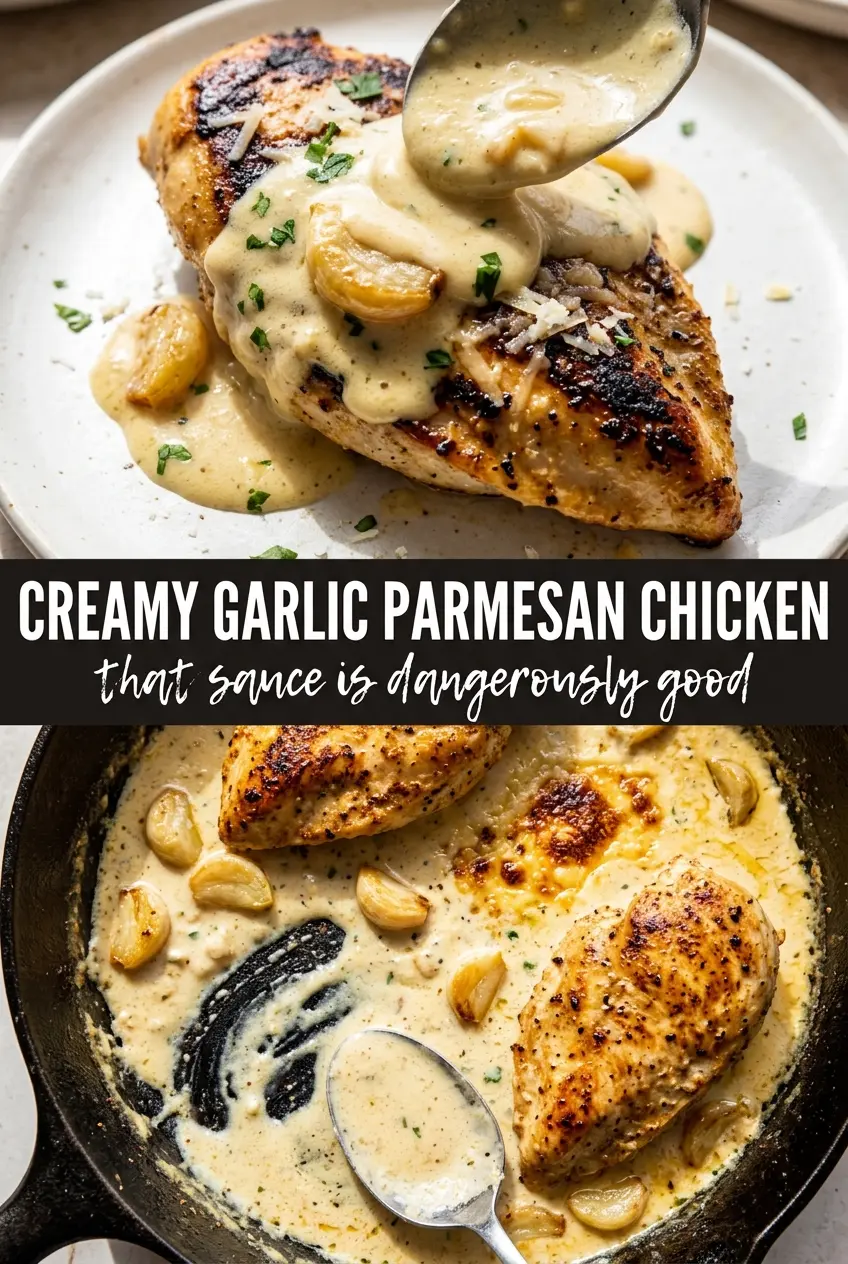
Creamy Garlic Parmesan Chicken
Ingredients
Equipment
Method
- Season the chicken breasts generously on both sides with salt, pepper, garlic powder, and smoked paprika.
- Heat the olive oil in a large skillet over medium-high heat until shimmering, then sear the chicken for 5-6 minutes per side until golden.
- Continue cooking until the chicken reaches an internal temperature of 165°F, then remove to a plate.
- Add the butter and minced garlic to the same pan and cook for 1 minute until fragrant, watching that the garlic doesn’t brown.
- Deglaze with the white wine and cook for 2 minutes, scraping up the browned bits from the skillet.
- Stir in the heavy cream, chicken broth, Parmesan cheese, and Italian seasoning, then simmer for 4-5 minutes until the sauce is thick and glossy.
- Return the chicken to the pan and spoon the sauce over each breast so it coats the tops and sides.
- Garnish with fresh thyme and parsley and serve immediately.