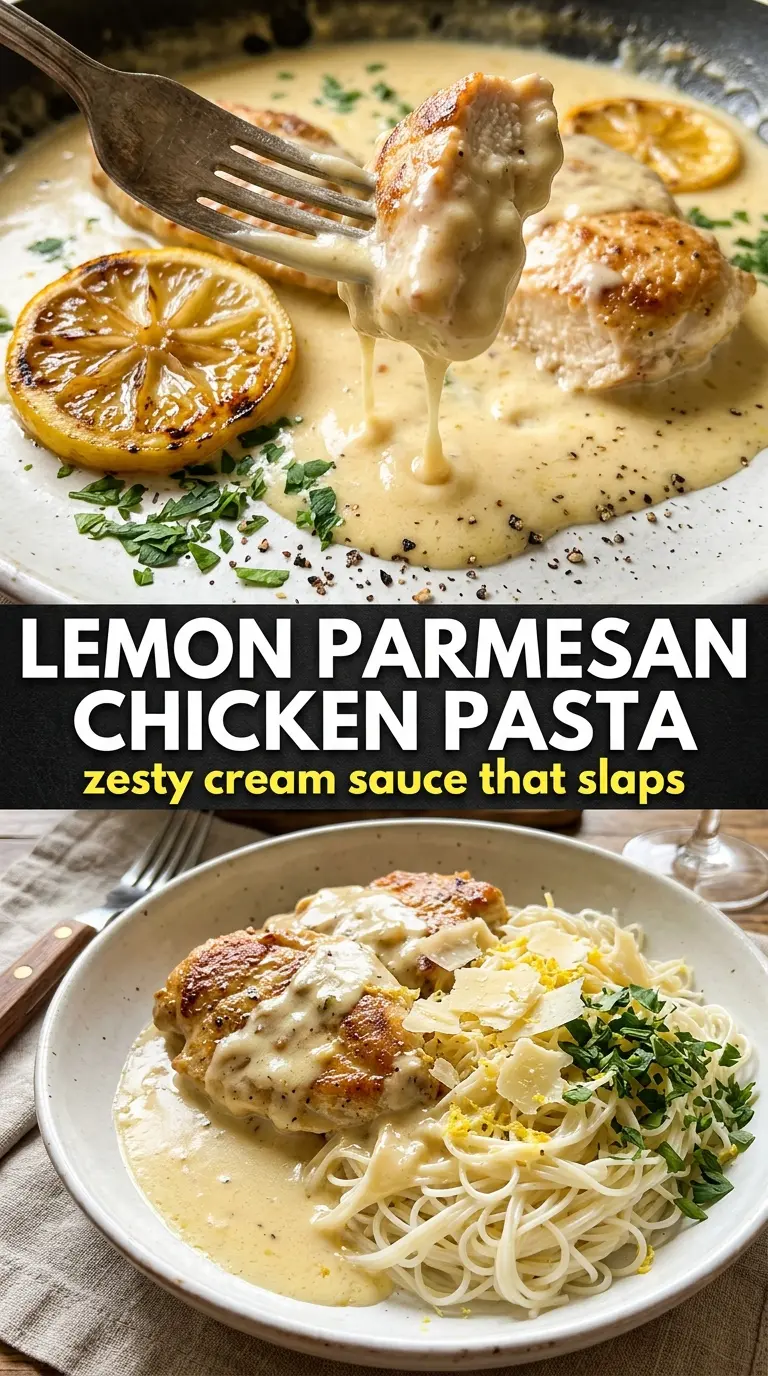
Golden seared chicken breasts in a silky lemon Parmesan cream sauce are the kind of dinner that lands on the table looking far fancier than the effort behind it. The chicken stays juicy because it gets a hard sear first, then finishes gently in the sauce instead of drying out in the pan. The sauce carries enough Parmesan to feel rich, but the lemon keeps it from tasting heavy or flat.
What makes this version work is the order. You build flavor in the skillet with the browned bits from the chicken, loosen them with a little wine or broth, then add the cream and cheese over a lower simmer so the sauce turns smooth instead of grainy. Fresh lemon juice goes in after the cream has started to thicken, which keeps the acidity bright without curdling the sauce.
Below, you’ll find the small details that matter most: how to get a good sear without overcooking the chicken, why freshly grated Parmesan behaves better than the pre-shredded kind, and what to change if you want to make it lighter or dairy-free.
The sauce thickened up beautifully and stayed silky even after I put the chicken back in. The lemon at the end kept it from feeling heavy, and my husband went back for seconds.
Save this creamy Parmesan lemon chicken for the nights when you want a glossy skillet dinner with bright lemon and a sauce that clings to every bite.
The Secret to Keeping the Sauce Smooth After the Lemon Goes In
The part that trips people up here is the acid. Lemon is what makes the sauce taste alive, but if it goes in too early or the pan is too hot, it can make the cream look split or slightly curdled. The fix is simple: let the cream and Parmesan take the lead first, then add the lemon juice once the sauce has started to thicken.
Freshly grated Parmesan matters because it melts into the cream instead of sitting there like sandy flecks. Pre-shredded cheese often has anti-caking starches that can make the sauce feel grainy. You’ll still get a good dinner with it, but the texture won’t be as smooth or glossy.
- Chicken breasts — Boneless, skinless breasts give you that clean, sliceable finish and they brown well in a skillet. If yours are thick on one end, pound them to an even thickness so the thinner part doesn’t overcook before the center is done.
- Dry white wine or chicken broth — The liquid is there to pull the browned bits off the pan and start the sauce with flavor. Wine gives a little extra depth, but broth works fine if that’s what you keep on hand.
- Heavy cream — This is what makes the sauce stable and rich. Half-and-half can work in a pinch, but it won’t thicken the same way and it’s more likely to break if you boil it hard.
- Freshly grated Parmesan — This is one ingredient worth buying as a wedge and grating yourself. It melts into the sauce more smoothly and gives you the salty, nutty backbone that makes the dish taste finished.
- Lemon juice and zest — The juice brightens the sauce, while the zest gives you the lemon aroma without extra acidity. Use both if you want the lemon to read clearly; the juice alone can taste sharper and flatter.
What Each Ingredient Is Actually Doing in This Recipe
- Primary ingredient (the star) — Quality matters most. Choose the best you can find.
- Cooking medium (oil, butter, or broth) — This carries flavors and prevents dryness.
- Seasonings (salt, pepper, spices, herbs) — Layer flavors so nothing overpowers. Build depth gradually.
- Aromatics (garlic, onion, herbs) — Cook with fat to bloom flavors. Become the foundation.
- Supporting ingredients — Complement the main ingredient without overpowering it.
- Sauce or liquid (if applicable) — Brings flavors together. Balance richness with acid.
- Acid (lemon, vinegar, wine, or other) — Brightens and prevents flat-tasting results.
- Final finish (garnish, glaze, or sauce) — Prevents one-dimensional taste and adds visual appeal.
Getting the Chicken Browned Before the Sauce Takes Over
Season the Chicken Generously
Coat both sides of the chicken with salt, pepper, garlic powder, and Italian seasoning before it hits the skillet. That layer does more than flavor the meat; it helps the surface brown instead of steaming. If the chicken is damp, pat it dry first or you’ll fight for color the whole time.
Sear Until the Edges Turn Deep Gold
Heat the olive oil over medium-high and lay the chicken in the pan without crowding it. You want a steady sizzle the moment it touches the oil. Let it cook undisturbed until the underside has a deep golden crust and releases from the pan cleanly, then flip and finish the second side. If the chicken sticks hard when you try to turn it, it needs another minute.
Build the Sauce in the Same Skillet
Take the chicken out once it reaches 165°F and use the same pan for the garlic and deglazing liquid. Those browned bits on the bottom are the best part of the sauce, and you don’t want to wash them away. Keep the garlic moving for just 30 seconds; if it browns too far, it turns bitter and that bitterness carries through the cream.
Finish Low and Slow
Pour in the cream, then stir in the Parmesan, lemon juice, and zest over a gentle simmer. The sauce should thicken enough to coat a spoon in 4 to 5 minutes, not boil into a tight paste. Pull the pan off the heat before stirring in the butter so it melts into a glossy finish instead of separating.
Make It Without Wine
Chicken broth stands in cleanly for the wine and still lifts the browned bits from the pan. You lose a little of the sharp, savory depth that wine brings, but the lemon and Parmesan still carry the dish.
Lighter Cream Sauce
You can swap part of the heavy cream for evaporated milk if you want something a little lighter. It won’t be quite as lush, and you need to keep the heat gentle, but it still gives you a smooth sauce if you don’t boil it.
Dairy-Free Version
Use full-fat coconut cream and a dairy-free Parmesan-style substitute. The sauce will taste a little less sharp and more mellow, but the texture stays creamy if you keep the heat low and add the lemon at the end.
Storage and Reheating
- Refrigerator: Store leftovers in an airtight container for up to 3 days. The sauce thickens as it chills, so expect it to look a little tighter the next day.
- Freezer: I don’t recommend freezing this one. Cream sauces tend to separate after thawing, and the lemon makes that texture shift even more noticeable.
- Reheating: Warm it gently in a skillet over low heat with a splash of broth or cream. High heat is the fastest way to break the sauce, especially once the Parmesan is already in it.
Answers to the Questions Worth Asking
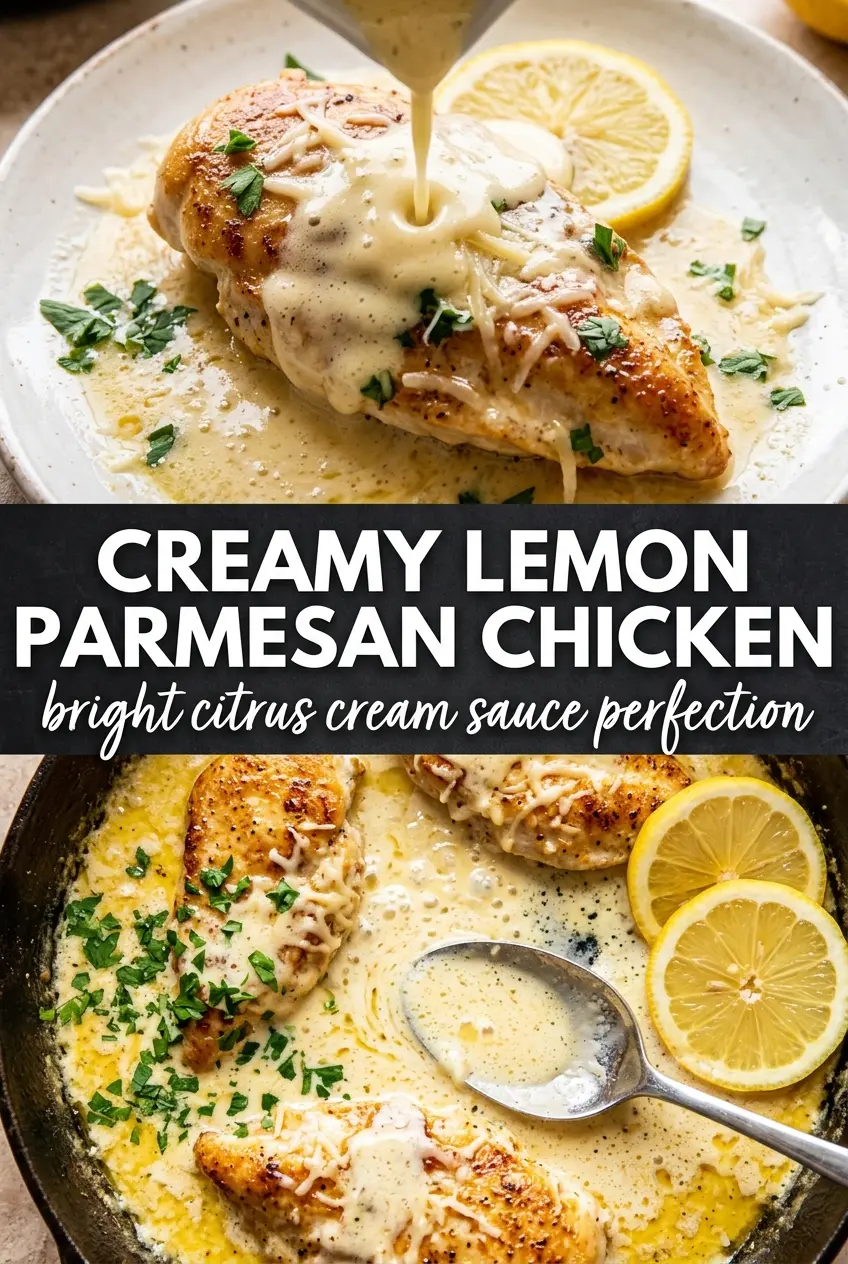
Creamy Parmesan Lemon Chicken
Ingredients
Equipment
Method
- Season the chicken breasts generously on both sides with salt, pepper, garlic powder, and Italian seasoning, making sure the surface looks evenly coated.
- Heat the olive oil in a large skillet over medium-high heat, then sear the chicken for 5-6 minutes per side until golden; remove when the internal temperature reaches 165°F.
- Add the minced garlic and cook for 30 seconds, stirring until fragrant and lightly golden.
- Deglaze with the white wine (or chicken broth), then simmer for 2 minutes to reduce slightly and loosen browned bits.
- Stir in the heavy cream, Parmesan, lemon juice, and lemon zest, then simmer for 4-5 minutes until the sauce thickens and coats the back of a spoon.
- Swirl in the butter until melted and glossy, keeping the sauce at a gentle simmer.
- Return the chicken to the skillet and spoon the sauce over each breast so the tops are glossy and coated.
- Garnish with fresh parsley and lemon slices, then spoon a little extra sauce around the chicken before serving.