Golden chicken breasts in a glossy pepperoncini cream sauce earn their place on the dinner rotation fast. The chicken stays juicy, the sauce turns silky and tangy, and the whole skillet tastes like it took far more effort than it did.
The trick is in the layering. Searing the chicken first builds a deep savory base, then the pan gets deglazed with chicken broth and pepperoncini brine so every browned bit ends up in the sauce instead of stuck to the skillet. Heavy cream and parmesan do the finishing work, but they go in after the acidic part has had a chance to calm down, which keeps the sauce smooth instead of grainy.
Below you’ll find the small details that matter here: how much brine gives the sauce bite without overpowering it, when to pull the chicken so it stays tender, and what to serve underneath it when you want every bit of that sauce on the plate.
The sauce thickened beautifully and the pepperoncini brine gave it just enough tang without making it too sharp. I served it over mashed potatoes and my husband went back for seconds before I even sat down.
Save this creamy pepperoncini chicken skillet for the nights when you want a tangy, saucy dinner with one pan and almost no cleanup.
The Part That Keeps the Cream Sauce Smooth Instead of Grainy
Most cream sauces for skillet chicken break in the same place: the heat stays too high after the dairy goes in, or the acid gets dumped in without enough liquid to buffer it. Pepperoncini brine is bright and useful here, but it needs chicken broth to carry it before the cream shows up. That order matters more than people think.
Another thing that helps is leaving the chicken out of the sauce until the parmesan has melted cleanly. If you return it too early, the pan stays too hot and the cheese can seize into tiny specks instead of melting into the cream. A gentle simmer is enough. You want a sauce that coats the back of a spoon, not one that boils itself apart.
What Each Ingredient Is Doing in This Skillet
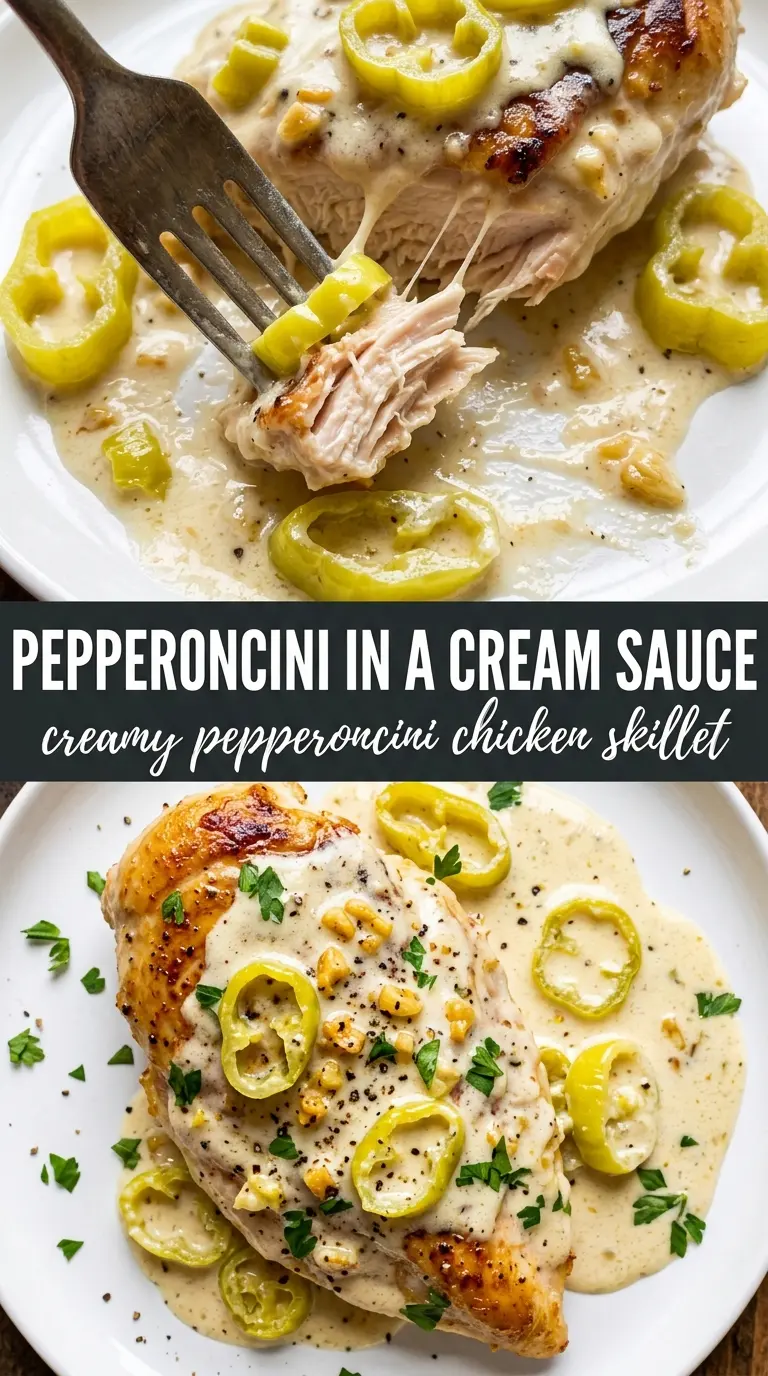
- Chicken breasts — Boneless, skinless breasts give you a clean base that soaks up the sauce well. If yours are thick on one end and thin on the other, pound them lightly so they cook at the same pace and don’t dry out before the center is done.
- Pepperoncini peppers and brine — The peppers bring the mild heat and tang, but the brine is what wakes up the sauce. Start with the listed amount and add more only after tasting, because too much can make the sauce sharp instead of balanced.
- Heavy cream — This is what gives the sauce its body and keeps the brine from tasting harsh. Half-and-half will work in a pinch, but it won’t thicken as confidently and is more likely to separate if you let the sauce boil.
- Parmesan — Freshly grated parmesan melts into the sauce much better than the pre-shredded stuff in a bag. The bagged version often has anti-caking agents that can leave the sauce a little sandy.
- Chicken broth — This stretches the sauce without thinning the flavor. Water won’t give you the same depth, so if broth is all you can swap, use a good one.
- Garlic and Italian seasoning — Garlic gives the sauce its savory backbone, and Italian seasoning rounds out the tang with herbs. The garlic only needs a minute; once it smells sweet and fragrant, move on before it browns.
- Butter and olive oil — Olive oil handles the high-heat sear, while butter adds a little richness when you build the sauce. Using both keeps the pan flavorful without burning the dairy at the start.
How to Build the Skillet So the Chicken Stays Juicy
Getting the Sear on the Chicken
Season the chicken generously and lay it into a hot skillet with the oil already shimmering. You want a deep golden crust that releases cleanly when it’s ready; if it sticks, give it another minute instead of forcing it. Don’t crowd the pan or the chicken will steam and turn pale instead of browning. Once both sides are seared, move it to a plate and let the center stay slightly underdone — it finishes in the sauce.
Turning the Fond Into the Sauce Base
After the chicken comes out, melt the butter and stir in the garlic just until fragrant. Then add the broth and pepperoncini brine and scrape up the browned bits from the bottom of the skillet. Those bits are the backbone of the sauce, and they dissolve best while the liquid is still thin. If the pan looks dry, add the liquid before the garlic has any chance to color too deeply.
Finishing With Cream and Parmesan
Once the broth mixture is simmering gently, add the cream and pepperoncini peppers and keep the heat low. A hard boil can make the sauce greasy or split, especially after the cheese goes in. Stir in the parmesan a little at a time until the sauce turns glossy and lightly thickened, then nestle the chicken back in and cook just until the center reaches done. The sauce should cling to the chicken and slowly slide off a spoon.
How to Adapt This Creamy Pepperoncini Chicken Skillet
Make It a Little Lighter
Use half-and-half instead of heavy cream if you want a lighter sauce, but keep the heat very gentle and don’t let it boil. The sauce will still taste good, just a little less rich and a touch thinner.
Make It Gluten-Free
The skillet itself is naturally gluten-free as written, as long as your chicken broth is certified gluten-free. Serve it over mashed potatoes, rice, or gluten-free pasta and you’ll still get every bit of the sauce.
Use Chicken Thighs Instead
Boneless thighs are a good swap if you want more richness and a little extra forgiveness on timing. They take a few minutes longer than breasts, but they stay tender and stand up well to the creamy sauce.
Turn Up the Pepperoncini Bite
If you want a brighter, tangier skillet, add another spoonful of brine at the end instead of early in the process. That keeps the flavor fresh instead of cooking it flat, and you can stop the moment it tastes right to you.
Storage and Reheating
- Refrigerator: Store leftovers in an airtight container for up to 3 days. The sauce will thicken as it chills, and the pepperoncini flavor gets a little more pronounced.
- Freezer: This one freezes, but the cream sauce can separate a bit after thawing. If you do freeze it, cool it completely first and thaw it slowly in the fridge.
- Reheating: Warm it in a covered skillet over low heat with a splash of broth or water. High heat is the fastest way to make the dairy break, so go slow and stir often until the sauce loosens again.
Questions I Get Asked About This Recipe

Creamy Pepperoncini Chicken Skillet
Ingredients
Equipment
Method
- Season the boneless skinless chicken breasts with salt and black pepper, then sear in olive oil in a large skillet over medium-high heat for 5–6 minutes per side until golden; remove and set aside.
- Keep the skillet hot so the fond browns well; after removing chicken, leave the browned bits in the pan.
- Melt butter in the same pan, add the minced garlic, and cook for 1 minute over medium heat until fragrant.
- Add chicken broth and 2 tablespoons pepperoncini brine, then stir to deglaze and loosen browned bits.
- Add heavy cream, Italian seasoning, and the whole pepperoncini peppers, then bring to a simmer over medium heat until bubbling around the edges.
- Stir in parmesan cheese until melted, creating a glossy sauce.
- Nestle the chicken breasts back into the sauce and cook for 5 minutes until the chicken is cooked through and the sauce thickens.
- Garnish with fresh parsley and serve the creamy pepperoncini chicken skillet over mashed potatoes, rice, or pasta.