Golden-seared gnocchi, creamy sauce, and a handful of spinach turn this Tuscan gnocchi into the kind of skillet dinner that disappears fast. The gnocchi soak up the sun-dried tomato cream without turning heavy, the sausage brings enough savory depth to carry the whole pan, and the parmesan melts into the sauce instead of sitting on top in little clumps. Every bite lands with that mix of soft, crisp, creamy, and salty that makes a one-pan dinner feel like more than the sum of its parts.
The trick is using the oil from the sun-dried tomatoes before anything else. That oil carries a lot of the tomato flavor, and it gives the garlic a head start without needing extra fat. I also like adding the gnocchi straight into the sauce after cooking them, because that last toss gives the sauce a chance to cling to the ridges instead of sliding off the pan.
Below, I’ve included the small timing details that keep the sauce smooth, plus a few swaps for making this work with different sausages or a lighter pantry.
The sauce turned out silky and coated every gnocchi without getting gloppy. I loved that the spinach wilted in at the end and the sausage stayed juicy.
Save this Tuscan gnocchi for the nights when you want a creamy skillet dinner with sausage, spinach, and sun-dried tomatoes in one pan.
The part that keeps the sauce from turning heavy
Tuscan gnocchi can go from silky to gluey if the cream boils hard or the parmesan goes in too fast. The sauce here stays smooth because the cream and broth simmer gently before the cheese is added, which gives the liquid a chance to reduce without separating. That matters more than it sounds like it should. Gnocchi already bring their own starch, so if you rush the sauce, you end up with a pan that tastes thick but not balanced.
The other thing that helps is bringing the sausage back in at the end instead of cooking it all the way through and then leaving it in the skillet the whole time. That keeps the meat juicy and gives you a cleaner, creamier sauce. Spinach also goes in last because it only needs a minute or two to collapse; if it sits too long, it turns dull and stringy.
What each ingredient is actually doing in this dish
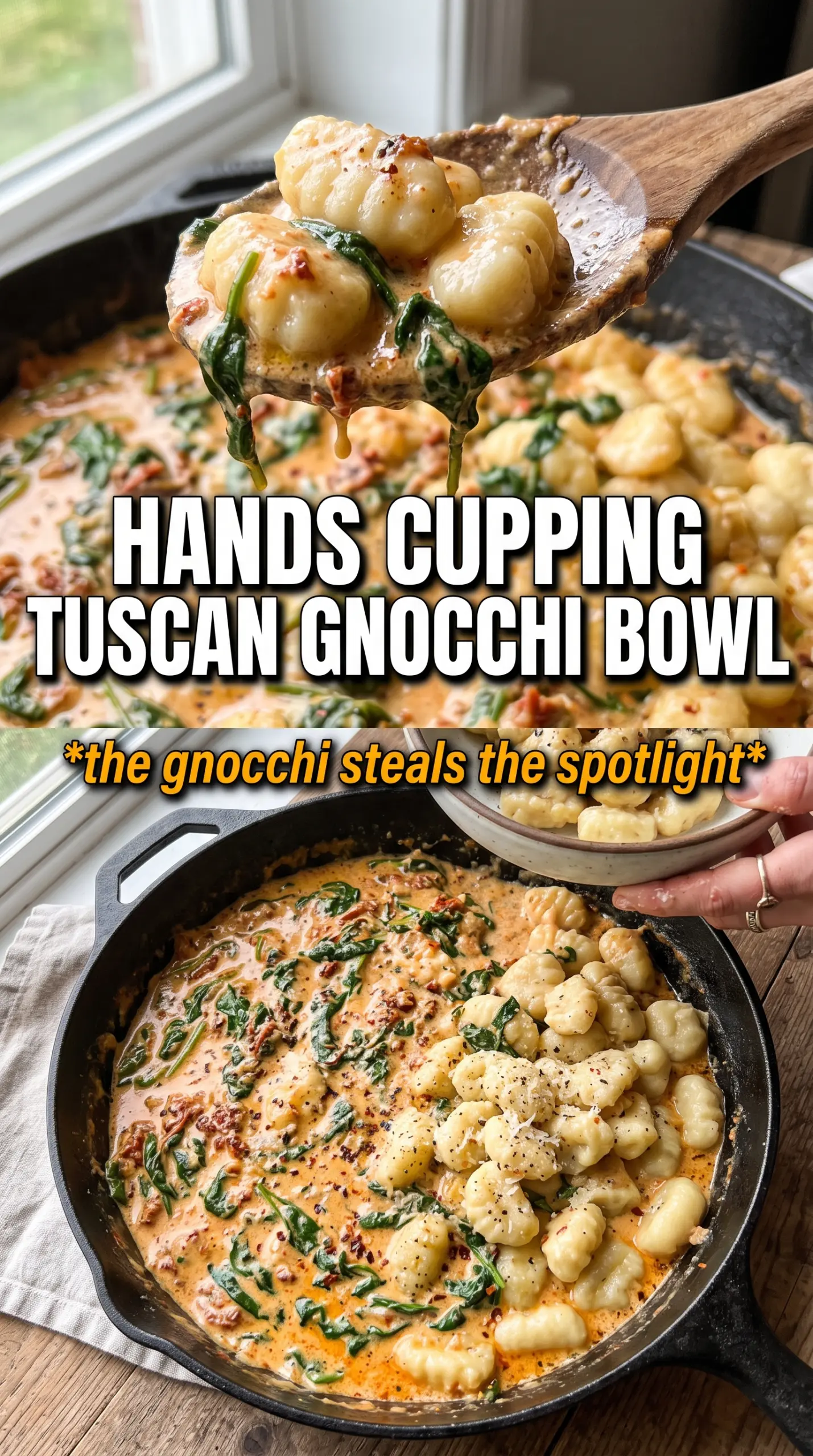
- Potato gnocchi — These give you the soft, pillowy bite that makes the dish feel substantial. Shelf-stable gnocchi work fine here, and they’re convenient because they cook quickly and hold up in the sauce. If you use refrigerated gnocchi, watch them closely so they don’t overcook and turn mushy.
- Italian sausage — This is the main source of seasoning and body, so a good sausage matters more than people think. Sweet or mild sausage keeps the dish round and rich; hot sausage pushes the whole skillet in a spicier direction. If you use chicken sausage, add a little extra salt at the end because it usually tastes leaner.
- Sun-dried tomatoes in oil — The oil is part of the recipe, not just a byproduct. It flavors the garlic and gives the sauce a deeper tomato note without adding extra steps. Dry-packed sun-dried tomatoes work in a pinch, but you’ll need to bloom them in olive oil first and the flavor won’t be quite as lush.
- Heavy cream and parmesan — This combination builds the sauce. The cream gives you body, while the parmesan thickens and sharpens the flavor. Grate the cheese fresh if you can; pre-shredded parmesan often contains anti-caking agents that keep it from melting as smoothly.
- Baby spinach — Spinach is here for freshness and contrast. It cuts through the richness and softens into the sauce without needing much attention. Larger spinach works too, but strip out the thick stems so the final texture stays tender.
How to build the skillet so the sauce stays silky
Brown the sausage first
Start with a hot skillet and let the sausage sit long enough to pick up color before you stir it. You want browned edges and rendered fat, not pale crumbles. If the pan looks dry, the sausage may be too lean, and you can add a small drizzle of oil, but don’t crowd the pan or it will steam instead of brown. Drain off excess grease after cooking so the sauce doesn’t turn greasy.
Wake up the garlic and tomatoes in the fat
Once the sausage is out, add the garlic and chopped sun-dried tomatoes to the same pan and let them cook in the tomato oil. That step only takes a couple of minutes, but it builds the base of the sauce. If the garlic starts to brown fast, lower the heat right away; burnt garlic tastes harsh and will take over the whole dish.
Simmer the cream before the cheese goes in
Pour in the cream, broth, seasoning, and red pepper flakes, then let the mixture bubble gently until it thickens a little. The surface should move in lazy bubbles, not a rolling boil. Add the parmesan once the sauce has taken on a slightly glossy look. If you dump the cheese into a hard boil, it can seize or go grainy instead of melting into the sauce.
Finish with gnocchi, sausage, and spinach
Cook the gnocchi according to the package, then add them directly to the skillet so they catch the sauce while they’re still warm. Return the sausage, add the spinach, and toss until the leaves just wilt. Taste before serving and add salt only if it needs it, because the sausage, parmesan, and sun-dried tomatoes already bring plenty of salt to the pan.
How to adapt this when you need a different version
Make it dairy-free without losing the creamy feel
Use full-fat coconut cream or an unsweetened dairy-free cooking cream instead of heavy cream, and swap in a dairy-free parmesan-style topping if you want that salty finish. The sauce won’t taste exactly the same, but the texture still comes together if you keep the heat low and let it simmer gently. Skip any substitute that’s too thin, or the sauce will never coat the gnocchi properly.
Use chicken sausage for a lighter skillet
Chicken sausage works well if you want something less rich, but it needs a little help with seasoning. Add a pinch more Italian seasoning and taste the sauce before serving, since chicken sausage usually carries less salt and fat than pork sausage. The dish will be a touch leaner, but the sun-dried tomatoes and parmesan still keep it satisfying.
Make it gluten-free with the right gnocchi
Many gnocchi are made with wheat flour, so check the package if gluten matters here. Gluten-free gnocchi work fine, but they can soften faster, so fold them into the sauce as soon as they’re cooked and don’t let them sit in water. The rest of the skillet is naturally gluten-free as long as your broth and sausage are labeled accordingly.
Stretch it into a bigger dinner
Add an extra handful of spinach or a little more gnocchi if you want the pan to feed more people, but don’t double the cream all at once. Too much liquid can make the sauce thin and leave the gnocchi floating instead of coated. If you need more volume, add another splash of broth only after tasting the sauce.
Storage and Reheating
- Refrigerator: Store leftovers in an airtight container for up to 3 days. The sauce will thicken as it chills, and the gnocchi will soften a bit.
- Freezer: I don’t recommend freezing this one. Cream sauces can separate, and the gnocchi turn mealy after thawing.
- Reheating: Warm gently on the stovetop over low heat with a splash of broth or cream. High heat is the mistake here; it can break the sauce and make the gnocchi tough.
Answers to the questions worth asking
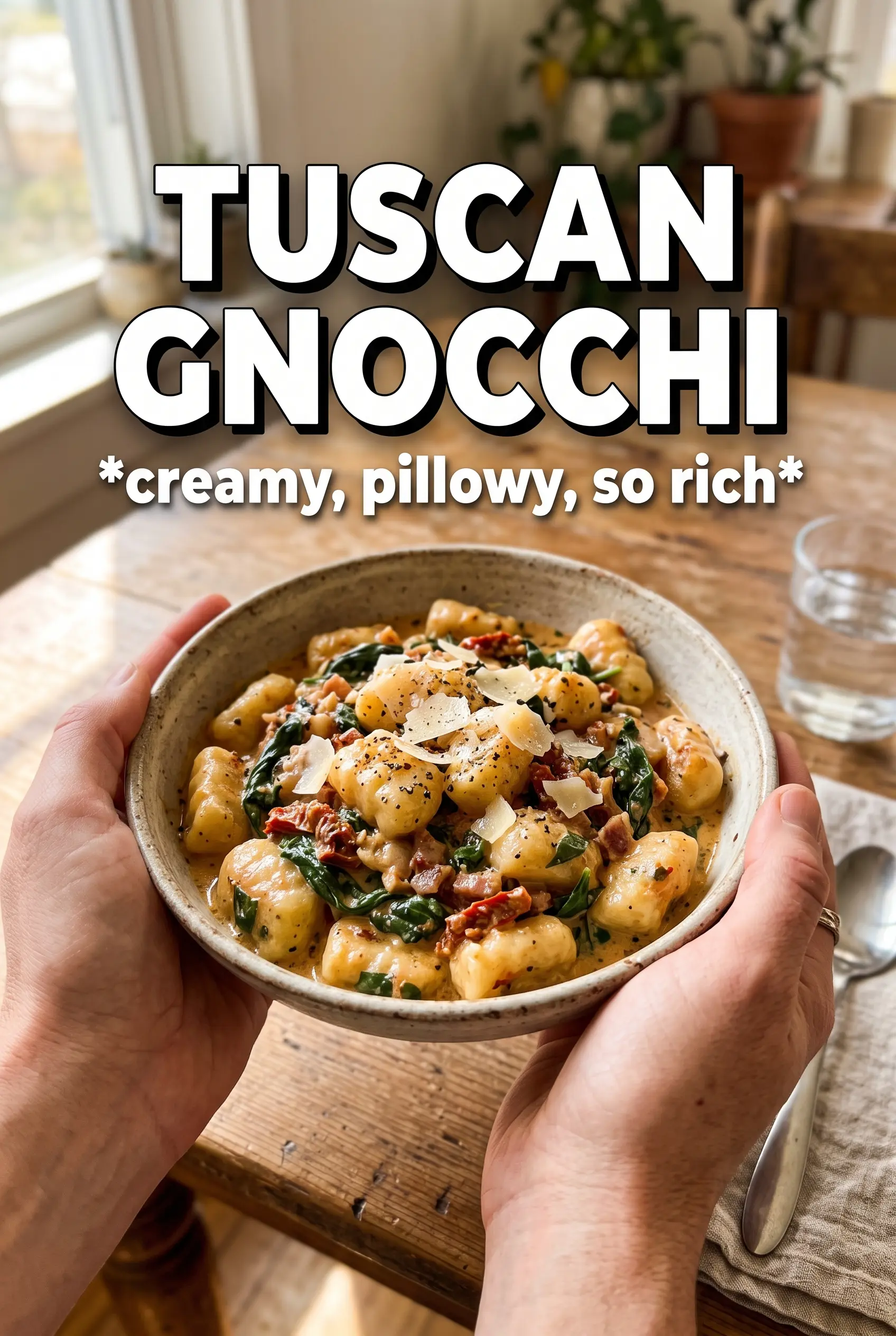
Tuscan Gnocchi
Ingredients
Equipment
Method
- Brown the Italian sausage in a large skillet over medium-high heat until browned and cooked through. Drain and set aside.
- Sauté the garlic and sun-dried tomatoes 2 minutes in the sun-dried tomato oil in the same skillet, stirring until fragrant.
- Add the heavy cream, chicken broth, Italian seasoning, and red pepper flakes, then bring to a simmer. Simmer 4 minutes until slightly thickened.
- Stir in the grated parmesan until melted and the sauce looks smooth and glossy.
- Cook the potato gnocchi according to package directions and add the cooked gnocchi directly to the sauce.
- Return the browned sausage to the skillet, add the baby spinach, and toss until the spinach wilts.
- Season with salt and pepper to taste, then top with fresh basil for serving.


