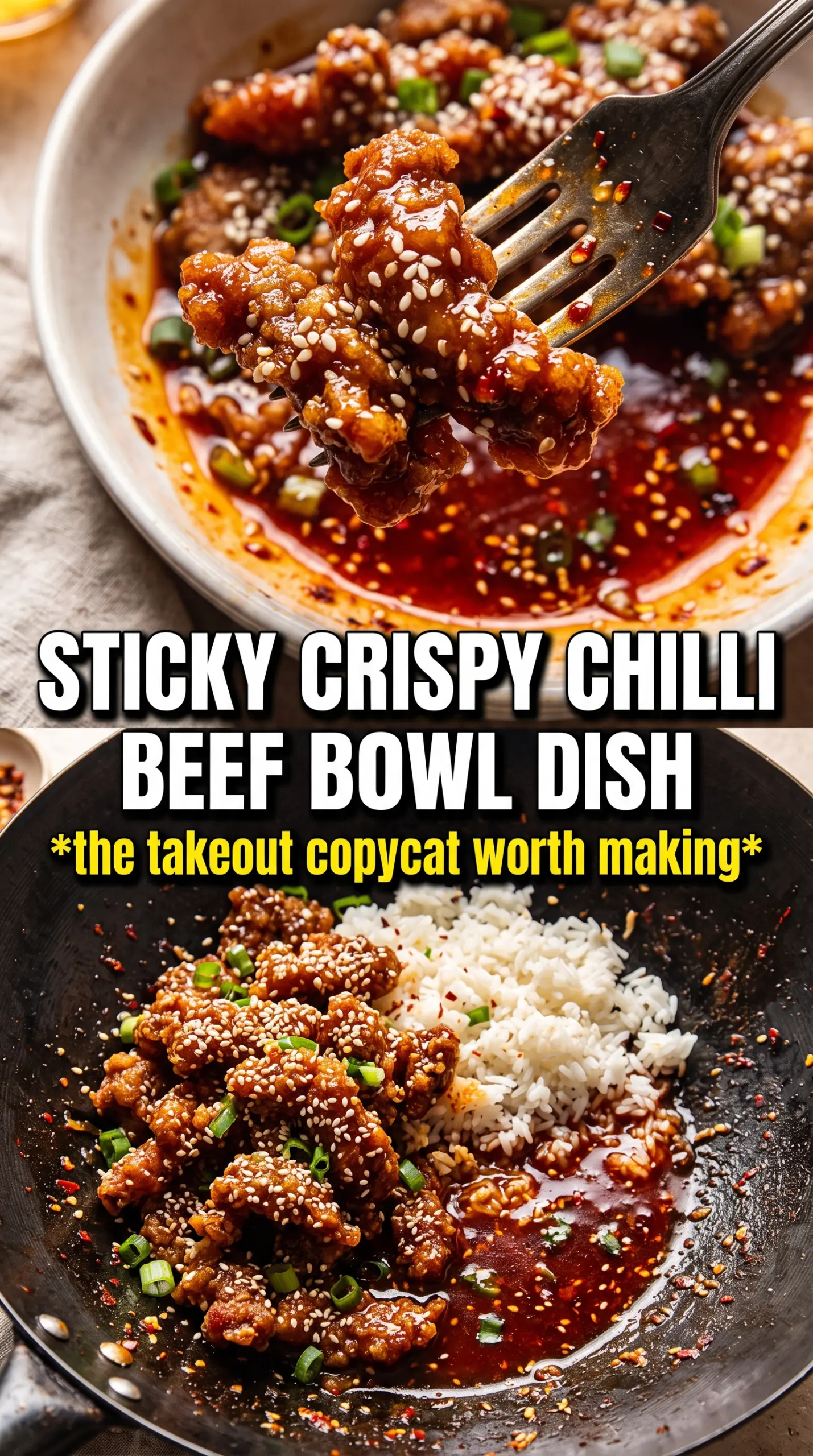
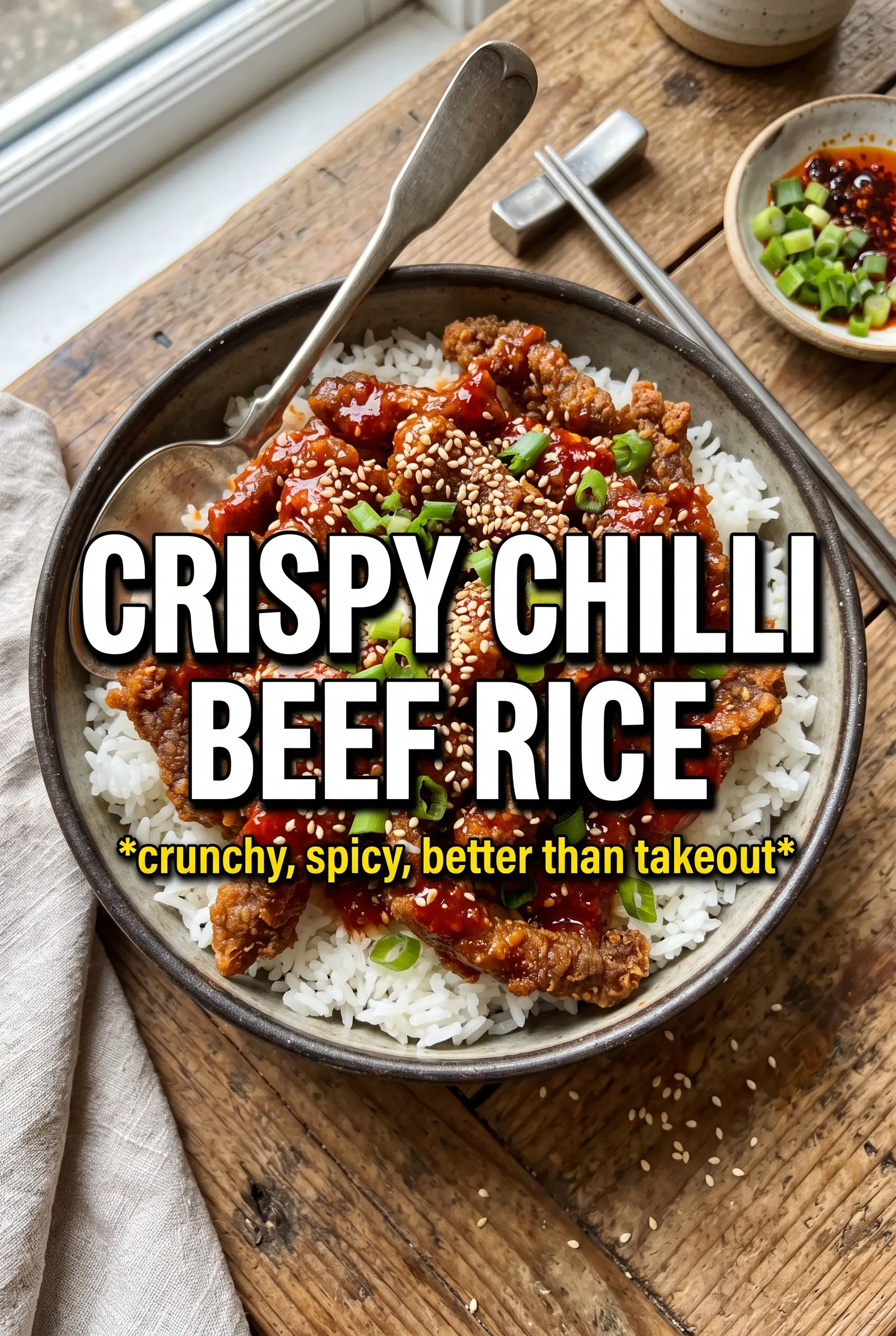
Shatteringly crisp beef over fluffy rice is one of those dinners that disappears fast, especially when the sauce hits that sweet-spicy spot without turning the coating soggy. The best bites have contrast: brittle edges on the beef, a glossy chilli sauce clinging just enough, and cool grains of rice underneath to catch everything that falls.
What makes this version work is the sequence. The beef gets a firm cornstarch coating before it ever touches the oil, which gives you that craggy, crunchy crust. Then the sauce is cooked separately and only tossed with the beef at the very end, because if the meat sits in sauce too long, the crust softens before it reaches the table.
Below, I’m breaking down the one part that matters most for the texture, plus the little timing details that keep the beef crispy all the way from wok to bowl.
The beef came out incredibly crisp, even after I tossed it in the sauce at the last minute. I was shocked that the coating stayed crunchy long enough for dinner, and the sweet chilli sauce had just enough tang to keep it from tasting heavy.
Save this crispy chilli beef rice for the night you want takeout-style crunch with sticky sweet heat over a bowl of rice.
The Crisp Dies the Second the Sauce Lingers
The biggest mistake with crispy chilli beef rice is treating the finished dish like a stir-fry that can sit around for a minute or two. It can’t. Once the beef is coated and fried, the surface is dry and brittle in the best way, and that’s what gives you the texture you want. The sauce should be ready before the beef goes in so the toss takes less than a minute from pan to bowl.
Thin slicing matters just as much as the frying. Flank steak gives you a good beefy bite, but only if it’s cut across the grain and sliced thin enough to cook quickly. If the strips are thick, the coating will brown before the meat is tender, and you’ll end up with crunchy outside, chewy middle.
Keep the oil hot and fry in batches. Crowd the pan and the temperature drops fast, which is how you get greasy beef instead of crisp beef. You want the strips to go in with a lively sizzle and come out deeply golden, not pale and floppy.
What Each Ingredient Is Actually Doing in This Bowl
- Flank steak — This cut stays flavorful and gets tender fast when sliced thin against the grain. If you swap in a tougher cut, it needs more time than this recipe gives it, which works against the crisp coating. Sirloin can stand in if that’s what you have.
- Cornstarch — This is the crunch engine. It forms that light, brittle shell that clings to the beef and catches the sauce without turning pasty right away. Flour won’t give the same glassy crispness.
- Sweet chilli sauce — This brings most of the sweetness, body, and gentle heat in one ingredient. A homemade substitute can work, but store-bought sauce gives the glossy finish and balanced texture that makes the coating cling.
- Soy sauce, rice vinegar, and brown sugar — These sharpen and deepen the sweet chilli sauce so it tastes less one-note. The vinegar keeps the sauce from reading sticky-sweet, and the soy adds the salty backbone that makes the beef taste finished.
- Sesame oil — Use a small amount and add it to the sauce, not the frying oil. It’s there for aroma, not cooking power, and too much will drown out the chilli and garlic.
- Garlic and fresh chilli — These are brief, quick-cooked aromatics. They need only a short hit of heat so they perfume the oil without burning, which would make the sauce taste bitter.
The 20 Minutes That Turn Into Crunchy Dinner
Coat the Beef Evenly
Toss the sliced beef with cornstarch, salt, and pepper until every strip looks dusty and well covered. You’re not making a wet batter here; you want a dry, even coating that fries into a thin shell. If there are bare patches, they’ll brown unevenly and the texture won’t be as crisp. Let the beef sit for a minute after coating so the starch hydrates slightly and clings better in the oil.
Fry in Small Batches
Heat about 1/2 inch of oil until it reaches 350°F, then fry the beef in batches for 2 to 3 minutes. The strips should go from pale to deeply golden with sharp edges and little bubbles around the coating. If the oil is too cool, the beef drinks it up; if it’s too hot, the outside darkens before the inside has time to cook through. Drain the fried beef on paper towels or a rack so the crust stays as dry as possible.
Build the Sauce Fast
Stir the sweet chilli sauce, soy sauce, rice vinegar, brown sugar, and sesame oil together before the pan ever heats up. In a wok or skillet, cook the garlic and chilli for about 30 seconds, just until fragrant. Add the sauce and let it simmer for about a minute so the sugar dissolves and the sauce looks glossy and slightly thickened. If it boils hard, it can reduce too far and turn sticky before the beef is ready.
Toss and Serve Right Away
Add the crispy beef to the sauce and toss quickly, just long enough to coat each piece. The beef should still look crisp when it goes onto the rice. Top with green onions and sesame seeds, then get it to the table immediately. The longer it sits, the more steam from the sauce works on the coating, and that crunch is the whole point.
How to Adapt This for Bigger Heat, Less Sugar, or No Fryer
Gluten-Free Version
Use tamari instead of soy sauce and check that your sweet chilli sauce is gluten-free. Cornstarch already does the heavy lifting on the coating, so the texture stays crisp without any extra changes.
Air Fryer or Oven Finish
You can crisp the coated beef in an air fryer or a very hot oven, but it won’t taste quite as light and shattery as the fried version. Spray the strips with oil and cook until browned and crisp, then toss with the sauce at the last second so the coating doesn’t soften too quickly.
Extra Spicy
Add more fresh chilli or a pinch of chilli flakes to the garlic oil, then finish with a little extra chilli sauce in the pan. This keeps the heat layered instead of harsh, which matters because the sweet chilli base can mute spice if you only add it at the end.
Lower Sugar Bowl
Cut the brown sugar in half and use a less-sweet sweet chilli sauce if you can find one. The sauce will taste brighter and a little less glossy, but the rice still balances the heat and salt nicely.
Storage and Reheating
- Refrigerator: Store leftovers for up to 3 days, but expect the coating to soften once it sits in sauce.
- Freezer: I don’t recommend freezing the finished dish. The beef loses its crisp texture and the sauce can separate after thawing.
- Reheating: Reheat in a hot skillet or air fryer until the beef is warmed through, then add a small spoonful of fresh sauce if needed. Microwaving turns the coating soft fast, which is the main thing you’re trying to avoid.
Answers to the Questions Worth Asking
Crispy Chilli Beef Rice
Ingredients
Equipment
Method
- Toss sliced flank steak with cornstarch, salt, and black pepper until every piece is well coated, with no dry cornstarch patches visible.
- Heat oil for frying in a Dutch oven to 350°F, checking that the surface shimmers consistently before frying.
- Fry the beef in batches, keeping it in about 1/2 inch of hot oil for 2–3 minutes per batch until extremely crispy and golden.
- Drain the fried beef on paper towels until no longer steaming, aiming to preserve the crisp exterior.
- Mix all chilli sauce ingredients together in a bowl until evenly combined and glossy.
- Heat 1 tablespoon oil in a wok (or use the Dutch oven if that’s what you have), then cook minced garlic and sliced red chilli at 350°F for 30 seconds until fragrant.
- Add the chilli sauce and simmer at 350°F for 1 minute until slightly thickened and red-orange in color.
- Add the crispy beef and toss quickly until coated, then serve immediately over cooked rice to prevent the crust from softening.
- Top each bowl with green onions and sesame seeds so the garnish stays bright and fresh.