Silky egg noodles, tender chicken strips, and a tangy mushroom sauce make chicken stroganoff the kind of dinner that disappears fast and still feels like a calm, dependable meal. The sauce coats every noodle instead of pooling at the bottom of the bowl, and the mushrooms bring enough depth that it tastes like more work than it actually is.
What makes this version work is the order. The chicken gets browned first, then the onion and mushrooms pick up all those browned bits in the same skillet, which means the sauce starts with real flavor instead of needing a long simmer. Sour cream goes in off the heat, so the sauce stays smooth instead of turning grainy or splitting.
Below, I’ve included the small timing details that keep the sauce creamy, plus a few smart swaps for when you need to work with what’s in the fridge. If you’ve had stroganoff go flat or gluey before, this version fixes both problems.
The sauce turned out smooth and rich, and the sour cream stayed creamy instead of curdling. I liked that the mushrooms got browned first because the whole dish tasted deeper than the usual quick stroganoff.
Save this creamy chicken stroganoff for the nights when you want tender noodles, mushrooms, and a tangy sour cream sauce in one skillet.
The Part That Keeps the Sour Cream Smooth
The most common stroganoff mistake is adding sour cream while the pan is still boiling. That’s how you get a grainy sauce with tiny curds instead of the glossy finish you want. Pulling the skillet off the heat before stirring it in keeps the dairy stable, and the sauce stays creamy enough to cling to the noodles.
The other thing that matters here is letting the flour cook for a full minute before the broth goes in. Raw flour tastes dull and can leave the sauce chalky. Once the broth hits, scrape the bottom of the skillet well; those browned bits from the chicken and mushrooms are what give this quick sauce its deeper, savory backbone.
What Each Ingredient Is Actually Doing in This Chicken Dish

- Chicken (cut into uniform pieces or whole) — Pat dry so it browns. Even thickness ensures uniform cooking.
- Oil or butter (the browning medium) — High-heat oil essential for proper searing. Creates pan flavor.
- Seasonings (salt, pepper, spices) — Don’t hold back. Chicken carries the entire flavor profile.
- Aromatics (garlic, onion, herbs) — Cook with fat to bloom flavors. Become the foundation of the dish.
- Sauce or braising liquid (cream, broth, or tomato) — This keeps chicken moist. Balance richness with acid.
- Vegetables (if using) — Layer by cooking time so everything finishes together.
- Acid (lemon, vinegar, or wine) — This brightens and prevents one-dimensional flavor.
- Proper doneness (165°F internal temperature) — Use a thermometer for accuracy. Overcooked is dry.
What Each Ingredient Is Actually Doing in the Skillet
- Chicken breasts — Slicing them into strips gives you fast, even cooking and keeps the meat from drying out before the sauce is ready. Chicken thighs will work too, but they’ll make the dish a little richer and softer in texture.
- Cremini mushrooms — These are worth using instead of plain white mushrooms if you can get them. They brown better and bring a deeper, meatier flavor that stands up to the sour cream.
- Dijon mustard and Worcestershire sauce — This is the part that keeps the sauce from tasting flat. Dijon adds sharpness, Worcestershire adds savoriness, and together they give the cream sauce enough edge to taste balanced instead of heavy.
- Sour cream — Full-fat sour cream gives the smoothest result. If you use a lower-fat version, stir it in gently off the heat and expect a slightly thinner sauce.
- Egg noodles — Their wide shape catches the sauce better than most pastas. Cook them just to tender so they don’t keep soaking up sauce and turn mushy once everything is combined.
Building the Sauce Without Breaking It
Browning the Chicken First
Season the chicken strips well before they hit the skillet, then cook them in butter over medium-high heat until the edges are golden and the centers are no longer pink. Don’t crowd the pan or the chicken will steam instead of brown. You want color here, because that fond on the bottom is the base of the sauce.
Softening the Onion and Mushrooms
Cook the onion and mushrooms in the same pan until the mushrooms release their moisture and start taking on a deep brown color. If they look pale and watery, keep going. Add the garlic at the end of this stage so it smells fragrant, not burnt, because garlic can go bitter fast in a hot skillet.
Thickening the Gravy Base
Sprinkle the flour over the vegetables and stir until it disappears into the fat. Let it cook for about a minute, then pour in the broth slowly while scraping the pan. If you dump it all in at once, the flour can clump; if you stir and add gradually, the sauce turns smooth and starts thickening evenly.
Finishing Off Heat
Once the sauce has simmered and thickened, turn off the heat before adding the sour cream. Stir it in until the sauce looks silky and uniform, then return the chicken to warm through. If the pan is still bubbling, the sour cream is much more likely to split, and once that happens there’s no real fixing it.
How to Adapt This for Different Kitchens and Different Nights
Make It Gluten-Free
Use a gluten-free all-purpose flour blend in place of the flour and serve it over gluten-free pasta or rice. The sauce still thickens well, but choose a blend that includes starches like rice or tapioca so it behaves more like regular flour.
Use Chicken Thighs for a Richer Result
Boneless skinless thighs can replace the breasts one-for-one. They stay juicier and bring a little more flavor, but they also release more fat, so you may not need every bit of the butter if the pan looks greasy.
Lighten It Up a Little
You can swap in Greek yogurt for part of the sour cream, but add it off heat just like the sour cream would go in. The sauce will taste a little tangier and less rich, and it may be slightly less silky than the original.
Skip the Noodles and Serve It Another Way
This also works over mashed potatoes, rice, or buttered spaetzle. The sauce is thick enough to coat something starchy, so the dish still eats like a full meal even when you change the base.
Storage and Reheating
- Refrigerator: Store leftovers in an airtight container for up to 3 days. The noodles will keep soaking up sauce, so the dish gets thicker overnight.
- Freezer: The sauce can separate after freezing because of the sour cream, so I don’t recommend freezing the finished stroganoff. If you need to get ahead, freeze the cooked chicken and mushroom sauce before adding the sour cream.
- Reheating: Rewarm gently in a skillet over low heat with a splash of broth or water. High heat is the fastest way to make the sauce break and the chicken turn dry.
Answers to the Questions Worth Asking
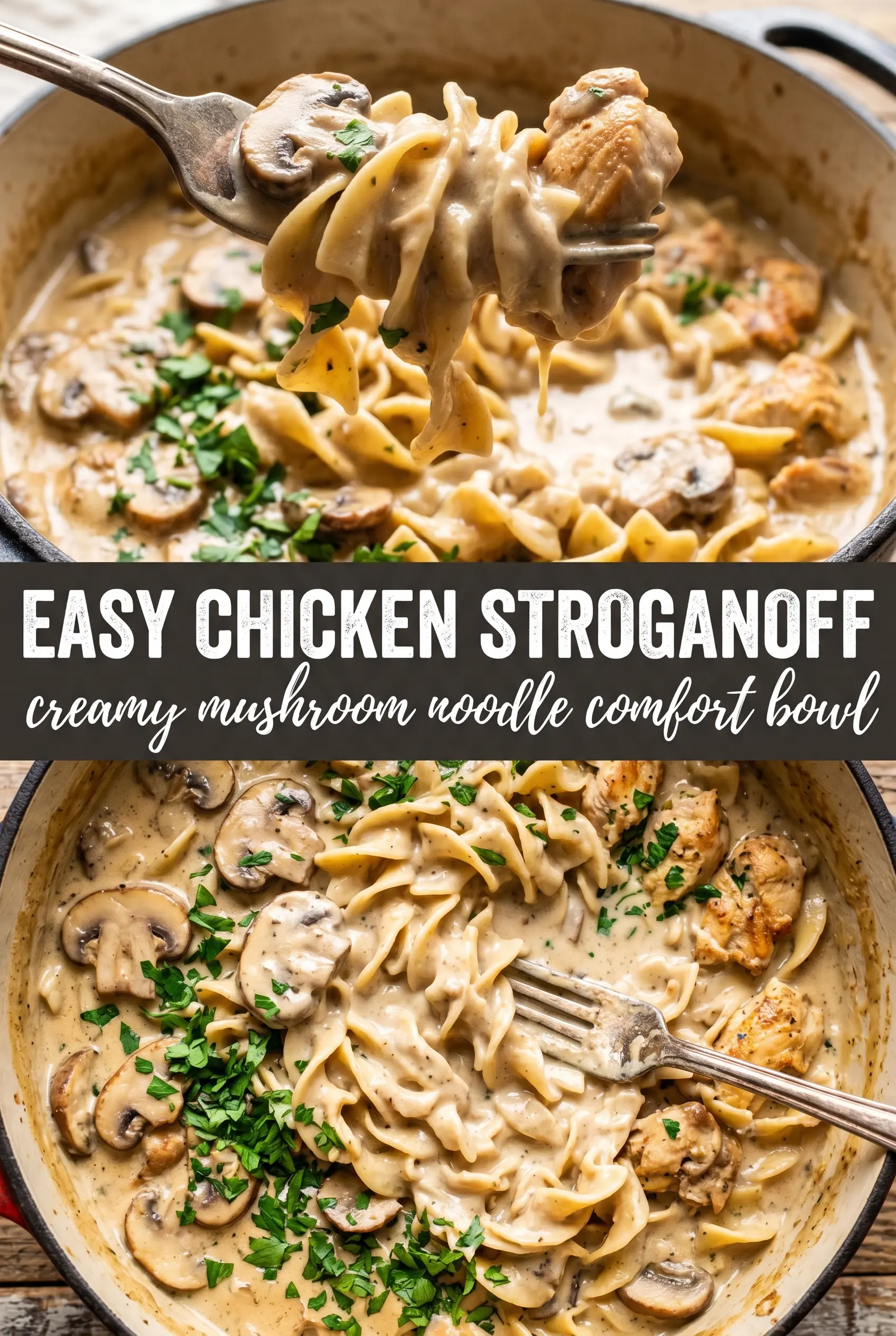
Easy Chicken Stroganoff
Ingredients
Equipment
Method
- Season the chicken strips with salt, pepper, garlic powder, and smoked paprika. Heat butter in a large skillet over medium-high heat and cook the chicken for 5-6 minutes, turning as needed, until golden and cooked through; remove to a plate.
- Add the diced onion and sliced mushrooms to the same skillet. Cook for 5-6 minutes over medium-high heat until golden, then add minced garlic and cook for 1 minute until fragrant.
- Sprinkle the all-purpose flour over the vegetables and stir for 1 minute. Gradually pour in the chicken broth while scraping up all browned bits from the bottom of the skillet.
- Stir in the Worcestershire sauce and Dijon mustard. Simmer for 4-5 minutes over medium heat until the sauce thickens.
- Remove the skillet from the heat and stir in the sour cream until the sauce is smooth. Return the cooked chicken to the skillet and stir to coat.
- Serve the stroganoff over the cooked egg noodles. Garnish with fresh dill or parsley and finish with cracked pepper if desired.