Ultra-creamy potato salad hits the table with that soft, rich texture people remember after the first bite. The potatoes stay tender without turning mushy, the dressing clings instead of puddling at the bottom of the bowl, and the mix of eggs, relish, celery, and onion gives every scoop a little crunch and tang. It’s the kind of side dish that disappears fast at cookouts, potlucks, and holiday dinners because it tastes familiar in the best way.
What makes this version work is the balance. Russet potatoes break down just enough to help create that creamy body, while a little sour cream sharpens the mayonnaise so the dressing tastes fuller and less heavy. The mustard, vinegar, and sugar are doing quiet work here too: one adds bite, one wakes up the whole bowl, and one rounds out the edges so the salad tastes well-seasoned after chilling.
Below, you’ll find the small timing details that keep the potatoes from getting waterlogged, plus the best way to fold everything together without smashing the chunks into paste. I’ve also included a few swaps and storage notes so you can make it ahead without losing that classic creamy texture.
The dressing got into every potato piece, and after chilling it was even better. Mine held its shape, but it still had that super creamy texture that coats the spoon.
Creamy Potato Salad with eggs, relish, and that tangy dressing is the one to pin for cookouts and potlucks.
The Part That Keeps Potato Salad Creamy, Not Gluey
The biggest mistake with potato salad is overworking the potatoes after they’re cooked. Russets are soft enough to help the salad turn creamy, but if you stir them too hard while they’re warm, you’ll end up with a sticky mash instead of distinct, tender pieces coated in dressing. The goal is a salad that holds together on the spoon and still has some texture when you bite into it.
Chilling matters more than most people think. The dressing tightens up in the fridge, the seasoning settles into the potatoes, and the whole bowl tastes more balanced after a couple of hours. If it seems a little loose right after mixing, that usually fixes itself as the salad rests.
- Russet potatoes — These give the salad its soft, creamy backbone. They’re starchier than waxy potatoes, which means they help the dressing feel rich instead of thin. Cut them into even cubes so they cook at the same rate and don’t fall apart in patches.
- Mayonnaise — This is the main body of the dressing, so use one you like the taste of. A neutral, full-fat mayo gives the smoothest texture. Light mayo works in a pinch, but the salad won’t have the same plush finish.
- Sour cream — This keeps the dressing from tasting flat or heavy. It adds a clean tang and softens the mayonnaise. Greek yogurt can stand in, but it brings a sharper, more noticeable tang and a slightly firmer texture.
- Sweet pickle relish — This adds sweetness, acid, and little bursts of pickle flavor without extra chopping. If you use chopped pickles instead, drain them first so the salad doesn’t get watery.
What Each Ingredient Is Actually Doing in This Creamy Potato Salad
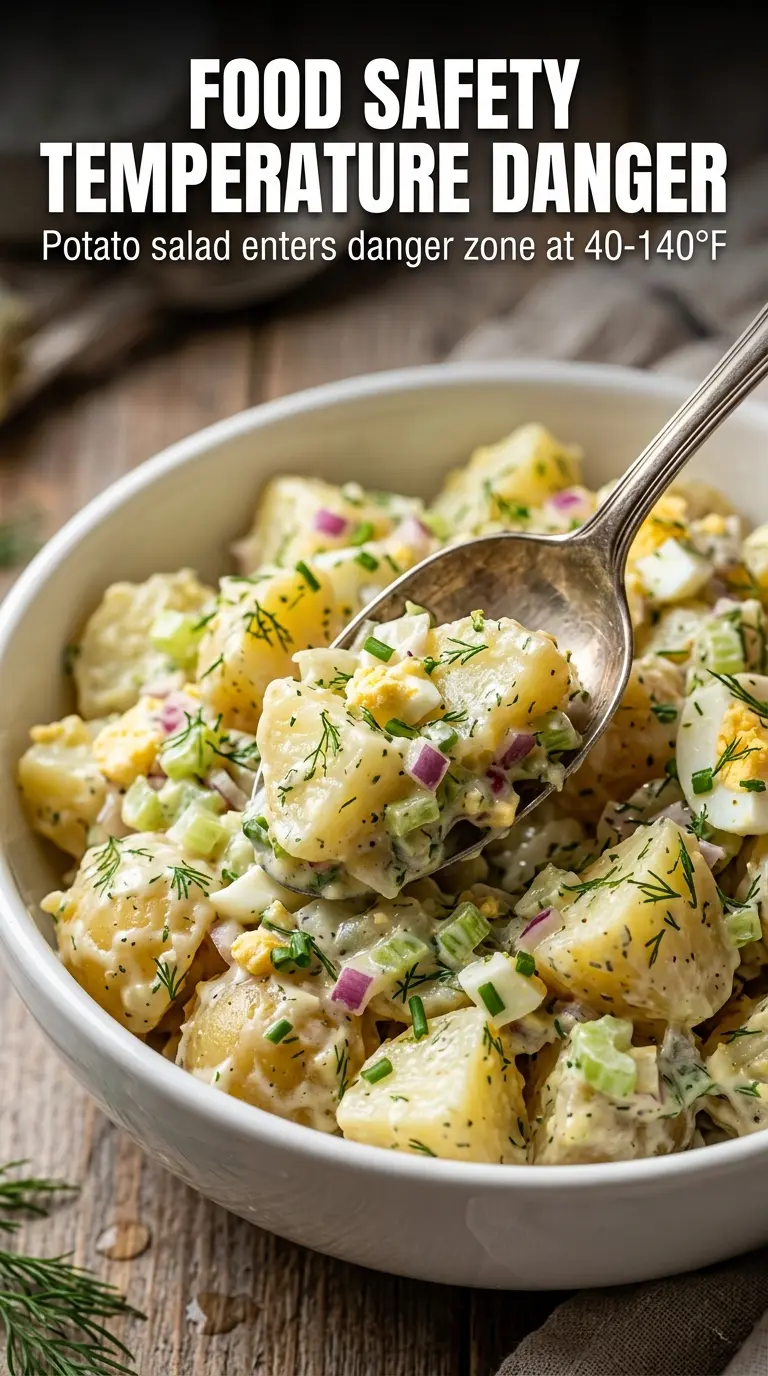
- Russet potatoes — These starchy potatoes help the dressing feel rich and creamy instead of thin and mayonnaise-forward. Their natural softness means they’ll break down a little even if you cook them carefully, which is exactly what you want. They give the bowl that signature soft, almost fluffy texture that makes potato salad feel comforting.
- Mayonnaise — This is the foundation of the dressing, so quality matters. A good full-fat mayo gives you a smooth, plush base. The mayo carries the seasoning and helps everything else coat the potatoes evenly. Light or eggless mayonnaise works but can taste a little thin or waxy.
- Sour cream — This is what keeps the dressing from tasting heavy or one-dimensional. It adds a tangy brightness that balances the richness of the mayo. Sour cream also helps the dressing firm up slightly as the salad chills, giving it a better texture after a few hours in the fridge.
- Mustard, vinegar, and sugar — Mustard adds bite and savory depth. Vinegar wakes up the whole bowl and stops the dressing from tasting flat. Sugar rounds out the edges so the acidic flavors don’t feel sharp. Together they build a dressing that tastes fully seasoned, not one-note.
- Hard-boiled eggs — These add a little richness and a subtle sulfurous depth that pairs well with the vinegar and mustard. Chop them into bite-sized pieces so they distribute through the salad instead of sinking or being picked out.
- Celery — Fresh celery brings crunch and a subtle vegetal sharpness that cuts through the richness. Dice it fine so it blends in without making the bowl feel crunchy all the way through. If the pieces are too big, the salad eats uneven.
- Onion — A little minced or very finely diced onion adds sharpness and a subtle bite. It should be raw and small enough that it’s barely noticeable as a distinct piece, just a whisper of allium flavor waking up the whole bowl.
- Sweet pickle relish — This is your quickest path to flavor. It adds sweetness, acid, and little bursts of pickle taste without extra chopping. If you use whole chopped pickles instead, drain them very well or the salad turns watery. Relish is already drained and ready to go.
How to Build the Dressing So It Coats Every Bite
Cooking the Potatoes Just Until Tender
Start the potatoes in a pot of cold salted water and bring them up together so the outside and center cook at the same pace. Once they’re tender, a knife should slide in easily but the cubes should still hold their edges. If they boil too hard or too long, the outside starts breaking before the inside is done, and that’s when the texture goes downhill.
Mixing the Dressing First
Stir the mayonnaise, sour cream, mustard, vinegar, sugar, salt, and pepper together before it touches the potatoes. That way every bite gets the same balance of tang, richness, and seasoning. If you dump the ingredients in separately, it’s harder to tell whether the bowl needs more salt or more acid until it’s already mixed.
Folding Without Crushing
Add the dressing to the potato mixture and fold gently with a spatula instead of stirring in circles. The potatoes should get fully coated, but you still want visible chunks of egg and celery throughout. If the salad starts to look pasty, stop before it turns into mash; a few uneven pieces are what make it eat like potato salad instead of spread.
Letting It Chill and Set
Cover the bowl and refrigerate it for at least 2 hours before serving. That resting time gives the dressing a chance to thicken and the seasoning time to sink in. If you serve it straight away, the flavors taste flatter and the texture can seem a little loose.
How to Adapt This for Picnics, Dairy-Free Tables, or a Little More Bite
Dairy-Free Potato Salad
Swap the sour cream for a dairy-free plain yogurt or more mayonnaise. The salad will still be creamy, but the tang changes a bit depending on the product you use. Choose one that’s thick, or the dressing can turn loose after chilling.
Extra Tangy, Less Sweet
Cut the sugar back or leave it out, then add a little more vinegar or mustard. This gives you a sharper, more savory salad that works well with grilled meats. The texture stays the same, but the dressing tastes less rounded and a little more punchy.
More Crunch and Freshness
Add a bit more celery or finely chopped dill pickle for extra snap. This is the easiest way to change the salad without messing with the creamy base. Just keep the add-ins small so they blend into the dressing instead of making the bowl feel crowded.
Storage and Reheating
- Refrigerator: Store covered for up to 4 days. The dressing may thicken a bit, and the potatoes will continue to absorb seasoning.
- Freezer: I don’t recommend freezing this salad. Mayonnaise and sour cream separate after thawing, and the potatoes turn grainy.
- Reheating: This salad is meant to be served cold. If it’s been chilled hard, let it sit at room temperature for 15 to 20 minutes before serving so the dressing loosens and the flavor opens up.
Answers to the Questions Worth Asking

Creamy Potato Salad
Ingredients
Equipment
Method
- Bring a large pot of water to a boil, then add peeled and cubed russet potatoes and cook until tender, about 15–20 minutes. A fork should slide in easily for even softness.
- Drain the potatoes and spread them on a sheet pan to cool completely, 10–15 minutes. This helps the salad stay creamy without getting watery.
- Add the cooled potatoes, chopped hard-boiled eggs, finely diced celery, finely diced onion, and sweet pickle relish to a large bowl. Fold gently until evenly combined.
- Whisk mayonnaise, sour cream, yellow mustard, white vinegar, sugar, salt, and pepper until smooth. Stop and scrape the sides to ensure the dressing is fully blended.
- Pour the dressing over the potato mixture and fold gently until very creamy. Keep folding lightly so the potatoes stay intact but fully coated.
- Refrigerate the potato salad for at least 2 hours before serving. It should thicken slightly and taste better after chilling.