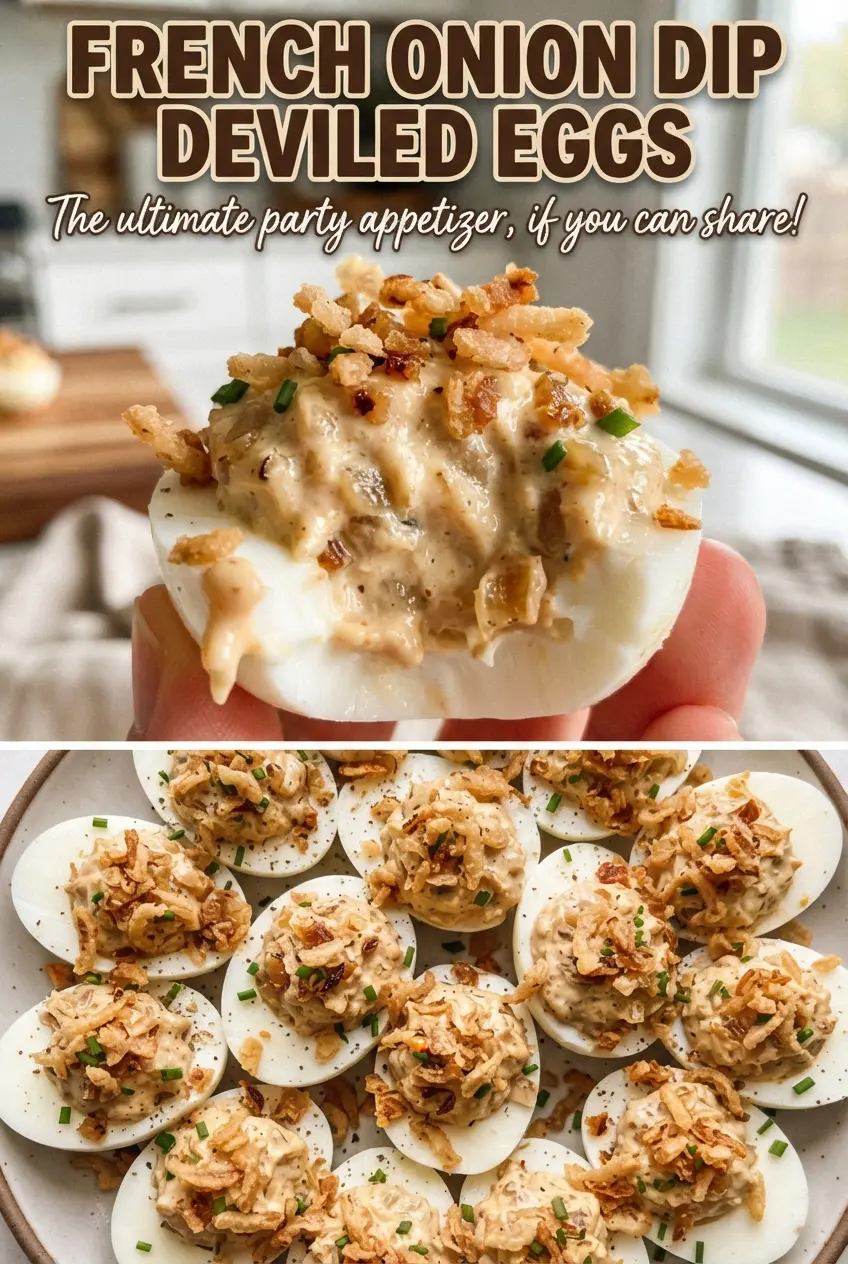
French onion dip deviled eggs bring that classic party-snack flavor into a bite that feels a little sharper, a little creamier, and a lot more interesting than standard deviled eggs. The filling stays rich and smooth, while the caramelized onions add the sweet-savory depth you expect from French onion dip. Then the crispy fried onions on top give every bite a crunch that keeps the whole thing from tasting soft or one-note.
The part that makes these work is patience with the onions. Cook them low and slow until they turn deep golden and almost jammy, because that is where the flavor comes from. The yolk mixture itself is kept balanced with sour cream, mayonnaise, and Worcestershire sauce, which gives you tang, body, and that familiar savory backbone without making the filling heavy. A little onion powder reinforces the onion flavor so the dip character comes through in every bite, even after the eggs chill.
Below, you’ll find the trick for keeping the filling smooth, the reason I fold in only half the onions, and a few smart variations if you want to adjust the flavor or make them ahead for a party.
The onions turned sweet and jammy, and the filling piped cleanly without being runny. I made these for game night and the crispy fried onions on top were the first thing to disappear.
Save these French onion dip deviled eggs for the appetizer table when you want creamy yolks, jammy onions, and a crunchy fried onion topping.
The Part Most People Rush: The Onions Decide Everything
French onion flavors only taste right here if the onions are cooked past soft and into deep, sweet, browned territory. If they stay pale, the filling tastes flat and the topping tastes scattered instead of integrated. That long, slow sauté is what gives these eggs their French onion dip character.
The other thing people miss is balance. Deviled eggs can turn gluey if the yolk mix is overloaded with mayo, and they can turn sharp if the sour cream takes over. This version stays creamy because the mayonnaise gives body, the sour cream adds tang, and the Worcestershire sauce brings the savory note that makes the onion flavor taste round instead of harsh.
- Yellow onion — This is the flavor base, and it needs time. Finely diced onion cooks down faster and melts into the filling better, but it still needs 20 to 25 minutes over medium-low heat to lose its raw edge.
- Sour cream — This gives the filling its French onion dip tang. Full-fat sour cream gives the best texture; lower-fat versions can loosen the filling a bit more.
- Mayonnaise — This is what keeps the yolk mixture lush and pipeable. Use a good one here, since it carries a lot of the texture.
- Crispy fried onions — These go on at the end so they stay crunchy. If they sit in the filling too long, they soften and lose the point of being there.
Building the Filling So It Stays Creamy, Not Loose

Egg yolks should be mashed while still a little warm or fully cooled, but not wet. If they’re damp from peeling, the filling can turn watery, so dry the egg whites before filling them.
The caramelized onions do double duty: half go into the filling for flavor throughout, and the rest sit on top for texture and visual appeal. That split keeps the eggs from tasting muddy, which happens when all the onions are mixed in and lost in the yolk mixture.
Worcestershire sauce matters more than it looks like it should. It adds depth, saltiness, and a little fermented savoriness that keeps the deviled eggs from tasting like plain onion mayo.
- Eggs — Older eggs usually peel more cleanly than very fresh ones. After boiling, chill them well before peeling so the whites tighten up and stay neat.
- Butter — Just enough to help the onions soften and caramelize without scorching. Don’t swap in a strong-flavored oil here; you want the onion flavor to stay front and center.
- Garlic powder and onion powder — These reinforce the dip flavor in the filling. They’re not there to make the eggs taste powdery; they’re there to make the onion taste fuller after chilling.
From Boiled Eggs to Party Tray Without the Mess
Cook the onions until they go jammy
Set the diced onion in butter over medium-low heat and give it time. Stir often enough to prevent browning in spots, but not so much that the onions never get a chance to soften and color. They’re done when they’re deep golden, sweet, and look almost spreadable. If they brown too fast, the heat is too high and the flavor turns sharp instead of sweet.
Boil, chill, and peel the eggs cleanly
Cover the eggs with cold water, bring them to a boil, then cover the pot, turn off the heat, and let them stand for 12 minutes. That method gives you set whites and yolks without the green ring around the yolk. Chill them fast in cold water before peeling so the shells release more easily. If the whites tear, the eggs were probably peeled while still warm or without enough chilling.
Mix the filling until it’s smooth but not fluffy
Mash the yolks with the sour cream, mayonnaise, Worcestershire sauce, onion powder, garlic powder, and salt until the mixture is creamy and holds its shape. Fold in only half the caramelized onions so the filling keeps some texture without getting overloaded. If it looks too stiff, add a small spoonful of sour cream; if it looks loose, chill it for a few minutes before piping.
Finish with crunch right before serving
Pipe the filling into the egg whites, then top each one with the reserved onions, crispy fried onions, and chives. Add the crispy onions close to serving so they stay crunchy. If they sit too long on the eggs, they pull moisture from the filling and lose their snap.
How to Adapt These for Different Tables and Different Schedules
Make Them Ahead for a Party
Boil, peel, and halve the eggs up to a day ahead, and make the filling separately. Store the whites and filling covered in the refrigerator, then pipe and top them just before serving. That keeps the filling smooth and the crispy onions from softening.
Dairy-Free Version
Swap the butter for a neutral oil or dairy-free butter and use a plant-based sour cream and mayonnaise. The texture stays close, but the flavor will be slightly less rich, so keep the Worcestershire and onion seasoning in place to hold onto the savory depth.
Gluten-Free Adjustments
The eggs and filling are naturally gluten-free, but check your Worcestershire sauce and crispy fried onions. Some brands contain wheat, so pick certified gluten-free versions if you’re serving someone with celiac disease or a strong sensitivity.
Storage and Reheating
- Refrigerator: Store filled deviled eggs for up to 2 days. The onions will stay flavorful, but the fried topping softens with time.
- Freezer: Don’t freeze deviled eggs. The whites turn rubbery and the filling separates after thawing.
- Reheating: Don’t reheat these. Serve them chilled or cool room temperature. If they’ve been in the fridge, let them sit out for about 10 to 15 minutes so the filling loses the fridge chill and tastes fuller.
Answers to the Questions Worth Asking
French Onion Dip Deviled Eggs
Ingredients
Equipment
Method
- Melt the butter in a cast iron skillet over medium-low heat, then add the finely diced yellow onion. Cook, stirring occasionally, for 20-25 minutes until deep golden; cool completely so the filling stays thick.
- Place the large eggs in a pot and cover with cold water. Bring to a boil, cover the pot, remove from heat, and let stand 12 minutes.
- Chill the eggs in the pot of cool water, then peel and halve them lengthwise. Scoop out the yolks and set the whites aside.
- Mash the egg yolks with sour cream, mayonnaise, Worcestershire sauce, onion powder, garlic powder, and salt until smooth. Fold in half of the caramelized onions so the filling tastes like classic French onion dip.
- Pipe the yolk mixture into the egg white halves. Top with the remaining caramelized onions, crispy fried onions, and fresh chives for garnish.