French onion meatballs bring the deep, sweet-savory comfort of classic onion soup into a skillet dinner that actually eats like a meal. The onions turn jammy and dark, the meatballs stay tender, and the Gruyere melts over the top in a glossy layer that pulls the whole pan together. It’s the kind of dish that tastes like it took all day, even though most of the time is hands-off while the onions do their thing.
The key here is patience with the onions and restraint with the meatballs. If the onions rush, they stay sharp and wet instead of turning silky and brown. If the meatballs are packed too tightly, they go dense once they simmer in the broth. This version keeps both parts in balance so you get a spoonable onion gravy, browned edges on the meatballs, and enough cheese to make every bite feel complete.
Below, I’ll show you where the flavor builds, which ingredient swaps still hold up, and how to keep the skillet from turning watery once the broth goes in.
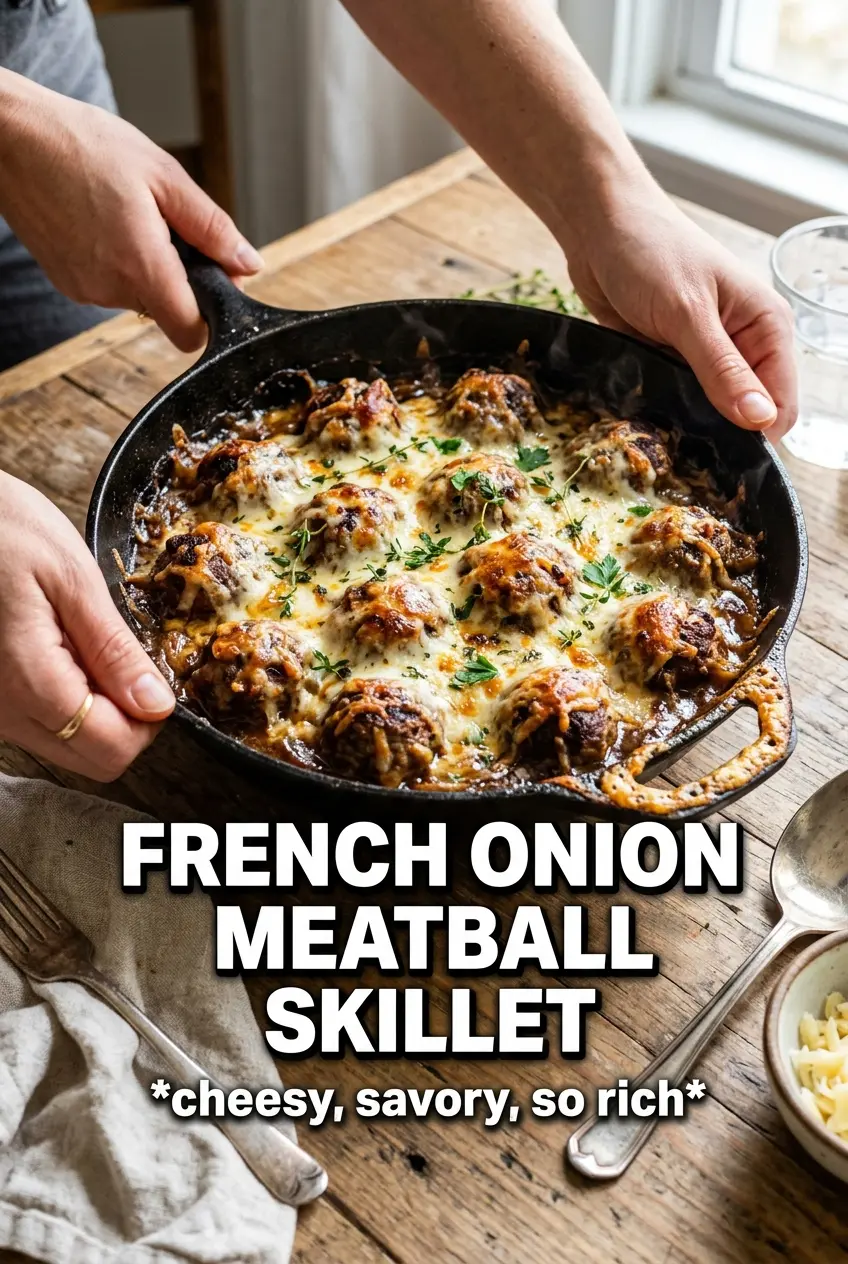
The onions cooked down into this rich, sweet broth and the meatballs stayed tender all the way through. I broiled it for just 4 minutes and the Gruyere came out golden and bubbly without drying anything out.
Save this French Onion Meatball Skillet for a one-pan dinner with caramelized onions, tender meatballs, and a melted Gruyere crust.
The Trick Is Letting the Onions Turn Sweet Before the Broth Goes In
The whole skillet rises or falls on the onions. They need enough time over medium-low heat to soften, shrink, and take on a deep amber color before the liquid is added. If you pour in broth while they’re still pale, you’ll end up with onion-flavored soup instead of that rich, sticky base that makes this dish taste like French onion soup with a hearty main course built in.
The other thing that matters is the skillet itself. Browning the meatballs first leaves little caramelized bits behind, and that fond gets scraped up when the wine hits the pan. Those browned bits are carrying a lot of the flavor, so don’t clean them out. That’s the part that makes the sauce taste layered instead of flat.
What Each Ingredient Is Actually Doing in the Skillet

- Ground beef — Use beef with some fat so the meatballs stay juicy after they simmer in the onion broth. Very lean beef can work, but the texture will be drier and less forgiving.
- Breadcrumbs and egg — These bind the meatballs and keep them from falling apart in the skillet. If you skip one, the meatballs are more likely to crumble once they’re nestled into the sauce.
- Worcestershire — This adds the savory depth you want in a French onion-style dish without needing extra ingredients. It goes into both the meatballs and the sauce, which helps the flavor feel consistent from pan to plate.
- Yellow onions — This is where the signature flavor comes from, so don’t rush them. Thin slices cook more evenly and break down into the silky, jammy texture you need.
- Dry white wine — A splash of wine lifts the browned bits from the pan and sharpens the sweetness of the onions. If you don’t use wine, add a little extra broth plus a teaspoon of cider vinegar for brightness.
- Gruyere — This melts into a smooth, nutty topping that suits the onion base better than a sharper cheese would. Pre-shredded cheese works in a pinch, but freshly shredded Gruyere melts more cleanly.
Building the Meatballs and Onion Base in the Right Order
Mixing Tender Meatballs
Stir the meatball mixture just until the ingredients look evenly combined, then stop. Overmixing turns the meatballs dense, and once they simmer in the sauce, that toughness becomes more noticeable. Roll them into even portions so they brown at the same rate. If the mixture feels sticky, dampen your hands lightly instead of adding more breadcrumbs.
Browning for Flavor
Sear the meatballs in butter in an oven-safe skillet until they pick up a deep golden crust on several sides, then move them out of the pan. You’re not cooking them through here; you’re building flavor and giving the meatballs enough structure to finish gently in the sauce. If the butter starts to scorch, lower the heat before the pan gets too hot, because burnt butter will show up in the finished broth.
Slowly Caramelizing the Onions
Add the sliced onions to the same skillet and cook them over medium-low heat, stirring often enough that they don’t stick but not so much that they steam. They should collapse, turn glossy, and then slowly deepen to a rich brown color over 30 to 35 minutes. If they start to catch on the bottom, add a splash of water and scrape up the pan, but don’t turn the heat up to rush them. That only burns the edges before the centers have time to sweeten.
Finishing the Sauce and Melting the Cheese
Stir in the garlic and thyme, then deglaze with wine and let it cook down before adding the broth and Worcestershire. Nestle the meatballs back in and simmer until they’re cooked through and the sauce has taken on a glossy, spoonable look. When the Gruyere goes on top, broil just until it bubbles and freckles with brown spots. Stay close to the oven here, because cheese can go from golden to greasy in a minute.
How to Adapt This French Onion Meatball Skillet Without Losing the Good Part
Make It Gluten-Free
Swap the breadcrumbs for gluten-free breadcrumbs or crushed gluten-free crackers. The texture stays close to the original, but use a light hand so the meatballs don’t turn bready. Check that your Worcestershire sauce is gluten-free too, since some brands include malt vinegar.
Make It Dairy-Free
Use olive oil instead of butter and skip the Gruyere, or finish with a dairy-free melting cheese if you have one that actually broils well. You’ll lose some of the classic French onion richness, so lean harder on the caramelized onions and let the broth reduce a little further for body.
Swap the Beef
Ground turkey works, but it needs a little extra fat to stay tender, so add a tablespoon of olive oil to the meatball mix or brown them in a bit more butter. The flavor gets lighter and less rich, which makes the onion base even more important.
Storage and Reheating
- Refrigerator: Store leftovers in an airtight container for up to 4 days. The onions thicken as they chill, so the sauce will look a little tighter the next day.
- Freezer: This freezes well without the cheese topping. Cool completely, freeze in a tightly sealed container for up to 2 months, and add fresh Gruyere after reheating if you want the best texture.
- Reheating: Warm it gently on the stove over low heat with a splash of broth to loosen the sauce. High heat can tighten the meatballs and make the cheese oily if you reheat after topping.
Questions I Get Asked About This Recipe
French Onion Meatball Skillet
Ingredients
Equipment
Method
- In a bowl, mix ground beef, breadcrumbs, egg, Worcestershire, garlic powder, salt, and pepper until just combined. Roll into meatballs and set aside while you caramelize the onions.
- Heat butter in an oven-safe cast iron skillet over medium-high heat, then brown the meatballs until golden on all sides. Remove meatballs to a plate.
- Reduce heat to medium-low and add sliced onions to the same skillet. Cook, stirring occasionally, for 30-35 minutes until deeply caramelized, then add minced garlic and fresh thyme.
- Pour in dry white wine to deglaze the pan, scraping up the browned bits. Simmer 2-3 minutes, then add beef broth and Worcestershire.
- Nestle the browned meatballs into the caramelized onion sauce. Simmer for 10 minutes until the meatballs are heated through.
- Scatter Gruyere over everything in an even layer. Broil for 3-5 minutes until golden and bubbly, then serve hot.