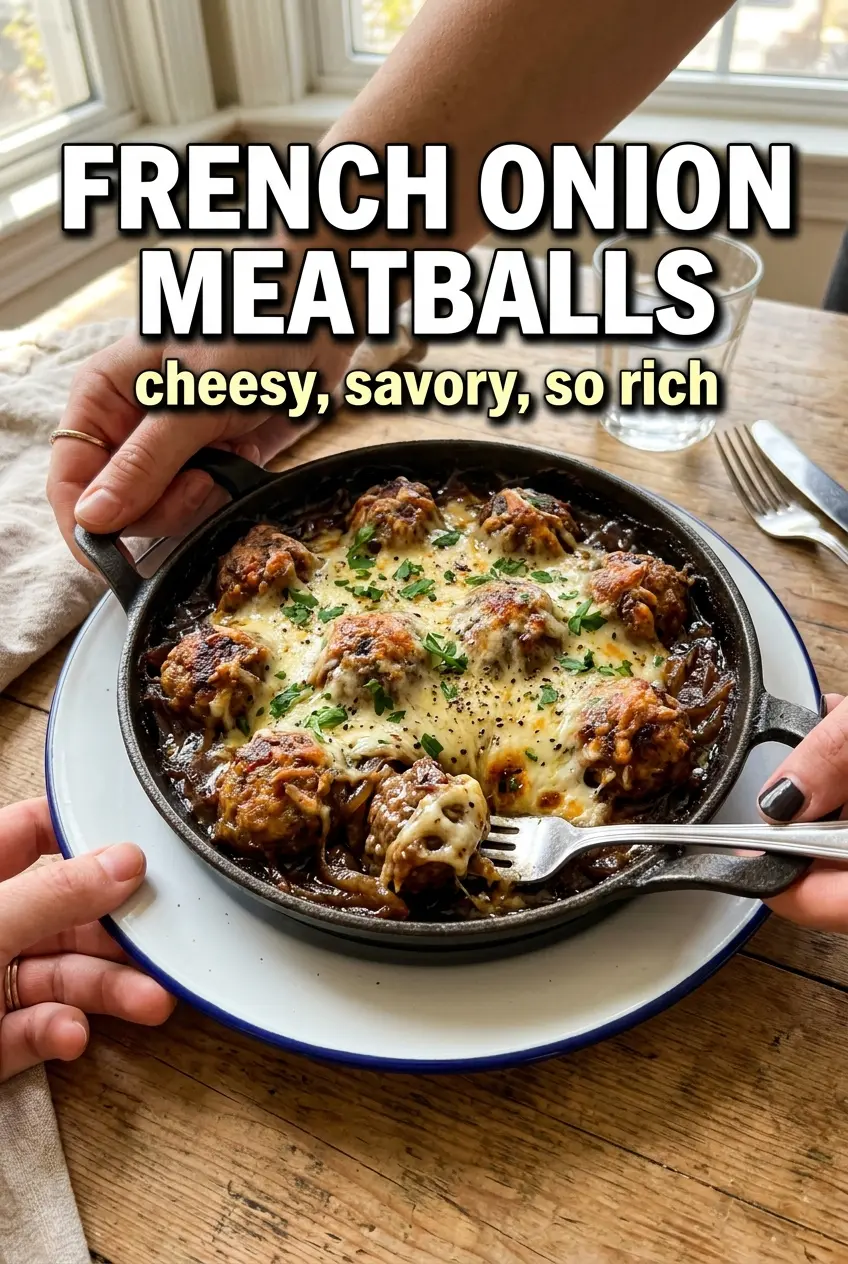
French onion meatballs deliver the best parts of a French onion soup dinner in one pan: deeply browned beef, sweet caramelized onions, and a blanket of melted cheese that turns bronzed and bubbly under the broiler. The sauce clings to the meatballs instead of thinning out into the dish, and every bite gets a little of that oniony broth and savory crust on top.
What makes this version work is patience in the skillet. The onions need enough time to turn soft, jammy, and dark gold before the broth goes in, because that slow caramelization is where the flavor comes from. Browning the meatballs first matters too; it gives the sauce a better base and keeps the meatballs from tasting steamed. Once the cheese goes on, the broiler finishes the job fast, so you get a real melt without drying out the sauce.
Below, I’ll walk through the part that matters most: how to build the onion sauce without rushing it, plus the best way to handle leftovers so the meatballs stay tender the next day.
The onions cooked down into this rich, sweet sauce and the cheese browned beautifully under the broiler. I was worried the meatballs would dry out, but they stayed tender all the way through.
Save these French onion meatballs for the night you want caramelized onions, melted Gruyere, and one pan of comfort without making soup.
The Part People Rush: Caramelizing the Onions Until They Turn Jammy
The onions are the backbone here, and they need time to lose their sharp edge and become soft, sweet, and deeply browned. If you crank the heat, they’ll scorch on the outside before the water cooks off, and the sauce ends up tasting bitter instead of rich. Medium-low heat gives you control, and the butter keeps everything moving without drying the pan out.
The other thing that matters is the fond left behind from browning the meatballs. Those browned bits dissolve into the wine or broth and build a sauce that tastes like it cooked for hours, even though it only took a few minutes to come together once the onions were ready.
What Each Ingredient Is Actually Doing in These French Onion Meatballs

- Ground beef — Use beef with enough fat to stay juicy after browning and simmering. Very lean beef will work, but the meatballs won’t have the same tenderness.
- Breadcrumbs and egg — This is the binder that keeps the meatballs from cracking or turning dense. The breadcrumbs hold onto moisture while the egg sets the shape.
- Worcestershire — It adds a deep savory note that bridges the beef and the onion sauce. There isn’t a clean substitute for the same complexity, but a little soy sauce can stand in if that’s what you have.
- Dry white wine or beef broth — Wine gives the sauce a brighter edge and helps lift the browned bits from the pan. Beef broth is the safer swap if you want to keep the flavor rounder and richer.
- Gruyere or provolone — Gruyere gives you the classic nutty, French-onion finish, while provolone melts into a milder, stretchier top. Use the better cheese here; cheap shreds can go greasy before they brown.
Building the Sauce So the Meatballs Stay Tender
Browning Without Crowding
Roll the meatballs into even 1.5-inch balls so they cook at the same pace, then brown them in butter until the outside has color but the centers are still underdone. If the pan is crowded, they’ll steam instead of sear, and you’ll lose both flavor and texture. Pull them out once they’ve got a browned crust; they finish in the sauce later.
Cooking the Onions Slowly
Add the sliced onions to the same skillet and let them soften before they start to color. Stir often, scrape the bottom, and keep the heat at medium-low so the onions turn sweet and jammy instead of dry and burnt. If the pan looks like it’s catching, add a splash of broth to loosen things and keep the fond from blackening.
Finishing in Broth and Cheese
Once the onions are deeply golden, deglaze with wine and let it simmer for a minute so the sharp alcohol edge cooks off. Add the broth, Worcestershire, and thyme, then return the meatballs and simmer until they’re cooked through and the sauce has thickened enough to coat a spoon. Top with cheese and broil just until the surface bubbles and spots of brown appear; walk away for even one minute too long and the cheese can go from melted to oily.
Three Ways to Adapt French Onion Meatballs
Make It Gluten-Free
Swap the breadcrumbs for gluten-free breadcrumbs or crushed gluten-free crackers. The meatballs will still hold together, though the texture may be a touch lighter, so don’t overmix the beef once the binder goes in.
Use Provolone for a Milder Melt
Gruyere gives the most classic onion-soup finish, but provolone melts beautifully and tastes a little softer and less nutty. If you want a gentler cheese flavor that still browns well, provolone is the better pick.
Make It Dairy-Free
Use a neutral oil or plant-based butter for the onions and skip the cheese topping, or finish with a dairy-free melting cheese if you have one you trust. You’ll lose some of the classic French onion richness, but the browned onions and beef broth still carry plenty of flavor.
Turn It Into a Bigger Dinner
Serve the meatballs over mashed potatoes, buttered noodles, or toasted bread to catch the sauce. That changes the dish from a skillet main into a full, stick-to-your-ribs dinner without changing the cooking method.
Storage and Reheating
- Refrigerator: Store in an airtight container for up to 4 days. The onions will thicken more as they chill, which actually helps the sauce cling to the meatballs.
- Freezer: Freeze the meatballs and sauce without the cheese topping for up to 2 months. Thaw overnight in the fridge before reheating so the meatballs don’t toughen.
- Reheating: Warm gently on the stove over low heat or in a covered baking dish at 325°F until heated through. If you blast it on high heat, the sauce can break and the meatballs will tighten up.
Questions I Get Asked About This Recipe
French Onion Meatballs
Ingredients
Equipment
Method
- Mix ground beef, breadcrumbs, egg, Worcestershire, garlic powder, onion powder, salt, and black pepper until evenly combined, then form into 1.5-inch balls.
- Heat 1–2 tablespoons of butter in a skillet over medium-high heat and brown the meatballs until well browned, then set aside.
- In the same skillet, melt butter over medium-low heat and add the thinly sliced onions.
- Caramelize the onions over medium-low heat for 30–35 minutes until deeply golden and soft, stirring occasionally (visual cue: sticky caramel color at the edges).
- Deglaze the skillet with dry white wine, scraping up browned bits.
- Add beef broth, Worcestershire, and fresh thyme, then bring the sauce to a gentle simmer.
- Return the browned meatballs to the onion sauce and simmer for 15 minutes until cooked through and coated in gravy.
- Transfer to a baking dish if your skillet isn’t oven-safe, then scatter shredded Gruyere or provolone over everything.
- Broil for 3–4 minutes until the cheese is golden and bubbly, watching closely to avoid burning.