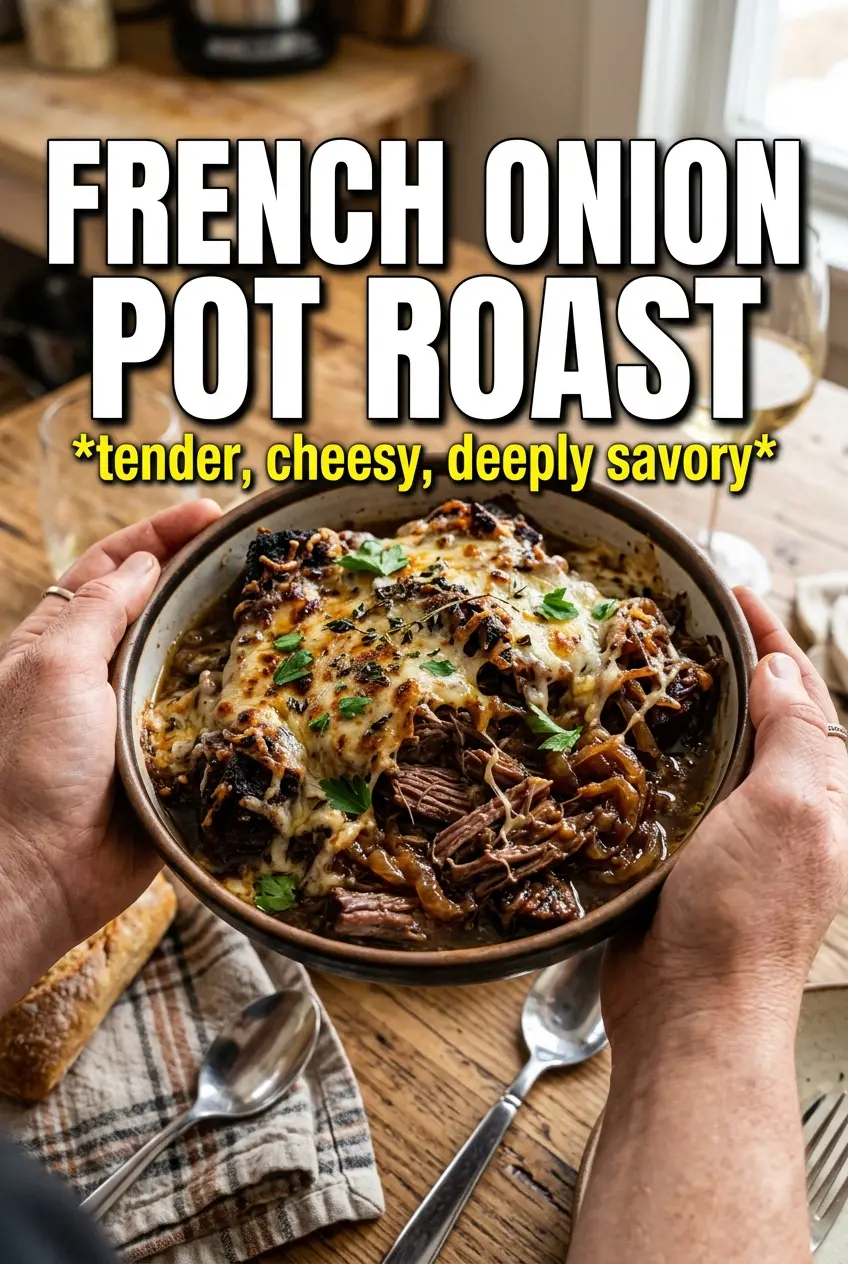
French onion pot roast lands in that sweet spot where the beef turns spoon-tender and the onions melt down into a broth that tastes like it took all day, because it did. The best bites have everything at once: deeply browned chuck, sweet caramelized onions, toasted bread, and a lid of Gruyere that goes blistered and stretchy under the broiler.
What makes this version work is patience in the pan before the oven ever takes over. The onions need time to go from sharp and crisp to jammy and brown, and the roast needs a hard sear so the braising liquid doesn’t taste flat. Wine adds lift, but if you use broth instead, the dish still gets plenty of depth from Worcestershire, thyme, and all those browned bits left in the pot.
Below you’ll find the small details that keep the onions from burning, how to tell when the beef is ready to shred, and the easiest way to broil the baguette and cheese without turning the top bitter.
The onions cooked down into this rich, sweet base and the roast shredded apart without any fight. I used the baguette on top and the Gruyere browned beautifully under the broiler.
Save this French Onion Pot Roast for the night you want a braised beef dinner with caramelized onions, toasted baguette, and bubbling Gruyere.
The Part Most Pot Roasts Miss: Building Onion Depth Before the Braise
The mistake with a French onion pot roast is treating the onions like a background vegetable. They’re not. They are the broth’s sweetness, the sauce’s body, and the reason the finished dish tastes like French onion soup instead of plain braised beef with cheese on top. If the onions stay pale, the whole pot tastes thin.
Thirty to thirty-five minutes over medium-low heat sounds long until you taste what that time buys you. The onions should collapse, turn glossy, then move from gold to a deep amber brown. If the pan starts catching, lower the heat and add a splash of broth or wine to loosen the browned spots without washing away the flavor.
What Each Ingredient Is Actually Doing in This Pot Roast

- Beef chuck roast — This is the cut you want because the fat and connective tissue break down into rich, shreddable meat. A leaner roast won’t give you the same silky texture after a long braise.
- Onions — Four large onions looks like a lot at the start, but they shrink into the sauce and give the dish its signature French onion flavor. Yellow onions are the best choice here; sweet onions work too, but they can push the final broth a little sweeter.
- Dry white wine or beef broth — Wine adds brightness and helps lift the browned bits from the bottom of the pot. If you skip it, use broth and add a small extra splash of Worcestershire for more savory depth.
- Gruyere — This cheese melts smoothly and browns without turning greasy. Swiss cheese can stand in, but the flavor will be milder and less nutty.
- Baguette — Toasted slices keep their shape under the broth and cheese instead of dissolving immediately. If the bread is soft, it turns gummy fast.
The Braise, the Shred, and the Broiler Finish
Getting a Deep Sear on the Roast
Heat the olive oil until it shimmers, then lay in the chuck roast and leave it alone until the first side releases cleanly. You’re looking for a dark brown crust, not gray beef with a few spots. If the pan is crowded or the meat is damp, it will steam instead of sear, and that lost browning is hard to get back later. Once the roast is deeply browned, move it out of the way and use the same pot for the onions.
Caramelizing the Onions Without Burning Them
Cook the onions in butter over medium-low heat and stir often enough to keep the edges from scorching. They’ll first soften, then turn golden, then slowly deepen into a sticky brown mass that clings to the spoon. If they start sticking too hard, add a spoonful of liquid and scrape the bottom of the pot; that loosened layer becomes part of the sauce. Garlic goes in late so it perfumes the pot without turning bitter.
Braising Until the Beef Falls Apart
After deglazing, return the roast to the pot and tuck it into the onions and broth. Cover it tightly and let the oven do the work for 3 to 3 1/2 hours, until a fork slips into the beef with almost no resistance. If it still feels tight, it needs more time, not more heat. A rushed braise gives you chewy slices instead of the loose, shred-ready texture that makes this dish worth making.
Finishing with Bread and Gruyere
Shred the beef directly in the broth so it soaks up the oniony liquid. Ladle it into bowls, add the toasted baguette rounds, then cover with Gruyere and slide the bowls under the broiler just until the cheese bubbles and spots of gold appear. Stay close at this point; the line between bubbly and burnt is short. The broiler should finish the dish, not rescue it.
How to Adapt This for a Bigger Table or a Different Pantry
Dairy-Free Version
Use olive oil for the onions and skip the butter, then finish the bowls without cheese or with a dairy-free melting cheese if you trust the brand. You’ll lose the classic Gruyere cap, but the braised beef and onions still carry the dish because the real flavor lives in the pot, not just on top.
Gluten-Free Serving
Serve the roast over mashed potatoes, polenta, or gluten-free toast instead of baguette. The broth itself is naturally gluten-free if your Worcestershire sauce is certified gluten-free, and that swap keeps the texture of the dish intact without changing the braise.
Wine-Free Option
Use beef broth in place of the white wine and add a little extra Worcestershire if you want more edge. The result is slightly rounder and less bright, but the long onion cook still gives the pot enough complexity to feel complete.
Make-Ahead for Guests
Braise the roast a day ahead, chill it in the broth, then reheat gently before serving and add the bread and cheese at the last minute. The flavor gets even better overnight, and this also makes skimming excess fat from the top much easier.
Storage and Reheating
- Refrigerator: Store the beef and broth for up to 4 days. The onions will continue to thicken the sauce as it sits.
- Freezer: Freeze the beef and onion broth without the baguette or cheese for up to 3 months. Thaw overnight in the fridge before reheating.
- Reheating: Warm gently on the stovetop or in a covered dish in the oven until hot through. Don’t boil it hard or the beef can dry out and the sauce can turn greasy.
Questions I Get Asked About This Recipe
French Onion Pot Roast
Ingredients
Equipment
Method
- Preheat the oven to 325F. Pat the beef chuck roast dry, season with salt and pepper, and sear in olive oil in a Dutch oven until deeply browned, then remove.
- Cook the onions in butter over medium-low heat for 30-35 minutes, stirring until deeply caramelized. Keep the heat low so the onions soften and brown without burning.
- Add the garlic and cook briefly until fragrant. Pour in the white wine or beef broth to deglaze, scraping up the browned bits.
- Add the beef broth, Worcestershire sauce, fresh thyme, and bay leaves to the Dutch oven. Stir to combine and return to a simmer if needed.
- Return the chuck roast to the pot, cover, and braise in the 325F oven for 3 to 3-1/2 hours until fall-apart tender. The meat should yield easily when prodded.
- Remove the bay leaves from the broth. Shred the beef in the broth so it soaks up the onion-garlic flavors.
- Ladle the pot roast and broth into bowls. Float toasted baguette on top and cover with Gruyère so it melts into the liquid.
- Broil for 3-4 minutes until the cheese is golden and bubbly. Keep a close watch so it browns without scorching.