Fresh cranberry orange sauce wakes up the whole plate with a bright pop of tart fruit and a glossy, spoonable texture that clings instead of running. The cranberries break down just enough to thicken the sauce naturally, while the orange juice and zest keep it from tasting flat or one-note. Folding in the orange segments at the end gives every bite a juicy burst that makes this version feel fresher than the usual straight-jam style sauce.
The key is starting with the sugar and orange juice before the cranberries go in. That gives the berries a hot, sweet bath that helps them burst evenly instead of drying out on the edges. The zest goes in off the heat so it stays fragrant instead of turning bitter, and the orange segments are added only after the sauce cools a little so they hold their shape.
Below, I’ve included the timing cue that keeps the sauce from getting too thick, plus a few smart swaps if you need to use frozen cranberries or want a less sweet finish.
I loved that the cranberries broke down in about 10 minutes and the orange zest stayed bright instead of getting lost. It thickened up beautifully as it chilled, and the orange segments made it taste fresh instead of heavy.
Save this fresh cranberry orange sauce for the side dish table when you want bright, chunky cranberry flavor with real orange pieces.
The Trick to Cranberry Sauce That Thickens Without Turning Jammy
Cranberries thicken as they burst, which is why this sauce needs a real simmer instead of a quick warm-up. If you pull it too early, it stays thin and sharp; if you cook it down too long, it turns pasty once it cools. The sweet spot is when most berries have popped but a few still hold their shape, giving you a sauce that looks loose in the pan and sets up properly in the fridge.
The orange juice also matters more than people think. It brings enough liquid to help the sugar dissolve, but it also adds enough acid to keep the sauce bright. That balance keeps the cranberries tasting lively instead of heavy.
What Each Ingredient Is Doing in the Pan
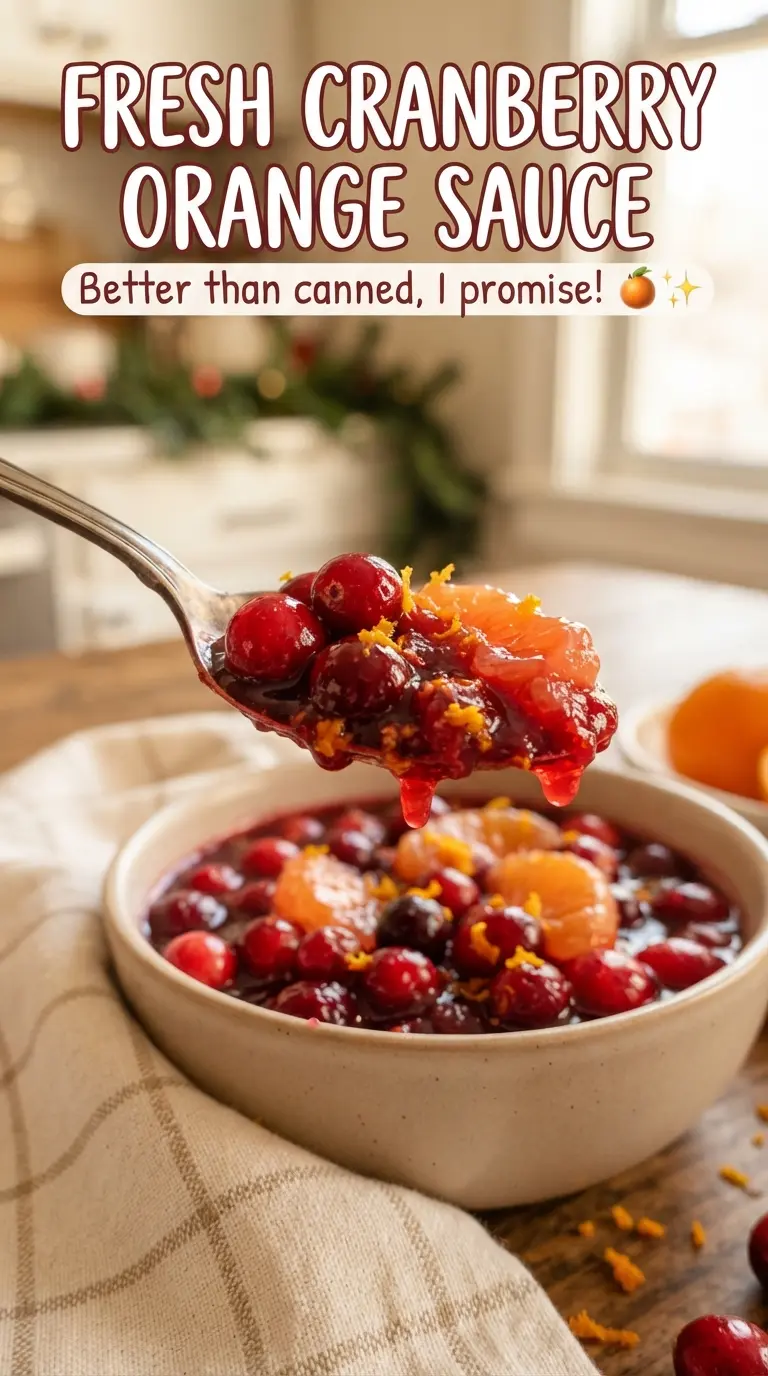
- Fresh cranberries — These are the backbone of the sauce. They burst as they cook and naturally give you that thick, glossy texture, so don’t swap in dried cranberries here. Frozen cranberries work well if that’s what you have; use them straight from the freezer and add a minute or two to the simmer.
- Fresh orange juice — This softens the sharp edge of the cranberries and gives the sauce enough liquid to start cleanly. Bottled juice works in a pinch, but fresh juice tastes brighter and keeps the sauce from leaning syrupy.
- Orange zest — This is where the real orange aroma lives. Stir it in after cooking so the oils stay fragrant, not cooked off. If you zest the orange before juicing it, you’ll get the most from both ingredients.
- Orange segments — These add freshness and texture at the end. Fold them in gently once the sauce cools a bit so they stay intact instead of breaking apart.
- Sugar — It doesn’t just sweeten; it helps the cranberries soften evenly and balances the tartness. You can reduce it slightly if you like a sharper sauce, but cutting it too much makes the fruit taste harsh instead of bright.
- Salt — Just a pinch, but it matters. It rounds out the orange and makes the cranberry flavor taste fuller.
Building the Sauce So the Fruit Stays Bright
Dissolving the Sugar First
Bring the orange juice and sugar to a full boil before adding the cranberries. You want the sugar fully dissolved so the sauce cooks evenly from the start, not grainy around the edges. If the liquid hasn’t come up hot enough, the berries take longer to burst and the finished sauce can taste flat.
Simmering Until Most Berries Burst
Once the cranberries and salt go in, lower the heat enough to keep a steady simmer. The berries will pop with little bursts as they heat through, and the sauce will turn from loose and foamy to thicker and glossy. Stop when most berries have burst but a handful remain whole; that mix gives the sauce body without turning it into a puree.
Finishing With Zest and Orange Segments
Take the pan off the heat before stirring in the zest. That keeps the citrus oils bright instead of bitter. Let the sauce cool for a few minutes before folding in the orange segments so they stay juicy and intact, then chill it until serving time. It will thicken more as it rests, which is exactly what you want.
How to Adapt It Without Losing the Bright Cranberry-Orange Balance
Less Sweet, More Tart
Cut the sugar back by 2 to 3 tablespoons if you like a sharper sauce, but don’t remove it completely. Cranberries need a little sweetness to taste round instead of aggressively sour, and the texture sets better when there’s enough sugar in the pot.
Using Frozen Cranberries
Frozen cranberries work without thawing, which makes this an easy make-ahead option. Add them straight to the simmering juice and expect the cook time to run a minute or two longer while they come up to temperature.
No Whole Oranges on Hand
If you don’t want orange segments in the sauce, leave them out and add a little extra zest instead. You’ll lose the juicy pops, but the sauce will still taste balanced and bright.
Storage and Reheating
- Refrigerator: Store in an airtight container for up to 1 week. It will thicken as it chills, so don’t judge the final texture while it’s still warm.
- Freezer: It freezes well for up to 2 months. Cool it completely, then freeze in a sealed container with a little headspace for expansion.
- Reheating: Warm it gently over low heat or at room temperature if you want it spoonable again. High heat can make the orange pieces break down and can loosen the set you worked for.
Answers to the Questions Worth Asking
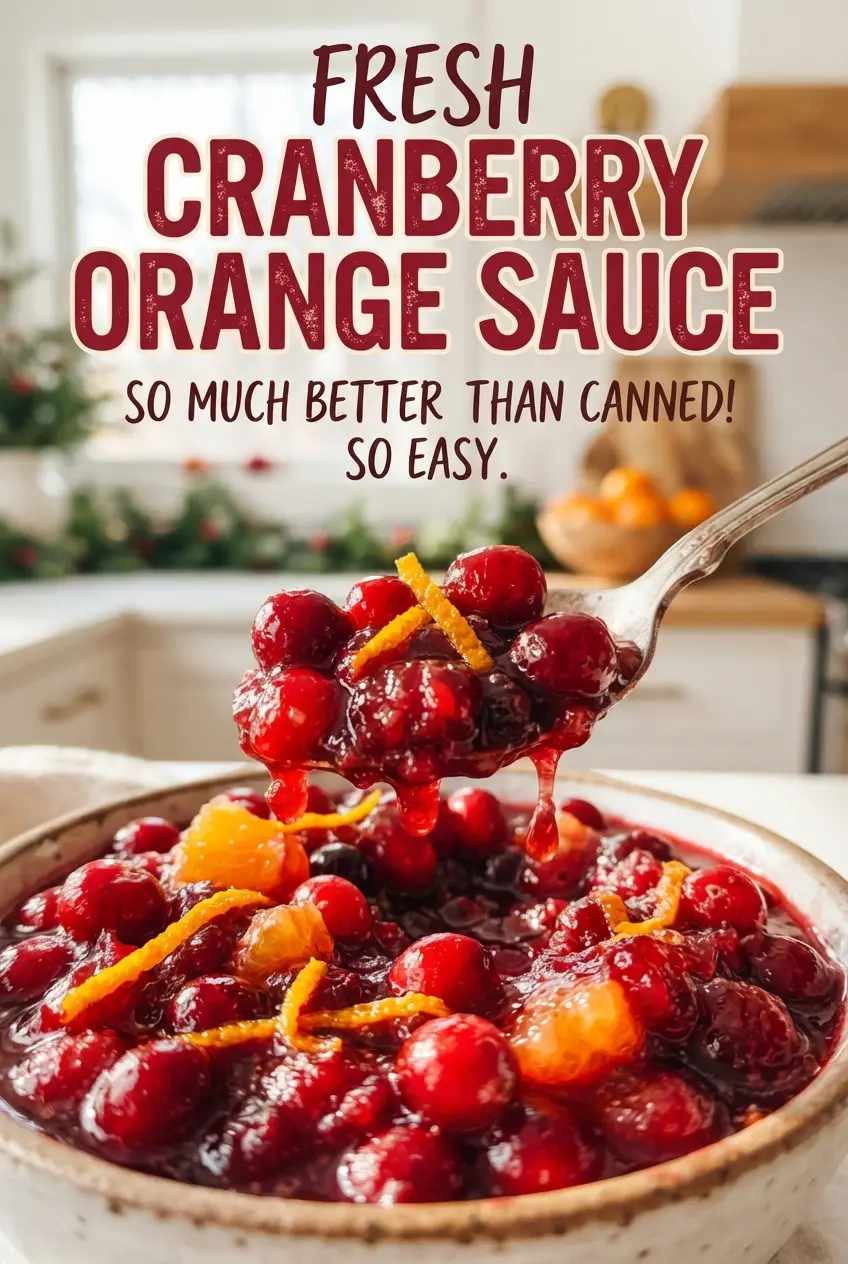
Fresh Cranberry Orange Sauce
Ingredients
Equipment
Method
- Bring sugar and fresh orange juice to a boil in a saucepan over medium-high heat, stirring until the sugar dissolves. Look for a rolling boil that keeps bubbling across the surface.
- Add fresh cranberries and salt to the saucepan. Stir to coat the berries and return to a boil before reducing heat.
- Simmer for 10 minutes, stirring occasionally, until most berries burst and the mixture looks thickened. Keep the simmer steady, not a hard boil.
- Remove the saucepan from the heat and stir in orange zest. The sauce should smell strongly citrusy right away.
- Cool slightly, about 5 minutes, so the sauce isn’t too hot to handle. It should be warm but not actively steaming.
- Gently fold in the orange segments until evenly distributed. Stop stirring as soon as the segments are coated to avoid breaking them.
- Chill the cranberry orange sauce until serving. The texture should thicken as it cools.