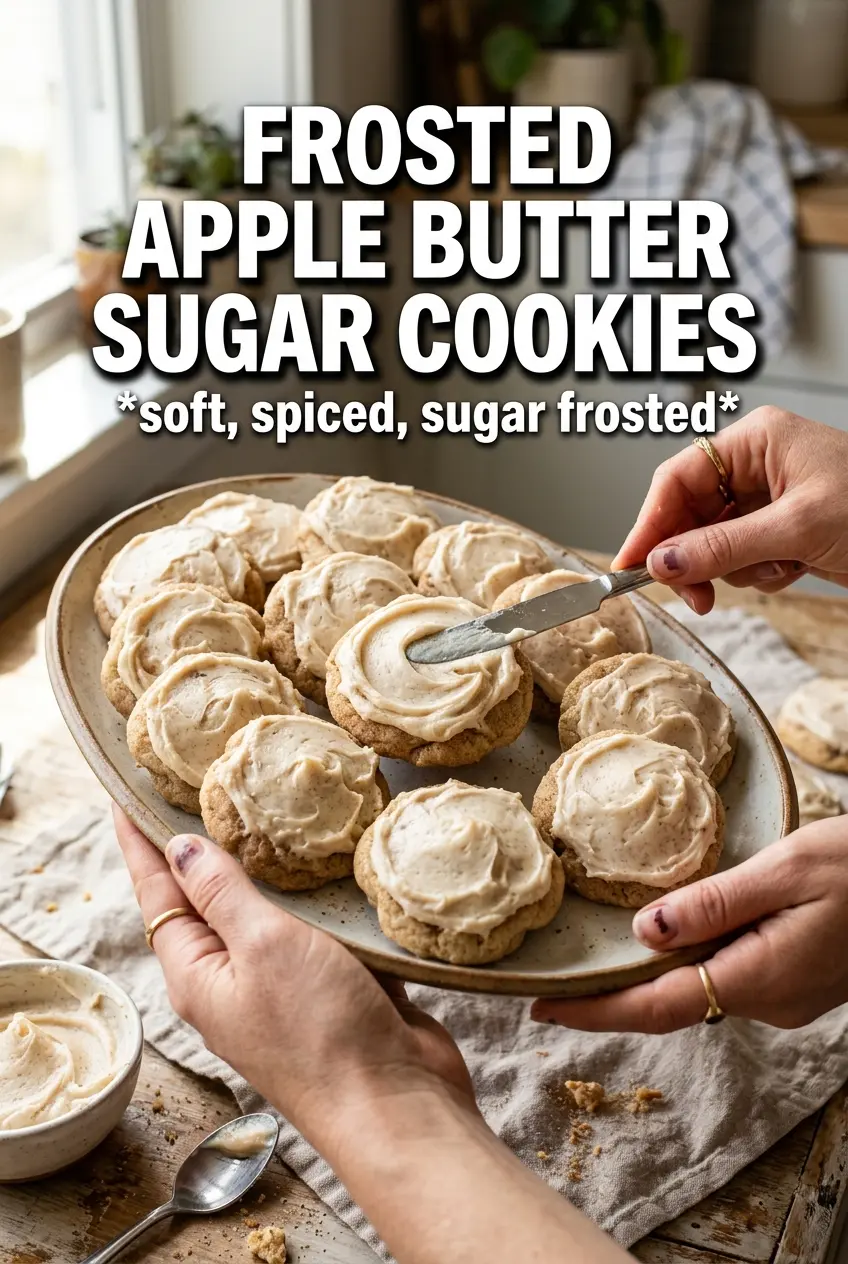
Frosted apple butter sugar cookies bake up soft in the center with crisp edges, then get finished with a creamy apple butter frosting that tastes like a cross between a bakery sugar cookie and a slice of warm spice cake. The apple butter gives the dough a deeper, rounder sweetness than plain sugar cookies, and the frosting brings that same flavor forward without turning the cookie heavy. The cinnamon sugar and caramel on top seal the deal.
What makes these work is the balance. The dough has enough butter to stay tender, but the apple butter adds moisture and flavor without making the cookies cakey. Chilling the dough matters here because it keeps the cut-outs neat and helps the cookies hold their shape in the oven. Skip that rest and you’ll get softer edges, but you’ll lose the clean round shape and the nice defined bite.
Below, I’ve included the small details that matter most, including how to keep the frosting spreadable and how to keep the cookies from puffing up too much in the oven. Those little things are what turn a decent cookie into one people keep reaching for.
The dough chilled beautifully and the cookies kept their shape, but they still baked up soft. That apple butter frosting was the part everybody went back for.
Save these frosted apple butter sugar cookies for the days when you want a soft cut-out cookie with cinnamon, caramel, and a thick apple butter frosting.
The Dough Needs a Chill or the Shapes Will Drift
Apple butter adds more moisture than plain sugar cookie dough, which is great for flavor but easy to mishandle if you rush it. If the dough goes into the oven too warm, the cookies spread before the edges set and you lose the clean cut-out look. Chilling gives the flour time to hydrate and firms the butter back up, which is what keeps the cookies thick and tidy.
Roll the dough only after it has chilled long enough to feel firm but still pliable. If it cracks at the edges when you roll it, let it sit for a few minutes on the counter before trying again. If it feels sticky, dust the surface lightly with flour instead of working in a lot more flour, which can make the cookies dry.
What the Apple Butter and Cream Cheese Are Each Doing Here
- Apple butter — This does two jobs: it flavors the dough and helps carry that same flavor into the frosting. A thicker, well-cooked apple butter works best because it adds concentrated apple flavor without thinning the dough too much. Homemade or store-bought both work as long as it’s smooth and not watery.
- Unsalted butter — Use softened butter for the dough so it creams properly with the sugar and traps air, which gives you a lighter cookie. For the frosting, butter helps the cream cheese spread smoothly and keeps the topping from tasting one-note.
- Cream cheese — This is what makes the frosting taste rich instead of just sweet. It needs to be fully softened so it beats smooth; cold cream cheese leaves little lumps that never quite disappear. If you want a slightly lighter frosting, you can reduce the cream cheese a bit, but you’ll lose that tangy finish.
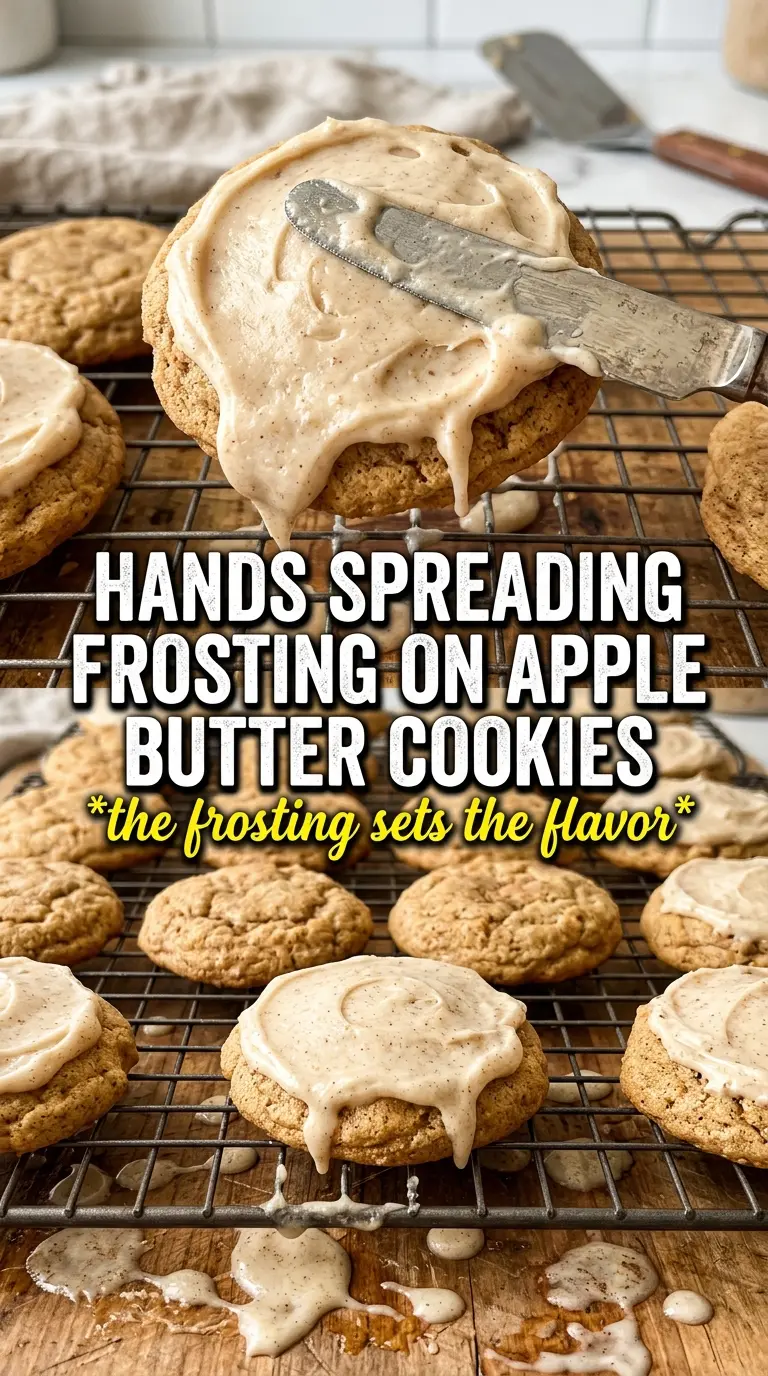
- Powdered sugar — This is what gives the frosting structure. Add it gradually, especially if your apple butter is on the loose side, so you can stop when the frosting is spreadable and not stiff. Too little and it slides off the cookies; too much and it turns pasty.
- Cinnamon — There’s cinnamon in both the dough and frosting because the apple butter needs that warm spice support. It doesn’t dominate here; it ties the whole cookie together. If your cinnamon is old and dull, the cookies will taste flatter than they should.
Rolling, Baking, and Frosting Without Losing the Texture
Build the Dough First
Start by creaming the butter, sugar, and apple butter until the mixture looks fluffy and slightly lighter in color. That step matters because it dissolves the sugar a bit and gives the cookies a softer bite. Add the egg and vanilla next, then mix in the dry ingredients just until the flour disappears. If you beat the dough after the flour goes in, you’ll toughen the cookies and they’ll bake up denser than they should.
Chill Before You Cut
Wrap the dough and chill it for a full hour. It should feel firm enough to roll without slumping, but not so cold that it shatters. Roll it to 1/4-inch thickness for the best balance of soft centers and sturdy edges, then cut your rounds or apple shapes and transfer them carefully to the baking sheet. If the dough starts sticking, chill it again for a few minutes instead of forcing it with more flour.
Bake Just Until the Edges Set
Bake at 350°F until the edges are set and the centers still look a touch soft, usually 8 to 10 minutes. These cookies keep cooking on the sheet after they come out, so pulling them at the first sign of firm edges keeps them tender instead of dry. Let them cool completely before frosting. If you frost them while they’re warm, the frosting melts and the cinnamon sugar slides right off.
Whip the Frosting to Spreadable
Beat the cream cheese, butter, apple butter, powdered sugar, cinnamon, and just enough milk to get a thick, spreadable frosting. It should hold swirls on the spoon but still move easily across the cookie without tearing the top. If it looks loose, add a little more powdered sugar. If it’s too stiff, add milk a teaspoon at a time. Spread the frosting only after the cookies are fully cool, then finish with cinnamon sugar and a light caramel drizzle.
How to Change These Cookies Without Losing What Makes Them Good
Gluten-Free Version
Use a 1:1 gluten-free all-purpose flour blend with xanthan gum already included. The cookies will be a little more delicate, so chill the dough well and handle the cut-outs gently. The flavor stays the same, but the texture is slightly more tender and less crisp at the edge.
Dairy-Free Adjustment
Swap in dairy-free butter for the dough and a dairy-free cream cheese alternative for the frosting. The cookies will still bake up soft, but the frosting may be a little looser, so add the powdered sugar slowly and chill it for a few minutes if needed before spreading.
Extra-Spiced Cookies
Add a pinch of nutmeg or allspice to the dough if you want the apple butter to read more like warm bakery spice than straight cinnamon. Keep the amount small, because the apple butter should still be the main flavor. Too much spice can bury the apple note and make the cookies taste crowded.
Make-Ahead Storage
You can chill the dough for up to 24 hours before rolling, or freeze the cut-out dough for later baking. Baked cookies keep well, but the frosting is best added the day you plan to serve them so the cinnamon sugar stays crisp and the caramel doesn’t soak in.
Storage and Reheating
- Refrigerator: Store frosted cookies in an airtight container for up to 4 days. The frosting stays creamy, but the cinnamon sugar will soften a bit after the first day.
- Freezer: Freeze unfrosted baked cookies for up to 2 months. Layer them with parchment so they don’t stick together, then thaw at room temperature before frosting.
- Reheating: These don’t need reheating. If you want to refresh an unfrosted cookie, let it sit at room temperature for 15 to 20 minutes; microwaving makes the edges go soft and the texture loses that clean sugar cookie bite.
Answers to the Questions Worth Asking
Frosted Apple Butter Sugar Cookies
Ingredients
Equipment
Method
- Beat the softened butter, granulated sugar, and apple butter until smooth, then beat in the egg and vanilla extract.
- Fold in the all-purpose flour, baking powder, salt, and cinnamon until the dough comes together.
- Refrigerate the dough for 1 hour while you preheat the oven to 350°F.
- Roll the dough to about 1/4-inch thickness, then cut into rounds or apple shapes.
- Place cutouts on a sheet pan and bake for 8–10 minutes, until the edges are just set.
- Cool the cookies completely before frosting.
- Beat the cream cheese, unsalted butter, apple butter, powdered sugar, and cinnamon until smooth and spreadable, adding milk as needed.
- Frost each cookie, then dust with cinnamon sugar and drizzle with caramel.