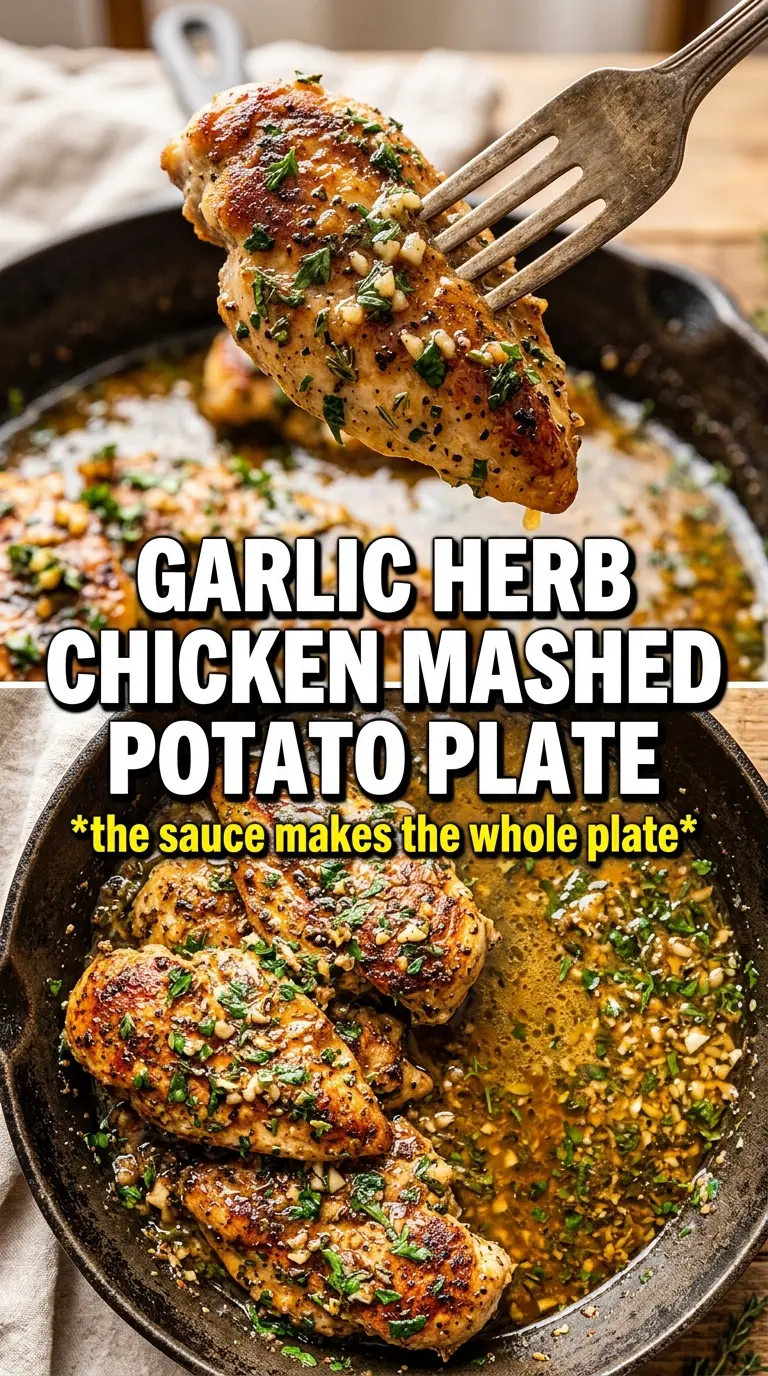
Golden-seared chicken breast with a garlicky herb pan sauce and a bowl of buttery mashed potatoes is the kind of dinner that disappears fast and gets requested again before the plates are cleared. The chicken stays juicy because it’s cooked hard enough to build color, then finished gently enough to stay tender. The potatoes do their part too: soft, creamy, and sturdy enough to catch every spoonful of sauce.
What makes this version work is the order. The chicken gets seasoned before it ever hits the pan, which builds flavor from the outside in, and the sauce starts with the browned bits left behind after searing. That fond is where the deep savory taste comes from. A little cream rounds everything out, but the sauce still tastes like garlic, herbs, and pan drippings instead of just dairy.
Below, I’m breaking down the parts that matter most: how to keep the chicken from drying out, how to get the mashed potatoes smooth without turning them gluey, and what to do if you want to make this with what you already have on hand.
The chicken stayed juicy and the sauce thickened just enough to coat the potatoes without turning runny. I liked that the garlic cooked in the pan for only a minute — it tasted mellow and rich instead of sharp.
Save this garlic herb chicken breast with mashed potatoes for the nights when you want a pan sauce that feels like extra effort without any fuss.
The Pan Sauce Starts With the Brown Bits, Not the Cream
The most common mistake with a chicken-and-potatoes dinner like this is rushing straight to the sauce before the pan has done its job. Those browned bits left behind after searing the chicken are the whole point. They dissolve into the broth and butter, turning into a sauce that tastes deep and savory instead of flat.
The other place people go wrong is heat. If the pan is too hot when the garlic goes in, it burns fast and turns bitter before the broth ever hits the skillet. Let the garlic go just until fragrant, then add the liquid and scrape the bottom while the pan is still hot enough to loosen everything easily. That’s how you get a smooth sauce with real flavor instead of a greasy skillet glaze.
- Chicken breasts — Boneless, skinless breasts work well here because they sear quickly and slice neatly over the potatoes. If yours are thick on one end and thin on the other, pound them to an even thickness so they cook at the same rate.
- Yukon gold potatoes — These give you a creamy mash without needing a ton of extra dairy. Russets work too, but they’ll taste a little fluffier and drier.
- Heavy cream — This matters in both the potatoes and the sauce because it adds body without turning thin or watery. Half-and-half works in a pinch, but the sauce will be lighter and the mash less plush.
- Fresh thyme and rosemary — Fresh herbs bring the clean, piney finish that dried herbs can’t quite match at the end of the sauce. Use dried herbs on the chicken seasoning if that’s what you have, but keep the fresh herbs for the finish if possible.
- Chicken broth — Use a broth you’d actually drink on its own. It’s only half a cup, but it carries the whole sauce base, so weak broth makes weak sauce.
What Each Ingredient Is Actually Doing in This Recipe
- Primary ingredient (the star) — Quality matters most. Choose the best you can find.
- Cooking medium (oil, butter, or broth) — This carries flavors and prevents dryness.
- Seasonings (salt, pepper, spices, herbs) — Layer flavors so nothing overpowers. Build depth gradually.
- Aromatics (garlic, onion, herbs) — Cook with fat to bloom flavors. Become the foundation.
- Supporting ingredients — Complement the main ingredient without overpowering it.
- Sauce or liquid (if applicable) — Brings flavors together. Balance richness with acid.
- Acid (lemon, vinegar, wine, or other) — Brightens and prevents flat-tasting results.
- Final finish (garnish, glaze, or sauce) — Prevents one-dimensional taste and adds visual appeal.
Getting the Chicken, Potatoes, and Sauce to Finish at the Same Time
Make the Mashed Potatoes First
Start the potatoes in salted water and cook them until a fork slides through with no resistance. If they’re even a little undercooked, the mash will stay grainy no matter how much butter you add. Drain them well, then let the steam escape for a minute before mashing so they don’t turn loose and watery. Warm cream melts in smoothly; cold cream cools the potatoes and can make them gummy when you stir too much trying to fix it.
Sear the Chicken Without Crowding the Pan
Season the chicken breasts well, then cook them in hot olive oil until the first side has a deep golden crust. If the pan is crowded, the chicken steams and turns pale, and you lose the flavor that should feed the sauce. Flip only once, and let the second side cook until the center reaches 165°F and the juices run clear. Pull the chicken out to rest before you start the sauce so it stays juicy when you slice it.
Build the Garlic Herb Pan Sauce
Lower the heat a little and add the butter, then stir in the garlic just until it smells fragrant, not browned. Pour in the broth and cream right away and scrape the skillet with a wooden spoon so every browned bit dissolves into the liquid. Let the sauce simmer until it lightly coats the back of a spoon. If it looks thin at first, that’s normal; it thickens as the steam cooks off and the cream settles into the pan drippings.
Finish With the Herbs and Serve Right Away
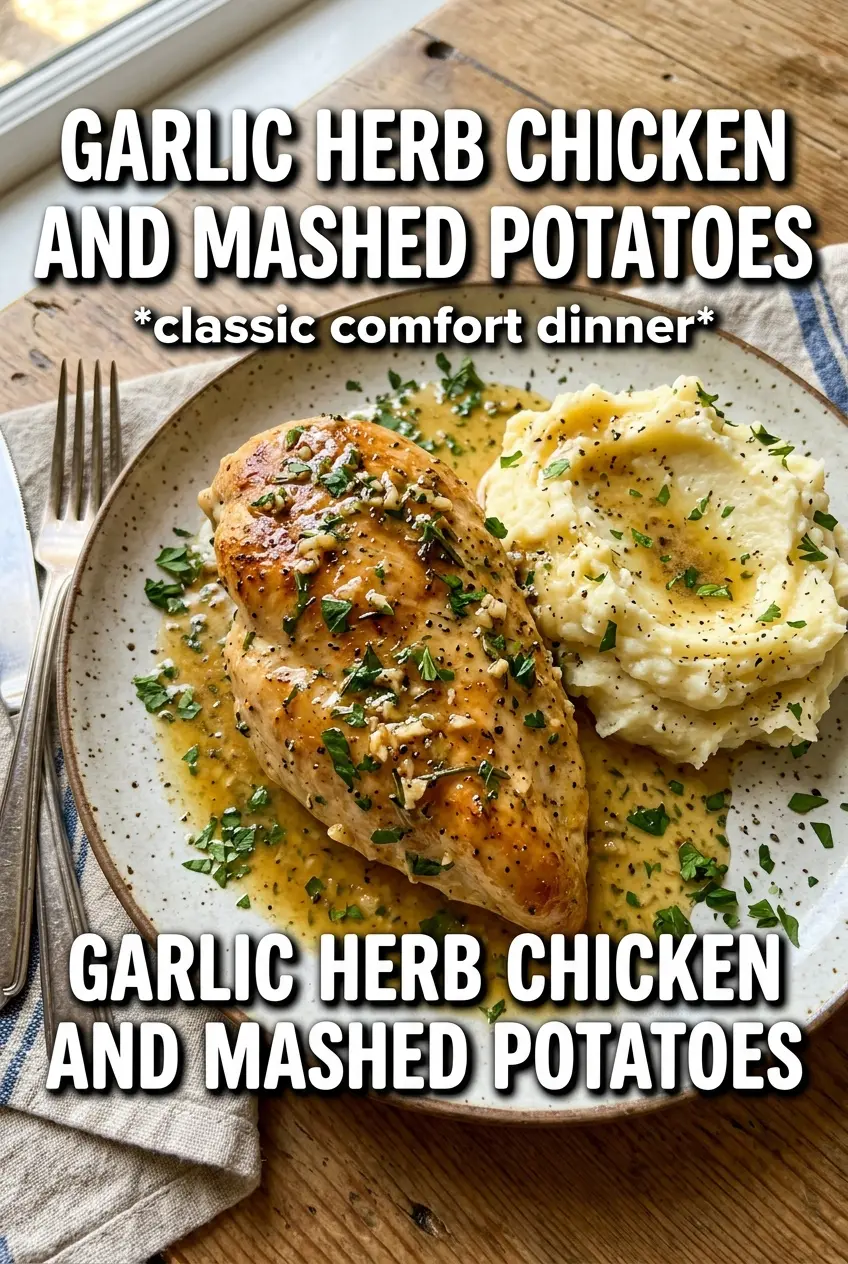
Stir in the thyme and rosemary at the end so they stay fresh and bright instead of tasting dull and cooked out. Spoon the mashed potatoes onto the plate first, then lay the chicken over them and drizzle the sauce across both. The sauce should pool around the potatoes and cling to the chicken in a glossy layer. If it sits too long in the pan, it will keep thickening, so serve as soon as everything is assembled.
How to Adjust This Chicken Dinner Without Losing the Comfort Food Feel
Make it dairy-free
Use olive oil in place of the butter and swap in unsweetened oat cream or a plain dairy-free cooking cream. The sauce won’t be quite as rich, but it will still cling nicely if you simmer it long enough to reduce. For the potatoes, use a dairy-free butter and warm unsweetened plant milk instead of cream.
Use chicken thighs instead of breasts
Boneless thighs bring a little more richness and are more forgiving if you tend to overcook chicken. They usually need a few extra minutes in the pan, but they stay tender and give the sauce even more flavor from the drippings.
Swap the potatoes for cauliflower mash
If you want a lower-carb plate, cauliflower mash works with the same sauce. Steam the cauliflower until very tender, then drain it well before blending with butter, cream, salt, and pepper. The texture will be lighter and less dense than potatoes, but it still gives you a good base for the pan sauce.
Stretch it for a bigger crowd
Double the sauce before you double anything else. A little extra broth and cream keeps enough sauce to coat more chicken and potatoes without tasting thin, and it also gives you room if some of the liquid cooks off faster than expected in a larger skillet.
Storage and Reheating
- Refrigerator: Store the chicken, sauce, and mashed potatoes separately for up to 4 days. The potatoes will firm up a bit as they chill, and the sauce will thicken.
- Freezer: The chicken freezes well, but the cream sauce and mashed potatoes can turn grainy after thawing. If you freeze it, keep the chicken and sauce together and make fresh potatoes later.
- Reheating: Warm the chicken gently in a covered skillet with a splash of broth, and reheat the sauce over low heat so the cream doesn’t split. The potatoes come back best with a spoonful of cream or milk stirred in as they heat.
Questions I Get Asked About This Recipe
Garlic Herb Chicken Breast with Mashed Potatoes
Ingredients
Equipment
Method
- Boil peeled and cubed Yukon gold potatoes in salted water until completely tender, about 15 minutes, then drain. Mash until smooth and creamy.
- Add 4 tablespoons butter and warm heavy cream to the mashed potatoes and mix until fully incorporated. Season with salt and black pepper until balanced and smooth.
- Season the boneless skinless chicken breasts with salt, black pepper, garlic powder, and dried herbs. Pat seasoning evenly so it adheres.
- Heat olive oil in a skillet over medium-high heat, then sear chicken for 5–6 minutes per side until golden. Cook through and set aside when done.
- Melt the remaining butter in the same skillet, add minced garlic, and cook for 1 minute until fragrant. Stir so the garlic doesn’t brown.
- Add chicken broth and heavy cream, then scrape up all the browned bits from the pan. Keep the heat steady so the sauce comes together.
- Simmer the pan sauce for 3–4 minutes until slightly thickened, then add fresh thyme and rosemary. Stir and let the herbs release their aroma for a moment.
- Serve the chicken over the mashed potatoes and drizzle the garlic herb pan sauce generously over both. Spoon extra sauce so it pools over the chicken and runs into the potatoes.