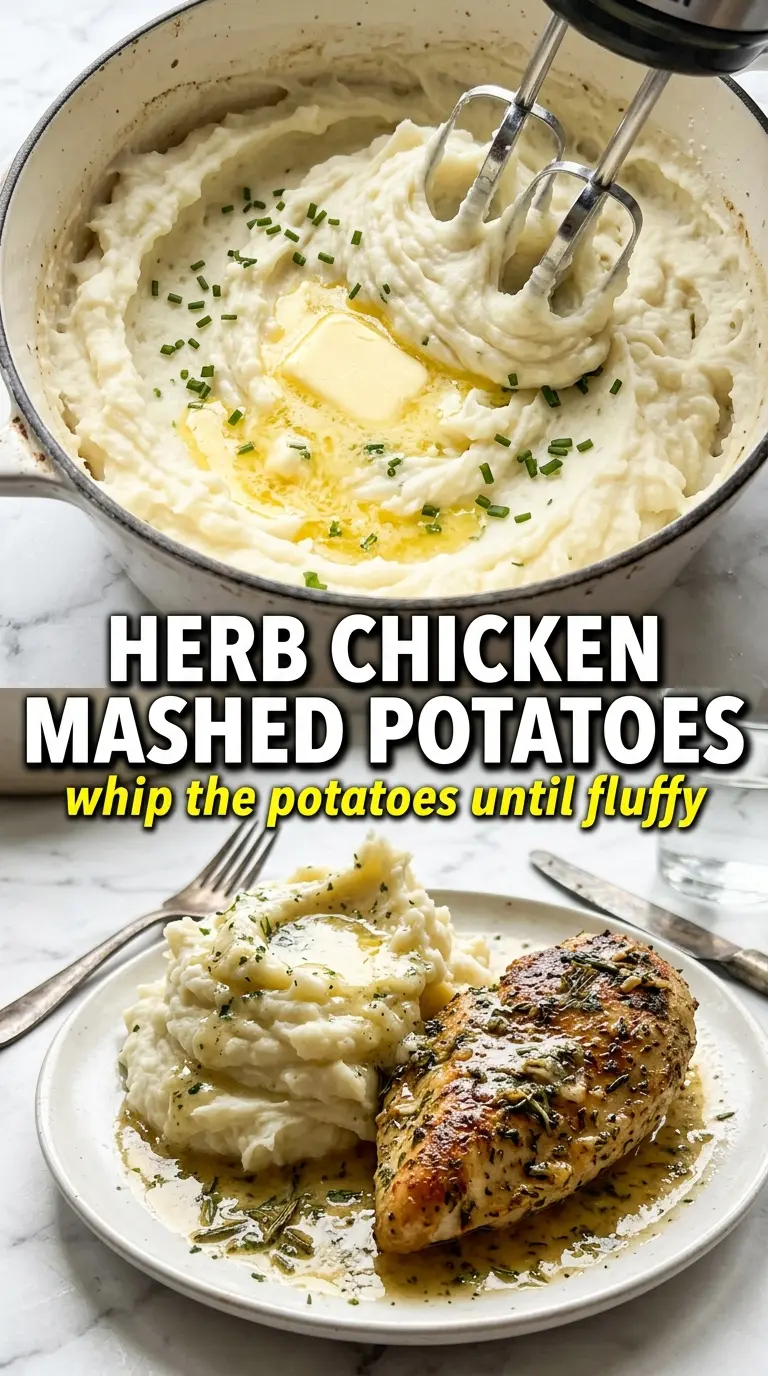
Golden seared chicken breast over buttery mashed potatoes is the kind of dinner that eats like comfort food but still looks polished on the plate. The chicken stays juicy because it’s seasoned well, seared hard enough to build color, and finished with a quick pan sauce that pulls every browned bit off the skillet. Pile that over Yukon Gold mashed potatoes, and you get a meal with crisp edges, tender meat, and enough sauce to make every bite count.
What makes this version work is the layering. The herb seasoning goes on the chicken before it hits the pan, so the surface develops a savory crust instead of tasting flat. Then the sauce gets built in the same skillet, which means the garlic, broth, and butter pick up all the flavor left behind from the sear. The potatoes matter too: Yukon Golds mash into a creamy texture without turning gluey, especially if you warm the cream before mixing it in.
Below, I’ll walk through the sear, the sauce, and the mashed potatoes so nothing gets rushed at the wrong moment. There’s also a note on keeping the chicken tender and a few variations if you want to swap the dairy or stretch the dish for a bigger table.
The chicken stayed juicy and the pan sauce picked up every bit of flavor from the skillet. I also loved that the mashed potatoes held up underneath without getting watery.
Garlic Herb Chicken Breast with Mashed Potatoes is the dinner I’d pin for a cozy plate with a real pan sauce and creamy Yukon Gold mash.
The Reason the Chicken Stays Juicy While the Sauce Still Gets Color
The biggest mistake with pan-seared chicken breast is giving the skillet too much work at once. If the pan is crowded or the heat is too low, the chicken steams before it browns, and you end up with pale meat and a thin, flat sauce. Here, the chicken goes into a hot pan with just enough oil to help the surface sear, then it comes out before the garlic and broth go in. That order matters because the browned bits left behind are the backbone of the sauce.
Breasts are lean, so they only need enough time to reach 165°F. Push them past that and they dry out fast. Letting them rest while you build the sauce gives the juices a chance to settle instead of spilling out the moment you slice in. That’s what keeps the chicken tender enough to sit on top of the potatoes without feeling stringy.
What the Potatoes and Pan Sauce Are Doing for Each Other
- Yukon Gold potatoes — These are the best choice here because they mash into a naturally creamy texture without turning stretchy. Russets work if that’s what you have, but they’ll make a fluffier, drier mash that wants more butter and cream to feel rich.
- Warmed cream or milk — Cold dairy cools the potatoes down and can make the mash feel stiff. Warm it first so it folds in smoothly and helps the butter emulsify instead of seizing up in the bowl.
- Butter in two places — The butter in the potatoes gives the mash its plush texture, and the butter in the skillet rounds out the sauce after the garlic cooks. If you cut the butter too much, the whole plate loses that silky finish.
- Fresh garlic — The minced garlic in the pan sauce is sharper and more aromatic than garlic powder, which is why it works best at the end. Garlic powder belongs on the chicken seasoning; fresh garlic belongs in the sauce.
The 20 Minutes That Actually Matter
Getting the Potatoes Silky
Start the potatoes in salted water and cook them until a fork slides in with no resistance. If they’re underdone, the mash turns lumpy no matter how long you beat it. Drain them well, then mash while they’re hot so the butter melts straight in. Add the warmed cream gradually, stopping as soon as the texture looks fluffy and smooth instead of wet.
Searing the Chicken Without Drying It Out
Pat the chicken dry before seasoning it. Moisture on the surface blocks browning. Season both sides generously, then lay the breasts into a hot skillet and leave them alone until they release easily and show a deep golden crust. Flip once and cook just until the center reaches 165°F; if the pan is smoking aggressively, the outside will darken before the middle is done.
Building the Sauce in the Same Pan
Pull the chicken out before you add the butter and garlic. The garlic only needs about a minute, just until it smells sweet and sharp without taking on color. Pour in the broth and scrape the pan hard enough to loosen the browned bits, then let it simmer until the sauce looks slightly glossy and spoonable. If it tastes flat, it usually needs another pinch of salt, not more broth.
Plating So the Sauce Lands Right
Spoon the mashed potatoes onto each plate first so they act like a soft base for the chicken. Set the chicken on top while it’s still hot, then drizzle the sauce over both the meat and the potatoes. That keeps the sauce from pooling in the bowl and lets every bite pick up a little of everything. Finish with parsley for color and a fresh edge.
How to Adapt This for Different Kitchens and Appetites
Dairy-Free Plate
Use olive oil in the potatoes instead of butter, and swap the cream for unsweetened oat milk or chicken broth if you want a lighter mash. The texture won’t be as rich, but warm dairy-free milk still gives the potatoes a smoother finish than adding it cold.
Make It Gluten-Free Without Changing the Method
This recipe is naturally gluten-free as written, as long as your chicken broth is certified gluten-free. The sauce gets its body from reduction and butter, not flour, so you don’t lose anything by keeping it that way.
Swap the Chicken Breasts for Thighs
Boneless thighs give you a little more wiggle room because they stay juicy even if they cook a minute or two longer. They’ll need an extra few minutes in the pan, and the final plate will taste a bit richer and more savory.
Stretch It for Four Hungry People
If you want the meal to go farther, increase the potatoes slightly and serve the chicken sliced over the mash instead of whole. Slicing makes the portions look generous, and the sauce coats more surface area so the plate still feels complete.
Storage and Reheating
- Refrigerator: Store the chicken, potatoes, and sauce in separate airtight containers for up to 4 days. The potatoes will thicken a little as they chill.
- Freezer: The chicken and sauce freeze well for up to 2 months, but the mashed potatoes can turn grainy after thawing. If you freeze the potatoes anyway, expect a softer, less creamy texture.
- Reheating: Warm the chicken gently in a covered skillet with a splash of broth, and reheat the potatoes over low heat with a little milk or cream. The key is low heat; high heat dries the chicken and makes the potatoes tighten up.
Answers to the Questions Worth Asking

Garlic Herb Chicken Breast with Mashed Potatoes
Ingredients
Equipment
Method
- Boil the Yukon Gold potatoes in salted water for 15-18 minutes until fork-tender, then drain well and return to the pot over low heat.
- Mash with butter and warmed heavy cream or whole milk until smooth and fluffy, then season with salt, pepper, and garlic powder to taste; cover to keep warm.
- Season both sides of the chicken breasts with garlic powder, smoked paprika, dried thyme, dried rosemary, salt, and pepper.
- Heat olive oil in a skillet over medium-high heat and sear the chicken for 5-6 minutes per side until golden and cooked through to 165°F, then remove to a plate.
- Melt 2 tablespoons butter in the same skillet, then cook minced garlic for 1 minute until fragrant.
- Add chicken broth and scrape up the browned bits from the pan, then simmer for 2-3 minutes until a simple pan sauce forms.
- Spoon mashed potatoes onto plates and place the chicken on top.
- Drizzle the garlic herb pan sauce over the chicken and potatoes.
- Finish with fresh parsley garnish and serve hot.