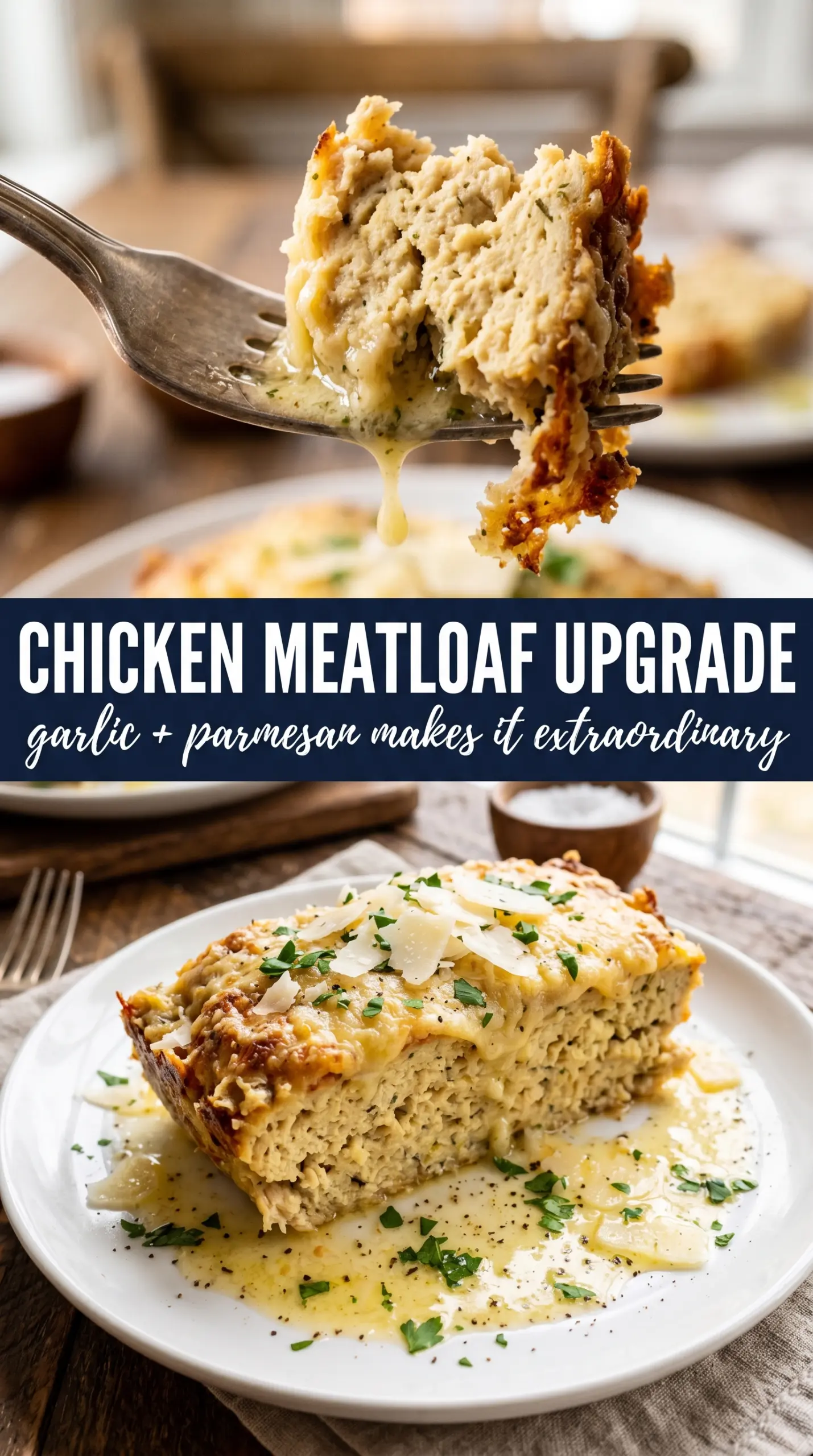
Garlic Parmesan Chicken Meatloaf comes out tender, savory, and crowned with a crisp, golden top that tastes like the best part of a baked pasta night without the pasta. The chicken stays lighter than a classic beef meatloaf, but the parmesan, garlic, and buttery finish give it enough richness to feel like a real main dish, not a compromise.
What makes this version work is the balance of moisture and structure. Ground chicken can go dry fast, so the egg, panko, and parmesan help the loaves hold together without turning dense. The garlic butter on top does more than add flavor; it keeps the surface from drying out and helps the parmesan brown into a salty crust.
Below, you’ll find the small details that matter most: how to mix the meat just enough, how to shape the loaves so they cook evenly, and the one topping move that gives you that glossy, bakery-style finish.
The loaves stayed juicy and the parmesan on top got this crisp little crust that my kids kept picking off first. I was worried ground chicken would be bland, but the garlic butter at the end fixed that completely.
Save these golden garlic parmesan chicken meatloaves for a lighter dinner that still brings a crisp crust and plenty of garlicky butter.
The Trick That Keeps Ground Chicken Tender Instead of Dense
Ground chicken needs a lighter hand than beef. If you work it like a meatloaf mixture that needs kneading, the proteins tighten up and you end up with a bouncy, dry loaf instead of a tender one. Mixing until the ingredients are just combined is the difference between slices that hold together and slices that eat like a hockey puck.
The other thing people miss is that parmesan and panko are doing different jobs here. Parmesan brings salt and a deep savory edge, while panko gives the mixture enough structure to keep the loaves from spreading into flat ovals on the pan. The garlic butter on top isn’t decoration; it protects the surface and helps the cheese brown before the interior overcooks.
- Ground chicken — Use a package that isn’t ultra-lean if you can help it. A little fat makes the finished meatloaves juicier. If yours is very lean, the butter topping matters even more.
- Parmesan — Freshly grated parmesan melts and browns better than the shelf-stable canister stuff. The pre-grated kind can work in a pinch, but it won’t give you the same crust.
- Panko breadcrumbs — Panko keeps the texture lighter than regular breadcrumbs. If you need a gluten-free version, use gluten-free panko and keep the amount the same.
- Garlic butter topping — This is where the dish gets its finish. Brush it on before baking for color, then use the rest after baking so the flavor stays bright and the surface stays glossy.
What Each Ingredient Is Actually Doing in This Meatloaf or Meatballs
- Ground meat (the protein foundation) — Use 80/20 so it stays moist. Handle gently to keep texture tender instead of dense.
- Breadcrumbs or fillers (the binder) — These hold the meat together without making it dense. Soak in milk first so they add moisture.
- Egg (the structural binding agent) — This holds everything together during cooking. One egg per pound of meat is the right ratio.
- Onion and aromatics (the base flavor) — Mince finely so they distribute evenly. Raw onion softens as it cooks and becomes part of the texture.
- Seasonings (salt, pepper, Worcestershire, spices) — Build flavor boldly. The meat mixture carries the entire flavor profile.
- Milk or liquid (the moisture keeper) — This keeps the meatloaf tender instead of dense and dry. Don’t skip this step.
- Glaze or sauce (ketchup-based or other) — This adds sweetness, moisture, and flavor to the exterior. Apply strategically so it caramelizes.
- Resting time (the final step) — Let the meatloaf rest 10 minutes so it sets and slices cleanly. Cutting too soon makes it fall apart.
Building the Loaves So They Bake Evenly
Mixing Without Overworking
Put everything in a bowl and mix with your hands just until the chicken no longer looks streaky. The mixture should hold together when you press it, but it shouldn’t feel pasted or sticky from too much handling. If it starts to look smooth like sausage filling, you’ve gone too far and the texture will tighten in the oven.
Shaping for Even Cooking
Divide the mixture into four equal portions and shape them into oval loaves on the parchment-lined pan. Keep them similar in size and thickness so they finish at the same time. If one loaf is much taller than the others, the outside will dry before the center reaches 165°F.
Finishing with Butter and Parmesan
Brush the tops with the melted garlic butter, then press on extra parmesan so it sticks. That layer turns into the crust you’re after. Bake until the tops are deeply golden and the juices run clear, then brush on the remaining butter right after they come out of the oven so the garlic stays fragrant.
Make It Gluten-Free
Swap the panko for gluten-free panko or crushed gluten-free crackers. Keep the amount the same, but watch the mixture texture; some gluten-free crumbs absorb a little more moisture, so the loaves may feel slightly firmer before baking.
Go Dairy-Free Without Losing the Garlic Finish
Use a dairy-free parmesan-style substitute in the meat mixture and top the loaves with olive oil mixed with garlic instead of butter. You won’t get the same rich browning, but you’ll still get a savory crust and a clean garlic finish.
Turn Them Into One Large Meatloaf
Shape the mixture into a single loaf and add 10 to 15 minutes to the bake time, checking the center with an instant-read thermometer. The flavor stays the same, but the crust will be a little less pronounced than with the individual loaves.
Storage and Reheating
- Refrigerator: Store leftovers in an airtight container for up to 4 days. The crust softens a bit, but the meatloaf stays moist.
- Freezer: Freeze baked meatloaves wrapped tightly and stored in a freezer bag for up to 2 months. Thaw overnight in the refrigerator before reheating for the best texture.
- Reheating: Warm in a 325°F oven, covered loosely with foil, until heated through. The biggest mistake is blasting it in the microwave, which dries out the chicken and turns the parmesan topping leathery.
Answers to the Questions Worth Asking
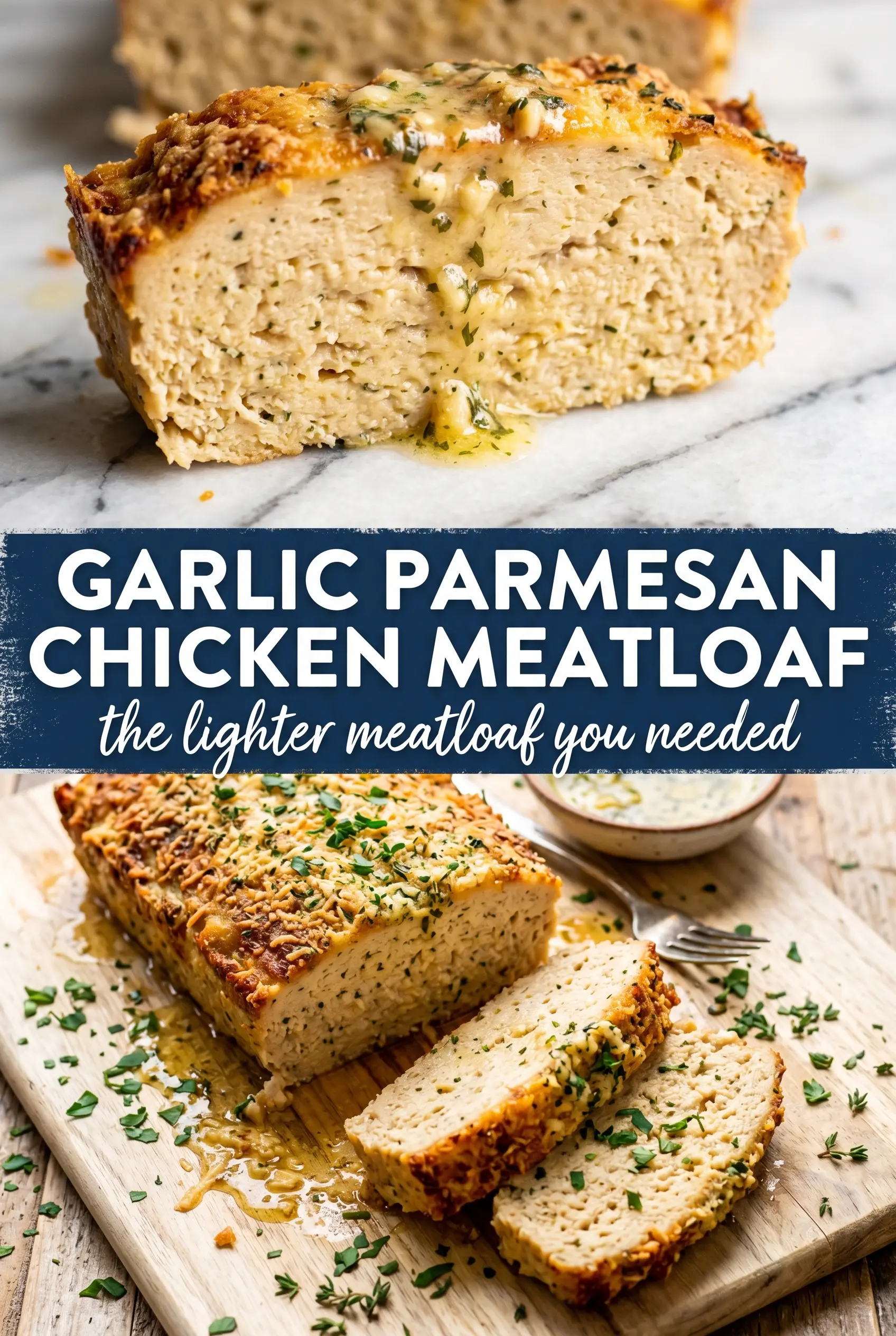
Garlic Parmesan Chicken Meatloaf
Ingredients
Equipment
Method
- Preheat the oven to 400°F and line a sheet pan with parchment for easy release and cleanup.
- In a large bowl, combine ground chicken, parmesan cheese, panko, minced garlic, egg, chopped parsley, Italian seasoning, garlic powder, salt, and black pepper, then mix until just combined.
- Divide the mixture into 4 equal portions and shape each into an oval loaf on the prepared sheet pan.
- For the topping, mix the melted butter with minced garlic and brush it over each meatloaf, then press extra parmesan on top.
- Bake for 25–28 minutes at 400°F until the meatloaves are cooked through to 165°F internally and golden on top.
- Brush with the remaining garlic butter, garnish with fresh parsley, and serve.