Garlic Parmesan Chicken Meatloaves come out tender in the middle with a salty, crisp top that tastes like the best part of a baked pasta dinner. The smaller shape gives you more browned edges than a standard loaf, and that means more flavor in every bite without waiting an hour for dinner to finish cooking.
The key is treating ground chicken gently and using just enough binder to hold the loaves together. Parmesan adds seasoning and helps the tops brown, while panko keeps the texture lighter than a dense beef-style meatloaf. A brushed-on garlic butter finish turns the top into something close to a crust, and it also keeps the meatloaves from tasting dry.
Below you’ll find the trick to shaping these so they bake evenly, plus a few smart swaps if you need to adjust the breadcrumbs or make them gluten-free. The details matter here, but the method stays simple enough for a weeknight.
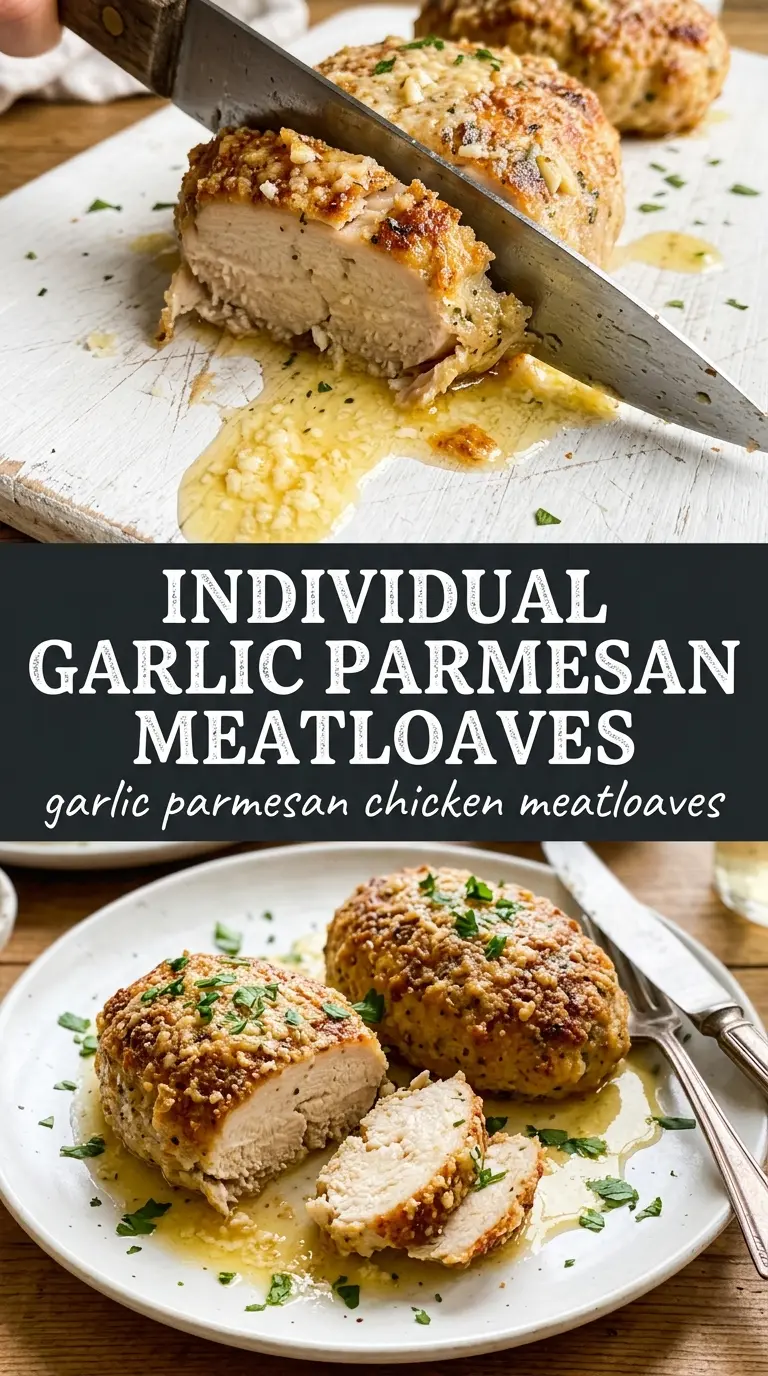
The parmesan on top browned into a crust and the centers stayed juicy. I baked them the full 25 minutes and they still sliced cleanly without falling apart.
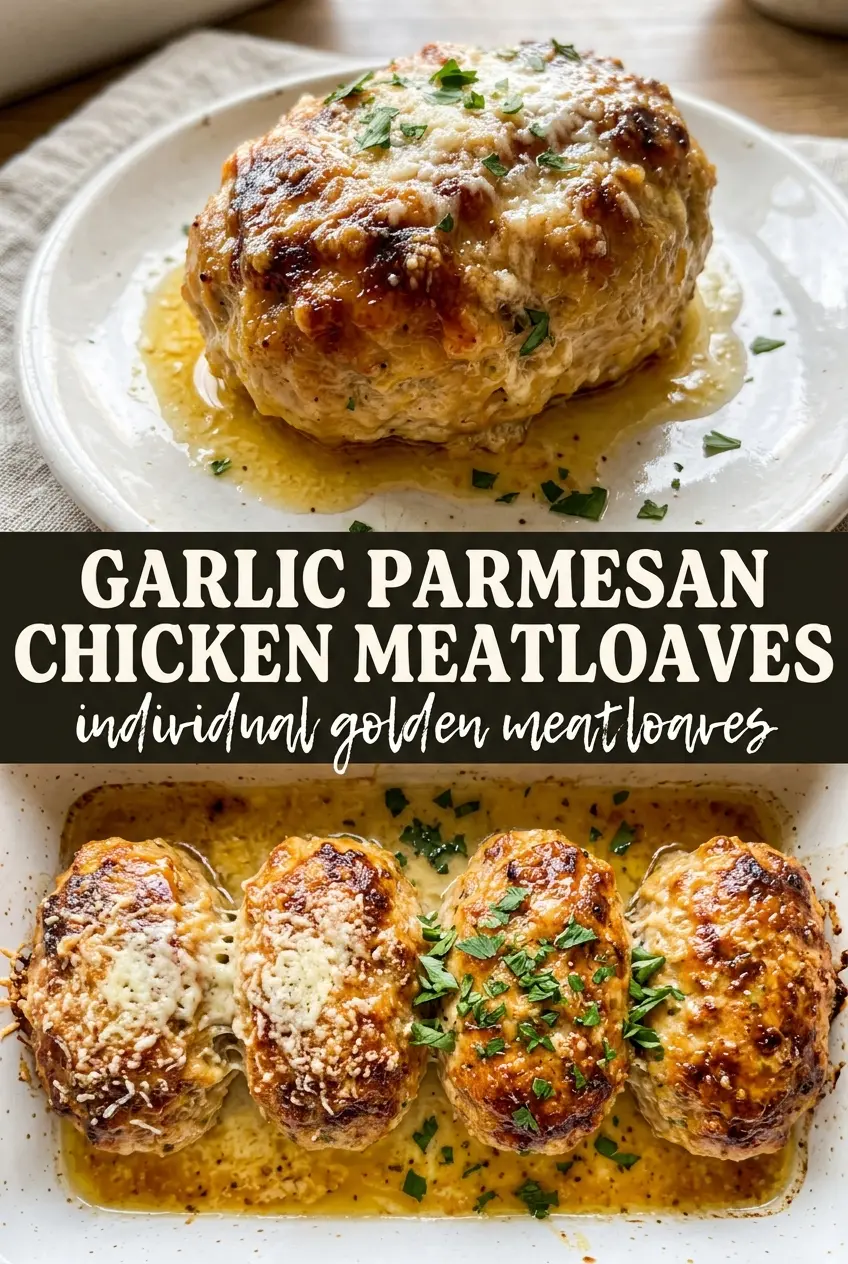
Garlic Parmesan Chicken Meatloaves bake into golden little loaves with a crisp parmesan top and juicy center every single time.
The Mistake That Makes Chicken Meatloaves Dense Instead of Tender
Ground chicken doesn’t have much fat, so it punishes overmixing faster than beef does. Stir it until the ingredients are evenly distributed, then stop. If you keep working the mixture, the proteins tighten up and the finished loaves turn springy instead of soft.
The other thing that matters here is shape. Four smaller loaves cook evenly and brown on all sides much better than one big loaf, which is why this recipe gives you better texture in less time. The parchment-lined sheet pan keeps the bottoms from sticking and lets the edges dry just enough to pick up color.
- Ground chicken — Use regular ground chicken, not extra-lean if you can help it. A little fat keeps the loaves moist and helps them hold together without tasting crumbly.
- Parmesan — Finely grated parmesan mixes into the meat for seasoning and structure, then more on top gives you that salty, bronzed crust. Pre-grated works in a pinch, but a finer fresh grate melts and browns better.
- Panko breadcrumbs — Panko keeps the texture lighter than standard breadcrumbs. If you need gluten-free, use gluten-free panko in the same amount; it works cleanly here.
- Garlic and garlic powder — Fresh garlic brings the sharp, savory bite, while garlic powder rounds it out inside the loaf. That two-layer approach keeps the flavor from tasting flat after baking.
- Butter topping — This is the finish that makes the recipe feel special. The butter helps the parmesan on top melt into a crust instead of sitting dry on the surface.
What Each Ingredient Is Actually Doing in This Recipe
- Primary ingredient (the star) — Quality matters most. Choose the best you can find.
- Cooking medium (oil, butter, or broth) — This carries flavors and prevents dryness.
- Seasonings (salt, pepper, spices, herbs) — Layer flavors so nothing overpowers. Build depth gradually.
- Aromatics (garlic, onion, herbs) — Cook with fat to bloom flavors. Become the foundation.
- Supporting ingredients — Complement the main ingredient without overpowering it.
- Sauce or liquid (if applicable) — Brings flavors together. Balance richness with acid.
- Acid (lemon, vinegar, wine, or other) — Brightens and prevents flat-tasting results.
- Final finish (garnish, glaze, or sauce) — Prevents one-dimensional taste and adds visual appeal.
Getting the Garlic Butter Crust on Before the Loaves Dry Out
Mix the meat gently
Combine everything with your hands or a spoon just until the chicken looks evenly dotted with parmesan and herbs. The mixture should hold together when pressed, but it should still look loose and a little rough. If it turns sticky and paste-like, it has been worked too hard and the finished loaves will be tougher.
Shape four even loaves
Divide the mixture into four equal portions and shape each one into a short oval on the pan. Keep them about the same thickness so they finish at the same time. If one loaf is much larger than the others, the outside will overcook before the center is done.
Brush and bake until the tops turn golden
Mix the melted butter with the minced garlic, brush it over each loaf, then press on the extra parmesan. That layer should look damp and heavily coated, not bare. Bake until the tops are golden and the centers hit temperature; if you pull them too early, the middle stays soft and undercooked, but if you leave them in until they look dark brown, the chicken dries out fast.
Finish with one last swipe of garlic butter
Brush the baked loaves with the remaining butter as soon as they come out of the oven and scatter over fresh parsley. The heat from the meatloaves melts the butter into the parmesan crust, which is where the shine and big garlic flavor come from. Let them rest a few minutes before serving so the juices settle instead of running onto the pan.
What to Change When You Need a Different Version of These Meatloaves
Gluten-Free Meatloaves
Swap the panko for gluten-free panko in the same amount. The texture stays close to the original, with a tender middle and a crisp top, while regular gluten-free breadcrumbs can make the mixture a little denser.
Dairy-Free Version
Use a dairy-free parmesan-style substitute and swap the butter for olive oil or a plant-based butter. You’ll lose a little of the rich, nutty finish, but the garlic and herbs still carry the dish well.
Mini Meatballs Instead of Loaves
Roll the mixture into 1 1/2-inch meatballs and bake them on the same sheet pan. They cook a little faster and pick up even more browned edges, but you’ll lose the neat slice-and-serve look of the loaves.
Storage and Reheating
- Refrigerator: Store in an airtight container for up to 4 days. The tops soften a little, but the flavor stays strong.
- Freezer: These freeze well. Cool completely, wrap individually, and freeze for up to 2 months for the best texture.
- Reheating: Warm in a 325°F oven, covered loosely with foil, until heated through. The biggest mistake is blasting them in the microwave, which turns the chicken rubbery before the center warms up.
Answers to the Questions Worth Asking
Garlic Parmesan Chicken Meatloaves
Ingredients
Equipment
Method
- Preheat the oven to 400°F and line a sheet pan with parchment to prevent sticking and help the tops brown evenly.
- In a mixing bowl, combine ground chicken, grated parmesan, panko, minced garlic, egg, chopped parsley, Italian seasoning, garlic powder, salt, and black pepper until just combined, avoiding overmixing.
- Divide the mixture into 4 equal portions and shape into oval loaves on the prepared sheet pan for even cooking.
- Mix melted butter with minced garlic, brush it over each meatloaf, then press extra parmesan onto the top for a golden crust.
- Bake at 400°F for 22–25 minutes until cooked through and golden on top.
- Brush with the remaining garlic butter, garnish with fresh parsley, and serve hot.