Silky garlic Parmesan sauce clings to every strand of pasta here, with golden sliced chicken laid on top so each bite gets both creaminess and a little crisp-edged savoriness. It’s the kind of dinner that looks like you put in a lot more work than you did, which is exactly why it earns a spot in the weeknight rotation.
The key is building the sauce in the same skillet that cooked the chicken. Those browned bits left behind bring depth, and the garlic only gets a quick minute in butter so it stays sweet instead of bitter. Freshly grated Parmesan matters here because pre-shredded cheese can turn grainy instead of melting into that smooth, glossy finish.
Below, I’ve included the small timing details that keep the sauce from tightening up too much, plus a few smart swaps if you need to stretch the dish or change it for what’s in your kitchen.
The sauce turned out glossy and smooth, and the pasta water brought it together perfectly. I added a splash at the end and it coated the spaghetti instead of pooling in the bowl.
Save this garlic Parmesan chicken pasta for the nights when you want a silky sauce, tender chicken, and one pan of comfort on the table fast.
The Reason the Sauce Stays Silky Instead of Turning Grainy
The biggest mistake with a cream-and-Parmesan pasta is rushing the cheese into a sauce that’s too hot. Parmesan can seize and turn sandy when it gets blasted with high heat, especially if the cream is boiling hard instead of simmering gently. Keep the sauce at a low simmer, then pull the pan back a touch before the cheese goes in. That gives you a smooth sauce that coats the pasta instead of breaking into greasy specks.
The other thing that matters is the pasta water. It’s not just there to “loosen” the sauce. The starch in that water helps the cream and cheese emulsify, which is why a splash or two can turn a thick, clumpy pan into a glossy sauce that hugs every strand.
What Each Ingredient Is Actually Doing in This Pasta
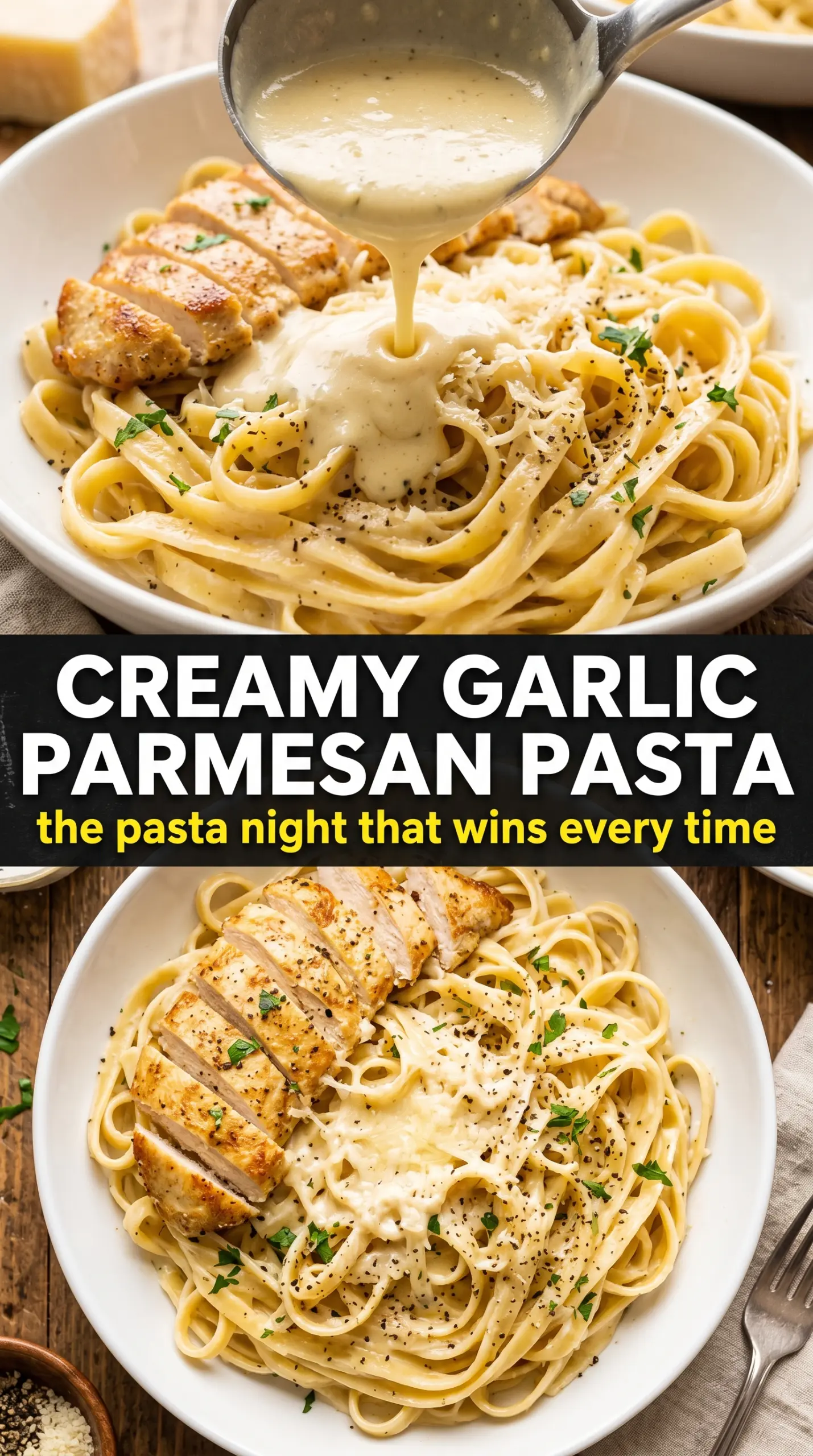
- Chicken breasts — Lean chicken breast gives you clean slices that sit nicely over the pasta. Pound them slightly if one side is much thicker than the other so they cook evenly instead of drying out at the edges before the center is done.
- Fresh garlic — This is where the sauce gets its backbone. Garlic powder won’t give you the same sweet, buttery finish, so use the real stuff here and cook it just until fragrant, not browned.
- Heavy cream — This is what makes the sauce lush and stable enough to coat the pasta. Half-and-half can work in a pinch, but the sauce will be thinner and a little more likely to separate if you boil it too hard.
- Freshly grated Parmesan — This is the ingredient worth buying with care. Freshly grated cheese melts into the sauce; the shelf-stable shredded kind often stays dusty or stringy and won’t give you that smooth texture.
- Chicken broth — A small amount keeps the sauce from tasting flat and adds enough moisture to stretch the cream without making it heavy. Use a low-sodium broth if yours tends to be salty, since Parmesan already brings plenty of salt to the pan.
- Spaghetti or fettuccine — Long pasta is the right shape here because it catches the sauce instead of letting it slide off. Cook it just to al dente so it can finish in the pan without turning soft and heavy.
Building the Sauce After the Chicken Comes Out
Searing the Chicken for Color and Flavor
Season the chicken well before it ever hits the skillet. You want a dry, seasoned surface so it browns instead of steaming. Let it cook undisturbed for a few minutes on the first side until it releases easily and has a deep golden crust, then turn it and finish until the center reaches 165°F. If the pan looks crowded, cook the chicken in batches; overcrowding traps moisture and leaves you with pale meat instead of browned slices.
Using the Same Skillet for the Sauce
Don’t wipe out the pan after the chicken comes out. The browned bits on the bottom dissolve into the butter and garlic and give the sauce its savory edge. Cook the garlic for just about a minute over medium heat, long enough for it to smell sweet and sharp but not long enough for it to brown. If the garlic darkens, the sauce can turn bitter fast.
Finishing with Cream, Cheese, and Pasta Water
Pour in the cream and broth, then let them simmer until they look slightly thicker and a little reduced. Stir in the Parmesan off the hottest part of the burner, then add pasta water a splash at a time until the sauce coats the back of a spoon and slides through the pasta instead of clumping around it. Toss the pasta while the sauce is still loose enough to move, because it will tighten as it sits.
Bringing It All Together
Add the pasta straight into the skillet and toss until every strand is coated. If the sauce looks tight, a small splash of pasta water will bring it back. Slice the chicken thin and lay it over the top so the juices stay with the meat instead of disappearing into the sauce. Finish with basil and extra Parmesan right before serving so the top stays fresh and bright.
How to Adapt This Garlic Parmesan Pasta Without Losing the Creamy Finish
Make it gluten-free with a sturdy pasta shape
Use a gluten-free spaghetti that holds its shape well, then pull it from the water when it’s just barely al dente. Gluten-free pasta can get soft fast, so keep the final toss short and add pasta water in smaller splashes to avoid a gummy sauce.
Make it lighter with half-and-half
Half-and-half will work if that’s what you have, but the sauce won’t be as rich or as stable. Keep the heat gentle and don’t boil it hard after the cheese goes in, or the thinner dairy has a better chance of splitting.
Swap in rotisserie chicken for a faster dinner
Skip the chicken-cooking stage and add shredded or sliced rotisserie chicken at the very end, just long enough to warm through. You lose the browned skillet flavor from searing, so the sauce will carry more of the dish, but it still lands as a fast, comforting pasta.
Add vegetables without watering down the sauce
Spinach, peas, or sautéed mushrooms all fit here, but cook off any extra moisture first. Wet vegetables dumped straight into the pan can thin the sauce and keep it from clinging to the pasta the way it should.
Storage and Reheating
- Refrigerator: Store leftovers in an airtight container for up to 3 days. The sauce will thicken as it chills.
- Freezer: It’s best fresh. Cream sauces can separate after freezing, so I don’t recommend freezing the finished pasta.
- Reheating: Reheat gently on the stove or in the microwave with a splash of milk, cream, or broth. High heat is what makes the sauce split, so warm it slowly and stir often.
Answers to the Questions Worth Asking
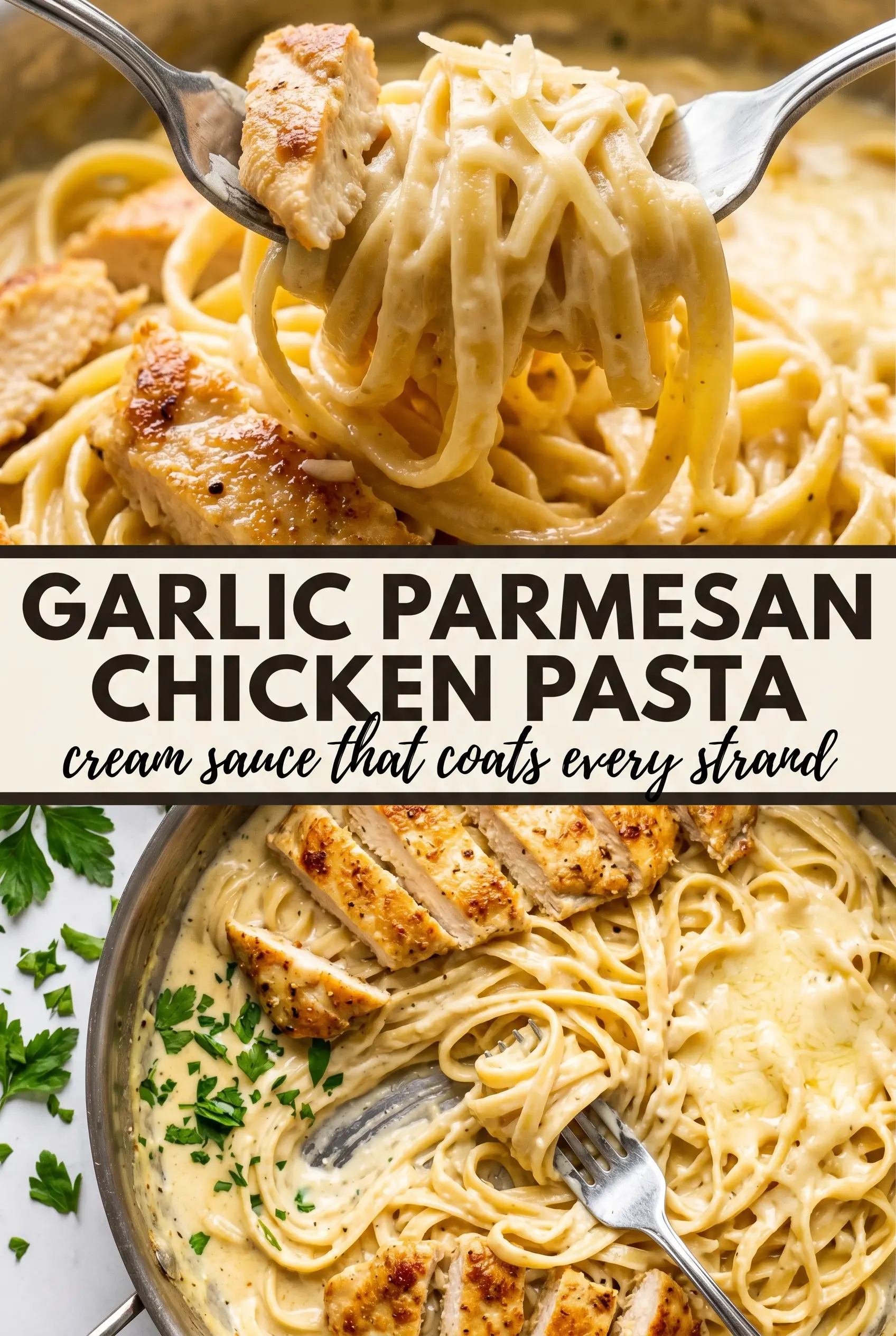
Garlic Parmesan Chicken Pasta
Ingredients
Equipment
Method
- Season the chicken breasts with salt, pepper, garlic powder, and Italian seasoning to taste. Heat olive oil in a large skillet over medium-high heat and cook for 5-6 minutes per side, until golden and cooked through to 165°F.
- Transfer chicken to a plate, rest briefly, then slice thin so it crowns the finished pasta.
- In the same skillet, cook the minced garlic in butter over medium heat for 1 minute, until fragrant. Reduce the heat as needed to prevent browning.
- Pour in the heavy cream and chicken broth, then bring to a simmer. Simmer for 4-5 minutes, until slightly thickened.
- Stir in the Parmesan cheese, Italian seasoning, and red pepper flakes until smooth. Add reserved pasta water as needed for consistency, one splash at a time, until the sauce coats the pasta.
- Toss the cooked spaghetti or fettuccine in the garlic Parmesan sauce until every strand is glossy and coated.
- Divide pasta among plates, then top each serving with the sliced chicken. Garnish with fresh basil and extra Parmesan to finish.