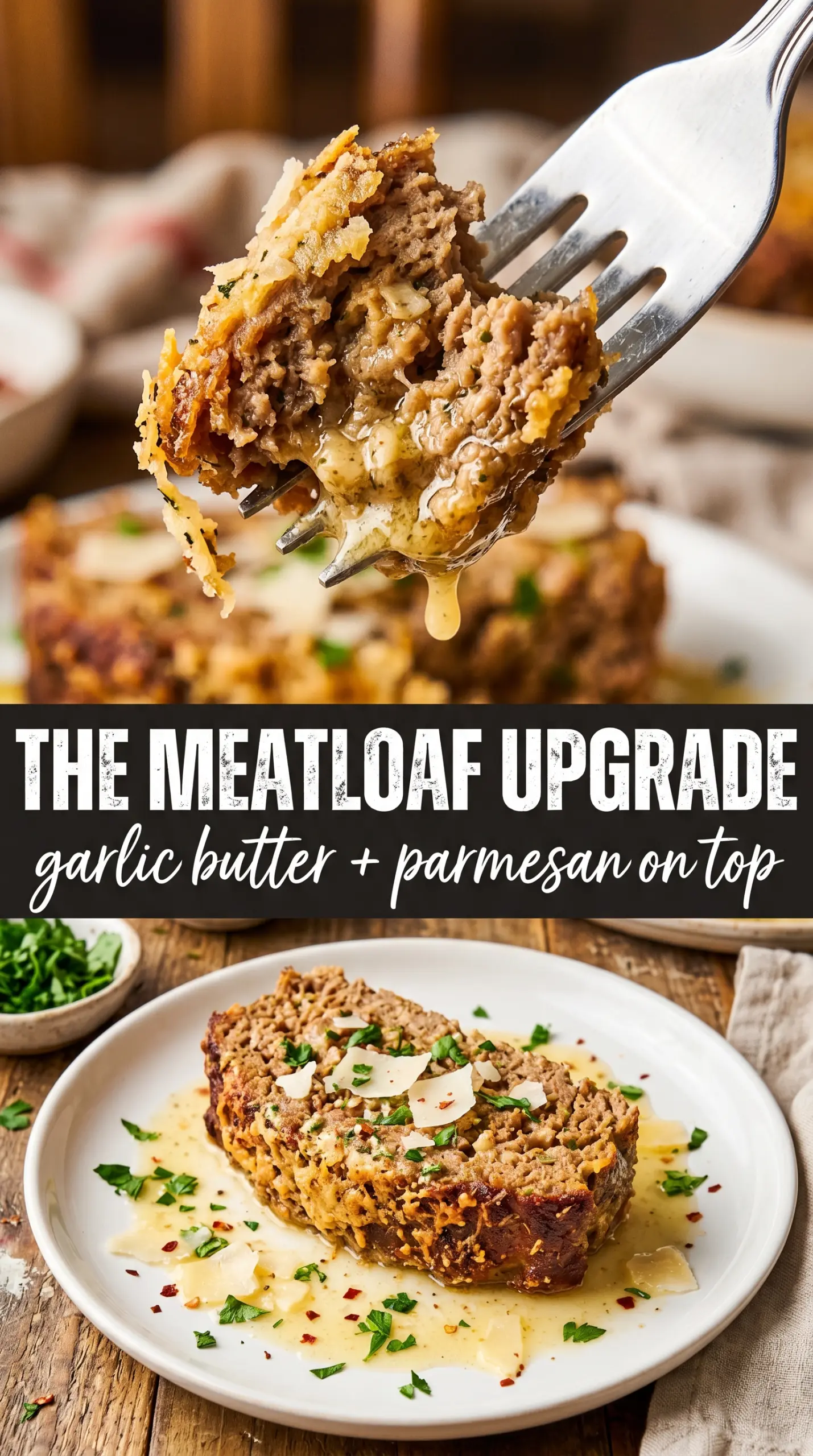
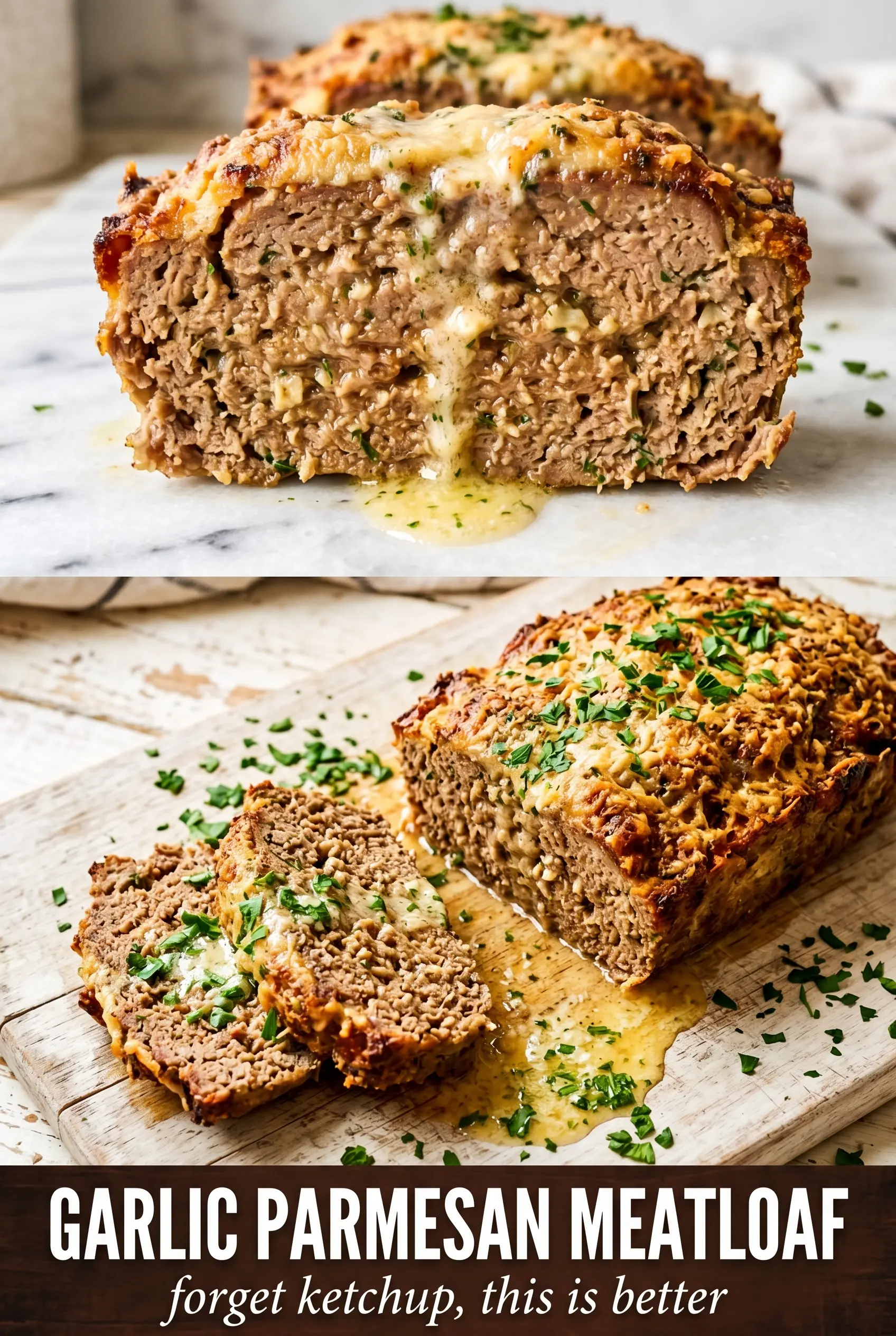
Garlic parmesan meatloaf comes out with a browned, savory crust and a juicy center that slices cleanly instead of crumbling on the plate. The parmesan gives the loaf a salty edge that carries all the way through, while the garlic butter on top turns the outside into something closer to a roasted, cheesy glaze than a plain baked loaf.
The trick is keeping the mixture tender while still giving it enough structure to hold its shape. Breadcrumbs and milk do the heavy lifting there, but the real payoff comes from not overmixing and from brushing on the garlic butter in two stages so the top browns without drying out. A free-form loaf on a parchment-lined pan also helps the edges caramelize, which you just don’t get from a tightly packed loaf pan.
Below, you’ll find the timing cues that matter, the ingredient swaps that still keep this meatloaf moist, and the storage notes I use when I want leftovers that reheat well instead of turning dense.
The garlic butter soaked into the top without making it greasy, and the parmesan crust actually stayed crisp around the edges. I baked it for the full 65 minutes and it sliced beautifully after the rest.
Garlic parmesan meatloaf with that buttery crust is the kind of dinner worth keeping handy for a no-fuss main dish night.
The Reason This Loaf Stays Juicy Instead of Turning Dense
Meatloaf usually goes wrong in one of two places: the mix gets worked into a paste, or it gets packed so tightly that the center turns bouncy instead of tender. This version avoids both by using just enough binder to hold the loaf together while keeping the beef loose when it goes onto the pan. The mixture should look evenly combined, not smooth.
The other mistake is baking it in a pan that traps steam. A free-form loaf on a parchment-lined sheet gives you airflow all around the meat, which means the outside browns while the middle stays moist. That browned surface matters here because the parmesan and garlic butter need direct heat to build that savory crust.
- Ground beef — Use an 80/20 blend if you can. Leaner beef will work, but the loaf won’t stay as juicy, especially after reheating.
- Breadcrumbs and milk — This is the panade that keeps the texture soft. The breadcrumbs soak up the milk before the loaf goes in the oven, which helps the meat stay tender instead of tight.
- Parmesan — Grated parmesan adds salt, structure, and that nutty crust on top. Pre-grated cheese is fine here, but freshly grated melts and browns better.
- Garlic butter topping — Don’t skip the second brush halfway through baking. That’s what keeps the top glossy and deepens the garlic flavor without scorching the cheese.
What Each Ingredient Is Doing in the Pan
- Ground beef — This is the backbone of the dish, so use beef with enough fat to stay moist. If you use very lean beef, add a spoonful of olive oil to the mixture only if it feels dry.
- Parmesan cheese — It seasons the loaf from the inside and forms the best crust on top. You can use a little extra over the surface, and that’s one place where more is welcome.
- Breadcrumbs, eggs, and milk — These work together to keep the loaf tender and sliceable. If you need a gluten-free version, use gluten-free breadcrumbs and keep the milk amount the same.
- Garlic and parsley — Fresh garlic gives the loaf its main aroma, while parsley keeps the flavor from feeling heavy. Dried parsley won’t hurt the recipe, but fresh parsley gives a cleaner finish.
- Worcestershire sauce — It adds depth without making the loaf taste saucy or tangy. It’s one of those small ingredients that quietly makes the beef taste more like itself.
- Garlic butter topping — This is where the crust gets its shine. Brush half before baking, then the rest halfway through so the garlic perfumes the loaf instead of burning on contact.
Building the Crust, Baking the Center
Mix the loaf gently
Put everything for the meatloaf into a large bowl and mix only until the ingredients look evenly distributed. Stop as soon as the breadcrumbs, cheese, and seasonings disappear into the beef. If the mixture looks glossy and paste-like, it’s already overworked and the finished loaf will be dense.
Shape it for browning
Form the mixture into a free-form loaf on a parchment-lined baking sheet. Keep the shape even from end to end so the loaf cooks at the same pace all the way through. A compact mound stays raw in the middle longer and can dry out at the edges before the center is done.
Brush on the garlic butter
Mix the melted butter, garlic, parmesan, and parsley, then brush about half over the top before it goes into the oven. Press a little extra parmesan onto the surface so it has something to cling to as it bakes. That first layer starts the crust, but the second brush halfway through is what keeps the top glossy and strongly flavored.
Bake to temperature, not just time
Bake at 350°F until the center reaches 160°F, which usually takes 55 to 65 minutes. The top should look deeply golden and the edges should pull away slightly from the parchment. If the cheese on top starts darkening too fast, tent loosely with foil near the end instead of lowering the oven too early.
Rest before slicing
Let the meatloaf sit for 10 minutes before cutting into it. That short rest keeps the juices in the loaf instead of running out onto the board. Slice too early and the middle will look wet even when it’s fully cooked.
How to Adapt the Loaf Without Losing the Garlic-Parmesan Character
Make It Gluten-Free
Swap the breadcrumbs for a gluten-free version in the same amount. The loaf will still hold together well, but the texture may be a touch softer, so give it the full rest before slicing.
Use a Mix of Beef and Ground Turkey
Replace up to half the beef with ground turkey for a lighter loaf. Turkey needs a little help staying juicy, so don’t skip the milk and keep the garlic butter topping exactly as written.
Add a Little Heat
A pinch of red pepper flakes or a little cayenne in the meat mixture gives the loaf a gentle kick without changing the structure. Start small; the parmesan and garlic should still lead.
Storage and Reheating
- Refrigerator: Store slices in an airtight container for up to 4 days. The flavor holds well, and the texture stays best when the slices are kept rather than the whole loaf.
- Freezer: This freezes well. Wrap individual slices tightly and freeze for up to 2 months so you can thaw only what you need.
- Reheating: Warm slices covered in a 300°F oven with a spoonful of water or broth in the pan, or microwave gently at medium power. High heat dries out the edges before the center is warm.
Answers to the Questions Worth Asking
Garlic Parmesan Meatloaf
Ingredients
Equipment
Method
- Preheat oven to 350°F and line a baking sheet with parchment (visual cue: parchment should cover the sheet).
- Combine ground beef, parmesan, breadcrumbs, eggs, whole milk, garlic, fresh parsley, Italian seasoning, Worcestershire sauce, salt, and black pepper in a mixing bowl (visual cue: mixture should look evenly speckled with herbs and garlic).
- Shape the mixture into a free-form loaf on the baking sheet (visual cue: loaf should be compact with a smooth top surface).
- Mix the garlic butter topping (melted butter, minced garlic, parmesan, and fresh parsley).
- Brush half of the garlic butter topping over the top and press extra parmesan into the surface (visual cue: top looks glossy and thickly coated with parmesan).
- Bake 55–65 minutes until internal temperature reaches 160°F, brushing with the remaining garlic butter halfway through (visual cue: crust is golden and the glaze looks set).
- Rest the meatloaf 10 minutes before slicing (visual cue: juices settle and slices hold their shape).
- Garnish with fresh parsley before serving (visual cue: bright green parsley flecks on top).