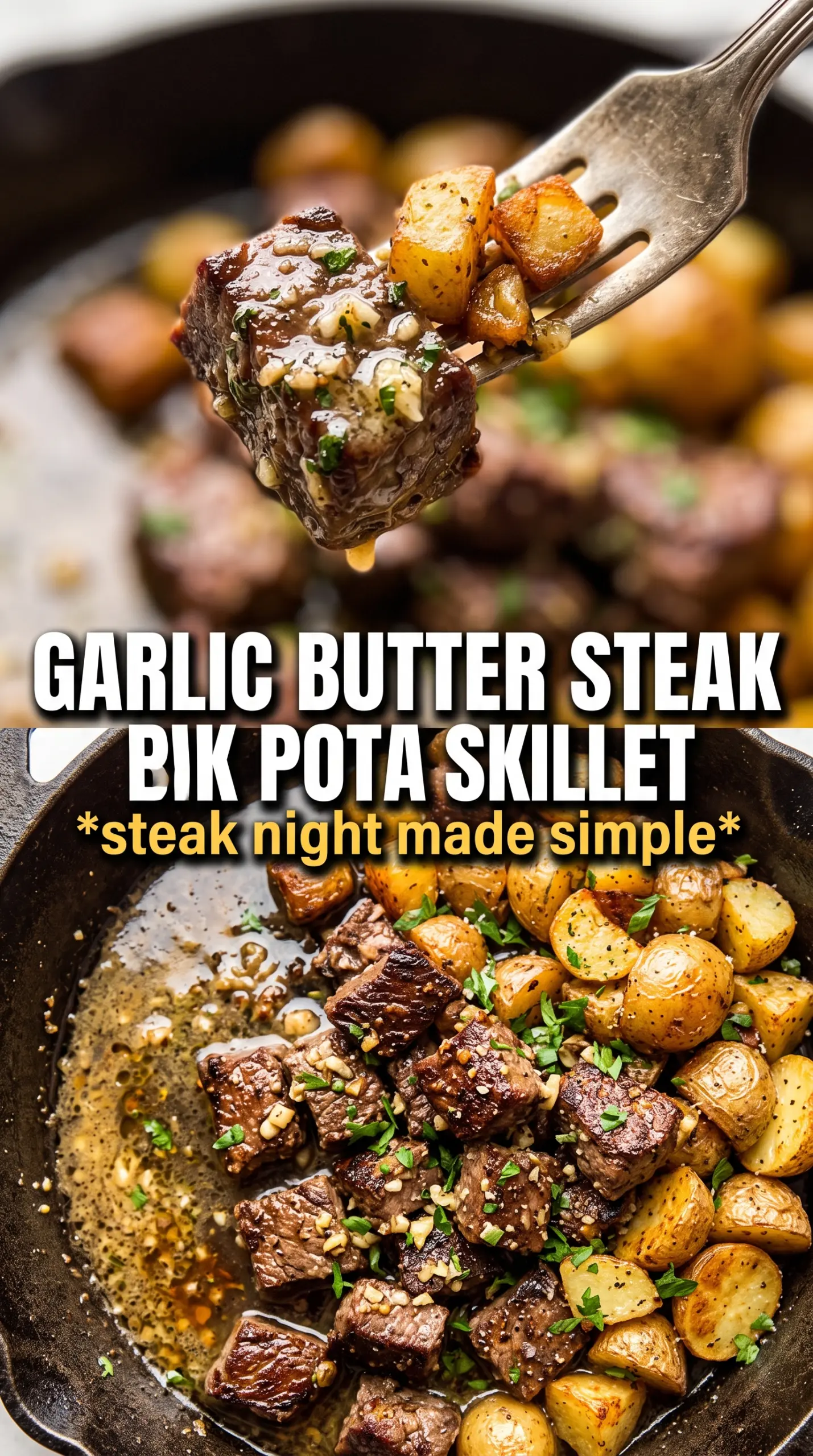
Crispy potatoes and deeply browned steak bites hit the skillet together with a garlic herb butter that clings to every edge. The potatoes bring the crunch, the sirloin stays tender, and the whole pan tastes like the kind of dinner people hover around before it even reaches the table.
What makes this version work is the order. The potatoes get a head start in boiling water so they cook through before they ever meet the pan, then they sear in hot oil until the cut sides turn glassy and golden. The steak goes in dry and well-seasoned, in batches, so it browns instead of steaming. Once the heat comes down, the butter, garlic, rosemary, and thyme melt together fast enough to perfume the pan without burning the garlic.
Below, I’ve included the little timing details that keep the potatoes crisp and the steak juicy, plus a few smart swaps if you need to work with what’s already in your kitchen.
The potatoes got that crisp edge I usually only get from roasting, and the steak stayed juicy because I didn’t crowd the pan. The garlic butter pulled everything together without turning greasy.
Like this skillet dinner? Save Garlic Steak Bites and Potatoes for the nights when you want crispy edges, tender steak, and one pan to clean.
The Secret to Keeping the Potatoes Crisp After the Steak Goes In
The biggest mistake in a skillet like this is treating the potatoes and steak like they want the same cooking method. They don’t. Potatoes need time to soften first, then hard heat to build a crust. Steak needs a hot pan and enough space to brown fast. If you skip the quick boil on the potatoes, they’ll take too long in the skillet and the steak will overcook before the potatoes are ready.
The other thing that matters is the pan itself. Cast iron holds heat well enough to keep both the potatoes and steak searing instead of simmering in their own moisture. If the pan starts to look crowded, work in batches. That little bit of patience is what gives you the caramelized edges in the photo instead of a soft, gray skillet full of steam.
What the Butter, Garlic, and Herbs Are Doing at the End
- Sirloin steak — Sirloin stays tender when it’s cut into cubes and seared fast. A pricier cut isn’t necessary here, but don’t use something overly lean and tough unless you’re willing to cook it very carefully. The goal is a browned outside and a pink, juicy center.
- Baby potatoes — Small potatoes are ideal because they cook through quickly and their cut sides get crisp without falling apart. Waxy potatoes hold their shape best. If you use larger potatoes, cut them into even chunks so they finish at the same time.
- Butter — Butter carries the garlic and herbs and gives the dish its glossy finish. Divide it so some goes into the pan after the steak browns and the rest can coat everything at the end. If you only use butter from the start, it can brown too early and go bitter.
- Garlic, rosemary, and thyme — These go in after the heat drops because garlic burns fast and turns sharp in a bad way. Fresh herbs matter more than dried here because they perfume the butter quickly without tasting dusty. If you need a swap, use half the amount of dried herbs and add them with the butter, not at the very beginning.
- Vegetable oil — Oil gives you the high-heat sear that butter can’t handle on its own. Any neutral oil works, but don’t replace it with olive oil if it has a low smoke point or a strong flavor you don’t want on the steak.
The 20 Minutes That Make or Break the Skillet
Par-Cooking the Potatoes
Boil the halved potatoes in salted water until they’re just barely fork-tender, not falling apart. You want the outside to give a little and the center to still have some structure. Drain them well and let the steam escape for a minute or two, because wet potatoes will sputter in the skillet and soften before they ever crisp.
Building the Potato Crust
Heat the oil until it shimmers, then lay the potatoes cut-side down into the cast iron. Don’t stir them right away; let them sit long enough to form a deep golden crust. Once they release easily from the pan, turn them and season with salt and pepper before removing them to a plate.
Searing the Steak in Batches
Season the steak generously right before it hits the pan. If you salt it too far ahead, the surface can wet out and the meat will brown less aggressively. Add the steak in batches and leave space around each piece so the sides can sear instead of steam. Two minutes per side is the target, but the real cue is color: you want a dark crust with the center still tender.
Finishing with Garlic Herb Butter
Lower the heat before adding the butter, garlic, rosemary, and thyme. That short minute is just enough to soften the garlic and wake up the herbs without scorching them. Baste the steak bites in the butter, then return the potatoes and toss fast so everything gets coated while the butter is still fragrant and glossy.
How to Change This Skillet Dinner Without Losing the Good Part
Swap in different potatoes
Yukon Gold potatoes give a creamier center and still crisp up well, while red potatoes stay a little waxier and hold their shape nicely. Russets work, but they’re fluffier and can break down more if you boil them too long. Keep the pieces even so the sear stays balanced.
Make it dairy-free
Use a good plant-based butter that browns well and has enough fat to carry the garlic and herbs. The result will be slightly less rich and a little less silky, but the pan sauce still comes together nicely. Choose one that’s unsalted so you can control the seasoning.
Use a different cut of steak
Ribeye makes the dish richer and more luxurious, while strip steak gives you a firmer bite. If you use something tougher, slice it against the grain and keep the sear even shorter so it doesn’t turn chewy. The butter still works the same way, but the cut changes the final texture more than anything else.
Storage and Reheating
- Refrigerator: Store leftovers in an airtight container for up to 3 days. The potatoes soften a bit, but the flavor holds up well.
- Freezer: You can freeze it, but the potatoes lose some of their crisp texture after thawing. If you do freeze it, cool it completely first and reheat from thawed for the best result.
- Reheating: Reheat in a hot skillet over medium heat with a small splash of oil or a pat of butter until the steak is warmed through. The microwave makes the potatoes soft and pushes the steak past tender, so it’s the last choice here.
Answers to the Questions Worth Asking
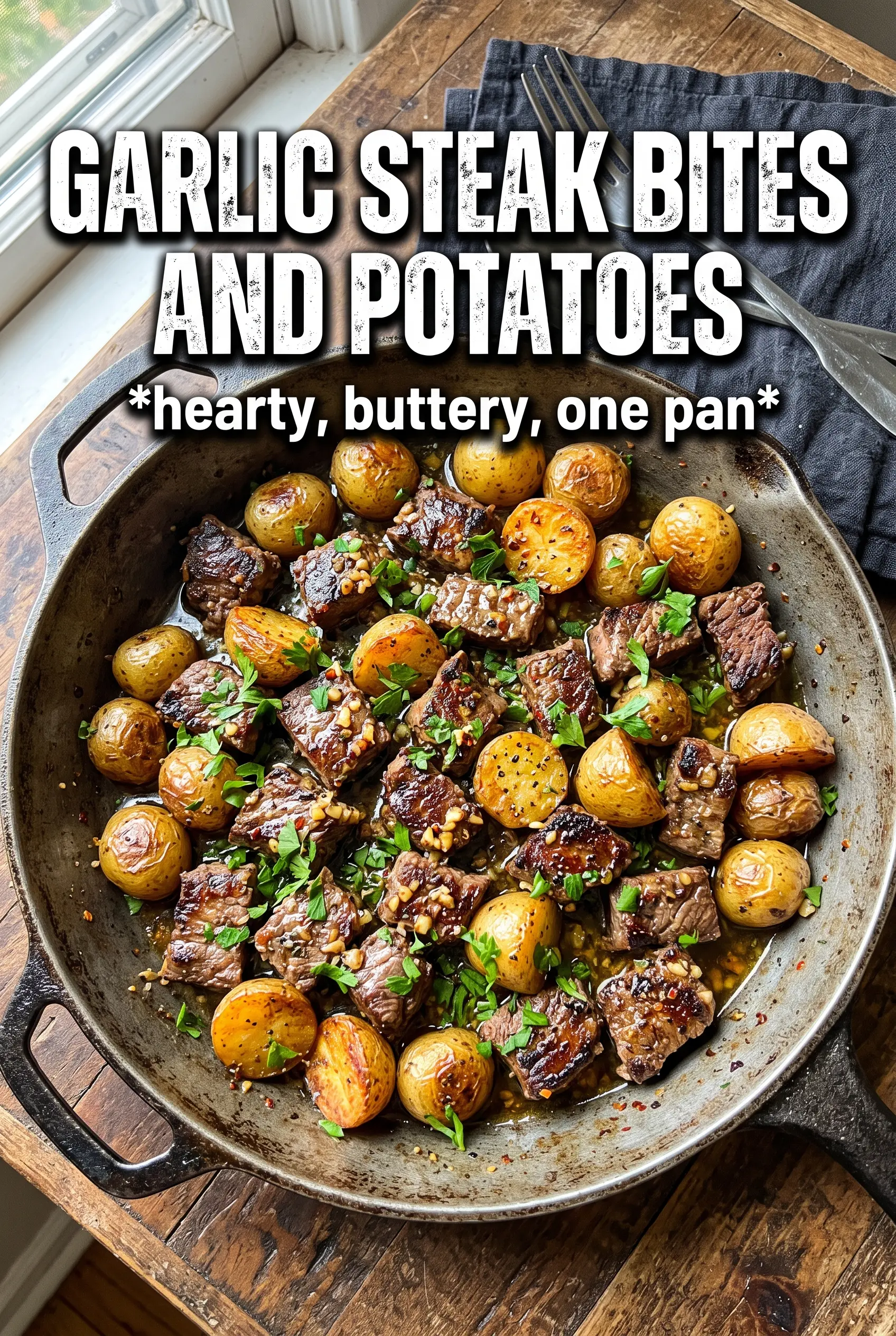
Garlic Steak Bites and Potatoes
Ingredients
Equipment
Method
- Boil halved potatoes in salted water for 8 minutes until just barely fork-tender, then drain.
- Heat 2 tablespoons vegetable oil in a large cast iron skillet over high heat, add potatoes, and sear until golden and crispy on each side.
- Season the seared potatoes with salt and cracked black pepper, then remove them from the skillet.
- Season the steak bites generously with salt and cracked black pepper.
- Add the remaining vegetable oil to the skillet and sear steak bites in batches for 2 minutes per side until deeply browned.
- Reduce heat to medium, add butter, garlic, rosemary, and thyme, and cook for 1 minute while stirring.
- Baste the steak bites with the garlic-herb butter until glossy and fragrant.
- Return potatoes to the skillet and toss everything together until the cubes and bites are evenly coated.
- Garnish with fresh parsley and serve immediately, with garlic butter pooling around the crispy edges.