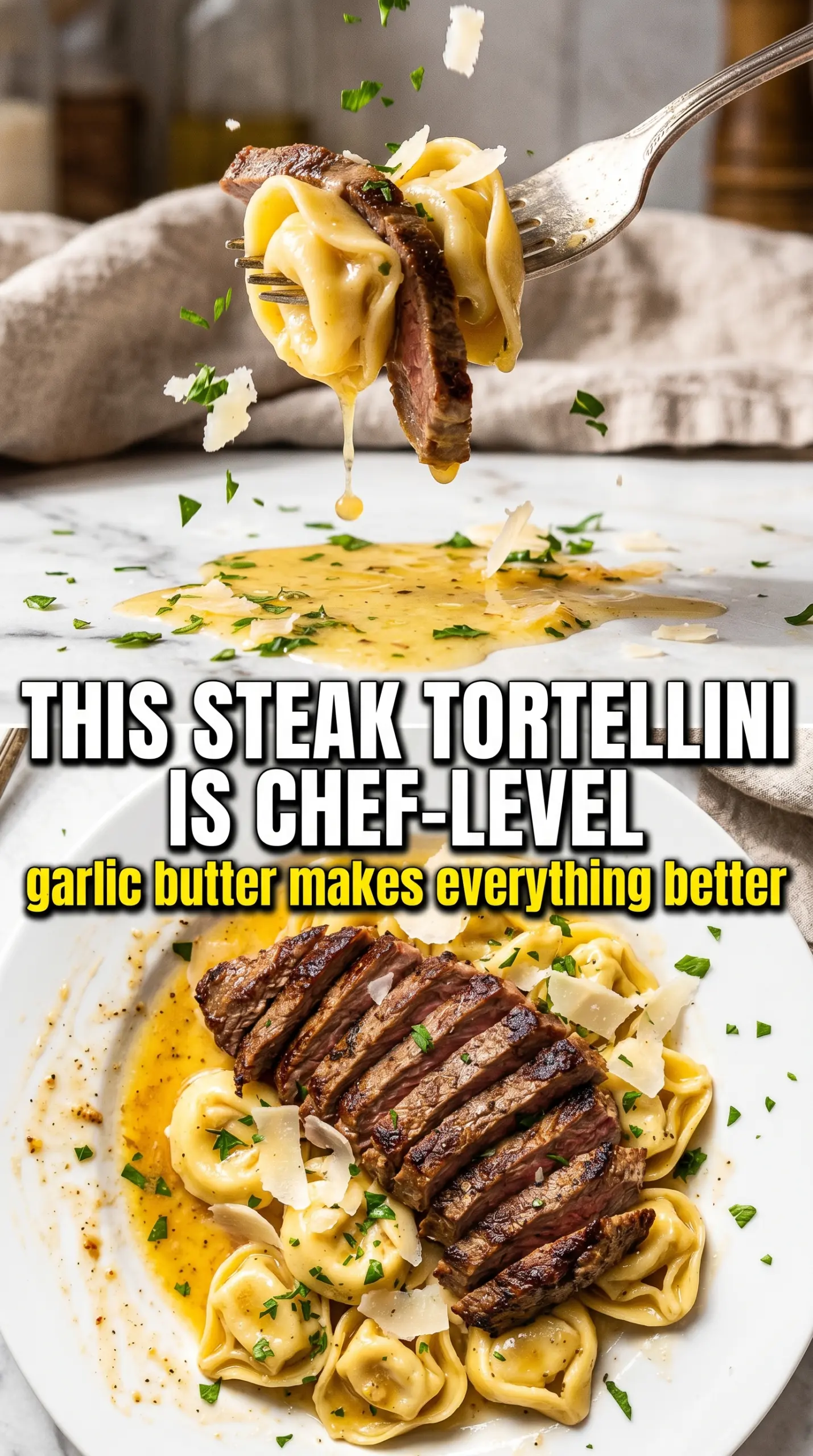
Garlic steak tortellini lands on the table with the kind of richness that makes a normal pasta night feel a little more intentional. You get tender cheese-filled tortellini, browned steak strips, and a garlic butter sauce that clings to every ridge and seam instead of pooling sadly at the bottom of the bowl. The parmesan finishes it with a salty bite that keeps the whole dish from tasting heavy.
What makes this version work is the order of the cooking. The steak gets a hard sear first, then the same pan builds the sauce, which means every browned bit left behind becomes part of dinner. The tortellini cooks separately so it stays intact and doesn’t soak up too much sauce while you’re still finishing the steak and cream.
Below, I’ll show you how to keep the sauce silky, when to pull the pan off the heat, and what to change if you want to make this with a different cut of beef or a lighter finish.
The sauce came together fast and stayed silky, and the steak stayed tender because I sliced it thin like you said. My husband went back for seconds and asked if we could have this again next week.
Save this garlic steak tortellini for the nights when you want a fast skillet dinner with a rich garlic butter sauce and tender seared steak.
The Pan Order That Keeps the Steak Tender Instead of Tough
The biggest mistake with steak pasta is letting the beef sit too long in the skillet while you build everything else. Sirloin only needs a short, hard sear, and once it’s browned, it should come out of the pan. If it stays in while the garlic and cream simmer, the edges tighten up and the steak eats dry.
That same skillet is still doing the heavy lifting after the steak comes out. Those browned bits at the bottom dissolve into the broth and cream, which gives the sauce a deeper beefy taste without needing extra ingredients. You’re not just cooking pasta and steak in the same pan. You’re building one dish in layers so nothing gets muddy or overcooked.
- Sirloin steak — This cut gives you good flavor and stays tender if you slice it thin against the grain. Ribeye works too if you want more richness, but it brings extra fat to the pan.
- Refrigerated cheese tortellini — Fresh tortellini cooks fast and stays soft in the finished sauce. Dried tortellini can work, but it usually needs a longer boil and doesn’t give the same pillowy texture.
- Butter — It carries the garlic and gives the sauce its gloss. Use the full amount here; this is not the place to trim fat if you want the sauce to coat properly.
- Heavy cream — This is what keeps the sauce from tasting thin or sharp. Half-and-half can work in a pinch, but the sauce will be looser and more likely to separate if it simmers too hard.
- Parmesan — Grate it fresh if you can. Pre-shredded parmesan often has anti-caking starch, which can make the sauce a little gritty instead of smooth.
What Each Ingredient Is Actually Doing in This Recipe
- Primary ingredient (the star) — Quality matters most. Choose the best you can find.
- Cooking medium (oil, butter, or broth) — This carries flavors and prevents dryness.
- Seasonings (salt, pepper, spices, herbs) — Layer flavors so nothing overpowers. Build depth gradually.
- Aromatics (garlic, onion, herbs) — Cook with fat to bloom flavors. Become the foundation.
- Supporting ingredients — Complement the main ingredient without overpowering it.
- Sauce or liquid (if applicable) — Brings flavors together. Balance richness with acid.
- Acid (lemon, vinegar, wine, or other) — Brightens and prevents flat-tasting results.
- Final finish (garnish, glaze, or sauce) — Prevents one-dimensional taste and adds visual appeal.
Building the Garlic Butter Sauce Without Breaking It
Cooking the Tortellini First
Boil the tortellini in salted water until it floats and tastes tender, then drain it promptly. If it sits in the colander too long, the pasta surface dries out and the sauce won’t cling as well. I set it aside while the steak cooks so it’s ready to go back into the pan at the end.
Getting a Clean Sear on the Steak
Season the steak generously, then get the skillet hot before the meat goes in. You want a loud sizzle the second it hits the pan. Work in a single layer so the slices brown instead of steaming; if the pan looks crowded, sear in batches. Pull the steak out as soon as it’s browned on the outside and still juicy inside.
Pulling the Sauce Together
Lower the heat before the garlic goes in. Garlic burns fast, and once it does, the whole sauce tastes bitter. Let it cook just until fragrant, then add the broth and cream and simmer until the liquid looks slightly thickened and glossy. If the sauce starts to look greasy or grainy, the heat is too high.
Finishing the Dish
Return the steak and tortellini to the skillet with the Italian seasoning and parmesan. Toss until everything is coated and the cheese melts into the sauce. If it feels too tight, add a splash of broth; if it seems thin, let it sit over low heat for another minute. Finish with parsley right before serving so the top stays bright and fresh.
How to Adjust Garlic Steak Tortellini for Different Kitchens and Cravings
Make It Lighter Without Losing the Sauce
Use half-and-half instead of heavy cream and add an extra splash of broth at the end if needed. The sauce won’t be quite as plush, but it still coats the tortellini well if you keep the simmer gentle. Don’t boil it hard or the dairy can separate.
Gluten-Free Version
Use gluten-free cheese tortellini and check that your broth is gluten-free. The rest of the recipe already fits naturally, and the steak and sauce don’t need any flour to thicken. Watch the pasta closely, since gluten-free stuffed pasta can soften faster than wheat-based versions.
Swap the Steak Cut
Ribeye gives you a richer result, while flank steak works if you slice it very thin against the grain. Flank is leaner and can turn chewy if it’s cut too thick or overcooked, so sear it fast and get it out of the pan quickly.
Storage and Reheating
- Refrigerator: Store in an airtight container for up to 3 days. The sauce will thicken as it chills.
- Freezer: Not my first choice, since cream sauces can turn a little grainy after thawing and the tortellini can get soft.
- Reheating: Warm gently in a skillet over low heat with a splash of broth or cream. The common mistake is blasting it in the microwave, which tightens the steak and makes the sauce separate.
Questions I Get Asked About This Recipe
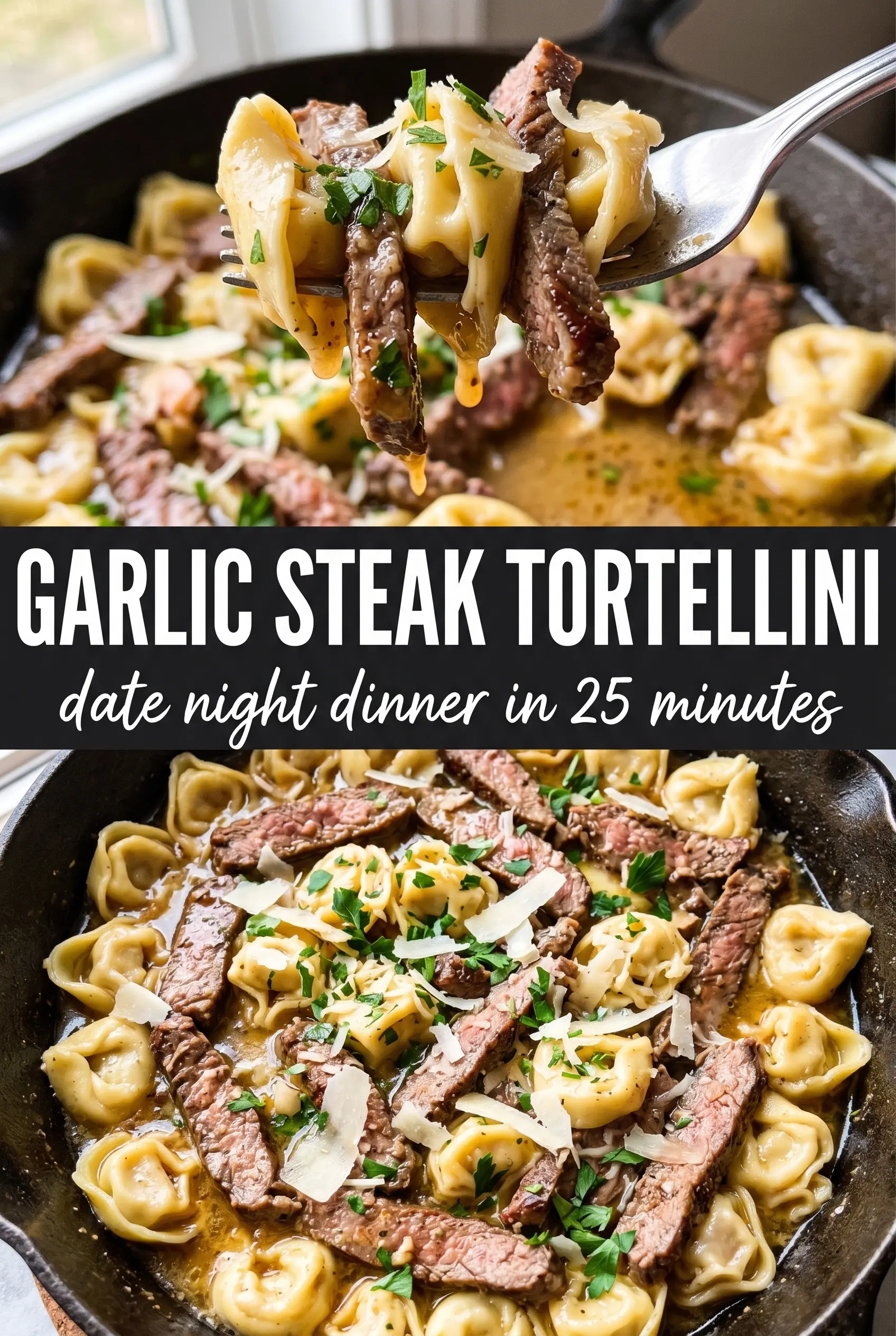
Garlic Steak Tortellini
Ingredients
Equipment
Method
- Bring a large pot of salted water to a boil, then cook the tortellini according to package directions until tender. Drain and set aside so it’s ready to toss into the skillet.
- Season the steak strips generously with salt and cracked black pepper. This ensures each bite has flavor before it meets the garlic sauce.
- Heat 2 tablespoons butter in a large skillet over high heat, then sear the steak strips for 2–3 minutes until browned. Transfer the steak to a plate and set aside.
- In the same skillet, melt the remaining butter over medium heat, then add the minced garlic and cook for 1 minute until fragrant. Keep it moving so the garlic doesn’t brown.
- Add beef broth and heavy cream, then simmer for 2–3 minutes until slightly thickened. The sauce should coat the back of a spoon.
- Return the steak and tortellini to the skillet, add Italian seasoning and parmesan, and toss until everything is coated. Serve immediately, topped with fresh parsley.