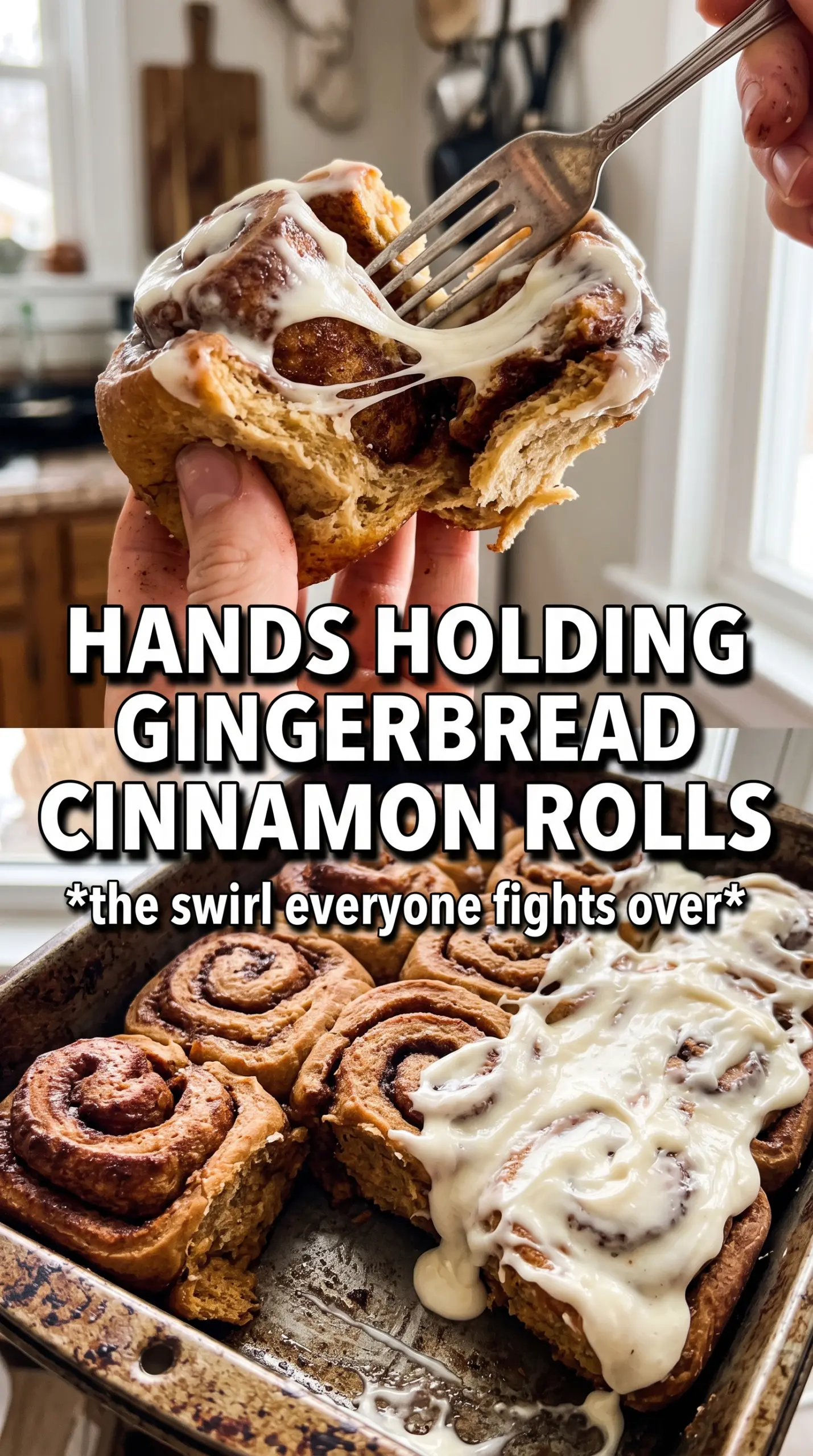
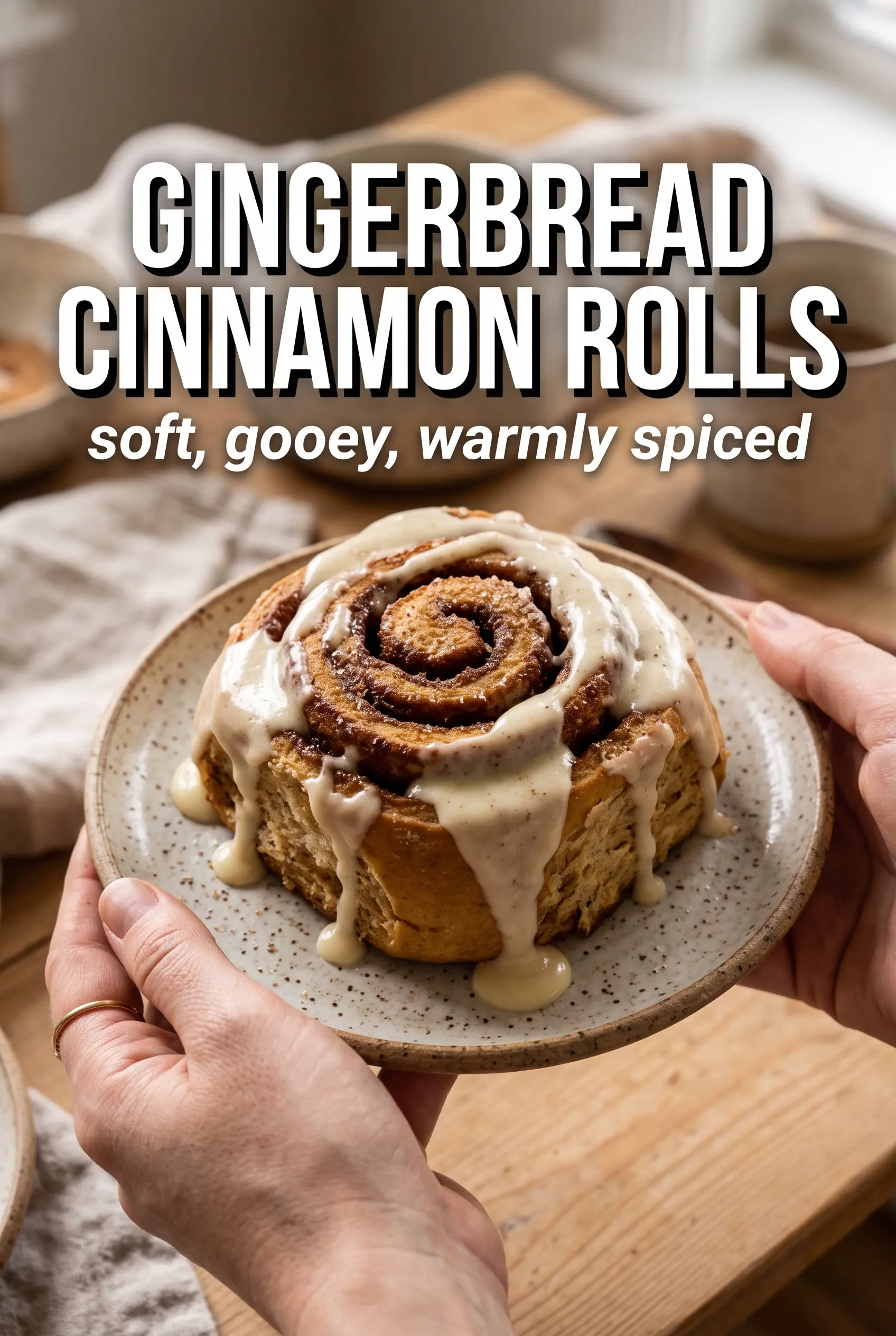
Soft gingerbread cinnamon rolls bake up with pillowy centers, sticky spiced swirls, and a cream cheese glaze that melts into every ridge. The dough tastes warmly of molasses and spice, but it still stays light enough to pull apart in tender layers instead of turning dense or bready. When they come out of the oven, the tops are bronzed, the edges are set, and the whole pan smells like a bakery that knows exactly what it’s doing.
What makes these work is balance. Molasses brings that deep gingerbread note, but the dough also gets enough butter, eggs, and flour to stay rich without becoming heavy. The filling uses a mix of brown sugar, cinnamon, ginger, and a little clove, which gives each spiral a sharp, fragrant bite instead of just sweetness. The cream cheese glaze is there for more than looks — it softens the warm rolls and settles into the cracks while they’re still hot.
Below, I’ve included the little details that matter most: how warm the milk should be for the yeast, what to look for during the first rise, and how to keep the filling from leaking out when you cut the rolls.
The dough rose beautifully and the rolls baked up so soft in the middle. The glaze seeped into the swirls while they were warm, and the gingerbread spice came through without tasting overpowering.
Save these gingerbread cinnamon rolls for the mornings when you want soft spirals, warm molasses spice, and cream cheese glaze in every bite.
The Trick to Keeping Gingerbread Rolls Soft Instead of Dense
Gingerbread dough can go heavy fast if the flour gets overworked or the yeast starts sluggishly. This dough is richer than a plain cinnamon roll dough because of the molasses and brown sugar, so the kneading and rising both matter. Give it the full 8 to 10 minutes of kneading until it looks smooth and elastic, not sticky and shaggy. If the dough tears when you stretch it, it needs a little more time on the counter.
The other place people lose tenderness is the rise. A dough that doesn’t puff enough before rolling will bake up tight, especially with all the spice in this one. You want it roughly doubled before you roll it out, and the second rise in the pan should leave the rolls touching lightly and looking fuller, not cramped. That little bit of space is what gives them those soft sides instead of dry edges.
What the Molasses, Spices, and Cream Cheese Are Each Doing Here
- Molasses — This is the gingerbread backbone. It gives the dough its deep color and that unmistakable dark, slightly smoky sweetness. Don’t swap in all honey or maple and expect the same result; they’ll sweeten the dough, but they won’t taste like gingerbread.
- Brown sugar — Brown sugar keeps both the dough and filling moist and helps the spirals stay soft after baking. In the filling, it melts into the butter and creates that glossy sticky layer between the swirls.
- Fresh spices — Cinnamon, ginger, and cloves should smell vivid when you open the jars. If your spices have been sitting around for years, the rolls will taste flat no matter how much you add. Ginger is the one worth paying attention to here; it drives the flavor more than cinnamon does.
- Cream cheese — The glaze needs the tang and body of cream cheese or it just turns into sweet milk. Let it soften first so it whisks smooth; cold cream cheese leaves little lumps that never fully disappear.
From Kneading to Glazing Without Letting the Filling Leak Out
Building the Dough
Start with warm milk that feels like a comfortable bath, not hot. Stir in the yeast with the molasses and let it sit long enough to look foamy and active before adding the sugar, butter, and eggs. Once the flour and spices go in, knead until the dough pulls cleanly from the bowl and feels supple when pressed. If you add too much flour early, the dough turns stiff and the final rolls lose that soft pull-apart texture.
Rolling and Filling
Roll the dough into a neat rectangle with even thickness so the rolls bake evenly. Spread the softened butter all the way to the edges, then scatter the brown sugar and spices in a thin, even layer. Leave one long edge bare by about half an inch; that clean strip helps the seam seal when you roll it up. If the filling looks piled in clumps, it will burst out during slicing and bake onto the pan instead of staying inside the spirals.
The Second Rise and Bake
Cut the log into 12 equal pieces and place them in a greased 9×13 pan with a little room to expand. After the second rise, they should look puffy and almost snug against each other. Bake at 375°F until the tops are set and the centers spring back lightly when touched, about 22 to 25 minutes. If the tops brown too fast, the rolls are probably done on the outside but still underbaked in the middle, so check the center roll before pulling the pan.
Glazing While Warm
Beat the cream cheese, powdered sugar, milk, and vanilla until smooth, then drizzle it over the rolls while they’re still warm. Warm rolls melt the glaze just enough for it to seep into the swirls without disappearing completely. If you wait until they’re fully cool, the glaze sits on top instead of settling in, and you lose part of what makes the first bite so good.
How to Adapt These Rolls for Different Mornings and Different Pan Sizes
Dairy-Free Gingerbread Cinnamon Rolls
Use a plant-based milk and a dairy-free butter substitute in both the dough and filling, then swap the cream cheese glaze for a simple vanilla icing made with powdered sugar, non-dairy milk, and vanilla. The rolls will still be soft and spiced, but the glaze will be thinner and a little sweeter.
Make-Ahead Overnight Rolls
Assemble the rolls, cover the pan tightly, and refrigerate after shaping instead of doing the second rise at room temperature. In the morning, let them sit on the counter until puffy before baking. Cold dough needs extra time, so don’t bake them straight from the fridge or the centers will lag behind the edges.
Gluten-Free Adaptation
Use a 1:1 gluten-free baking blend that includes xanthan gum, and expect a softer, slightly more delicate dough. It won’t stretch as far when rolling, so work gently and keep the rectangle a little smaller. The texture will still be tender, but the spirals may not hold as sharply as the wheat-flour version.
Storage and Reheating
- Refrigerator: Store covered for up to 4 days. The rolls stay soft, but the glaze will set more firmly once chilled.
- Freezer: Freeze the baked rolls without glaze for up to 2 months. Wrap them well after cooling, then thaw overnight before reheating and glazing.
- Reheating: Warm individual rolls in the microwave for 20 to 30 seconds or cover the pan and reheat in a 300°F oven until heated through. If you reheat too long, the dough dries out before the center warms.
Answers to the Questions Worth Asking
Gingerbread Cinnamon Rolls
Ingredients
Equipment
Method
- In a bowl, stir warm milk, yeast, and molasses until combined, then add brown sugar, melted butter, and eggs. Wait for the mixture to look active and slightly foamy, about 5 minutes.
- Add flour, cinnamon, ginger, cloves, and salt, then knead until smooth and elastic, 8-10 minutes. Stop when the dough feels springy and no dry streaks remain.
- Cover the dough and let it rise until doubled in size, about 1 hour. It should look noticeably puffy when pressed lightly.
- Roll the dough into a rectangle on a lightly floured surface. Aim for even thickness so the rolls bake uniformly.
- Spread softened butter over the dough, then sprinkle on brown sugar, cinnamon, ginger, and cloves. Spread to the edges so every spiral has filling.
- Roll the rectangle tightly into a log, then cut into 12 rolls. Keep the log seam-side down to help the spirals hold together.
- Place the rolls in a greased 9x13 baking dish, spacing them evenly. Cover and let them rise for 45 minutes until puffy.
- Bake at 375F for 22-25 minutes, until the tops are golden brown. Look for set centers and lightly browned edges.
- Beat cream cheese, powdered sugar, milk, and vanilla until smooth and drizzleable. Stop when the glaze falls from a spoon in thick ribbons.
- Drizzle the glaze over the warm rolls right after baking. Use a steady motion for thin streaks that sink slightly into the spirals.


