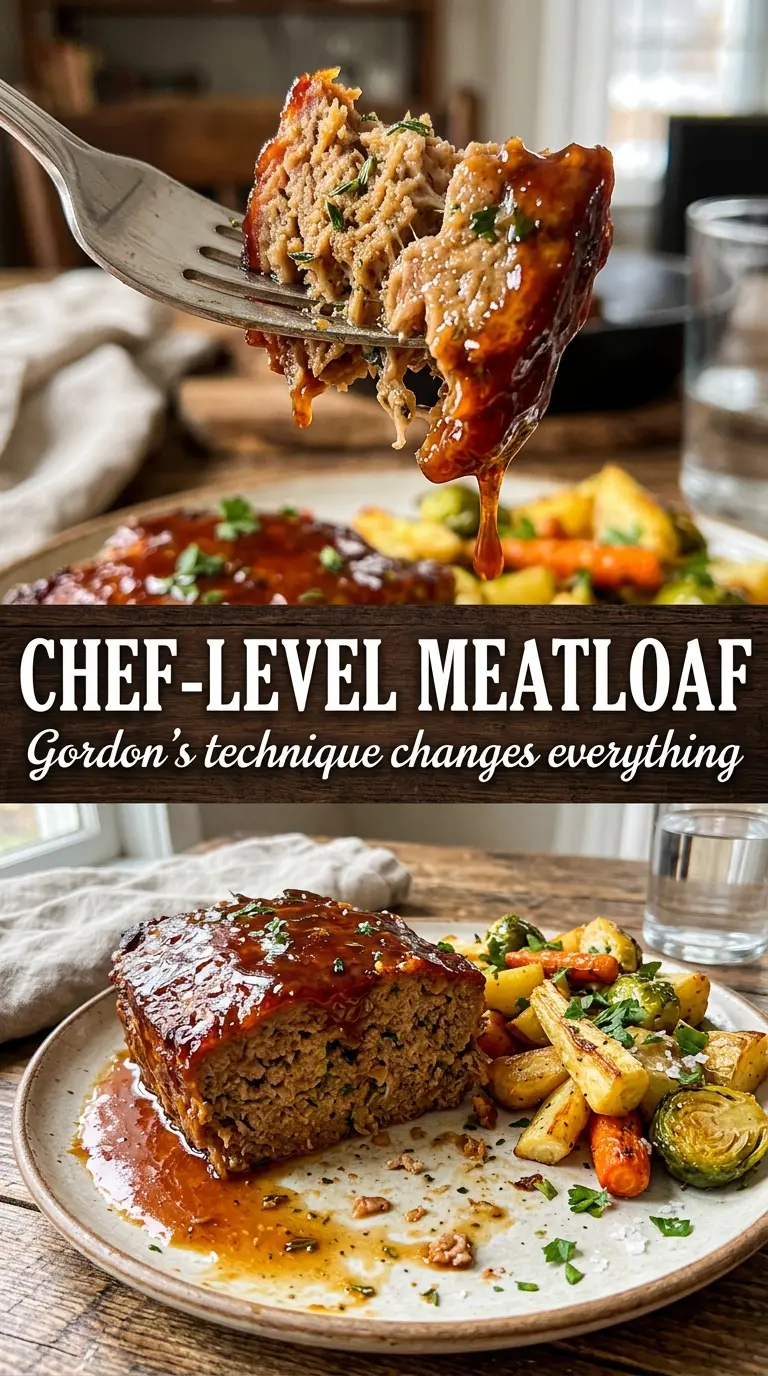
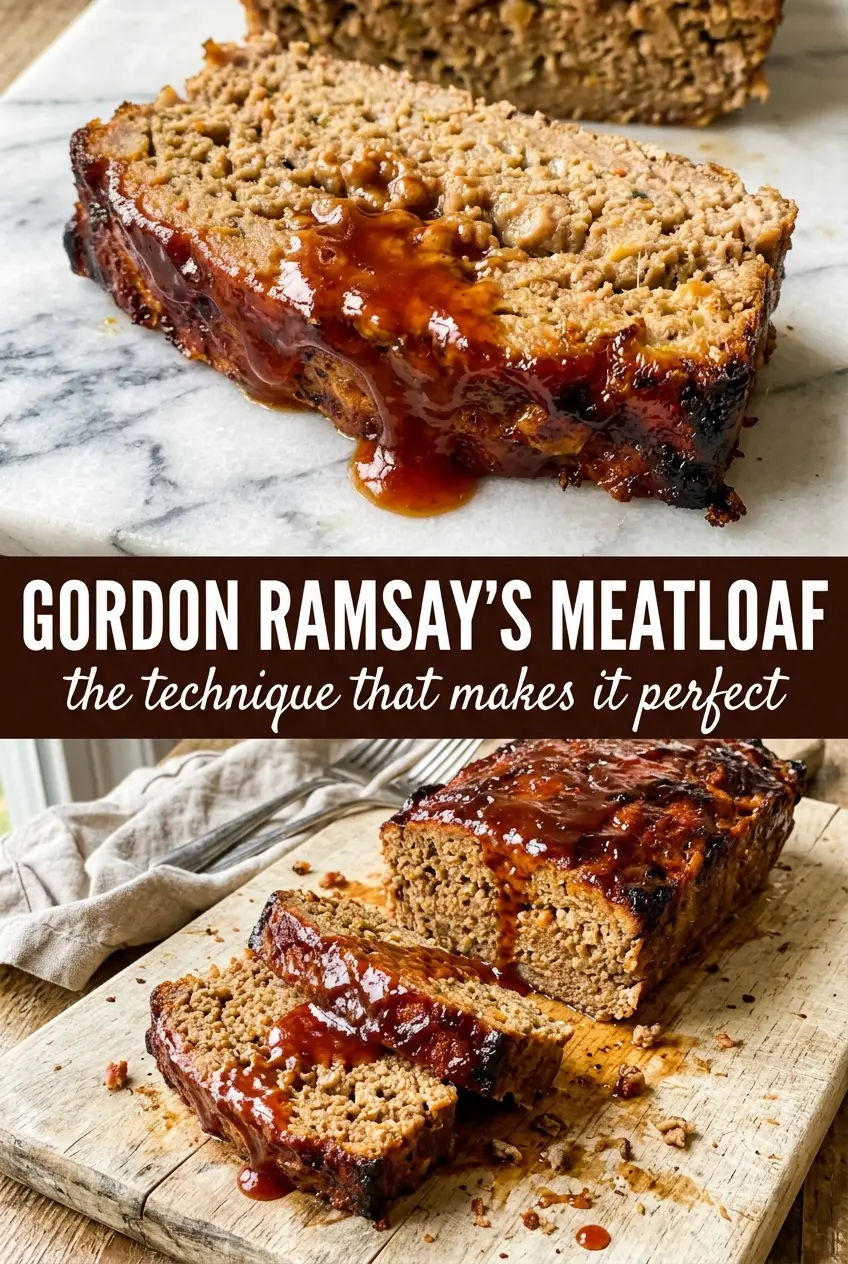
Lacquered on the outside, juicy in the center, and packed with enough savory depth to make a plain weeknight meatloaf feel like a restaurant plate, this Gordon Ramsay-style meatloaf earns its place in the rotation fast. The seared crust matters here. It gives the loaf structure, keeps the edges from turning soft, and builds the kind of browned flavor you usually only get from a skillet dinner.
The mix is built with beef and pork for a better balance of flavor and moisture, then held together with breadcrumbs, milk, and eggs so it slices cleanly without turning dense. Sautéed onion and garlic go in cooked, not raw, which keeps the texture even and the flavor rounded instead of sharp. The glaze is simple, but the balsamic and brown sugar give it that sticky finish that makes each slice taste finished, not just cooked.
Below, I’ve included the searing cue that keeps the loaf from falling apart, plus a few swaps and storage notes for the nights when you want this to work with what’s already in the kitchen.
The seared crust was the best part, but what surprised me was how juicy the inside stayed after resting. The glaze went on thick and caramelized in the oven without sliding off the loaf.
Save this Gordon Ramsay meatloaf for when you want a browned, juicy main dish with a glossy glaze and clean slices.
The Sear Is What Keeps This Meatloaf from Turning Soft
The biggest mistake with free-form meatloaf is treating it like a loaf pan recipe. When the mixture goes straight into the oven, the outside steams before it browns, and you lose the deep crust that gives this version its edge. Searing the loaf on all sides first changes the whole dish. You’re building a browned shell that locks in shape and gives the glaze something to cling to.
That quick skillet sear also helps the fat render a little before the roast begins, which means the final texture stays juicy instead of greasy. If the loaf sticks when you try to turn it, it’s not ready yet. Give it another minute; once it releases, the crust is set enough to move without tearing.
What Each Ingredient Is Doing in the Loaf
- Ground beef and ground pork — Beef brings the strong, savory backbone. Pork adds fat and a softer bite, which keeps the loaf from drying out in the oven. If you swap in all beef, use a slightly fattier grind or the slices can turn firm.
- Fresh breadcrumbs, milk, and eggs — This is the binder that keeps the meatloaf tender. Fresh crumbs soak up the milk and hold moisture better than dry crumbs, which is why the center slices cleanly instead of crumbling. If you only have dry breadcrumbs, use a little less and let them hydrate fully before shaping.
- Sautéed onion and garlic — Cooking them first takes away the harsh raw edge and keeps the loaf from weeping liquid as it bakes. Finely dice the onion so it disappears into the meat instead of leaving big soft pockets.
- Worcestershire, Dijon, thyme, and parsley — These are the flavor builders. Worcestershire adds depth, Dijon sharpens the meatiness, thyme gives the loaf that classic savory note, and parsley keeps it from tasting heavy. Fresh herbs matter here because they stay bright after baking.
- Glaze ingredients — Ketchup gives body, balsamic adds tang, and brown sugar helps the top caramelize. The glaze should be brushable, not runny. If it looks thin, it won’t lacquer the loaf; it will slide off.
Building the Loaf, Searing It, and Finishing It Without Drying It Out
Mix the meat gently
Combine the beef, pork, breadcrumbs, eggs, milk, onion, garlic, Worcestershire, Dijon, herbs, salt, and pepper just until the mixture comes together. Overmixing packs the proteins too tightly and gives you a dense, springy loaf instead of a tender one. The mixture should hold its shape when pressed, but it shouldn’t look paste-like. If it feels loose, let it sit for a minute so the breadcrumbs can absorb the moisture before shaping.
Shape a tight free-form loaf
Form the mixture into a compact oval or rectangular loaf on a tray or in the skillet. A tight shape helps it cook evenly and keeps the sear from breaking apart the edges. Don’t press so hard that you squeeze out the fat; you want it snug, not compressed. If cracks appear, smooth them with damp hands before it hits the pan.
Brown all sides in a hot skillet
Heat the olive oil until it shimmers, then lay the loaf in carefully and let each side sear for about 2 minutes. You’re looking for a deep brown crust, not just a little color. If the pan is too cool, the meat will stick and gray instead of browning. Turn it with two spatulas if you need extra support, and don’t rush the first side until it releases cleanly.
Glaze, roast, and rest
Stir the glaze together and brush it over the top after searing. Slide the skillet into a 350°F oven and roast until the center reaches 160°F, usually 60 to 70 minutes depending on thickness. If the top starts darkening too fast, tent it loosely with foil for the last stretch. Let the meatloaf rest for 15 minutes before slicing; that pause keeps the juices in the loaf instead of spilling onto the board.
How to Change This Meatloaf for Different Kitchens and Different Nights
Make It Gluten-Free
Swap the fresh breadcrumbs for gluten-free breadcrumbs or finely crushed gluten-free crackers. Keep the amount about the same, then check the mixture before shaping. You want a loaf that holds together without feeling dry, so add a splash more milk only if the mixture looks stiff and crumbly.
Use All Beef if That’s What You Have
You can replace the pork with more ground beef, but choose beef with enough fat to stay juicy, ideally not extra lean. The flavor will be a little cleaner and less rich, and the texture will be firmer. If your beef is lean, add an extra tablespoon of milk or the loaf can bake up dry.
Dairy-Free Version
Replace the milk with unsweetened plain oat milk or another neutral dairy-free milk. The loaf still binds well because the eggs and breadcrumbs do the structural work. Skip anything strongly flavored like coconut milk, or it will show up in the finished taste.
Storage and Reheating
- Refrigerator: Store sliced meatloaf in an airtight container for up to 4 days. The glaze will set a little firmer after chilling.
- Freezer: Freezes well. Wrap slices or the whole cooled loaf tightly, then freeze for up to 3 months. Thaw overnight in the refrigerator before reheating.
- Reheating: Warm covered in a 300°F oven with a splash of water or extra glaze until heated through. The common mistake is blasting it in the microwave, which toughens the edges before the center is hot.
Answers to the Questions Worth Asking
Gordon Ramsay Meatloaf
Ingredients
Equipment
Method
- Preheat oven to 350°F.
- Mix ground beef, ground pork, breadcrumbs, eggs, whole milk, sautéed onion, garlic, Worcestershire sauce, Dijon mustard, thyme, parsley, salt, and coarse black pepper until just combined, with an even texture throughout.
- Shape the mixture into a tight, free-form loaf so it holds together when lifted.
- Heat olive oil in an oven-safe skillet over medium-high heat and sear the meatloaf on all sides until deeply browned, about 2 minutes per side, watching for a dark caramelized crust.
- Mix the glaze ingredients (ketchup, balsamic vinegar, and brown sugar) and brush the glaze over the top so it coats evenly.
- Transfer the skillet to the oven and roast for 60–70 minutes at 350°F until the internal temperature reaches 160°F, looking for a set center and glossy, lacquered surface.
- Rest the meatloaf for 15 minutes before slicing to let the juices redistribute, then cut thick slices and serve.