Greek chicken tenders hit that sweet spot between fast and satisfying: juicy inside, deeply seasoned on the outside, and bright enough that the whole plate tastes awake. The lemon, oregano, and garlic build a crust that tastes like it took longer than it did, and the skillet gives the edges just enough char to keep every bite interesting. Spoon them over cool tzatziki and the contrast makes the whole dish feel finished, not just assembled.
What makes this version work is the short marinade. Chicken tenders pick up flavor quickly, so twenty minutes is enough to season them without turning the texture mushy. Lemon juice and zest do the lifting, but the oil matters too because it carries the spices and helps the surface brown instead of drying out. I also use smoked paprika and a little cumin, which don’t read as dominant flavors here; they deepen the background and make the chicken taste fuller.
Below, I’ll show you the one pan detail that keeps the chicken from steaming, plus a few smart swaps if you want to turn this into a bowl, a pita filling, or a lighter dairy-free plate.
The marinade gave the chicken a ton of flavor in just 20 minutes, and the tenders browned beautifully without drying out. I served them with tzatziki and pita, and my husband immediately asked when I was making them again.
Save these lemon-oregano Greek chicken tenders for a fast skillet dinner with crisp edges, creamy tzatziki, and a bright Mediterranean finish.
The Marinade Is Short on Purpose, and That’s Why the Chicken Stays Juicy
Chicken tenders don’t need a long soak to taste seasoned all the way through. In fact, with this much lemon juice in the mix, leaving them in the marinade too long can start to change the texture at the edges before they ever hit the pan. Twenty minutes is the sweet spot: enough time for the garlic, oregano, and citrus to settle in, not enough time for the acid to work against you.
The other mistake is crowding the skillet. Tenders need direct contact with hot metal if you want that golden sear. If they sit too close together, the juices collect underneath and they steam, which leaves you with pale chicken and a wet surface instead of a crust that tastes sharp and savory.
What the Lemon, Oregano, and Tzatziki Are Doing Here
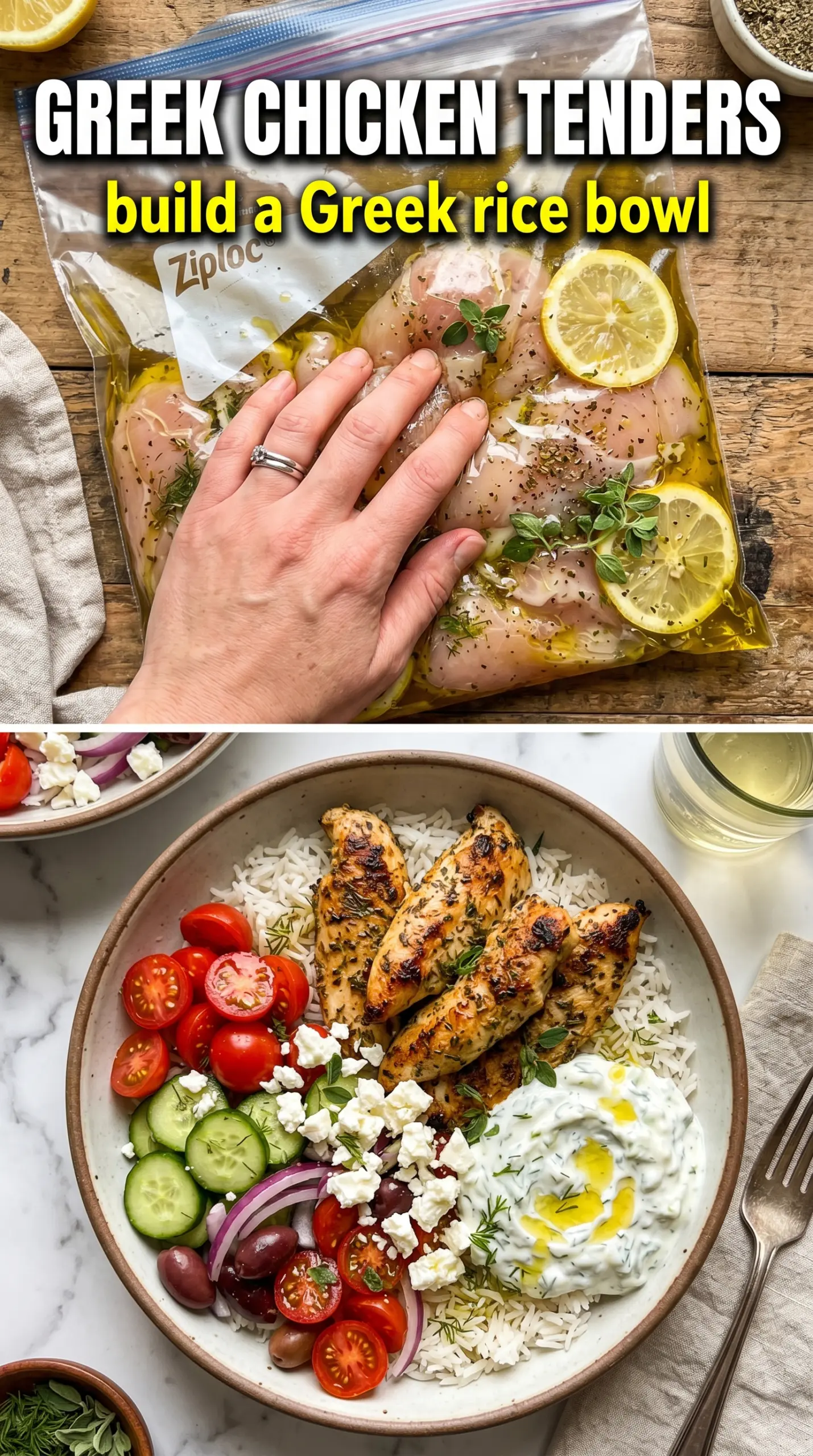
- Chicken tenders — They cook quickly and stay tender even in a hot skillet, which is why they’re the best cut for this kind of fast marinade. Chicken breast strips can work too, but cut them into even pieces so they finish at the same time.
- Fresh lemon juice and zest — Juice gives the brightness, but zest is what makes the marinade smell and taste like actual lemon instead of just acidic. If you only have bottled lemon juice, the chicken will still taste good, but it loses that fresh top note.
- Olive oil — This carries the spices across the chicken and helps the surface brown. A decent everyday olive oil is fine here; save the expensive finishing oil for the platter.
- Dried oregano, smoked paprika, and cumin — Oregano gives the Greek backbone, paprika deepens the color, and cumin adds warmth under the citrus. Don’t skip all three and expect the same depth; together they turn a simple lemon chicken into something more layered.
- Tzatziki — It cools the garlic and lemon and gives the plate a creamy base. Store-bought works, but a thicker tzatziki holds up better under the chicken and keeps the serving platter from turning watery.
- Feta, olives, cucumber, and dill — These are the finishing pieces that make the dish feel complete. Use good feta if you can, because the saltiness matters against the lemon; the cucumber and dill keep the plate fresh.
The Fast Sear That Gives These Tenders Their Edges
Mix the Marinade Until It Looks Glossy
Whisk the olive oil, lemon juice, zest, garlic, oregano, paprika, cumin, salt, and pepper until the mixture turns emulsified and slightly thickened. That glossy look matters because it means the spices are suspended in the oil instead of sinking to the bottom of the bowl. Toss the chicken well so every piece gets coated, then let it rest for 20 minutes while the pan heats.
Let the Pan Get Hot Before the Chicken Goes In
Set a large skillet or grill pan over medium-high heat and add a small drizzle of oil. When the oil shimmers and moves easily across the surface, the pan is ready. If you add the chicken too early, the marinade will leak out before the outside sets, and you’ll miss the browning that makes these taste like more than plain lemon chicken.
Cook in a Single Layer
Lay the tenders in the pan with a little space between each piece. They should sizzle the moment they touch down; if they don’t, the pan isn’t hot enough. Cook for 3 to 4 minutes per side until the edges are golden and the center reaches 165°F. If the marinade starts to darken too fast, lower the heat a touch rather than flipping constantly, which keeps the crust from forming.
Build the Plate While the Chicken Rests
Spread tzatziki on the platter first, then pile the chicken on top so the sauce catches the juices instead of running off the plate. Scatter feta, olives, cucumber, and dill around the edges for texture and color. Finish with lemon wedges because that last squeeze wakes up the oregano and makes the whole dish taste fresher.
Three Ways to Turn Greek Chicken Tenders Into a Different Meal
Make it dairy-free
Skip the feta and use a dairy-free tzatziki or a cucumber-herb sauce made with unsweetened yogurt alternative. You’ll keep the cooling contrast without changing the chicken itself, and the lemon-oregano marinade still carries the dish.
Turn it into pita sandwiches
Slice the cooked tenders and tuck them into warm pita with tzatziki, cucumber, dill, and a few olives. The chicken stays the same, but the meal turns more handheld and the juices soak into the bread in the best way.
Use chicken breasts instead
Cut boneless chicken breasts into even strips and cook them the same way, but watch the pan closely because they dry out faster than tenders. The flavor stays the same, though the texture is a little firmer and less naturally juicy.
Make it gluten-free without changing anything
The chicken itself is already gluten-free, so the only thing to check is the tzatziki and any bread or pita on the side. Serve it over rice, salad, or roasted potatoes and the dish stays just as satisfying.
Storage and Reheating
- Refrigerator: Store the cooked chicken in an airtight container for up to 4 days. The coating stays flavorful, but the crust softens once it sits in the fridge with the sauce.
- Freezer: Freeze the cooked chicken without tzatziki for up to 2 months. Wrap it well and thaw it in the fridge before reheating so the outside doesn’t overcook before the center warms through.
- Reheating: Warm the chicken in a skillet over medium-low heat with a tiny splash of water or oil, just until heated through. The common mistake is blasting it in the microwave, which makes the tenders rubbery and wipes out the seared texture.
Questions I Get Asked About This Recipe

Greek Chicken Tenders
Ingredients
Equipment
Method
- In a bowl, whisk olive oil, fresh lemon juice, lemon zest, minced garlic, dried oregano, smoked paprika, cumin, salt, and pepper until evenly combined, then toss chicken tenders in the marinade to coat.
- Rest the marinated chicken 20 minutes so the flavors soak in and the surface looks slightly glossy.
- Heat a large skillet or grill pan over medium-high heat and add a drizzle of olive oil to coat the surface.
- Cook chicken tenders for 3-4 minutes per side until golden, flipping once, and cook until the internal temperature reaches 165°F.
- Spread tzatziki on a serving platter into an even layer.
- Arrange the seared chicken tenders over the tzatziki.
- Scatter crumbled feta, Kalamata olives, cucumber slices, and fresh dill around the chicken for a bright finish.
- Serve with warm pita and lemon wedges on the side.