Crispy Greek feta roast potatoes hit the table with caramelized edges, a lemony roast-pan glaze, and just enough feta to turn every bite salty, creamy, and bright. The potatoes soften in the middle while the liquid concentrates underneath them, so you get a side dish that tastes layered instead of plain and roasted.
The trick is giving the potatoes enough space to brown and enough liquid to steam the centers before it cooks off. Yukon golds hold their shape well and turn buttery inside, while the chicken broth and lemon juice reduce into a pan sauce that clings to the wedges instead of pooling around them. The feta goes on at the end so it stays crumbly and sharp rather than melting away into the pan.
Below, I’ve included the detail that matters most for getting those crisp edges, plus a few swaps and serving notes if you want to adjust the herbs or make the dish vegetarian.
The potatoes got those crisp, bronzed edges I never manage with plain roasting, and the lemon-garlic pan juices soaked into the cut sides. I added the feta right at the end and it stayed crumbly instead of disappearing.
Love these lemon-oregano Greek feta roast potatoes? Save them for the next night you want a crisp-edged side with bold Mediterranean flavor.
The Liquid Has to Cook Off Before the Potatoes Can Crisp
A lot of roasted potato recipes stop too early, while the wedges are still sitting in a shallow bath. That leaves you with soft edges and a good sauce, but not the crisp, bronzed surface these potatoes need. Here, the broth and lemon juice do double duty: they season the potatoes from the start, then evaporate so the cut sides can fry in the oil left behind.
The single layer matters more than people think. If the wedges crowd each other, the steam gets trapped and the bottoms turn pale. Flip them halfway through roasting so both sides catch the heat directly, and don’t pull them out just because the pan looks dry — the best color shows up after the liquid is gone.
What Each Ingredient Is Actually Doing in This Pan
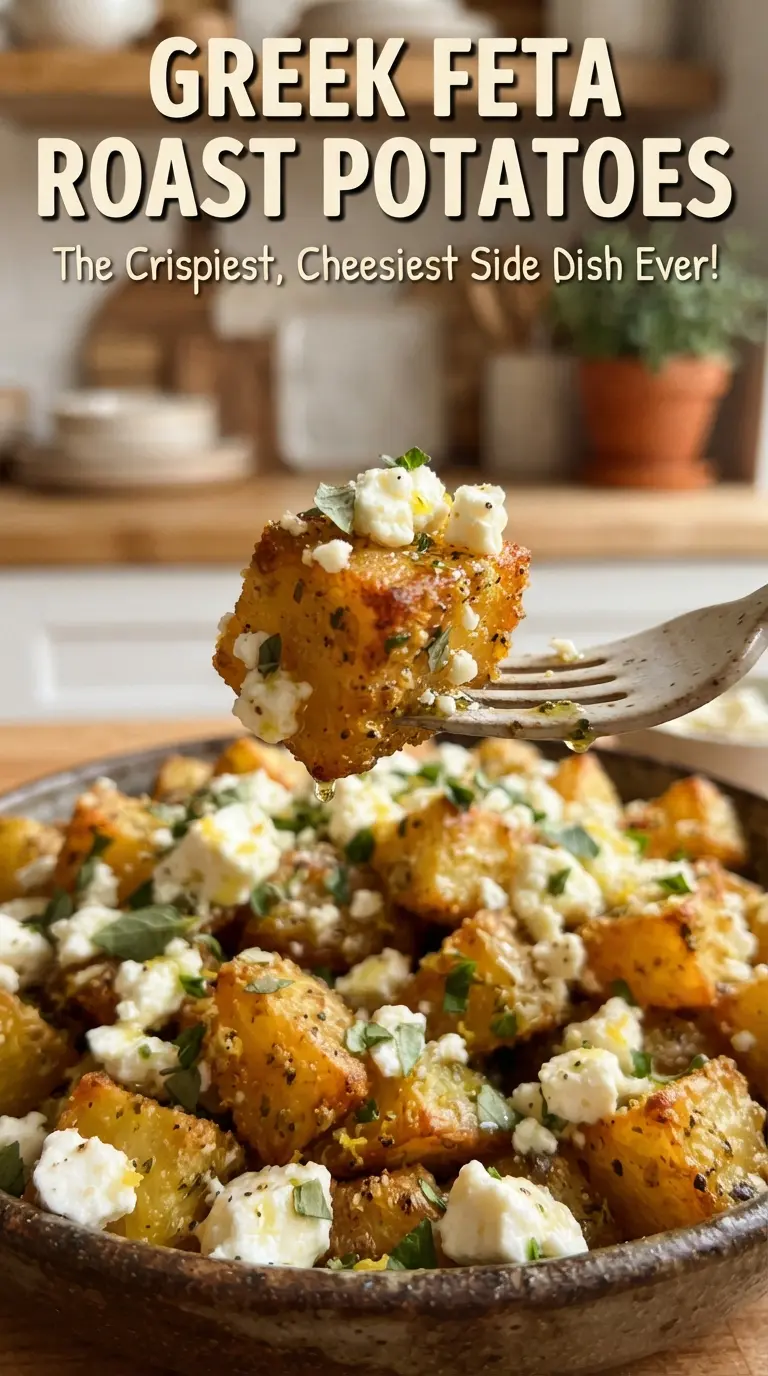
- Yukon gold potatoes — These hold their shape without going waxy, and the thin skins help the wedges stay intact as they roast. Russets can work in a pinch, but they break down more and give you a fluffier center instead of that creamy bite.
- Olive oil — This is what helps the edges turn deep golden once the liquid has cooked off. Use a decent one because the flavor stays noticeable, but there’s no need to use your most expensive finishing oil here.
- Lemon juice — Fresh lemon is worth using because bottled juice tastes flat once it reduces. It brightens the potatoes and keeps the feta from tasting one-note.
- Chicken broth — The broth adds savoriness and keeps the potatoes from drying out in the first part of roasting. Vegetable broth works if you want a vegetarian version; the result is a little lighter, but still good.
- Feta — Add it after roasting so it stays crumbly and salty instead of melting into the pan. A block of feta crumbled by hand has better texture than the pre-crumbled kind, which is often drier.
- Dill or parsley — Dill gives the potatoes a sharper Greek-style finish, while parsley keeps things fresher and greener. Either one should go on right at the end so the herbs stay fragrant.
Roasting the Potatoes Until the Pan Is Dry and the Edges Crackle
Coating the Wedges Evenly
Toss the potatoes in the roasting pan so every cut side gets slicked with the oil, lemon, broth, and garlic mixture. The pan is better than a bowl here because you can spread everything out immediately and see whether the wedges are sitting in one layer. If there’s a lot of liquid pooling under the potatoes before they go in the oven, the pan is too crowded or the potatoes were cut too small.
Roasting Through the First 25 Minutes
At 425°F, the potatoes need enough time to soften before they brown properly. You’ll see the liquid bubble around the edges and the garlic mellow into the oil. If the garlic starts looking dark before the potatoes are tender, your pan is too close to the top of the oven, so move it to the center rack next time.
Flipping for Color
Turn the wedges once halfway through so the bottom sides get a chance to meet the hottest part of the pan. The goal is not perfect symmetry; it’s a patchy, rugged crust with some deeply browned corners. Use a thin spatula and scrape up any stuck-on bits — those bits are full of lemon and oregano and belong back on the potatoes.
Finishing With Feta and Herbs
When the liquid is absorbed and the edges look crisp, pull the pan from the oven and scatter the feta over the top right away. The residual heat softens it just enough without turning it greasy. Finish with dill or parsley while the potatoes are still hot so the herbs release their aroma the second they hit the pan.
How to Adapt These Greek Feta Roast Potatoes Without Losing the Crisp Edge
Make it vegetarian
Swap the chicken broth for vegetable broth. You’ll lose a little of the savory depth, but the lemon, garlic, and feta still carry the dish well. If your vegetable broth is very mild, add an extra pinch of salt before roasting.
Use parsley instead of dill
Parsley gives a cleaner, greener finish if dill feels too sharp for you. The potatoes still taste distinctly Greek because the lemon, oregano, and feta do the heavy lifting.
Add red onions for a fuller side dish
Thin wedges of red onion roast well alongside the potatoes and pick up the lemon-garlic flavor from the pan. They soften into sweet, jammy bits that balance the saltiness of the feta.
Storage and Reheating
- Refrigerator: Store leftovers in an airtight container for up to 4 days. The potatoes will soften a bit, but the flavor holds well.
- Freezer: They freeze, but the texture turns mealy after thawing, so I don’t recommend it for the best result.
- Reheating: Warm them on a sheet pan in a 400°F oven until hot and re-crisped. The microwave makes the wedges soft and steamy, which is the opposite of what you want here.
Answers to the Questions Worth Asking
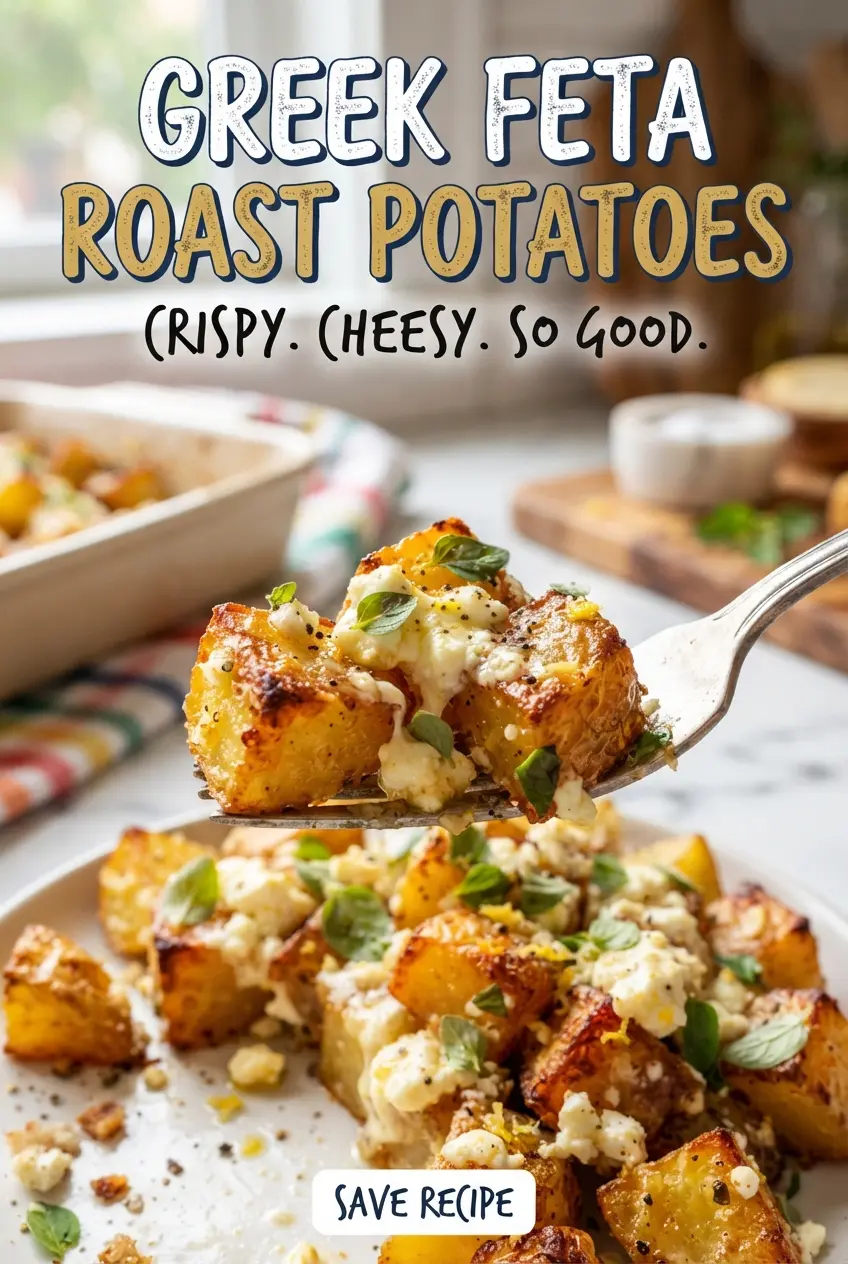
Greek Feta Roast Potatoes
Ingredients
Equipment
Method
- Preheat oven to 425°F (215°C). Make sure the oven is fully heated for crisp, golden edges.
- Toss potato wedges with olive oil, lemon juice, chicken broth, minced garlic, dried oregano, salt, and black pepper in a roasting pan. Coat everything evenly so the sauce reduces around the edges.
- Spread potatoes in a single layer on the sheet pan. Avoid crowding so they roast instead of steam.
- Roast for 45-50 minutes total, flipping halfway, until the liquid is absorbed and the edges are crispy and golden. Look for browned edges and a dry, clinging coating in the pan.
- Top hot potatoes with crumbled feta and fresh chopped dill or parsley, then serve immediately. The feta should soften slightly from the heat.