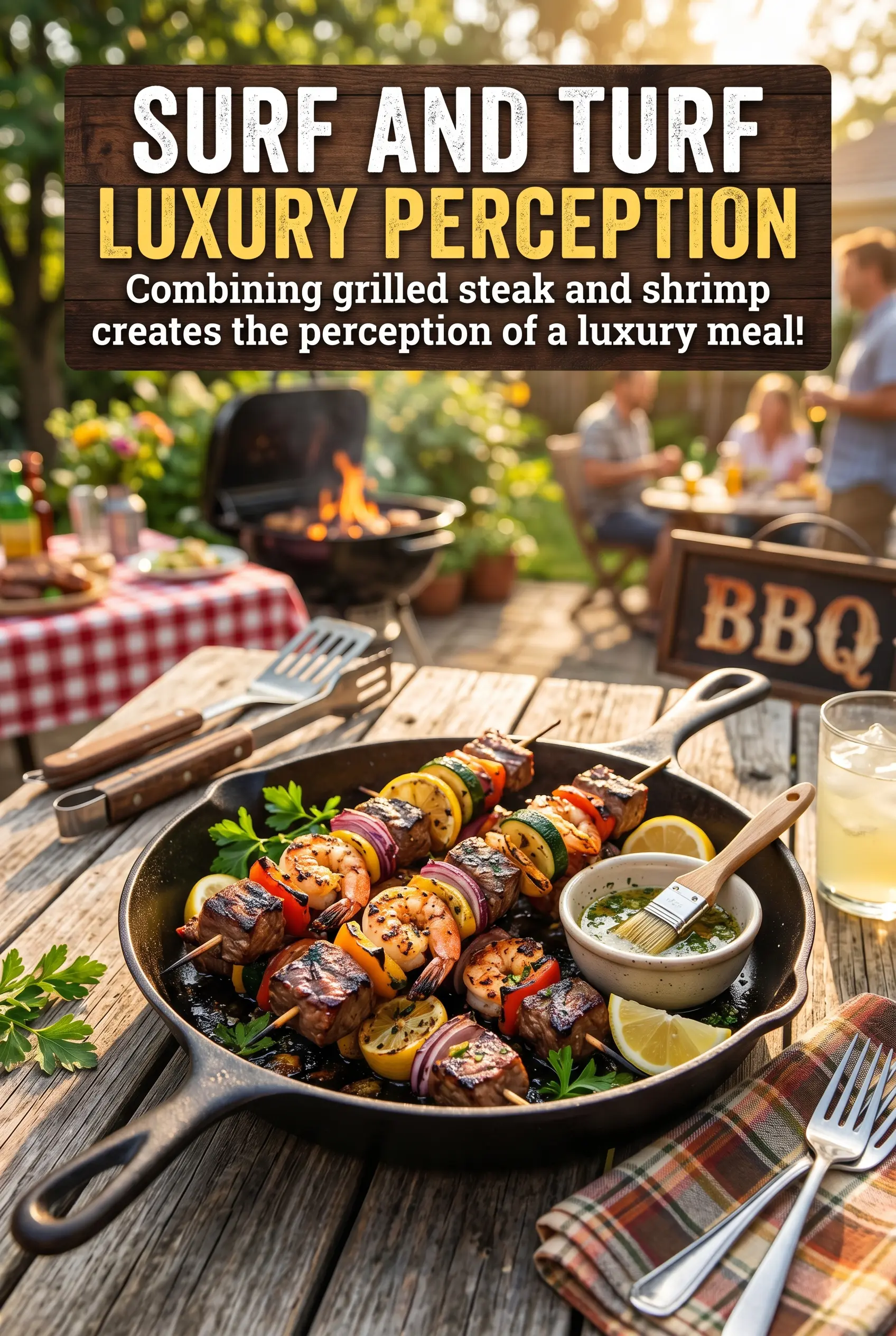
Juicy steak, pink shrimp, and charred vegetables on a skewer is already a strong combination, but garlic butter pushes it into the kind of meal people remember. The steak gets browned edges before the inside overcooks, the shrimp stay tender, and every bite picks up a glossy layer of lemony butter that clings instead of running off the grill. It eats like something you’d order for a celebration, but it still comes together fast enough for a regular summer dinner.
The trick is giving the steak and shrimp different amounts of time in the heat without making the assembly fussy. A short butter marinade seasons both proteins and helps the shrimp stay supple, while reserving half the sauce for basting keeps the flavor bright and fresh instead of cooked out. I also like cutting the vegetables into pieces that match the protein size so everything grills at the same pace and the skewers look balanced on the platter.
Below, I’ve included the part that matters most: how to keep the shrimp from going rubbery while the steak finishes, plus the easiest swaps if you need to work with what’s already in the fridge.
The garlic butter soaked into the steak while the shrimp stayed plump, and everything came off the grill at the same time. I basted right at the end like you said, and the skewers had the best char without tasting burnt.
Save these grilled garlic butter steak and shrimp kabobs for the nights when you want surf and turf with real grill char and zero fuss.
The Reason These Kabobs Stay Juicy Instead of Overcooking
The biggest mistake with steak and shrimp kabobs is treating them like one ingredient when they need two different kinds of attention. Shrimp move from perfect to tough fast, while sirloin needs enough heat to pick up color and still stay tender in the center. The answer here is simple: cut the steak into evenly sized cubes, use large shrimp, and keep the vegetables in chunks that won’t collapse before the meat is done.
The garlic butter does more than add flavor. It coats the surface, helps the skewers brown, and gives you something to baste with at the end so the finished kabobs taste rich and fresh instead of dry. If your grill runs hot, work a little faster and pull the skewers as soon as the shrimp turn opaque and the steak feels just slightly springy when pressed. That last bit of carryover heat finishes the job.
What the Garlic Butter Is Actually Doing Here
- Sirloin steak — Sirloin gives you a beefy bite without needing a long grill time, which matters here because the shrimp are waiting on the same skewer. Cut it into uniform cubes so the pieces cook at the same rate; irregular chunks leave you with some overdone and some underdone.
- Large shrimp — Large shrimp hold up better on the grill and are easier to thread without curling off the skewer. Smaller shrimp overcook before the steak is ready, so this is one place where size matters.
- Butter — Melted butter carries the garlic, lemon, and parsley across every bite and helps the surface brown. You can use salted or unsalted butter, but unsalted gives you more control if your steak is already seasoned.
- Lemon juice — Just a tablespoon keeps the butter from tasting heavy and wakes up the shrimp. Don’t skip it; without acid, the kabobs taste flatter and the butter reads oily instead of bright.
- Bell peppers and onions — These aren’t just fillers. They add sweetness, a little char, and enough structure to separate the steak and shrimp so the skewers grill evenly. Cut them to match the protein size, or they’ll lag behind and turn soft before the meat is done.
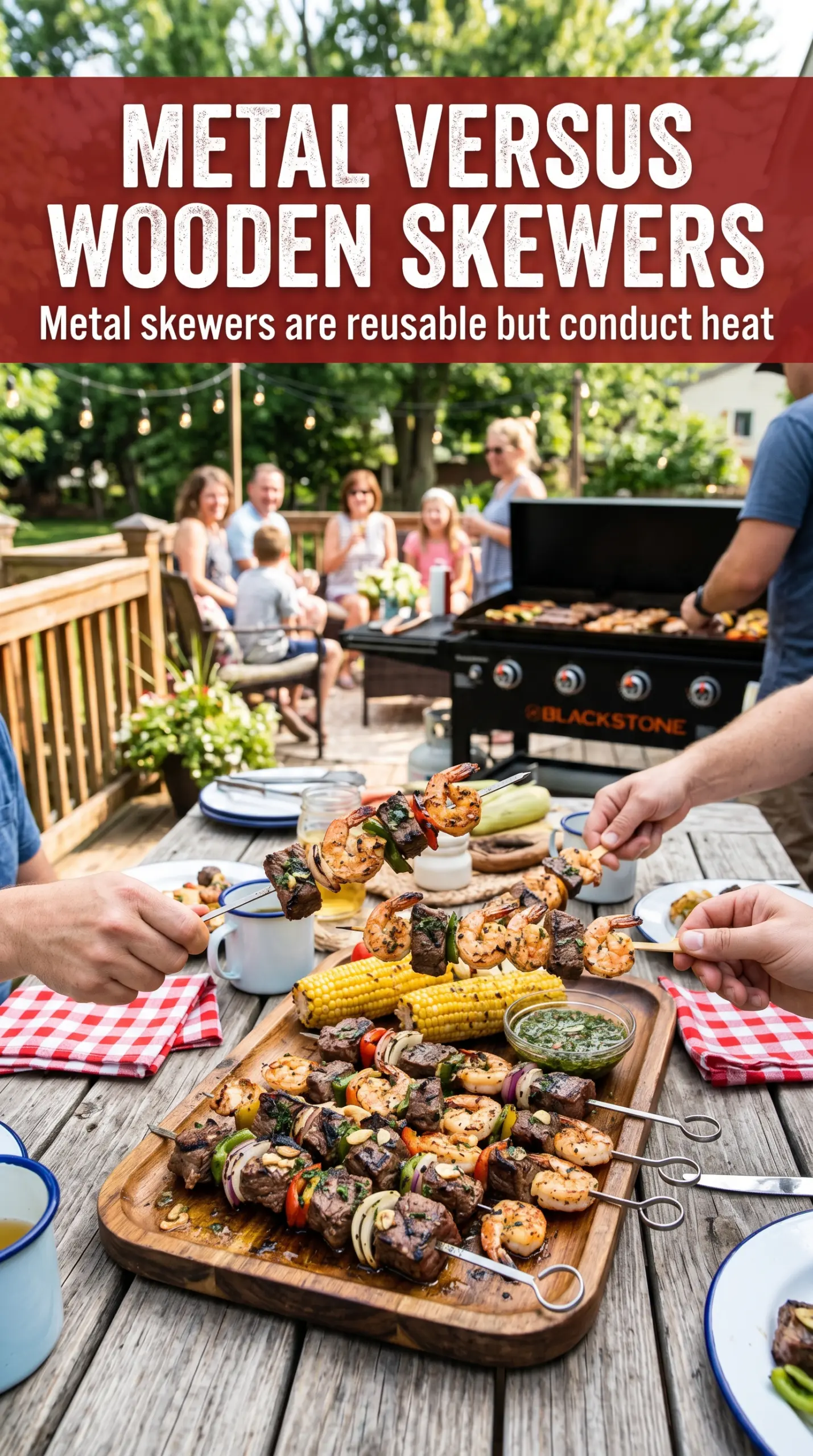
- Wooden or metal skewers — Metal skewers can go straight on the grill, while wooden skewers need a soak so they don’t burn. If you use wood, give them at least 30 minutes in water before threading the kabobs.
The Heat, the Basting, and the Moment to Pull Them Off
Mixing the Garlic Butter
Stir the melted butter, garlic, parsley, lemon juice, salt, and pepper together until the garlic looks evenly suspended and the mixture smells sharp and fragrant. Half of this goes into the marinade and the rest stays clean for basting, so don’t mix up the two portions after the raw steak and shrimp have been in contact with the first batch. If the butter starts to firm up while you work, warm it just enough to liquefy again.
Marinating Without Softening the Shrimp
Thirty minutes is enough here. Any longer and the shrimp can start to take on a slightly cured texture from the lemon juice, which throws off the tenderness you want after grilling. Toss the steak and shrimp gently in the butter mixture, then move them along; this is a quick flavor coating, not an overnight marinade.
Threading the Skewers Evenly
Alternate steak, shrimp, peppers, and onions so the heat can move around each piece instead of building a solid wall of meat. Leave a little space between items if you can, because crowded skewers steam before they char. If the shrimp are curved tightly, thread them through twice so they stay secure and don’t spin when you flip them.
Grilling for Char, Not Dryness
Set the kabobs over medium-high heat and grill for 3 to 4 minutes per side, basting near the end with the reserved garlic butter. You’re looking for browned edges on the steak, opaque shrimp with just a little firmness, and vegetables that have softened slightly but still have bite. If the shrimp turn chalky, the grill stayed on too long; pull everything earlier next time and let the residual heat finish the center.
Make It Spicier
Add a pinch of red pepper flakes or a little cayenne to the garlic butter. It doesn’t change the grilling method, but it gives the butter a slow heat that works especially well with the sweetness of the shrimp.
Dairy-Free Version
Swap the butter for a good olive oil or a plant-based butter with a neutral taste. You’ll lose a little of the rich finish that real butter gives, but the garlic, lemon, and parsley still carry the dish cleanly.
Make It Gluten-Free
This recipe is naturally gluten-free as written, as long as your butter and seasonings are certified gluten-free if cross-contact matters to you. Serve it with grilled vegetables, rice, or potatoes and you’re set.
Storage and Reheating
- Refrigerator: Store leftovers in an airtight container for up to 2 days. The shrimp will firm up a bit after chilling, so expect a less tender bite the next day.
- Freezer: I don’t recommend freezing the finished kabobs; shrimp and grilled vegetables both lose their best texture after thawing. If you want to get ahead, freeze the cubed steak separately and assemble fresh.
- Reheating: Warm gently in a skillet over low heat with a splash of water or extra butter, just until heated through. High heat dries out the shrimp fast, which is the quickest way to turn leftovers rubbery.
Answers to the Questions Worth Asking
Grilled Garlic Butter Steak and Shrimp Kabobs
Ingredients
Equipment
Method
- Mix melted butter, garlic, parsley, lemon juice, salt, and pepper until combined, then pour it into a bowl. Visual cue: the mixture should look glossy and evenly speckled with garlic and parsley.
- Reserve half the garlic butter for basting, and set the rest aside for marinating. Visual cue: you should have two portions of similar color and texture.
- Add sirloin steak and large shrimp to the remaining garlic butter and toss to coat well. Visual cue: the cubes and shrimp should look slick and lightly coated all over.
- Marinate for 30 minutes. Visual cue: the steak should look slightly darker and the shrimp should look lightly opaque at the edges.
- Thread steak, shrimp, and bell peppers and onions alternately onto wooden or metal skewers. Visual cue: leave small spaces so the heat reaches all sides.
- Grill over medium-high heat for 3-4 minutes per side, turning once and keeping the grill at steady heat. Visual cue: the steak should develop grill marks and the shrimp should turn pink.
- Baste with the reserved garlic butter during grilling while the kabobs cook. Visual cue: the butter should look melted and lightly sizzling on the surface.
- Serve immediately after grilling. Visual cue: the shrimp should be pink and the steak should look juicy, not dried out.