Golden butterbeer cookies land right in that sweet spot between soft-baked sugar cookie and butterscotch treat. The edges set just enough to hold their shape, the centers stay tender, and the frosting brings that creamy cream-soda note that makes the whole cookie taste like a nod to the wizarding world without turning cloying. The gold sugar on top gives them a little sparkle and a light crunch that keeps each bite from feeling flat.
What makes this version work is the combination of melted butterscotch chips in the dough and cream soda in both the cookie and the frosting. That gives you a layered butterbeer flavor instead of just one note of sweetness. The cinnamon is subtle, but it keeps the cookies from tasting one-dimensional and helps the butterscotch read warmer and richer.
Below, I’ll walk through the small details that matter here: how to keep the cookies soft instead of cakey, how to get the frosting smooth enough to pipe, and what to do if you want to make them a little less sweet without losing the butterbeer character.
The cookies stayed soft for days and the cream soda frosting set up just enough to pipe without sliding off. I was worried they’d be too sweet, but the butterscotch and cinnamon balanced each other better than I expected.
Save these Harry Potter Butterbeer Cookies for the days when you want soft cookies with a creamy butterscotch frosting and a little gold sparkle.
The Trick to Keeping Butterbeer Cookies Soft Instead of Puffy
The most common mistake with cookies like these is overbuilding the dough. Once the flour goes in, stop mixing as soon as you no longer see dry streaks. If you beat the dough too long, the cookies bake up thicker and a little bready instead of soft and tender.
The other thing that matters here is the melted butterscotch chips. They help carry flavor through the dough, but they also add a bit of extra sugar and fat, which means the cookies need just enough flour to hold together without turning dry. Scoop them into 2-tablespoon rounds so they bake evenly and stay in that soft middle zone.
What the Butterscotch, Cream Soda, and Brown Sugar Each Bring
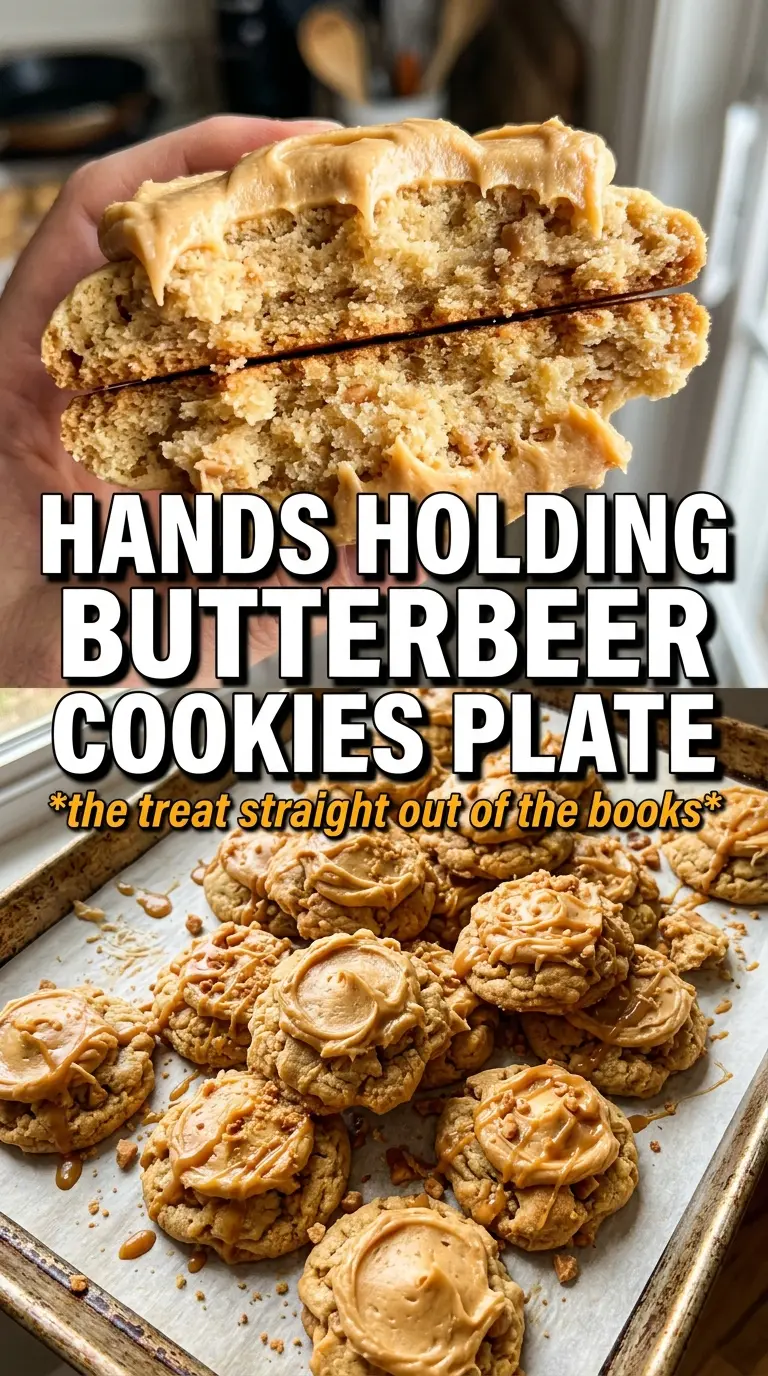
- Butter — Softened butter beats with the brown sugar into a base that stays rich and chewy. Don’t use melted butter here; it will spread the cookies too much and take away that plush texture.
- Brown sugar — This gives the cookies their deeper caramel note and helps them stay moist. Light or dark brown sugar both work, but dark brown sugar will push the cookies a little more toward molasses.
- Butterscotch chips — Melting the chips before adding them is what spreads the butterscotch flavor through the dough instead of leaving it in little pockets. If you only have butterscotch sauce, it won’t behave the same way in the cookie base.
- Cream soda — This is the butterbeer cue in both the dough and the frosting. Use a regular cream soda, not a diet version, since the sugar helps the frosting texture and the flavor is cleaner.
- Buttercream frosting base — The unsalted butter and powdered sugar make a pipeable frosting that holds its shape once the cookies cool. The butterscotch sauce adds flavor and a little softness; add the cream soda one spoonful at a time so the frosting doesn’t turn loose.
Building the Dough and Frosting in the Right Order
Whipping the Butter and Sugar
Start with softened butter and brown sugar and beat them until the mixture looks lighter and a little fluffy. That step gives the cookies lift without relying on extra leavening. If the butter is too cold, the sugar won’t cut through it and the dough will look grainy.
Adding the Wet Ingredients
Stir in the melted butterscotch chips, egg, vanilla, and cream soda until the dough looks glossy and smooth. The butterscotch should be warm, not hot, so it blends without scrambling the egg. If the mixture looks separated, keep mixing for a few more seconds; it usually comes together once the egg fully disperses.
Folding in the Dry Mix
Add the flour mixture and fold just until the dough holds together. The dough should be soft and scoopable, not sticky and loose. If it feels slack, let it sit for a few minutes before scooping so the flour has time to hydrate.
Baking and Cooling
Bake at 375°F for 10 to 12 minutes, just until the edges look set and the centers still look slightly underdone. They finish firming on the pan as they cool. If you leave them in until the tops look fully dry, they’ll lose that soft middle.
Making the Frosting
Beat the softened butter, butterscotch sauce, powdered sugar, cream soda, and vanilla until the frosting is smooth and fluffy. Add the cream soda slowly so you can stop at a pipeable texture. If it gets too loose, a little more powdered sugar brings it back; if it gets stiff, a tiny splash of cream soda loosens it again.
Make Them a Little Less Sweet
Use the lower end of the cream soda in the frosting and stop there if it already feels fluffy. That keeps the topping lighter without losing the butterbeer note, and it helps the butterscotch flavor stay front and center instead of being buried under sugar.
Gluten-Free Version
A good 1:1 gluten-free baking flour can work here, but the cookies may spread a little less and finish with a slightly more tender crumb. Let the dough rest for 10 minutes after mixing so the flour has time to absorb the liquid before you scoop it.
Dairy-Free Swaps
Use a plant-based butter that’s meant for baking and a dairy-free cream soda. The cookies will still bake up soft, but the frosting may need a touch more powdered sugar to hold its shape because some non-dairy butter spreads softer than regular butter.
Storing the Finished Cookies
- Refrigerator: Store in an airtight container for up to 4 days. The frosting firms up a bit in the fridge, but the cookies stay soft.
- Freezer: Freeze the unfrosted cookies for up to 2 months. Thaw at room temperature, then frost after they’re fully soft again.
- Reheating: These are best served at room temperature. If you want to take the chill off unfrosted cookies, warm them for 5 to 8 seconds in the microwave. Don’t heat frosted cookies or the topping will slide.
Questions I Get Asked About This Recipe
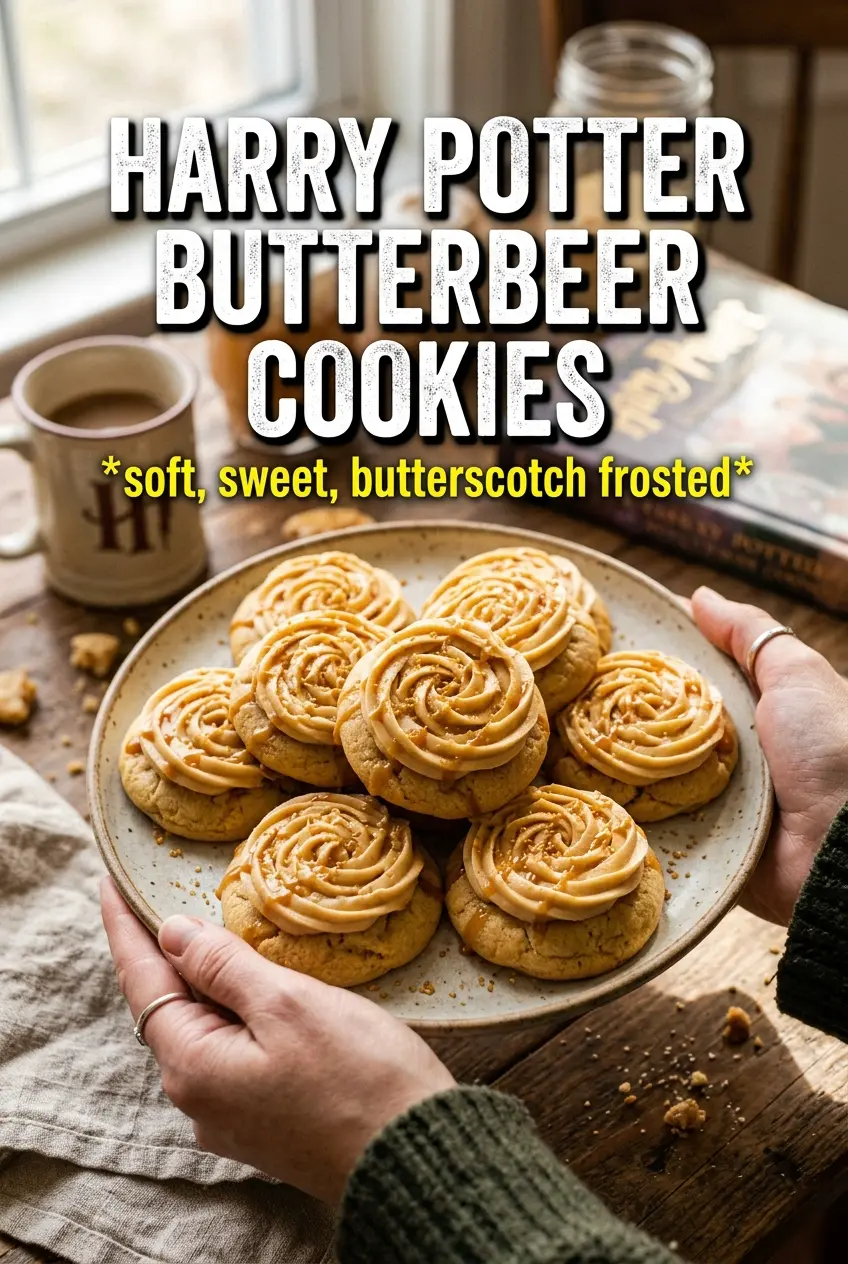
Harry Potter Butterbeer Cookies
Ingredients
Equipment
Method
- Beat the softened butter and brown sugar until smooth and creamy. Beat in the melted butterscotch chips, then add the egg and vanilla, followed by the cream soda.
- Whisk together the flour, baking soda, baking powder, cinnamon, and salt, then fold the dry mixture into the wet ingredients just until no dry streaks remain. Scoop 2-tablespoon rounds of dough onto a sheet pan.
- Bake at 375°F for 10–12 minutes, until the cookies look set around the edges but still slightly soft in the center. Cool the cookies completely before frosting.
- Beat the softened unsalted butter and butterscotch sauce until well combined. Mix in the powdered sugar, then beat in 2–3 tablespoons cream soda and vanilla until smooth and fluffy.
- Pipe or spread the butterbeer frosting onto each cooled cookie. Decorate with gold sugar sprinkles immediately so they stick.


