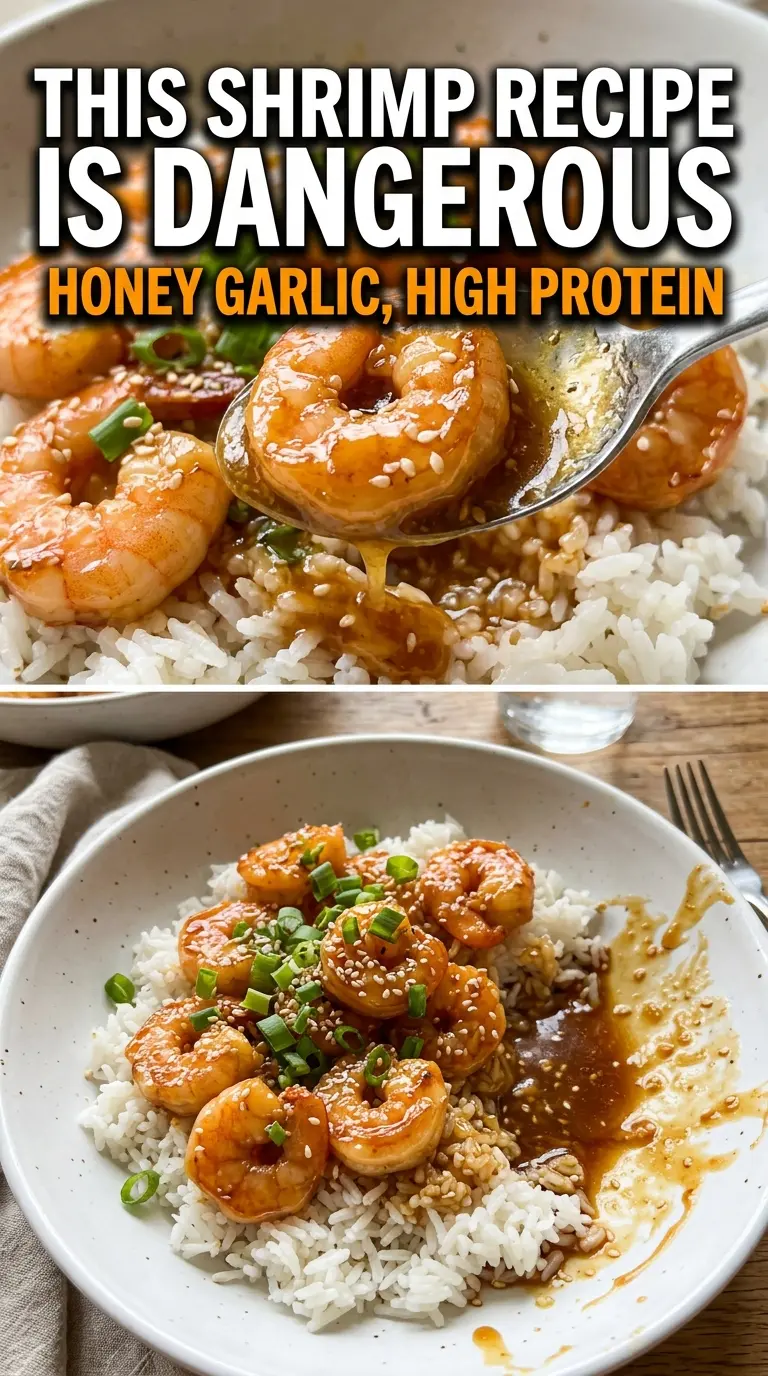
Sticky honey garlic shrimp hits the table with that glossy, take-another-bite coating that clings to every curve of the shrimp without turning heavy. The sauce is sweet at first, then sharp with garlic and lemon, with just enough heat to keep it from tasting flat. Served over rice, it’s the kind of fast dinner that feels finished and intentional even though it comes together in about twenty minutes.
The key is building the glaze in the same skillet you used for the shrimp. Those little browned bits left behind after the shrimp cook give the sauce depth, and the honey thickens quickly once the pan is hot. Shrimp need only a short sear, so the whole dish stays tender instead of rubbery, and the lemon juice keeps the sauce bright enough to balance the sweetness.
Below you’ll find the timing that matters most, the ingredient swaps that still keep the sauce balanced, and the small cue that tells you the glaze is ready before the shrimp go back in.
The shrimp stayed plump, and the sauce thickened into that sticky glaze I was hoping for. I served it over rice and my husband went back for seconds before I even sat down.
Save this high-protein honey garlic shrimp for a fast dinner with sticky glaze, tender shrimp, and almost no cleanup.
The Fastest Way to Get a Sticky Glaze Without Overcooking the Shrimp
Honey garlic shrimp falls apart when the pan is crowded or the sauce is started too early. Shrimp throw off moisture fast, and if they sit in that liquid too long, they steam instead of sear. That’s how you end up with pale shrimp and a thin sauce that never gets the lacquered finish you wanted.
The fix is simple: cook the shrimp first, get them out of the skillet, then build the sauce in the same pan. The shrimp only need a minute or two per side, just until they turn pink and opaque. Pull them off the heat before they curl into tight little rings, because that’s the warning sign they’re heading toward rubbery.
- Single layer shrimp — Give them space in the pan so they brown a little instead of steaming. If your skillet is small, cook them in two batches.
- Hot pan — You want the oil shimmering before the shrimp go in. A lukewarm pan leaves you with gray shrimp and no sear.
- Short sauce simmer — The honey only needs a minute or two to thicken. If you cook it too long, it tightens into candy and stops coating evenly.
- Return the shrimp at the end — Toss them in the glaze just long enough to coat every piece. Extra time in the sauce is what turns tender shrimp tough.
What the Honey, Soy Sauce, and Lemon Are Each Doing Here
- Large shrimp — Bigger shrimp stay juicier through the quick cook time and hold onto the glaze better. Medium shrimp work too, but they cook even faster, so watch them closely.
- Honey — This is what gives the sauce its shine and sticky body. Maple syrup can work in a pinch, but it tastes darker and less clean, so the final sauce won’t read quite the same.
- Low-sodium soy sauce — It adds salt, color, and the savory backbone that keeps the honey from tasting one-note. Regular soy sauce can be used, but dial back any extra salt until you taste the finished glaze.
- Fresh lemon juice — The acid cuts through the sweetness and keeps the sauce bright. Bottled lemon juice works if that’s what you have, but fresh gives the glaze a cleaner finish.
- Garlic — Fresh minced garlic is worth it here because it perfumes the sauce in seconds. If it goes in too early or the heat is too high, it burns fast, so give it just 30 seconds before adding the liquid ingredients.
Building the Glaze in the Same Pan as the Shrimp
Dry the Shrimp Before They Hit the Oil
Pat the shrimp dry first. Wet shrimp release steam the moment they touch the skillet, and steam is the enemy of a quick sear. A light sprinkle of salt and pepper is enough at this stage because the soy sauce will bring the salt later. If the shrimp look glossy and damp, keep blotting until the surface feels dry to the touch.
Cook Until Just Pink, Then Get Them Out
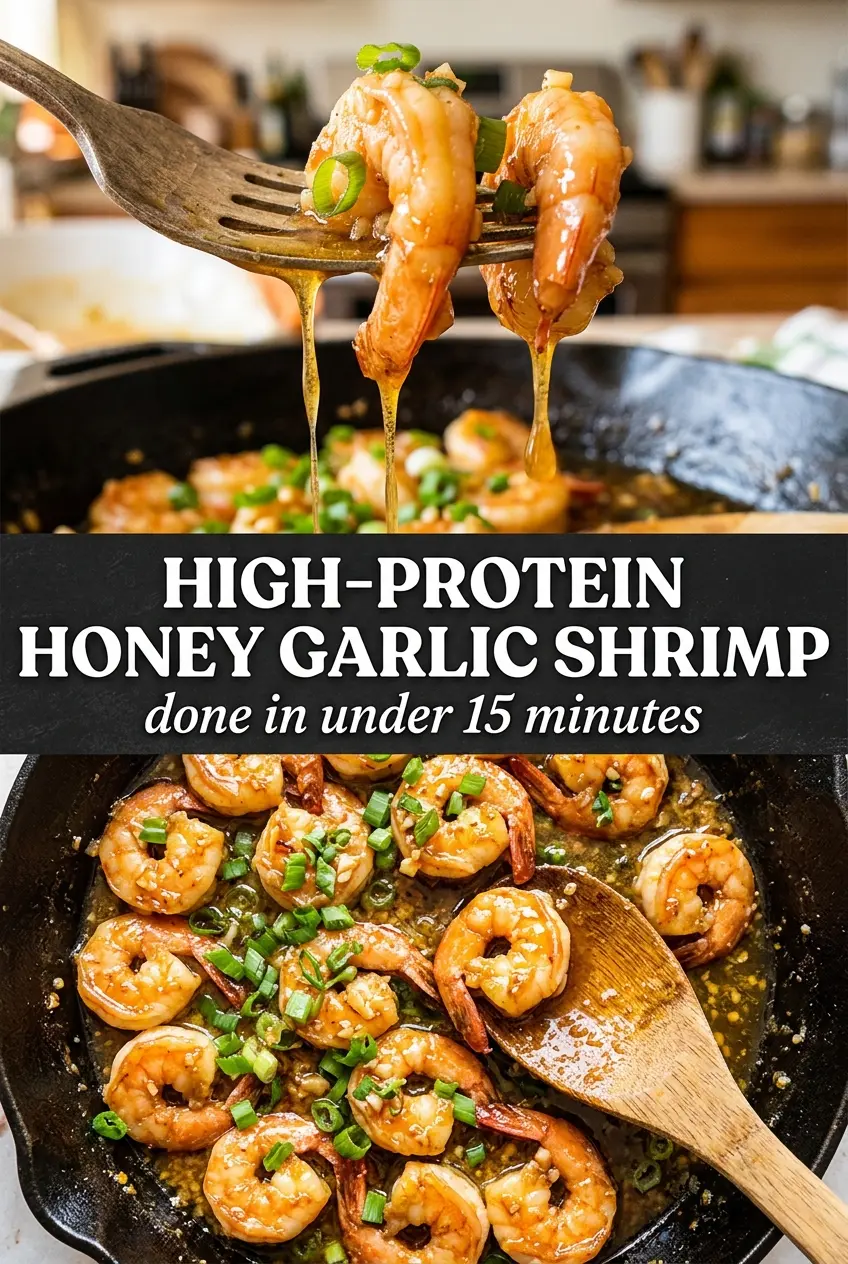
Lay the shrimp in a single layer over medium-high heat and leave them alone for a minute before flipping. You’re looking for pink edges, opaque centers, and a little bit of browning on the outside. The second they’re curled into a loose C shape, pull them out. Tight O-shaped shrimp usually mean they’ve gone too far.
Let the Garlic Bloom in the Leftover Oil
Add the garlic to the same skillet and stir for about 30 seconds. It should smell fragrant almost immediately, but not browned. If the pan looks dry, a small splash more oil keeps the garlic from catching. Burnt garlic turns the whole sauce bitter, and once that happens there’s no fixing it.
Finish the Sauce, Then Coat and Serve
Stir in the honey, soy sauce, lemon juice, and red pepper flakes, then simmer just until the sauce looks slightly thicker and glossy. It should coat the back of a spoon, not sit in a watery puddle. Return the shrimp and toss quickly over low heat so every piece is lacquered but still tender. Serve immediately over rice or broccoli, because the glaze thickens even more as it cools.
How to Adapt This Shrimp for Different Dinners
Gluten-Free Version
Use tamari instead of soy sauce and keep the rest of the recipe the same. Tamari keeps the glaze savory and balanced without changing the texture, so the sauce still finishes glossy and sticky.
Lower-Sugar Option
Cut the honey back to 2 tablespoons and simmer a little longer so the sauce can still thicken. The glaze won’t be quite as sticky, but the shrimp will still pick up a nice shine and a more savory finish.
No-Shrimp Swap
Cubed chicken works if you cook it through before making the sauce, but it needs more time than shrimp and won’t feel quite as light. Use a meat thermometer and cook chicken to 165°F before tossing it in the glaze.
Broccoli Bowl Dinner
Skip the rice and serve the shrimp over steamed broccoli for a lighter plate with the same sticky sauce. The florets catch the glaze in all the right places, and the extra bitterness from the broccoli balances the honey nicely.
Storage and Reheating
- Refrigerator: Store leftovers in an airtight container for up to 2 days. The shrimp will firm up a little, and the sauce will thicken as it chills.
- Freezer: I don’t recommend freezing this dish. Shrimp get a little watery and grainy after thawing, and the glaze loses its fresh shine.
- Reheating: Warm gently in a skillet over low heat with a splash of water to loosen the sauce. High heat is the mistake here — it turns the shrimp tough before the glaze has a chance to loosen.
Answers to the Questions Worth Asking
High-Protein Honey Garlic Shrimp
Ingredients
Equipment
Method
- Pat 1.5 lb large shrimp dry with paper towels and season lightly with salt and black pepper to taste.
- Heat 2 tbsp olive oil in a large skillet over medium-high heat until shimmering.
- Add the shrimp in a single layer and cook for 1–2 minutes per side until pink and opaque, then remove and set aside.
- In the same pan, add 5 minced garlic cloves and cook for 30 seconds.
- Add honey, low-sodium soy sauce, fresh lemon juice, and red pepper flakes, then stir until combined.
- Simmer the sauce for 1–2 minutes until slightly thickened, with a glossy amber look.
- Return the shrimp to the pan and toss to coat until the glaze clings to the shrimp.
- Serve immediately over cooked rice or steamed broccoli, garnished with sesame seeds and sliced green onions.