Hobo casserole lands on the table the way a good weeknight bake should: hot, hearty, and built from simple layers that turn into something much more comforting than the parts suggest. The potatoes go tender underneath a savory beef filling, and the creamy mushroom sauce settles into every gap so each bite tastes seasoned all the way through, not just on top.
The trick here is slicing the potatoes thin enough to soften in the same time as the beef layer, then covering the dish tightly for the first part of baking so the steam does the work. If the slices are too thick, the center stays stubborn; if the foil isn’t sealed well, the sauce can tighten before the potatoes are done. A final blanket of cheddar gives you that browned, bubbling top that makes everyone come back for a second scoop.
Below, I’ll walk through the small details that keep the layers from turning watery, plus a few swaps that still keep the casserole cozy and filling.
The potatoes came out tender all the way through and the sauce stayed creamy instead of watery. I used sharp cheddar on top and my husband went back for seconds before I’d even sat down.
Save this Hobo Casserole for a layered beef-and-potato dinner with a creamy mushroom sauce and browned cheddar top.
The Step That Keeps the Potatoes Tender Instead of Starchy
The biggest mistake in a potato casserole like this is rushing the potato layer. Thin slices matter because they need to absorb heat from the sauce and steam from the covered pan before the cheese goes on. Russets work well because they soften into a creamy bite, but they only do that if the slices are even. A mandoline helps, but a sharp knife and steady patience get you there too.
The other thing that protects the texture is draining the beef after browning. A little fat is fine; a lot of it turns the bottom greasy and keeps the sauce from setting up around the potatoes. Once the sauce mixture goes in, it should coat the back of a spoon lightly, not pour around like broth.
What Each Ingredient Is Doing in the Pan
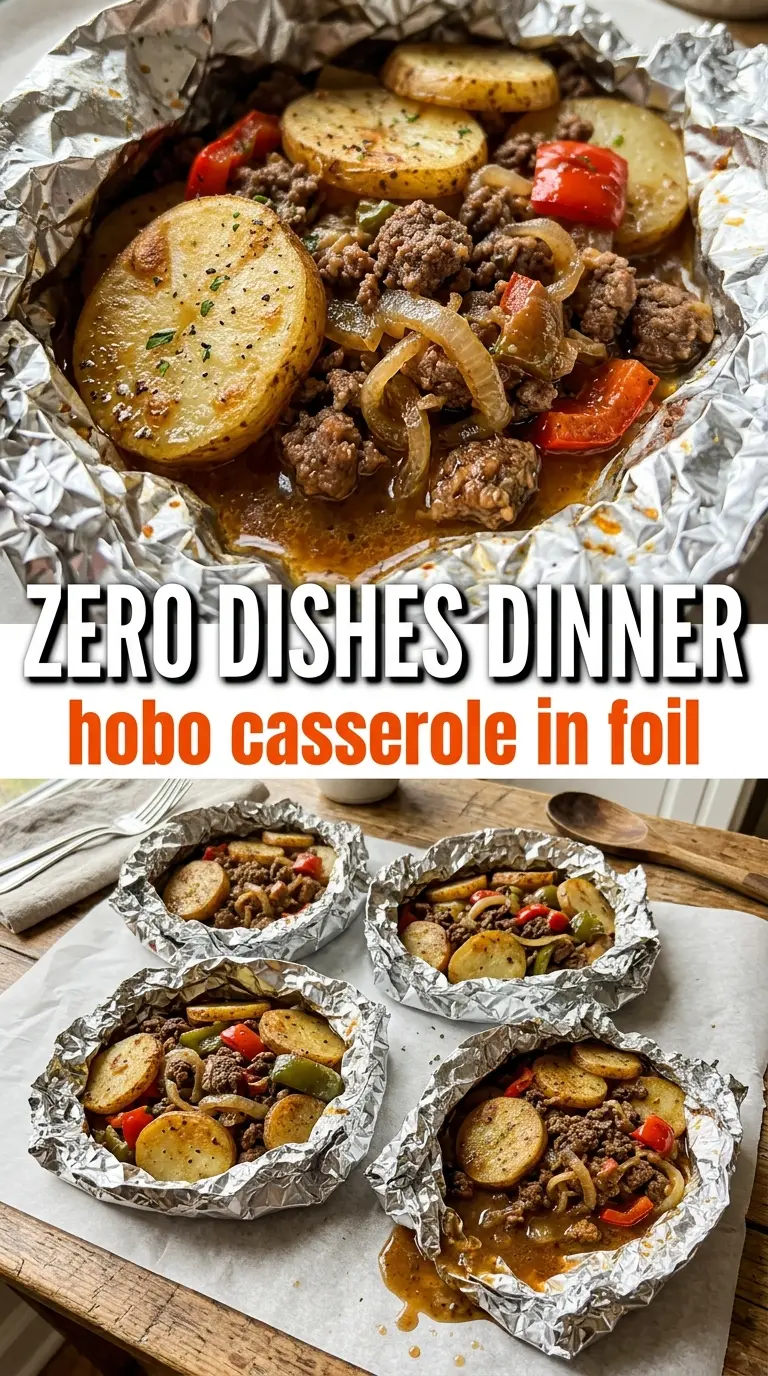
- Ground beef — This brings the main savory flavor and enough richness to stand up to the potatoes. An 80/20 blend is ideal; leaner beef works, but you’ll lose some depth.
- Onion and garlic — These build the base flavor before the casserole even hits the oven. Cooking them with the beef takes the raw edge off and keeps the whole dish from tasting flat.
- Russet potatoes — Russets break down into a soft, comforting texture that fits this kind of bake. Slice them thin and evenly so they cook through at the same rate as the rest of the casserole.
- Cream of mushroom soup, sour cream, and beef broth — This is the creamy layer that carries the seasoning through the dish. If you want a slightly lighter result, you can swap the sour cream for plain Greek yogurt, but add it off the heat so it doesn’t split.
- Sharp cheddar — Sharp cheddar gives you real flavor, not just a melted lid. Mild cheese works in a pinch, but it won’t stand up as well against the beef and mushroom sauce.
Building the Layers So the Casserole Bakes Evenly
Brown the Beef Until the Pan Tells You It’s Ready
Cook the beef with the onion over medium heat until the meat loses its pink color and the onion softens, not just until everything looks mixed together. You want a few browned bits in the pan because they deepen the flavor of the sauce. Drain the fat after browning so the casserole doesn’t bake up oily. Stir in the garlic at the end and cook it for just a minute, long enough for it to smell fragrant without turning bitter.
Whisk the Sauce Until It Turns Smooth
The soup, sour cream, broth, and seasonings should blend into a creamy mixture with no streaks of sour cream left behind. If the sauce looks too thick, add a splash more broth; it should be pourable so it can move down through the layers. This is also the time to taste for salt and pepper, because once it’s layered, the seasoning won’t distribute as evenly on the surface. A well-seasoned sauce is what keeps the casserole from tasting like potatoes with meat on top.
Layer for Steam, Not Just for Looks
Start with half the potatoes, then half the beef, then half the sauce, and repeat. Keep the layers even and spread them to the edges so there aren’t dry corners in the baking dish. Cover the dish tightly with foil for the first bake; that trapped steam is what softens the potatoes. If the foil is loose, the top dries out before the center finishes.
Finish Under the Broiler’s Cousin: the Oven
When the potatoes are tender, pull off the foil and add the cheddar. Bake uncovered until the cheese is melted, bubbling, and spotted with golden color at the edges. If you want deeper browning, give it a minute or two longer, but watch it closely because cheddar can go from golden to greasy fast. Let the casserole sit for a few minutes before serving so the layers settle instead of sliding apart.
How to Adapt This for a Different Table
Make It a Little Richer
Stir in a handful of cooked bacon or swap half the cheddar for Monterey Jack. Bacon adds salt and smoke, while Jack melts more smoothly than cheddar, so the top gets stretchier and a little softer.
Use Ground Turkey Instead of Beef
Ground turkey works, but it needs help because it’s leaner and milder. Add a little extra oil when browning and don’t skip the smoked paprika; it replaces some of the depth that beef gives you for free.
Dairy-Free Version
Use a dairy-free sour cream and a creamy mushroom soup made without milk, then finish with your favorite melting plant-based cheese. The texture will still be comforting, but the top won’t brown quite the same way, so rely on the bubbling edges as your cue.
Make It Ahead
Assemble the casserole up to a day in advance and refrigerate it tightly covered. Add 10 to 15 minutes to the covered bake since it will go into the oven cold, and don’t add the cheese until the potatoes are fully tender.
Storage and Reheating
- Refrigerator: Store covered for up to 4 days. The sauce will thicken as it chills, but the flavor holds up well.
- Freezer: It freezes well after baking. Cool completely, wrap tightly, and freeze for up to 2 months; thaw overnight before reheating for the best texture.
- Reheating: Reheat covered in a 325°F oven until hot in the center. The common mistake is blasting it in the microwave, which turns the potatoes mealy and the cheese tough.
Questions I Get Asked About This Recipe
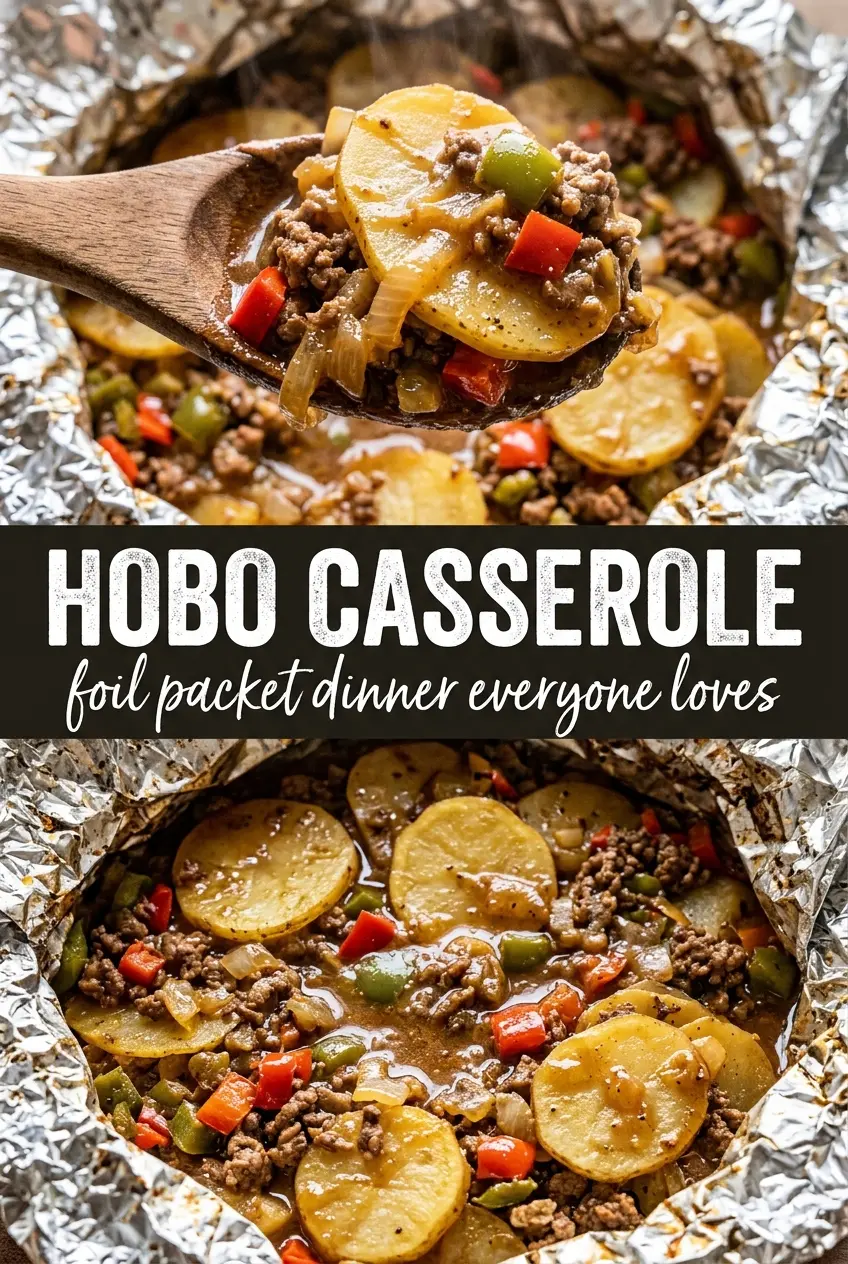
Hobo Casserole
Ingredients
Equipment
Method
- Preheat oven to 375°F and grease a 9x13 baking dish.
- Brown ground beef with diced onion in a skillet over medium heat until cooked through, then drain fat.
- Add minced garlic to the skillet and cook 1 more minute until fragrant.
- Mix cream of mushroom soup, sour cream, beef broth, garlic powder, onion powder, smoked paprika, salt, and black pepper in a bowl until smooth, with no lumps remaining.
- Layer half the thinly sliced russet potatoes in the bottom of the dish, spreading them into an even layer.
- Top the potatoes with half the beef mixture, covering the surface.
- Spoon half the soup mixture over the beef so it seeps between layers.
- Repeat with the remaining potatoes, then the remaining beef mixture, then the remaining soup mixture.
- Cover tightly with foil and bake for 40 minutes until the potatoes are tender when pierced.
- Remove foil, top with shredded sharp cheddar cheese in an even blanket, and let it melt into the casserole surface.
- Bake uncovered for 15 more minutes at 375°F until the cheese is golden and bubbly.