Honey baked ham comes out with that crackly, glossy crust that makes people hover around the carving board before dinner is even served. The outside bakes into a sweet spiced shell while the spiral slices stay tender and juicy underneath, so every piece gets a little bit of the glaze in each bite. It’s the kind of centerpiece that looks like you worked all day, even though most of the time is hands-off in the oven.
What makes this version work is the layering. The ham heats gently first, covered, so it stays moist all the way through. Then the honey butter and spiced sugar go on in rounds at a higher temperature, which builds that caramelized crust instead of letting the coating melt off into the pan. The cinnamon, cloves, ginger, nutmeg, allspice, and paprika give the glaze depth, not just sweetness, so the finish tastes round and polished instead of flat.
Below you’ll find the exact timing for getting the ham hot without drying it out, plus the little detail that keeps the sugar crust from sliding off before it has a chance to set.
The sugar crust turned out crackly instead of sticky, and the honey butter soaked into the slices without making the whole thing watery. I used the last round of glaze right at the end and it sliced beautifully.
Love that crackly honey sugar crust? Save this honey baked ham for the next holiday dinner when you want a glazed centerpiece with zero fuss.
The Trick to Keeping the Sugar Crust on the Ham, Not in the Pan
Spiral ham is already cut, which makes it easy to glaze, but those same slices are what can cause the coating to slide off if the oven stays too cool for too long. The first covered bake warms the ham gently and gives you a stable surface. The uncovered blast at 400°F is what melts the honey butter into the surface and starts the sugars setting into a crust.
The other thing that matters is letting each layer go on in stages instead of dumping everything over the top at once. The honey butter acts like glue, and the spiced sugar gives the ham that lacquered finish. If you rush this part, the sugar turns syrupy before it has a chance to brown, and you lose the crackle that makes this recipe worth making.
What Each Glaze Ingredient Is Doing Here
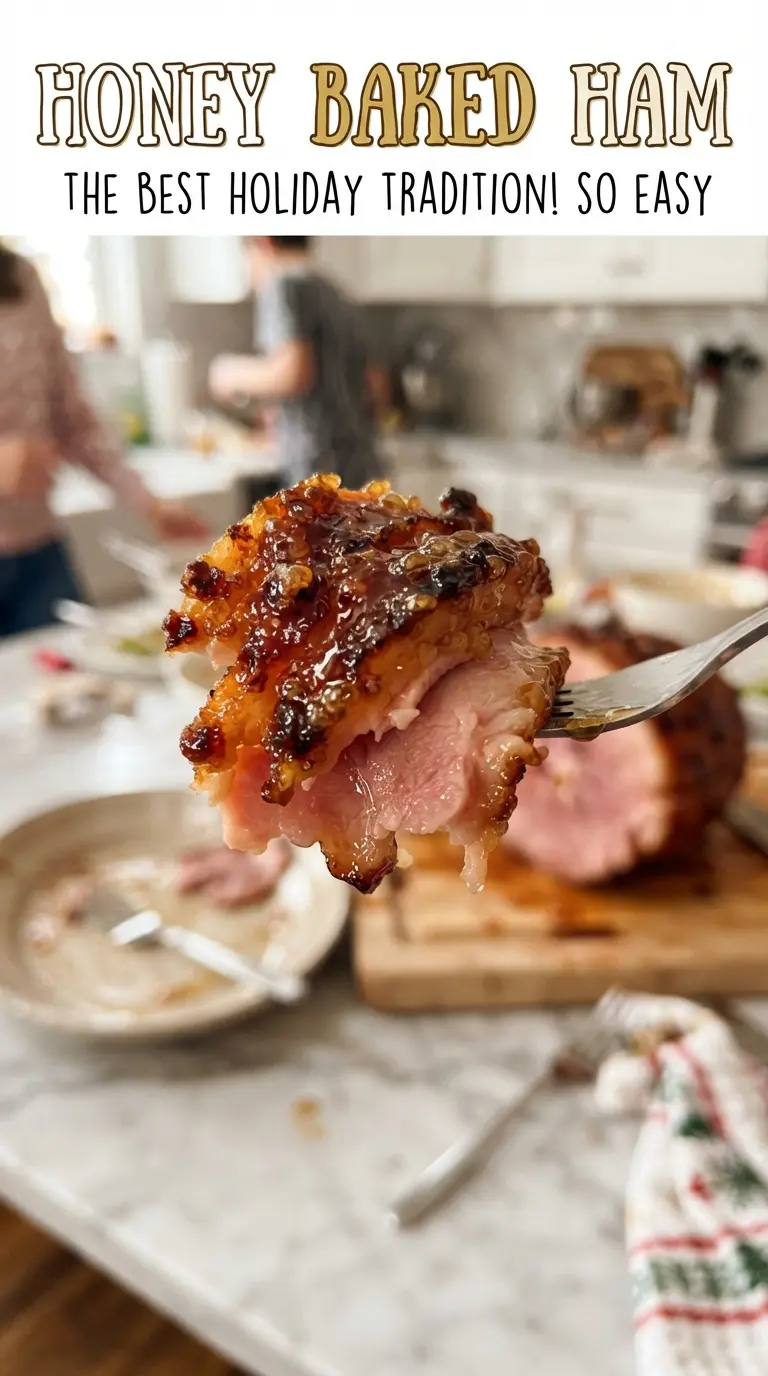
- Bone-in spiral-sliced ham — Bone-in hams stay juicier and taste richer than boneless ones, and the spiral cuts let the glaze work down between the slices. Don’t swap in a fully raw ham here; this method is built for a fully cooked ham that only needs reheating and glazing.
- Honey — This gives the glaze its shine and that soft floral sweetness that clings to the meat. A standard grocery-store honey works fine, but something darker and more robust will taste deeper once it’s baked.
- Butter — Butter helps the honey spread evenly and keeps the glaze from tasting sharp or one-note. If you use salted butter, the ham will still work, but the finish reads a little less clean.
- Brown sugar and granulated sugar — Brown sugar brings molasses depth, while granulated sugar helps create a drier, cracklier crust. If you use all brown sugar, the topping stays stickier and won’t set up the same way.
- Cinnamon, cloves, ginger, nutmeg, allspice, paprika — These spices make the glaze taste like it has been simmering longer than it has. The paprika doesn’t make the ham taste smoky so much as it rounds out the color and keeps the crust from looking flat.
Building the Ham in Layers So It Browns Instead of Burns
Warming the Ham Gently First
Set the ham cut-side down in the roasting pan and cover it tightly with foil. That foil traps steam and protects the exposed slices while the center comes up to temperature. Bake at 325°F until the ham reaches about 120°F inside. If you skip the covered phase or open the foil too early, the edges dry out before the glaze ever has a chance to turn into a crust.
Mixing the Glaze While the Ham Heats
Melt the honey and butter together, then stir the sugars and spices in a separate bowl. Keeping the dry mixture separate prevents clumps and helps you press it onto the ham in an even layer. The glaze should smell warm and spiced, not burnt or bitter. If the butter starts browning hard on the stove, pull it off the heat; you want melted, not toasted.
Coating and Re-Coating for the Crust
Remove the foil, brush on the honey butter, then pat the spiced sugar over the top. Raise the oven to 400°F and bake for about 5 minutes, then repeat the brushing and sugaring two more times. This is where the crust forms. The surface should look glossy, then sandy, then lacquered as the sugar melts and tightens. If it looks wet for too long, the oven isn’t hot enough or the ham is sitting in too much liquid in the pan.
Finishing to the Right Internal Temperature
Keep baking until the crust is deep golden and crackly and the ham reaches 140°F. That final temperature matters because a spiral ham only needs reheating, not cooking from raw, and pushing it much further is how you end up with dry slices. Rest it for 15 minutes before serving so the juices settle and the glaze clings instead of running off the board.
How to Adapt This Ham for a Smaller Crowd or a Different Finish
Bone-in vs. boneless ham
Bone-in ham gives you better flavor and a more forgiving texture, which matters here because the glaze is sweet and concentrated. Boneless ham works in a pinch, but it slices more uniformly and can feel a little less juicy after baking.
Lower-sugar version
Cut the granulated sugar back by a third and keep the brown sugar, honey, and spices the same. You’ll get a softer glaze that leans more caramel than candy-shell, which is a good trade if you want less crunch and a little less sweetness.
Gluten-free and naturally dairy-free
This ham is naturally gluten-free as long as your spice blends and ham packaging are certified safe, and it can be made dairy-free by swapping the butter for a neutral plant butter or refined coconut oil. The glaze will still set, but butter gives the richest finish and the smoothest brushing consistency.
Storage and Reheating
- Refrigerator: Store leftovers tightly covered for up to 4 days. The crust softens a bit, but the flavor holds.
- Freezer: Sliced ham freezes well for up to 2 months. Wrap portions tightly and freeze with a little glaze or pan juices so the meat doesn’t dry out.
- Reheating: Reheat covered at 300°F with a splash of liquid in the pan until just warmed through. High heat dries spiral ham fast, so don’t blast it in the oven unless you want the edges to go leathery.
Answers to the Questions Worth Asking
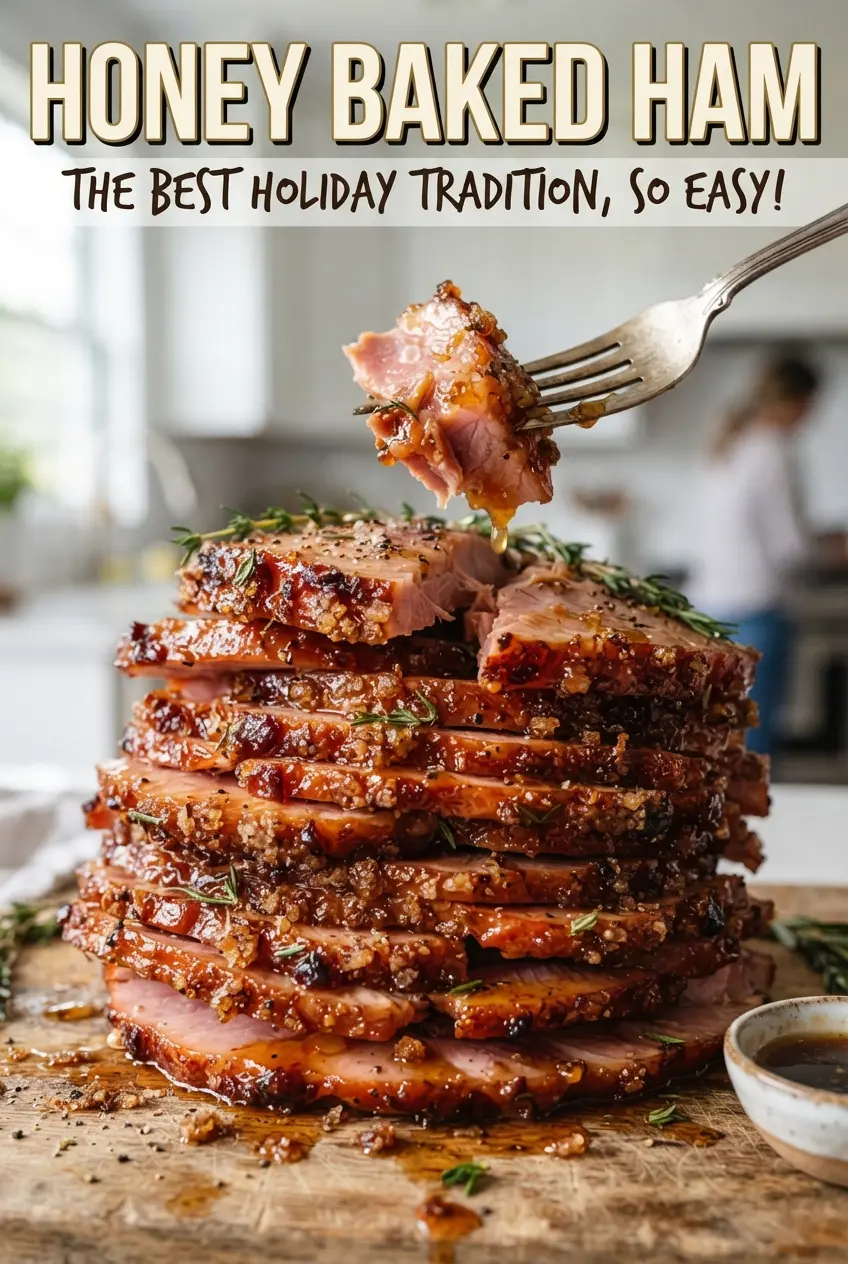
Honey Baked Ham
Ingredients
Equipment
Method
- Preheat the oven to 325F. Place the ham cut-side down in a roasting pan and cover tightly with foil, creating a sealed cooking environment.
- Bake for 12-14 minutes per pound until the center reaches 120F. Keep the foil on the whole time so the ham stays moist while warming through.
- Melt the honey and butter together until smooth and pourable. Watch for a glossy consistency that will cling to the ham.
- Mix the granulated sugar, brown sugar, cinnamon, cloves, ginger, nutmeg, allspice, and paprika in a separate bowl. Stir until the color looks evenly speckled with spices.
- Remove the foil, then brush the ham generously with the honey butter. Coat the spiral ridges so the crust can form in every crease.
- Pat the spiced sugar layer onto the brushed ham. Press lightly so the sugar adheres and doesn’t fall off.
- Raise the oven temperature to 400F and bake for 5 minutes. Look for the sugar to start melting and turning slightly darker at the edges.
- Brush with honey butter again and pat on another layer of spiced sugar. Aim for an even coating for a uniform crackly crust.
- Bake for 5 minutes at 400F. Continue watching for deepening color and early crackling.
- Brush once more with honey butter and pat on the remaining spiced sugar. Keep the coat thicker over the top-facing spiral ridges.
- Bake until the crust is deep golden and crackly and the ham reaches 140F. The finish should look caramelized with crisp, textured sugar.
- Rest the ham for 15 minutes before serving. The glaze will set and the slices will cut more cleanly.