Honey BBQ sausage pasta hits that sweet-smoky-savory balance that keeps you going back for one more forkful. The sauce clings to every ridge of the rigatoni, the sausage gets those sticky caramelized edges, and the cheddar melts into the sauce just enough to round everything out without turning it heavy.
What makes this version work is the layering. Browning the sausage first gives the pan the deep, meaty bits that carry the whole sauce. Then the BBQ sauce, honey, broth, and Dijon simmer long enough to thicken slightly before the pasta goes in, so the final dish tastes built, not stirred together. The reserved pasta water matters here too; it loosens the sauce just enough to coat the noodles instead of sitting underneath them.
Below you’ll find the small details that keep the sauce glossy, the sausage caramelized, and the pasta from drying out. There’s also a few smart swaps and a storage note for leftovers, because this one reheats better than most pasta dishes if you handle it right.
The sauce clung to the rigatoni perfectly, and the sausage kept those caramelized edges even after I stirred in the cheese. I thought the honey would make it too sweet, but the Dijon balanced it out.
Save this honey BBQ sausage pasta for a weeknight dinner with sticky sauce, caramelized sausage, and a cheesy finish.
The Reason the Sauce Stays Glossy Instead of Turning Gloppy
The biggest mistake with sweet barbecue pasta is dumping everything together at once and calling it done. That gives you a sauce that tastes flat and sits on top of the pasta instead of coating it. Here, the sauce gets a few minutes to simmer on its own, which tightens it up before the noodles and cheese go in. That extra little bit of reduction matters because rigatoni needs a sauce that can hold to its ridges.
Browning the sausage first does more than add color. It leaves fat and browned bits in the pan, and that is where the depth comes from. If the sausage goes in pale, the whole dish tastes one-note. Let it get caramelized on both sides, then pull it out before building the sauce so it keeps its texture instead of overcooking in the skillet.
What Each Ingredient Is Actually Doing in the Skillet
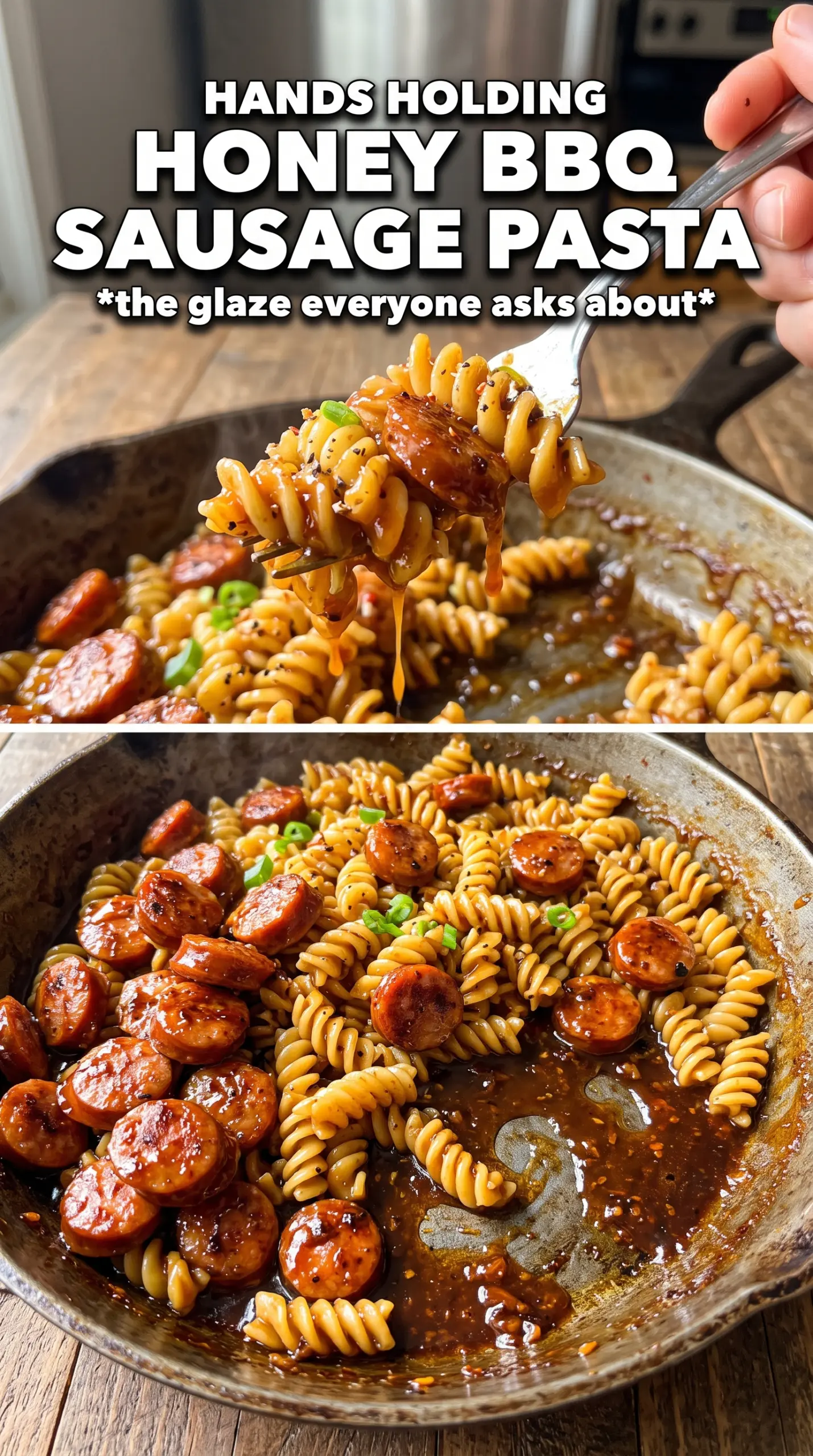
- Smoked sausage — This is the backbone of the dish. It brings built-in seasoning and fat, so you get depth without having to brown meat from scratch. Any good smoked sausage works here, but a firmer link holds its shape best when tossed through the pasta.
- BBQ sauce — Use one you already like the taste of, because its flavor will carry through the whole pan. A thinner sauce is fine since it reduces with the broth, but a very smoky or very sweet one will dominate fast.
- Honey — This is what gives the sauce that sticky, lacquered finish. It also rounds out the vinegar in the BBQ sauce. Don’t add much more than the recipe calls for unless you want a sweeter glaze.
- Dijon mustard — This keeps the sauce from tasting candy-sweet and helps the whole thing read as savory instead of syrupy. It won’t make the dish taste like mustard; it just sharpens the edges.
- Rigatoni — The tube shape traps sauce inside and around the ridges, which is exactly what you want here. If you swap the pasta, pick another shape with some structure, not a delicate noodle that will disappear into the sauce.
- Cheddar — A moderate handful is enough to melt into the sauce and add body. Use a block and shred it yourself if you can; pre-shredded cheese can make the sauce a little grainy because of the anti-caking coating.
Building the Sauce So It Clings to Every Piece of Pasta
Brown the sausage first
Set the sausage slices in a hot skillet in a single layer and leave them alone long enough to develop a deep brown edge before turning. If the pan is crowded, the sausage steams and you lose that caramelized surface, so cook in batches if needed. Pull the sausage out once it is browned on both sides. It will finish warming later, and taking it out now keeps it from turning rubbery.
Cook the vegetables until the moisture cooks off
Onion and bell pepper need a few minutes in the same skillet to soften and pick up the browned bits left behind by the sausage. When the onion turns translucent and the pepper starts to bend easily, add the garlic and smoked paprika. Garlic burns fast, so one minute is enough; if it smells harsh instead of fragrant, the heat is too high.
Simmer the barbecue base before the pasta goes in
Whisk the BBQ sauce, honey, broth, and Dijon together, then let that mixture simmer until it looks a little thicker and more cohesive. You want small steady bubbles, not a hard boil. If it reduces too aggressively, the sugar in the sauce can get sticky before the pasta is added, which makes the final dish heavy instead of glossy.
Finish with pasta water and cheese
Toss the cooked rigatoni into the sauce with a splash of reserved pasta water. That starchy water helps the sauce emulsify and wrap around the pasta instead of pooling in the bottom of the pan. Add the cheddar off the heat or over very low heat, stirring until it melts. If the sauce looks grainy, the pan was too hot when the cheese went in.
Three Ways to Adjust the Dish Without Losing What Makes It Work
Make it gluten-free
Use a sturdy gluten-free pasta that can hold up in the skillet, and check that your BBQ sauce and sausage are gluten-free. The rest of the method stays the same, but keep a close eye on the pasta so it doesn’t go soft before it reaches the sauce.
Make it dairy-free
Skip the cheddar or use a good melting dairy-free shreds substitute. You’ll lose a little body and that creamy finish, so let the sauce reduce a touch longer and use the pasta water carefully to keep it glossy instead of thin.
Swap the sausage for chicken sausage or turkey sausage
This lightens the dish a bit while keeping the smoky, savory backbone. Leaner sausage won’t render as much fat, so you may need a small drizzle of oil to brown it properly and keep the pan from drying out.
Use a spicier BBQ sauce for more heat
A spicy sauce changes the whole tone of the dish without changing the method. If your BBQ sauce brings heat, hold back a little at the start and add more after the cheese melts so the pepper heat doesn’t bury the honey and Dijon balance.
Storage and Reheating
- Refrigerator: Store in an airtight container for up to 4 days. The sauce will tighten as it chills, and the pasta will absorb some of the liquid.
- Freezer: It freezes okay, but the pasta softens a bit after thawing. Freeze in portions if you want convenience, and thaw overnight in the fridge before reheating.
- Reheating: Warm it gently in a skillet over low heat with a splash of broth or water. The common mistake is blasting it in the microwave until the cheese separates and the sausage toughens. Low heat brings the sauce back together without drying everything out.
Questions I Get Asked About This Recipe
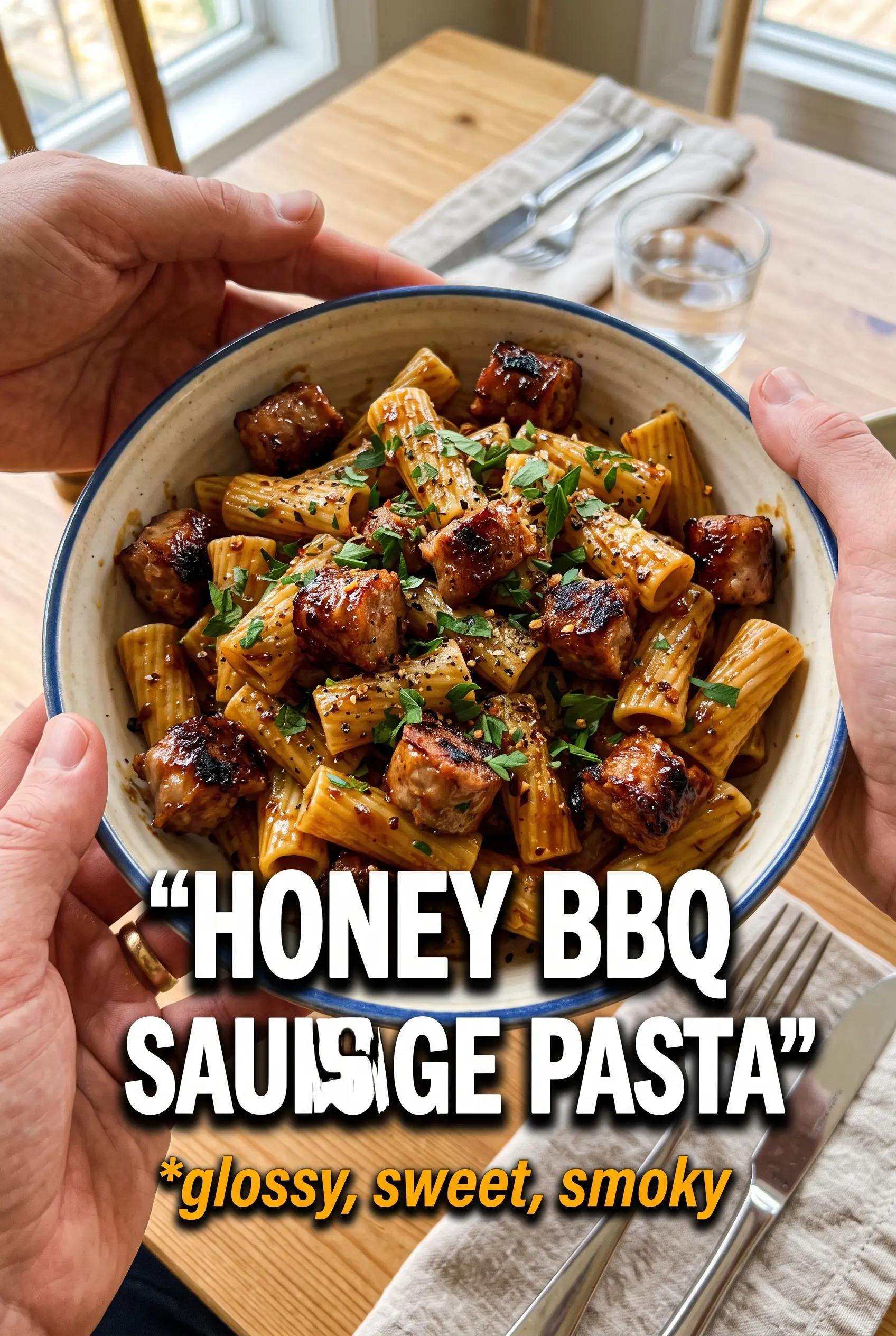
Honey BBQ Sausage Pasta
Ingredients
Equipment
Method
- Cook rigatoni in salted water until al dente; reserve 1/2 cup pasta water before draining.
- Brown sausage slices in a large skillet over medium-high heat until caramelized on both sides, then remove to a plate.
- Sauté diced onion and red bell pepper for 4 minutes, stirring, until softened.
- Add minced garlic and smoked paprika and cook for 1 minute, stirring constantly to prevent burning.
- Whisk BBQ sauce, honey, chicken broth, and Dijon mustard, then pour into the skillet and simmer for 5 minutes until glossy.
- Add cooked pasta to the skillet along with the reserved pasta water and return the sausage; toss until the sauce coats the rigatoni.
- Stir in shredded cheddar and season with salt and pepper until melted and thickened.
- Garnish with green onions and parsley to finish.