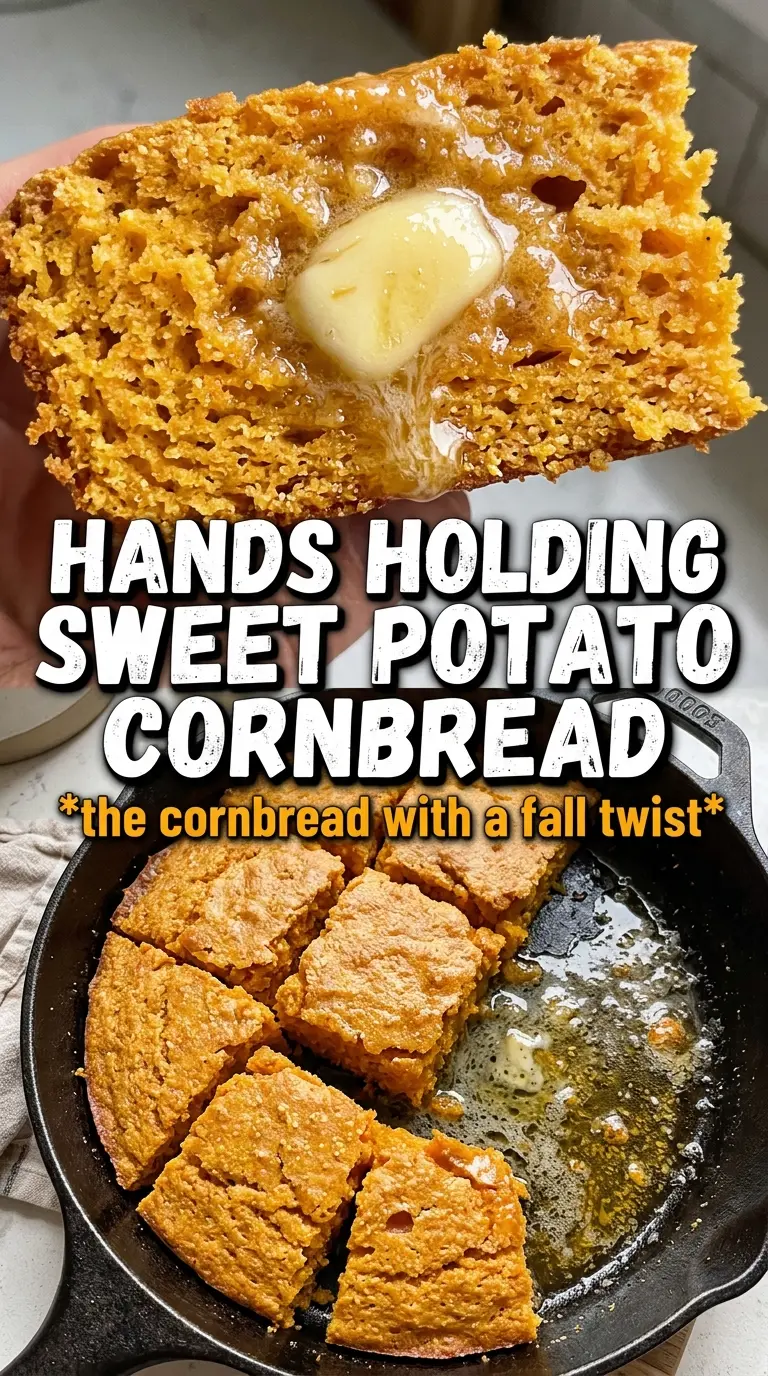
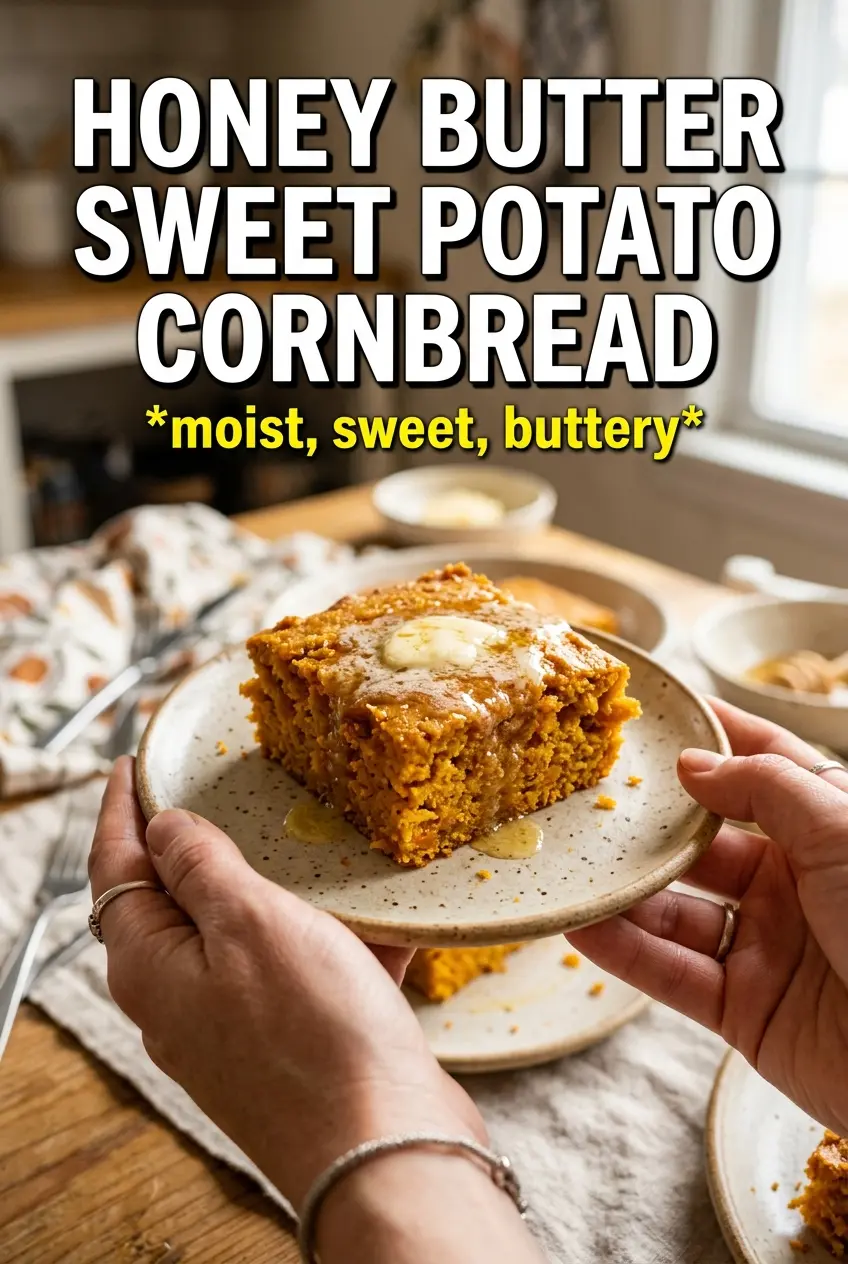
Honey butter sweet potato cornbread bakes up with crisp, caramelized edges and a center that stays moist and tender instead of crumbly and dry. The sweet potato gives it that deep golden color and a soft, almost custardy bite, while the honey butter on top melts into the warm crumb and leaves the whole skillet glossy and fragrant. It’s the kind of cornbread that disappears fast, even before the rest of dinner hits the table.
What makes this version work is the balance. Sweet potato adds moisture and body, but the cornmeal keeps the texture grounded so it still tastes like cornbread, not cake. A little cinnamon and honey round out the flavor without taking it over the line, and the melted butter keeps the batter rich without weighing it down. The trick is stopping as soon as the dry ingredients disappear; if you keep stirring, the crumb tightens up and loses that soft bite.
Below, I’ll show you how to get the edges deeply browned, how to tell when the center is done, and how to change this into muffins or a dairy-free version without losing the texture that makes it good.
The honey butter sank into the top and the center stayed incredibly moist. I baked it in my cast iron skillet, and the edges came out caramelized just like the photo. My husband kept going back for another piece.
Save this honey butter sweet potato cornbread for the nights when you want a skillet bread with a moist crumb and caramelized edges.
The Trick to Keeping Sweet Potato Cornbread Tender, Not Dense
Sweet potato cornbread goes wrong when the batter gets treated like quick bread that needs to be beaten smooth. It doesn’t. Once the wet and dry ingredients come together, the flour starts building structure fast, and too much stirring turns the crumb tight and gummy. The batter should look thick, a little rustic, and just barely mixed.
The other place people lose the texture is with the sweet potato itself. It needs to be smooth and cool enough that it blends in without cooking the eggs or making streaks in the batter. Roasted sweet potato puree gives better flavor than boiled because it brings more sweetness and less water, which keeps the cornbread from baking up heavy.
- Cornmeal gives the bread its grit and cornbread character. Fine cornmeal makes a softer slice; medium grind gives a little more texture and bite.
- Sweet potato puree is the moisture and flavor engine here. Roasted puree works best because it’s naturally thicker and sweeter than canned filling or boiled mash.
- Honey sweetens the batter and helps the top brown. Maple syrup works in a pinch, but it changes the flavor and makes the crumb a touch looser.
- Whole milk keeps the batter rich without thinning it out. Lower-fat milk works, but the finished bread won’t taste as plush.
What Each Ingredient Is Actually Doing in the Skillet
- All-purpose flour holds everything together and balances the cornmeal. If you swap in only gluten-free flour, the texture will be softer and a little more fragile, so use a good 1:1 blend with xanthan gum if you need a gluten-free version.
- Baking powder gives the cornbread lift. This batter is fairly thick, so fresh baking powder matters more here than in a thinner quick bread.
- Cinnamon and vanilla deepen the sweet potato flavor without making the bread taste like dessert. They’re subtle, but they keep the final result from tasting flat.
- Melted butter gives richness and a tender crumb. If you want a dairy-free version, use melted coconut oil or a neutral oil; the bread will still bake well, but it won’t have the same buttery finish.
- Honey butter topping is not just decoration. Brushing it on while the cornbread is warm lets it melt into the top crust, which softens the surface and adds that glossy finish.
How to Bake It So the Edges Caramelize and the Center Stays Soft
Start With a Hot Pan or Skillet
Heat the oven fully before the batter goes in. A properly hot 400°F oven helps the edges set quickly so they brown instead of drying out before the center is done. If you’re using cast iron, butter it well and let the pan warm for a few minutes while the oven heats; that jump-starts the crust. In a square pan, the bread will still bake beautifully, but the skillet gives you the deepest edges.
Mix the Wet Ingredients Until They Look Silky
Whisk the sweet potato, eggs, milk, melted butter, honey, and vanilla until the mixture looks smooth and evenly colored. You don’t want streaks of butter or blobs of sweet potato hiding in the batter, because those create uneven pockets in the crumb. If the butter is too hot, it can scramble the eggs or make the mixture look broken, so let it cool for a minute before adding it.
Stop Stirring as Soon as the Flour Disappears
Fold the wet mixture into the dry ingredients just until no dry pockets remain. The batter should look thick and spoonable, not pourable like pancake batter. A few small lumps are fine and better than overmixing. If you beat it smooth, the cornbread turns dense and loses the soft, tender middle that makes this recipe work.
Watch the Color, Not Just the Timer
Bake until the top is deeply golden and a toothpick comes out clean or with a few moist crumbs. The center should spring back lightly when touched, and the edges should pull just a little from the pan. If the top browns too fast before the middle is done, tent it loosely with foil for the last few minutes. Brush on the honey butter while the bread is still warm so it melts into the surface instead of sitting in a greasy layer.
Three Ways to Change the Pan Without Losing the Good Part
Make It Dairy-Free
Use a neutral oil or melted coconut oil in place of the butter, and swap the milk for unsweetened almond milk or oat milk. The cornbread will still be moist, but the finish will be less rich, so the honey butter topping matters even more if you want that glossy, buttery top.
Turn It Into Muffins
Divide the batter into greased or lined muffin cups and start checking them around 16 to 18 minutes. Muffins bake faster and give you more browned edges, but they lose the dramatic skillet center and need the honey butter brushed on right away while they’re still warm.
Cut the Sugar Slightly
You can reduce the sugar to 2 tablespoons if you want a more savory cornbread. The texture will stay the same, but the top will brown a little less and the sweet potato flavor will come through more clearly.
Use Canned Sweet Potato in a Pinch
Unsweetened canned sweet potato puree works if that’s what you have, but drain off any excess liquid first. Canned puree is often looser than roasted mash, so too much moisture can make the center sink a little and bake up heavier.
Storage and Reheating
- Refrigerator: Store covered for up to 4 days. The crumb firms up in the fridge, but it softens again when reheated.
- Freezer: Freeze slices wrapped tightly for up to 2 months. Thaw at room temperature or in the fridge before reheating so the center doesn’t stay cold while the outside dries out.
- Reheating: Warm in a 300°F oven for about 10 minutes or in short bursts in the microwave. If you use the microwave, cover the slice with a damp paper towel so it doesn’t turn rubbery.
Answers to the Questions Worth Asking
Honey Butter Sweet Potato Cornbread
Ingredients
Equipment
Method
- Preheat the oven to 400F, then butter an 8-inch square pan or cast iron skillet.
- Whisk the yellow cornmeal, all-purpose flour, granulated sugar, baking powder, cinnamon, and salt together until evenly combined.
- Whisk the sweet potato puree, eggs, whole milk, melted butter, honey, and vanilla extract until smooth.
- Fold the wet mixture into the dry ingredients just until combined, stopping when no dry streaks remain.
- Pour the batter into the prepared pan and bake for 25–30 minutes at 400F until golden and a toothpick comes out clean.
- While the cornbread is warm, brush generously with honey butter that’s made by whipping softened butter, honey, and a pinch of cinnamon together.


