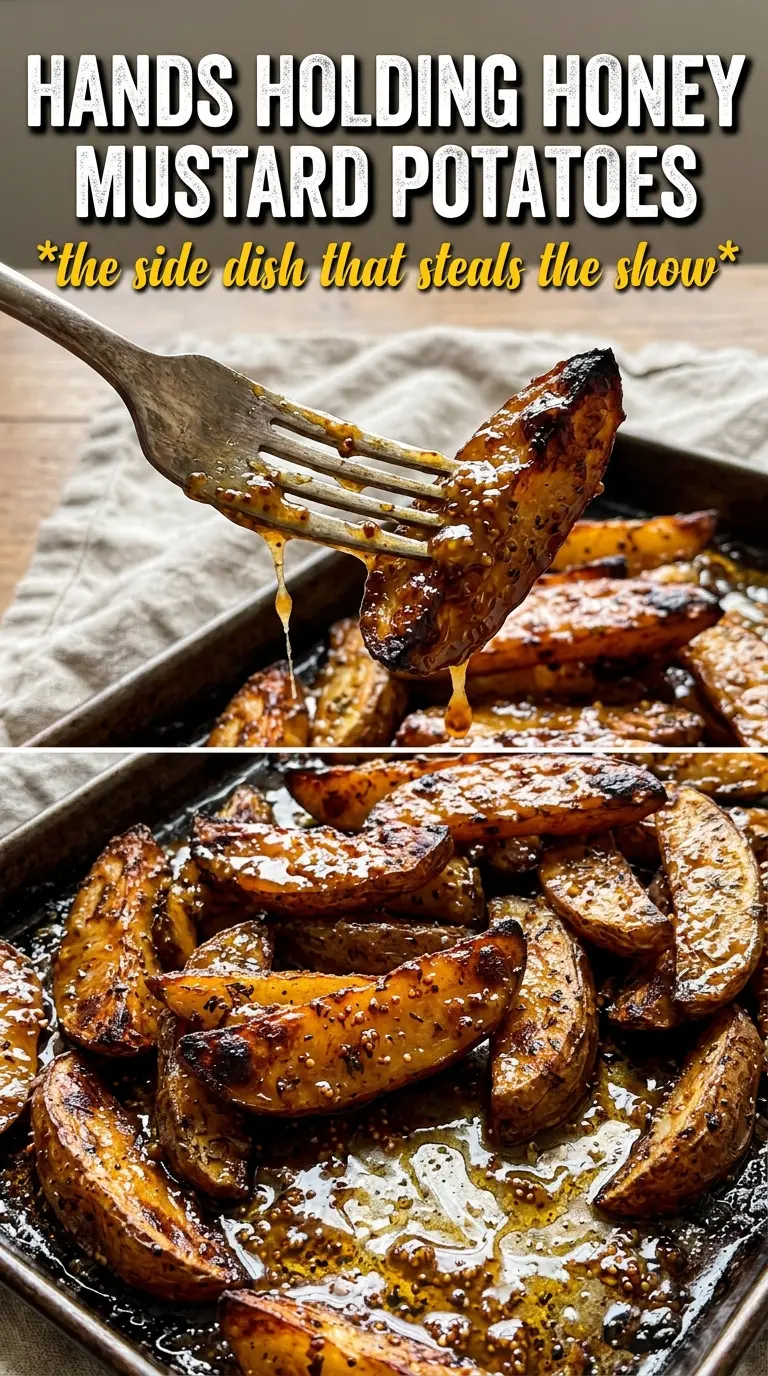
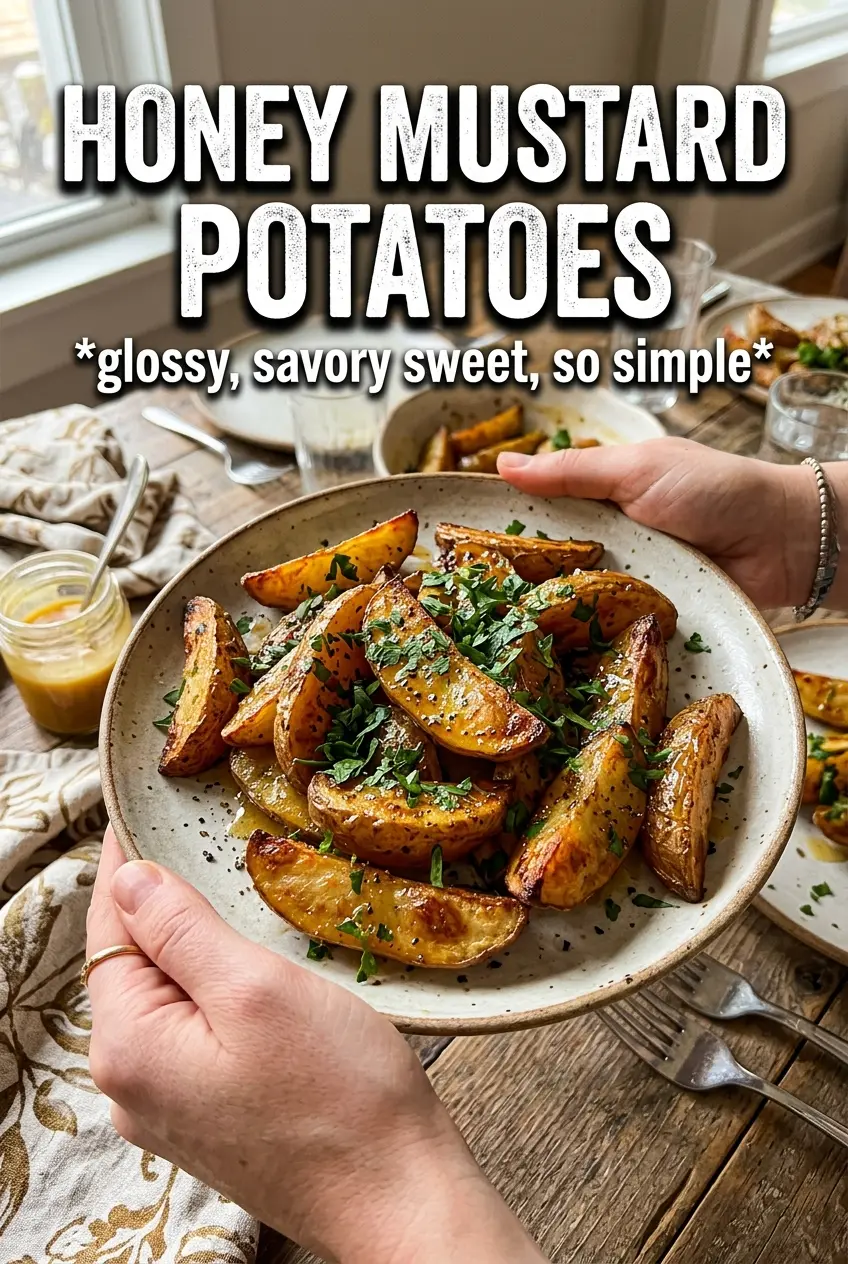
Honey mustard potatoes come out with crisp, caramelized edges and a glossy coating that clings to every cut side. The flavor lands in that sweet-savory middle ground that keeps people picking at the pan long after dinner is over. They work as a side for roast chicken, pork, salmon, or just about anything that needs a little lift and a little crunch.
What makes this version work is the balance in the glaze. Dijon brings sharpness, whole grain mustard adds texture and a milder mustard note, and honey helps the potatoes brown instead of just steam. A little apple cider vinegar keeps the whole thing from tasting flat, and the potatoes roast better when they’re spread out with some breathing room.
Below, I’ll show you the one step that keeps the glaze from sliding off, plus a couple of smart swaps if you only have one kind of mustard on hand.
The potatoes got those sticky caramelized edges I was hoping for, and the honey mustard coated every piece without burning. I tossed them halfway through and they came out perfect with a little flaky salt on top.
Save these honey mustard potatoes for the nights when you want crispy roasted edges and a sticky glaze with almost no extra work.
The Trick That Keeps the Glaze Stuck Instead of Sliding Off
The biggest mistake with honey mustard potatoes is drowning the potatoes in sauce and expecting the oven to do all the work. That gives you a wet pan and pale edges. The potatoes need enough glaze to coat, not pool, and they need direct contact with the hot pan so the cut sides can caramelize.
Cut potatoes into even halves so they roast at the same pace. Baby potatoes and Yukon golds both work because they hold their shape and have enough natural starch to pick up color without turning mealy. If the potatoes are crowded, they’ll steam first and brown last, which is why a single layer matters more here than almost anything else.
- Dijon mustard — This gives the glaze its sharp backbone and helps emulsify the oil and vinegar. Yellow mustard won’t give the same depth, and the flavor ends up flatter.
- Whole grain mustard — The seeds add texture and a gentler mustard note. If you only have Dijon, use it for all of the mustard, but the coating will be smoother and a little less interesting.
- Honey — This is what gives you that sticky, lacquered finish. Maple syrup works in a pinch, but it tastes more woody and browns a little faster, so keep an eye on the pan.
- Apple cider vinegar — It keeps the glaze from reading heavy or sugary. Lemon juice can stand in, but it tastes brighter and less rounded.
- Rosemary and smoked paprika — Rosemary brings a piney, savory note that cuts through the sweetness, and smoked paprika deepens the color while adding a little warmth.
What Each Ingredient Is Actually Doing in This Recipe
- Primary ingredient (the star) — Quality matters most. Choose the best you can find.
- Cooking medium (oil, butter, or broth) — This carries flavors and prevents dryness.
- Seasonings (salt, pepper, spices, herbs) — Layer flavors so nothing overpowers. Build depth gradually.
- Aromatics (garlic, onion, herbs) — Cook with fat to bloom flavors. Become the foundation.
- Supporting ingredients — Complement the main ingredient without overpowering it.
- Sauce or liquid (if applicable) — Brings flavors together. Balance richness with acid.
- Acid (lemon, vinegar, wine, or other) — Brightens and prevents flat-tasting results.
- Final finish (garnish, glaze, or sauce) — Prevents one-dimensional taste and adds visual appeal.
Getting the Potatoes Caramelized Without Burning the Honey
Building the Glaze
Whisk the Dijon, whole grain mustard, honey, oil, vinegar, garlic, rosemary, smoked paprika, salt, and pepper until the mixture looks smooth and glossy. The honey should disappear into the oil and vinegar instead of sitting in streaks. If the garlic is very coarse, mince it finely so it doesn’t scorch in the oven. A broken-looking mixture at this stage usually means the oil was added too fast, but it still works once it coats the potatoes.
Coating the Potatoes
Add the potato halves and toss until every cut side has a thin coating. The goal is a clingy film, not a puddle at the bottom of the bowl. If the potatoes look wet and slippery, lift them out with a spoon and leave the extra glaze behind. That small step helps the potatoes roast instead of braise.
Roasting for Color
Spread the potatoes on a lined baking sheet in a single layer with the cut sides facing down where you can manage it. Roast at 425°F for 30 to 35 minutes, tossing halfway through so the honey doesn’t overbrown on one side. You’re looking for deep golden edges, browned spots on the glaze, and potatoes that slide cleanly off the pan when they’re ready. If they’re pale at 30 minutes, give them a few more minutes rather than pulling them early.
Finishing for the Best Texture
Scatter over the parsley and flaky salt right after the potatoes come out of the oven. The parsley gives freshness, and the flaky salt sharpens the sweet-savory finish in a way table salt can’t quite match. Let the potatoes sit for a minute or two so the glaze settles and clings. Serve them while the edges are still crisp.
How to Adapt These Honey Mustard Potatoes for Different Tables
Dairy-Free and Naturally Gluten-Free
The recipe is already both dairy-free and gluten-free as written, which makes it an easy side for mixed groups. Just check your mustard labels if you’re cooking for someone with a serious allergy, since some brands use additives you may want to avoid.
Use One Kind of Mustard
If you only have Dijon, use 5 tablespoons total and skip the whole grain mustard. The flavor will still be bold, but the glaze will be smoother and a little less textured. If you only have whole grain mustard, the potatoes will taste milder and a bit less sharp, so add an extra teaspoon of vinegar to keep the balance.
Make It Herb-Forward
Rosemary is the strongest herb match here, but thyme works if that’s what you have. Thyme gives the potatoes a softer, woodsy finish, while rosemary makes the dish taste a little more roast-dinner styled.
Storage and Reheating
- Refrigerator: Store leftovers in an airtight container for up to 4 days. The potatoes soften a bit, but the flavor holds well.
- Freezer: I don’t recommend freezing these. The texture turns mealy and the glaze loses its glossy finish after thawing.
- Reheating: Reheat on a sheet pan in a 400°F oven for 10 to 12 minutes until the edges wake back up. The microwave makes them soft and damp, which works against everything this recipe is trying to do.
Answers to the Questions Worth Asking
Honey Mustard Potatoes
Ingredients
Equipment
Method
- Preheat the oven to 425F and line a sheet pan for roasting.
- Whisk the Dijon mustard, whole grain mustard, honey, olive oil, apple cider vinegar, garlic, rosemary, smoked paprika, salt, and pepper until smooth.
- Toss the halved baby potatoes or Yukon golds in the honey mustard mixture until evenly coated.
- Spread the potatoes in a single layer on the sheet pan, then roast for 30-35 minutes at 425F, tossing halfway, until caramelized and golden.
- Finish by scattering fresh parsley and flaky salt over the roasted potatoes while hot.