Hot buttered applesauce lands with a softer, richer finish than the jarred version most people remember. The apples cook down into a silky spoonful that still tastes bright, but the brown butter gives it a toasted edge that makes the cinnamon and nutmeg feel deeper, not heavier. It’s the kind of side dish that disappears fast because it works with pork, pancakes, oatmeal, or a plain spoon right out of the pot.
The trick is starting the apples in butter that has just begun to brown. That quick head start gives the finished sauce a nutty base before the fruit releases its juices, and the cider keeps everything from tasting flat. I also like using apples that soften evenly without turning mealy, because the texture of the final sauce depends on how the fruit breaks down in the pan.
Below you’ll find the small decisions that make this version worth making: when to stop browning the butter, how to choose the right apple mix, and how to finish the sauce so it tastes warm and balanced instead of overly sweet.
The brown butter gave the applesauce such a warm, nutty taste, and it thickened up perfectly after simmering. I left mine a little chunky, and it was gone before dinner was over.
Save this hot buttered applesauce for the day you want a warm, cinnamon-scented side dish with a buttery finish.
The Brown Butter Step That Keeps Applesauce From Tasting Flat
Most applesauce gets all its character from the fruit alone, which is why it can taste one-note if the apples are very sweet. Browning the butter first changes that fast. The milk solids toast just enough to add a nutty depth, and the apples hit the pan before that flavor can go too far. If the butter turns dark brown or smells sharp, it’s already past the point where it helps this dish.
The other thing that matters here is not rushing the simmer. The apples need time to collapse into themselves so the sauce tastes smooth instead of watery and cooked in pieces. If your sauce looks loose at first, that’s normal; it tightens as the fruit breaks down and the steam cooks off.
- Apples — Honeycrisp, Fuji, or McIntosh all soften well, but a mix gives the best balance. If you use only very sweet apples, the sauce can taste soft and one-dimensional. If you want more tang, add a tart apple or two without changing the method.
- Butter — Unsalted butter lets you control the seasoning, and the browning step is where the recipe gets its signature flavor. Don’t swap in oil here; you’ll lose the toasted milk-solid flavor that makes the sauce taste round.
- Apple cider or apple juice — Cider gives a fuller apple flavor, while juice is a little lighter and sweeter. Either works, but cider keeps the finished sauce from tasting thin.
- Brown sugar or maple syrup — Brown sugar gives a deeper caramel note, while maple syrup leans warmer and softer. Use maple if you want a gentler sweetness; use brown sugar if you want the sauce to taste a little more classic.
Cooking the Apples Until They Collapse, Not Just Warm Through
Start With the Butter Before the Fruit
Melt the butter over medium heat and watch for the point where the foam settles and tiny brown specks appear at the bottom. That’s the moment to add the apples. If you wait until the butter is dark, the finished sauce can pick up a bitter edge, and the whole pot tastes tired instead of rich.
Let the Apples Soften in Their Own Steam
Once the cider, sweetener, and spices go in, cover the pan and keep the heat low enough for a steady simmer. The apples should look glossy and start to slump apart as they cook. If the heat is too high, the liquid reduces before the fruit softens, and you end up with thick syrup around firm pieces instead of applesauce.
Choose Your Texture at the End
When the apples are completely soft, mash them for a rustic sauce or use an immersion blender for something smooth and spoonable. Blend only after the apples have fully broken down, or you’ll chase chunks around the pan and never get an even texture. Stir in the vanilla last so it stays fragrant, then taste for sweetness and salt before serving.
Make It Brighter With Lemon
A teaspoon of lemon juice at the end sharpens the apple flavor and keeps the sauce from leaning too sweet. It won’t make the apples taste lemony; it just gives the cinnamon and nutmeg a cleaner finish.
Dairy-Free Version
Use coconut oil or vegan butter in place of the dairy butter. You’ll lose the exact browned-butter flavor, but a good vegan butter still gives the sauce richness and keeps the texture close to the original.
Chunky Instead of Smooth
Mash lightly with a potato masher and stop while there are still soft apple pieces in the pot. This version works especially well if you want the applesauce to sit beside pork chops or spoon over oatmeal without disappearing into the bowl.
Storage and Reheating
- Refrigerator: Keeps for 5 days in a covered container. It thickens as it chills, so don’t judge the texture cold.
- Freezer: Freezes well for up to 3 months. Cool it completely, portion it into airtight containers, and leave a little space for expansion.
- Reheating: Warm gently on the stove over low heat with a splash of water or cider if needed. High heat can make the applesauce scorch at the bottom before the center is hot.
Answers to the Questions Worth Asking
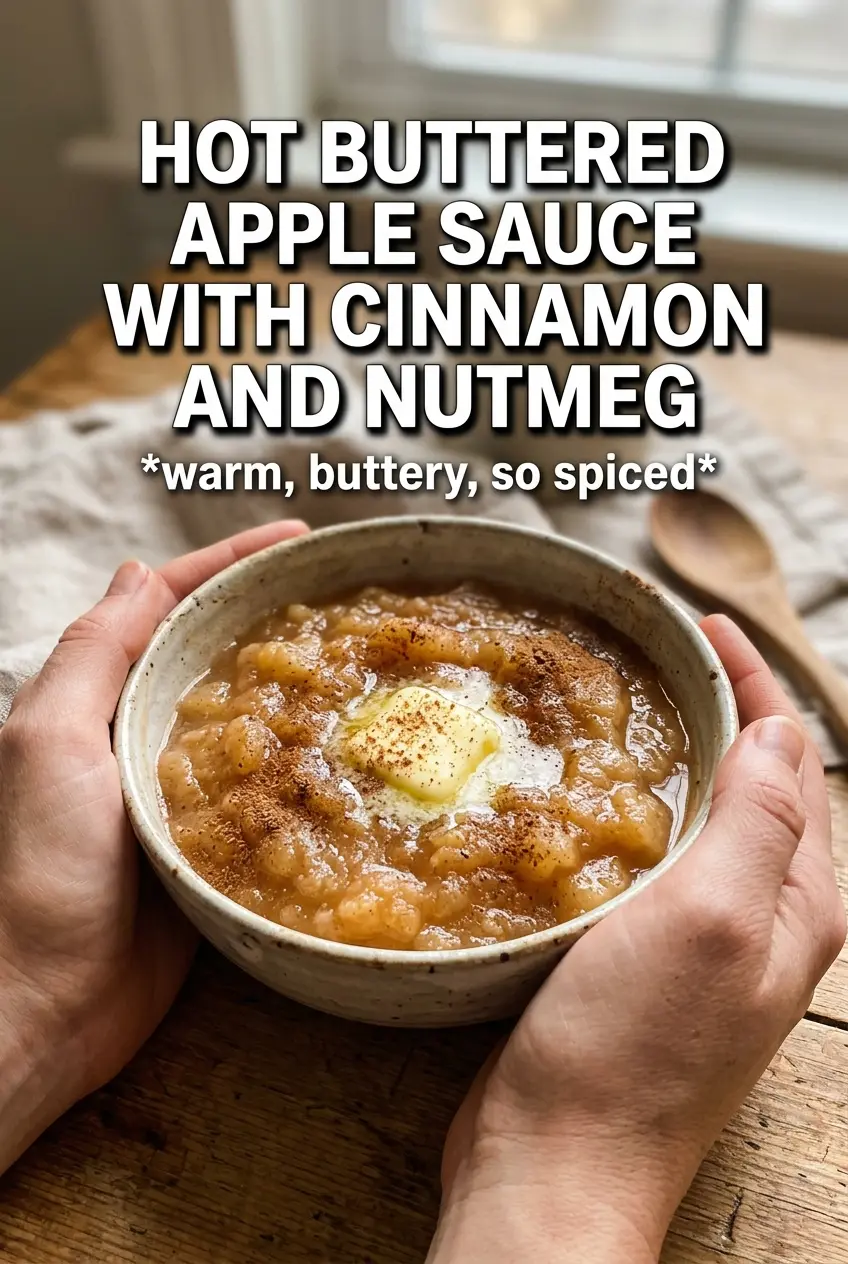
Hot Buttered Apple Sauce With Cinnamon And Nutmeg
Ingredients
Equipment
Method
- Melt the unsalted butter in a large saucepan over medium heat until it just starts to brown, then add the chopped apples immediately.
- Cook for 3-4 minutes, stirring occasionally, until the apples begin to soften and look glossy.
- Add the apple cider (or apple juice), brown sugar (or maple syrup), cinnamon, nutmeg, and salt; stir until the mixture looks evenly coated.
- Cover and simmer over gentle heat for 20-25 minutes until the apples are completely soft.
- Mash the apples to your desired texture—chunky or smooth—using a masher.
- For smooth applesauce, blend with an immersion blender until no larger chunks remain.
- Stir in the vanilla extract, then taste and adjust sweetness if needed.
- Serve warm with an extra pat of brown butter and a dusting of cinnamon.