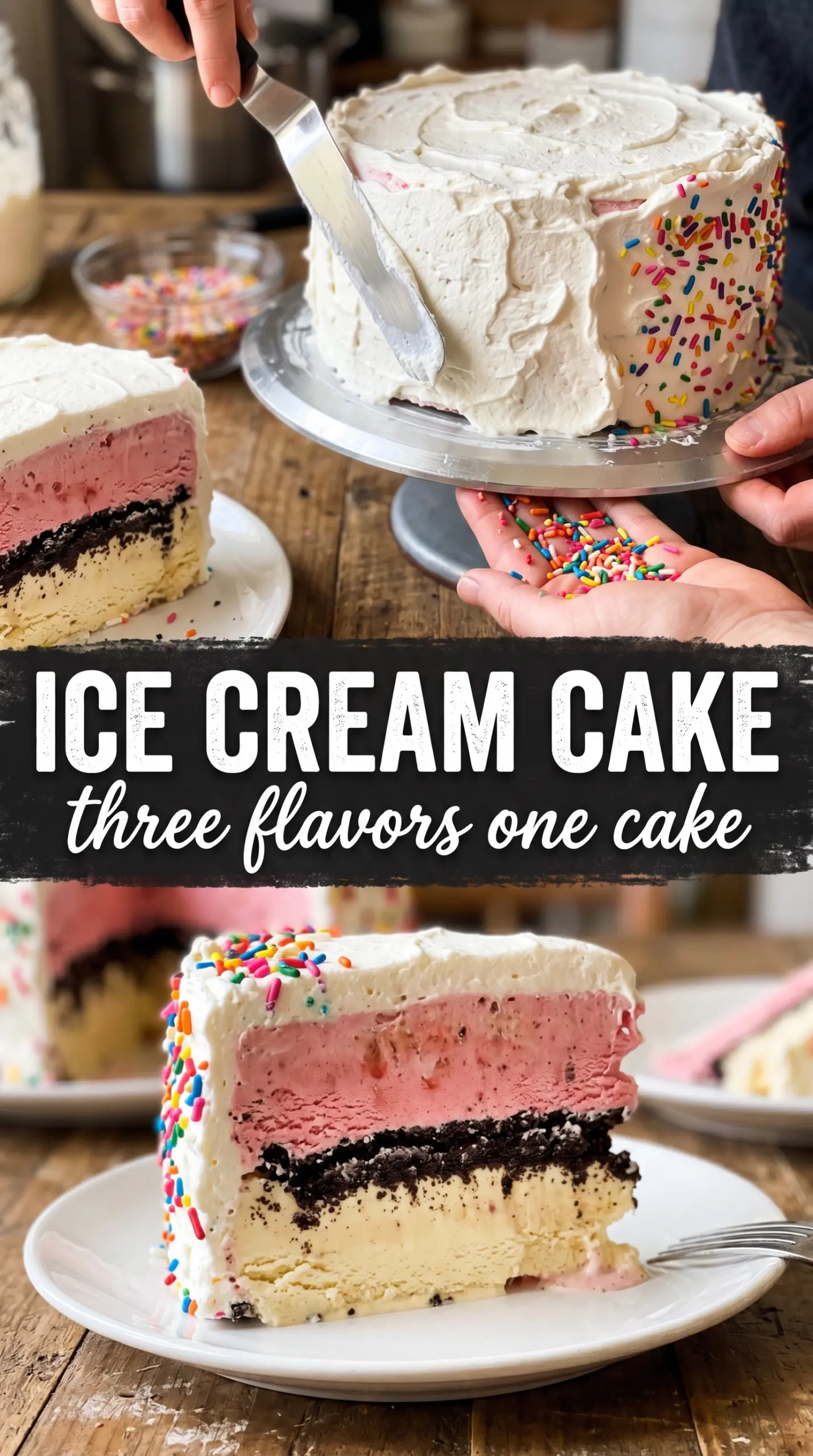
Ice cream cake hits the sweet spot between nostalgic and impressive, and this version gives you clean layers instead of a melted, lopsided dessert that falls apart the second it leaves the freezer. The Oreo crust stays crisp enough to slice, the fudge ribbon settles between the ice cream layers instead of disappearing into them, and the whipped topping keeps the whole cake looking party-ready right up until serving time.
The trick is treating each layer like it needs its own set time. The crust gets a short freeze so it locks into the pan, the vanilla layer firms up before the fudge goes on, and the final freeze gives the strawberry layer enough structure to hold a clean slice. Slightly softened ice cream spreads without tearing up the layer underneath, but it still needs to be cold enough that it doesn’t turn soupy while you work.
Below, you’ll find the little details that keep the cake neat from pan to plate, plus a few smart swaps if you want to change the flavor or make it ahead for a birthday or summer gathering.
The layers froze up perfectly and the hot fudge stayed as an actual ribbon instead of mixing into everything. I sliced it after about 10 minutes on the counter and got clean pieces with the crust still holding together.
Like this Oreo ice cream cake? Save it to Pinterest for the next birthday when you want neat layers, a fudge ribbon, and an easy no-bake dessert that slices cleanly.
The Reason the Layers Stay Clean Instead of Melting Together
The biggest mistake with ice cream cake is rushing the freeze between layers. If the vanilla layer is still soft when the fudge goes on, the fudge sinks instead of sitting in a stripe. If the final layer goes on before the middle is firm, the whole cake turns muddy and the slice won’t show those sharp, pretty bands.
This version works because each layer gets enough time to set before the next one is added. The crust is packed firmly so it acts like a base, not loose crumbs. The ice cream should be spreadable, not runny, and the pan should go back into the freezer immediately after each layer is finished.
- Springform pan — This is the part that gives you a clean release. A regular cake pan makes serving a lot harder.
- Oreo crumbs — Oreos bring flavor and structure at the same time. The filling helps the crust hold together once the butter chills.
- Hot fudge — Let it cool slightly so it stays thick and ribbon-like. If it’s hot, it will melt the vanilla layer and blur the center stripe.
- Softened ice cream — It needs to be soft enough to spread in an even layer, but not so soft that it puddles. Ten to fifteen minutes on the counter usually does it.
What Each Ingredient Is Actually Doing in This Ice Cream
- Base ingredient (cream, milk, or custard) — This provides the foundation and richness. Quality matters.
- Sweetener (sugar, honey, or condensed milk) — This sweetens and prevents ice crystals. The ratio is critical.
- Flavor element (vanilla, fruit, chocolate, or other) — This defines the ice cream personality. Use quality ingredients.
- Egg yolks (if making custard base) — These create richness and silky texture. Optional but elevates ice cream.
- Churning (if using ice cream maker) — This incorporates air and prevents ice crystals. Critical for smooth texture.
- Freezing temperature and time — Proper freezing prevents rock-hard texture. Store at 0°F or below.
- Mix-ins (chocolate, cookies, fruit, or swirls) — These add texture and prevent one-dimensional flavor. Add near end of churning.
- Serving temperature (slightly soft, not rock hard) — This provides creamy mouthfeel. Remove from freezer 5 minutes before serving.
Building the Cake So the Crust, Fudge, and Ice Cream All Hold Their Shape
Pressing the Oreo Base
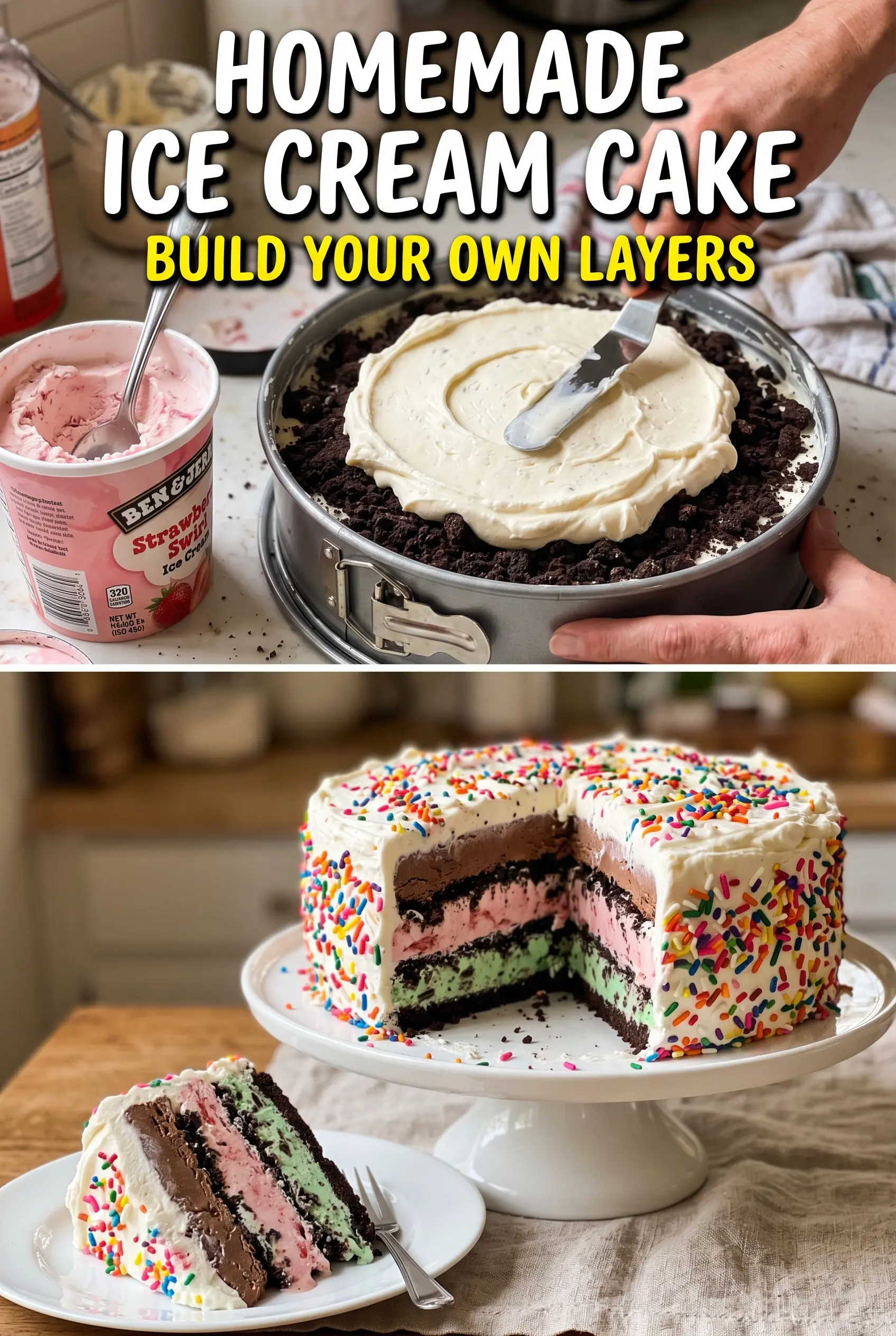
Mix the crushed Oreos with melted butter until every crumb looks damp, then press the mixture hard into the bottom of a 9-inch springform pan. Use the bottom of a measuring cup to get the crust compact and level, because loose crumbs will crumble when you slice the cake. A 15-minute freeze gives the butter enough time to firm up so the crust doesn’t shift under the ice cream.
Layering the Vanilla and Fudge
Spread the vanilla ice cream in an even layer and smooth the top with an offset spatula or the back of a spoon. Freeze it until it feels firm to a light touch; if it’s still soft, the fudge will disappear into it instead of staying distinct. Drizzle the cooled fudge over the set vanilla layer in a thin, even ribbon, then freeze again for a short stretch so the next layer sits on top instead of blending through.
Finishing with Strawberry and the Final Freeze
Spread the strawberry ice cream over the fudge layer and smooth it all the way to the edges. Cover the pan and freeze for at least 4 hours, though overnight gives you the cleanest slices. If the top is left uncovered, it can pick up freezer frost and turn grainy at the surface, so plastic wrap or a tight lid matters here.
Decorating and Slicing Without Cracks
Run a warm knife around the edge before releasing the springform pan. Pipe the whipped topping around the rim and add the sprinkles right before serving so the colors stay bright. For the cleanest cut, dip a sharp knife in hot water, wipe it dry, and slice in one firm motion; sawing back and forth is what tears soft ice cream and drags the crust.
Three Smart Ways to Change the Flavor Without Losing the Structure
Make it chocolate-and-vanilla
Swap the strawberry ice cream for chocolate and keep the rest the same. You’ll get a more classic Oreo-and-fudge combination, and the deeper chocolate flavor makes the cookie crust taste even richer.
Use homemade whipped cream instead of whipped topping
A stabilized whipped cream gives you a fresher taste and still holds its shape on top of the frozen cake. Regular whipped cream can weep and slump after a while, so use a stabilized version if the cake needs to sit out during a party.
Make it gluten-free
Use gluten-free sandwich cookies in place of Oreos and keep the rest of the recipe unchanged. The crust still packs and freezes well, but it may be a little more delicate, so press it firmly and don’t skip the first freeze.
Change the color theme for a holiday or birthday
Keep the vanilla layer, swap the strawberry for another bright ice cream flavor, and match the sprinkles to the occasion. The layering method stays the same, which means you can change the look without risking the structure.
Storage and Reheating
- Refrigerator: Not recommended. Ice cream cake softens too fast in the fridge and loses its layered structure.
- Freezer: Wrap leftovers tightly and freeze for up to 1 week for the best texture. After that, the crust can get icy and the top may start to pick up freezer burn.
- Reheating: No reheating needed. Let the cake sit at room temperature for 5 to 10 minutes before slicing so the knife can glide through without cracking the top.
Questions I Get Asked About This Recipe
Ice Cream Cake
Ingredients
Equipment
Method
- Mix crushed Oreos with melted butter until the crumbs look evenly coated, then press firmly into the bottom of a 9-inch springform pan. Freeze for 15 minutes to set the crust.
- Spread the vanilla ice cream in an even layer over the Oreo crust and smooth the top with gentle pressure. Freeze for 1 hour until firm.
- Drizzle the slightly cooled hot fudge sauce over the vanilla layer in a thin, even ribbon. Freeze for 15 minutes to firm up before the next layer.
- Spread strawberry ice cream over the fudge layer and smooth the top, then cover with plastic wrap. Freeze for at least 4 hours or overnight until fully set.
- Run a warm knife around the edge to loosen, release the springform, and transfer the cake to a serving plate. Work quickly so the edges don’t melt.
- Pipe whipped cream swirls around the top edge and scatter sprinkles across the center. Slice with a hot knife and serve immediately.