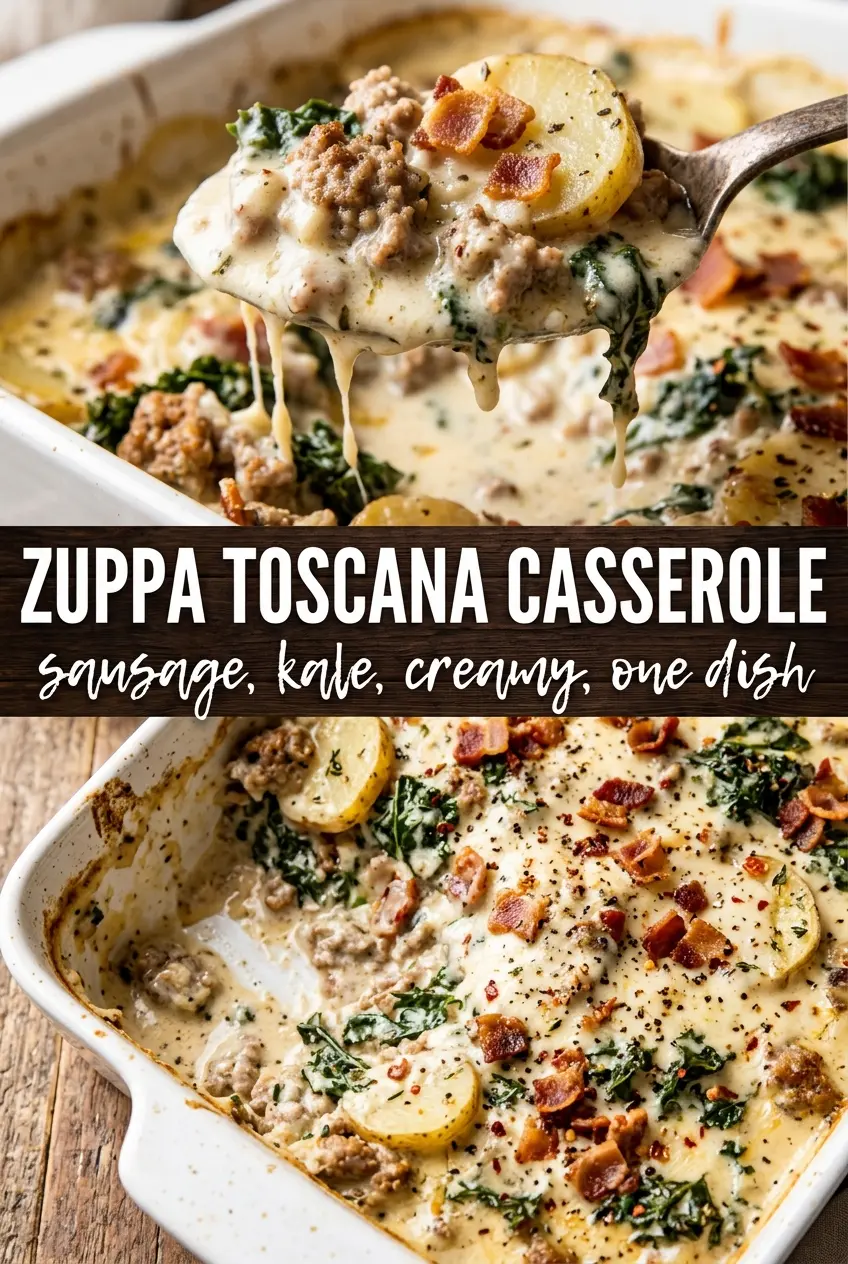
Italian Zuppa Toscana Casserole comes out creamy in the middle, salty from the sausage and parmesan, and finished with tender potatoes that hold their shape instead of turning to mush. The kale softens just enough to weave through the filling, and the top bakes into a golden crust that gives each scoop a little bit of crunch before you hit the rich cream sauce underneath. It’s the kind of casserole that eats like a full meal and lands on the table looking like you spent more time on it than you did.
What makes this version work is the way the potatoes are sliced thin enough to cook through in the same bake as the sausage and kale, while the cream and broth go in together so the sauce starts out loose and settles into the dish as it bakes. Browning the sausage first matters, because that fond in the pan gives the sauce more depth than a straight dump-and-bake version ever will. A little red pepper flakes keeps it in classic Zuppa Toscana territory without making it hot.
Below you’ll find the small details that keep the casserole from turning watery, plus the easiest way to adapt it if you need to swap ingredients or plan ahead.
The potatoes stayed tender without falling apart, and the parmesan on top browned into this perfect salty crust. I made it on a Tuesday and there wasn’t a spoonful left by the end of dinner.
Save this Italian Zuppa Toscana Casserole for the nights when you want creamy potatoes, sausage, kale, and a parmesan crust in one pan.
The Trick to Keeping the Potatoes Tender Without Turning the Bake Watery
The biggest mistake in a casserole like this is slicing the potatoes too thick or crowding them so tightly that the cream can’t move through the dish. Thin russet slices cook evenly in the oven and absorb the broth-cream mixture as they bake, which is what gives you that spoonable, cohesive texture instead of a loose soup under a crust. If the potatoes are cut unevenly, some pieces stay firm while others collapse, and that’s where the casserole starts to feel patchy instead of comforting.
Layering matters here too. The cream mixture goes over the top, but pressing down gently before baking helps it settle between the layers so every bite gets enough sauce. Covering the dish for the first part of the bake traps heat and softens the potatoes before the parmesan can brown too fast on top.
What Each Ingredient Is Doing in This Casserole
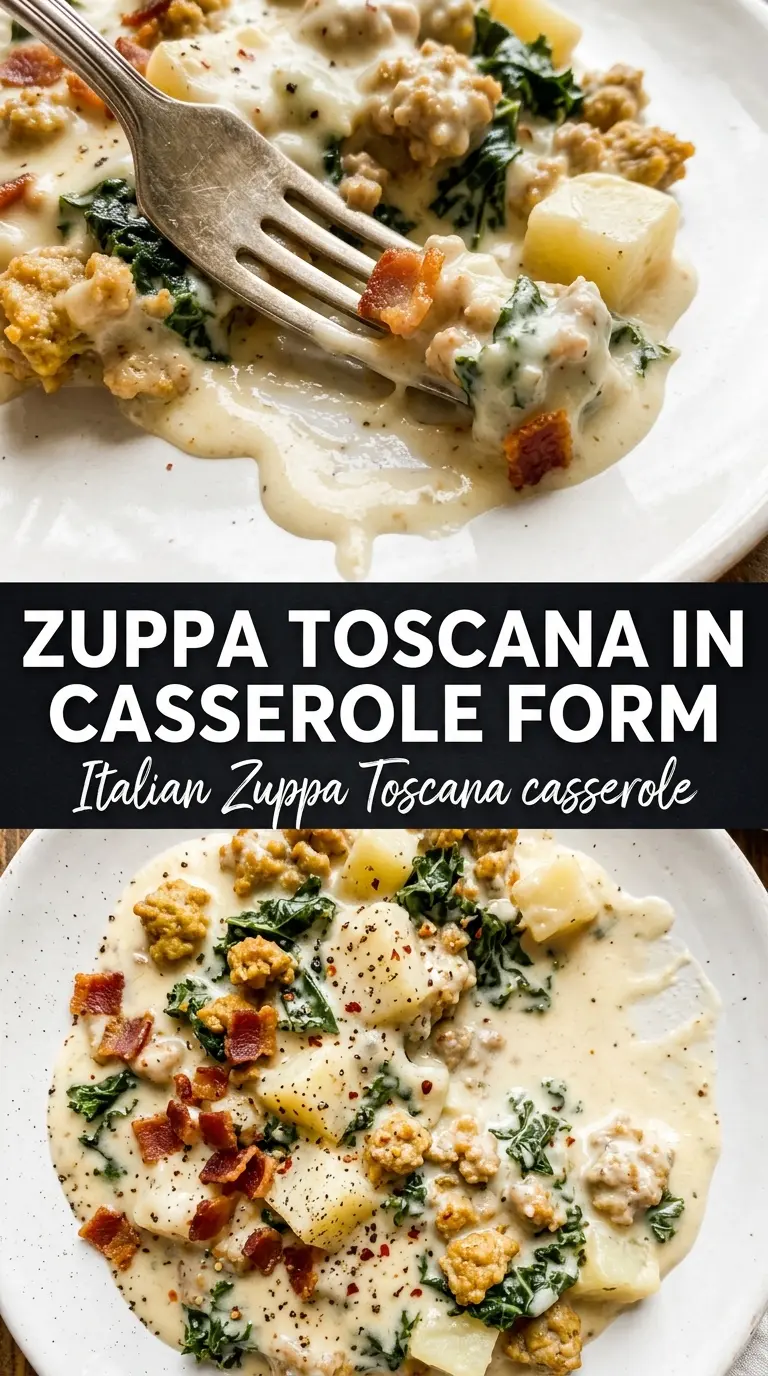
- Italian sausage — This carries most of the seasoning and fat for the casserole, so use a sausage you actually like the flavor of. Mild or hot both work; hot gives the closest nod to the soup version. Turkey sausage works in a pinch, but the final bake will be leaner and a little less rich.
- Russet potatoes — Russets soften enough to meld into the cream sauce without going waxy. Slice them thin and evenly so they cook at the same pace. Yukon Golds will hold a bit more shape if that’s what you want, but they won’t thicken the casserole quite the same way.
- Heavy cream and chicken broth — The cream gives body, while the broth keeps the dish from feeling heavy before the potatoes release starch into the bake. Don’t swap in milk here unless you’re fine with a thinner, less stable sauce. Half-and-half works, but the result won’t be as plush.
- Kale — Kale holds up in the oven better than spinach and keeps some texture after baking. Chop it fairly small so it softens into the layers instead of sitting in big tough ribbons. If you use spinach, add less and expect a softer, wetter casserole.
- Parmesan — This is what gives you that salty crust on top. Grate it fresh if you can, because pre-shredded cheese doesn’t melt as cleanly and can look dusty instead of forming a good lid. Pecorino Romano is a sharper swap if you want more bite.
Building the Layers So the Sauce Reaches Every Bite
Brown the Sausage First
Cook the sausage over medium-high heat until it’s fully browned and broken into crumbles with some crisp edges. That browning is where the savory backbone comes from, and if you rush it, the filling tastes flat. Drain off the excess fat, but leave just enough in the pan to cook the onion without sticking. If the sausage steams instead of browns, the whole casserole loses depth.
Cook the Onion and Garlic in the Same Pan
Add the onion to the same skillet and cook it until it softens and turns translucent, then stir in the garlic for just a minute. Garlic burns fast once the pan is hot, so don’t walk away here. You want it fragrant, not browned. This step pulls the browned bits off the pan and folds them into the base of the sauce.
Layer and Press Before Baking
Build the potatoes, sausage, and kale in two even layers so the filling is distributed from top to bottom. Pour the cream mixture over everything slowly, then press down gently with a spoon so it slips between the potato slices. If the top looks dry before baking, the bottom will stay under-sauced later. Covering the dish first gives the potatoes time to steam tender before the parmesan finishes the top.
Finish Until the Top Goes Gold
After the covered bake, uncover the casserole and let the parmesan turn deep golden and a little crisp at the edges. That final uncovered stretch is where the texture changes from creamy casserole to proper baked dinner. Pierce a potato slice with a knife in the center; it should slide in without resistance. If the top darkens before the potatoes are done, lay the foil back loosely and keep baking.
How to Tweak This Zuppa Toscana Bake for Your Table
Make It Spicier
Use hot Italian sausage and increase the red pepper flakes a little if you want more heat. That change sharpens the creamy sauce without changing the structure of the casserole, so it still bakes the same way. Add the extra heat with the sausage, not at the end, so it seasons the whole dish.
Dairy-Free Version
Swap the heavy cream for full-fat canned coconut milk and use a dairy-free parmesan-style topping. The texture will still be creamy, but the flavor shifts slightly sweeter and less sharp. That coconut note stays mild once the sausage and garlic are in the mix.
Use Yukon Gold Potatoes Instead
Yukon Golds give you a creamier, less starchy bite and hold their shape a little better than russets. The casserole will slice cleaner, but it won’t thicken as much from the potatoes themselves. If you go this route, keep the slices thin so they still cook through in the same timeframe.
Storage and Reheating
- Refrigerator: Store leftovers covered for up to 4 days. The sauce thickens as it chills, and the potatoes soften a bit more overnight.
- Freezer: It freezes, but the cream sauce can separate slightly after thawing. For the best texture, freeze in portions and thaw in the fridge before reheating.
- Reheating: Warm covered in a 325°F oven until heated through, or reheat single servings gently on the stove with a splash of broth or cream. High heat is what makes the sauce break and the potatoes dry out.
Questions I Get Asked About This Recipe
Italian Zuppa Toscana Casserole
Ingredients
Equipment
Method
- Preheat the oven to 375°F and grease a 9x13 dish.
- Peel and slice the russet potatoes thin, then chop the kale and dice the onion.
- Brown Italian sausage in a skillet over medium-high heat, breaking apart until browned, then drain fat and remove.
- Sauté onion for 3 minutes in the same pan, then add garlic and cook 1 minute.
- Add heavy cream, chicken broth, and red pepper flakes and stir to combine.
- Layer half the potato slices in the prepared dish.
- Scatter half the sausage and half the kale over the potatoes.
- Repeat the layers with remaining potatoes, sausage, and kale.
- Pour the cream mixture evenly over everything, pressing down gently to help potatoes settle.
- Top with parmesan cheese, cover with foil, and bake for 25 minutes at 375°F.
- Remove the foil and bake 15 more minutes at 375°F until potatoes are tender and the top is golden.