Italian Zuppa Toscana casserole takes everything people love about the soup and gives it the kind of baked finish that makes a pan disappear fast. The potatoes turn tender in a creamy broth, the sausage brings the savory base, and the kale softens just enough to stay green under a blanket of melted cheese. Then the crispy bacon on top gives you that salty crunch in every spoonful.
What makes this version work is the order. The potatoes are simmered until just tender before the casserole goes into the oven, which keeps the cream from cooking too long and the vegetables from turning mushy. The sausage and bacon both get cooked first, so the final bake is about bringing everything together and browning the top, not rescuing undercooked ingredients. That keeps the texture balanced instead of turning the dish heavy.
Below you’ll find the timing that keeps the potatoes intact, the ingredient swaps that still hold up, and the one reheating trick that keeps the sauce from separating the next day.
The potatoes stayed tender without falling apart, and the cheese browned up beautifully on top. I’ve made a lot of casseroles, but this one had that same cozy soup flavor with a much better texture for dinner.
Save this Zuppa Toscana casserole for the nights when you want creamy potatoes, sausage, kale, and a golden cheese crust in one pan.
The Potato Layer That Keeps This Casserole Creamy Instead of Gritty
The biggest mistake in a dish like this is rushing the potatoes. If they go into the oven raw and thick, the cream has to work too hard, the top overbrowns before the center softens, and you end up with a casserole that eats like half-finished soup with cheese on it. Thin slices and a short simmer take the guesswork out of the bake.
Yukon gold potatoes are the right fit because they hold their shape but still turn silky at the edges. Russets can work in a pinch, but they break down faster and make the filling looser. The goal here is tender slices that still stack and settle into the cream without collapsing into mash.
- Thin-sliced potatoes — Keep them as even as you can so they cook at the same pace. A mandoline makes the job faster, but a sharp knife works if the slices stay close in thickness.
- Heavy cream and whole milk — The mix gives you body without making the casserole feel gluey. Using all cream makes the dish richer but heavier; using only milk risks a thinner sauce that won’t cling to the potatoes.
- Kale — Add it near the end so it softens in the hot liquid without turning olive-drab. Baby kale wilts a little faster, but chopped curly kale holds up better in the bake.
What Each Ingredient Is Doing in the Pan
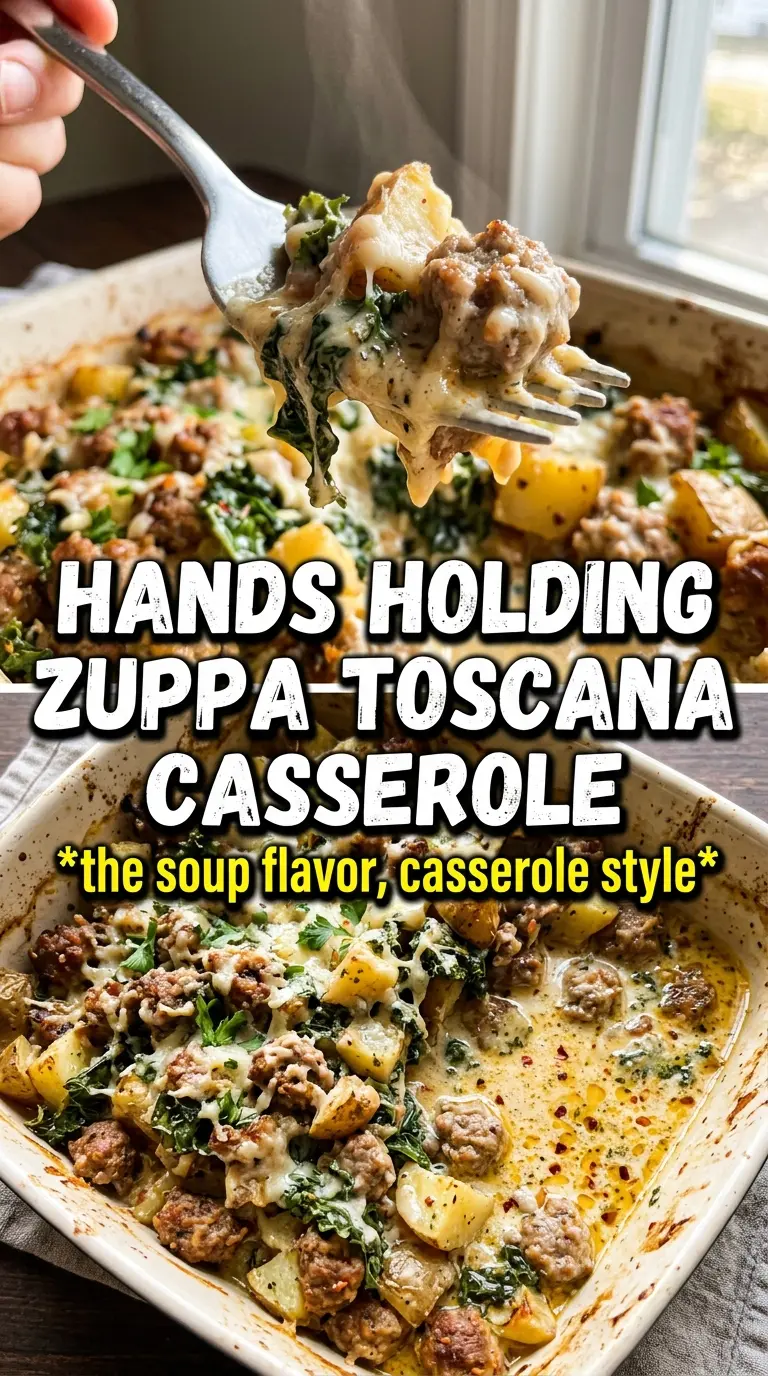
- Italian sausage — This is the main seasoning for the whole casserole, so use one that tastes good on its own. Mild gives you a rounder, quieter flavor; hot sausage brings more kick and cuts through the cream.
- Bacon or pancetta — Either one gives you salty crunch and rendered fat for the onion and garlic. Pancetta stays a little more delicate, while bacon adds a smokier finish.
- Onion and garlic — These get cooked in the fat so they soften and pick up flavor before the dairy goes in. If the garlic starts to brown hard, the burner is too hot and the whole base can turn bitter.
- Mozzarella and parmesan — Mozzarella gives you the stretchy top layer, and parmesan sharpens the flavor so the casserole doesn’t taste flat. Pre-shredded mozzarella works, but freshly grated parmesan melts cleaner and tastes brighter.
Building the Casserole So the Sauce Stays Smooth
Brown the Meat First
Cook the sausage in a large oven-safe skillet until it loses its pink color and picks up some browned bits. That color at the bottom is where the flavor starts, and it also keeps the casserole from tasting one-note. Drain off excess fat if the pan looks greasy, but leave enough behind to cook the onion. If you skip this browning, the final dish tastes softer and flatter than it should.
Cook the Bacon Until Crisp
The bacon needs to be crisp before it goes on top, not halfway done. It finishes its job in the oven, but the skillet should already have that shattery texture so it stays crunchy instead of turning limp. Set it aside while you build the base. If you add it too early, it gives up too much fat into the sauce and disappears into the cheese.
Simmer the Potatoes in the Cream Mixture
After the onion and garlic soften, add the broth, cream, milk, and red pepper flakes, then slip in the potatoes and let them simmer until just tender. You want the slices flexible and nearly cooked through, but not falling apart. This is the stage that protects the casserole from ending up chalky in the middle. If the liquid boils hard, the dairy can separate and the potatoes can break before the oven ever sees them.
Finish With Kale, Cheese, and the Last Bake
Fold in the kale and sausage, season it properly, then move everything to a 9×13 dish if the skillet feels crowded. Spread the mozzarella and parmesan all the way to the edges so the top browns evenly. Bake until the sauce is bubbling at the sides and the cheese has melted into a deep golden crust. Add the bacon after baking so it stays crisp instead of softening under the cheese.
How to Adapt This for a Crowd, a Lighter Pan, or No Dairy
Make it dairy-free
Use full-fat canned coconut milk in place of the cream and milk, then choose a dairy-free mozzarella-style shred that melts well. The flavor shifts slightly richer and sweeter, but the sausage, garlic, and red pepper flakes still carry the dish. Skip the parmesan or replace it with a dairy-free hard-style topping if you want a salty finish.
Make it gluten-free without changing the texture
This recipe is naturally gluten-free as written, as long as your sausage and broth are certified gluten-free. That matters because some packaged broth and sausage links quietly add wheat-based fillers. The texture stays the same, so this is one of the easiest casseroles to keep celiac-friendly.
Stretch it for a bigger crowd
Add an extra pound of potatoes and another cup of broth and dairy, then bake it in a deeper casserole dish so the filling doesn’t spill over. The bake time may run a few minutes longer because the center has more mass to heat through. Keep the cheese layer generous; that top is what makes the whole pan feel finished.
Storage and Reheating
- Refrigerator: Store leftovers covered for up to 4 days. The sauce will thicken as it chills, and the potatoes will absorb some of the cream.
- Freezer: It freezes, but the texture gets a little grainy once thawed because of the dairy and potatoes. If you freeze it, cool it completely, wrap it tightly, and thaw overnight in the fridge before reheating.
- Reheating: Warm portions covered in a 325F oven until hot all the way through, or reheat gently on the stovetop with a splash of broth or milk. High heat is what breaks the sauce and makes the potatoes go mealy.
Answers to the Questions Worth Asking
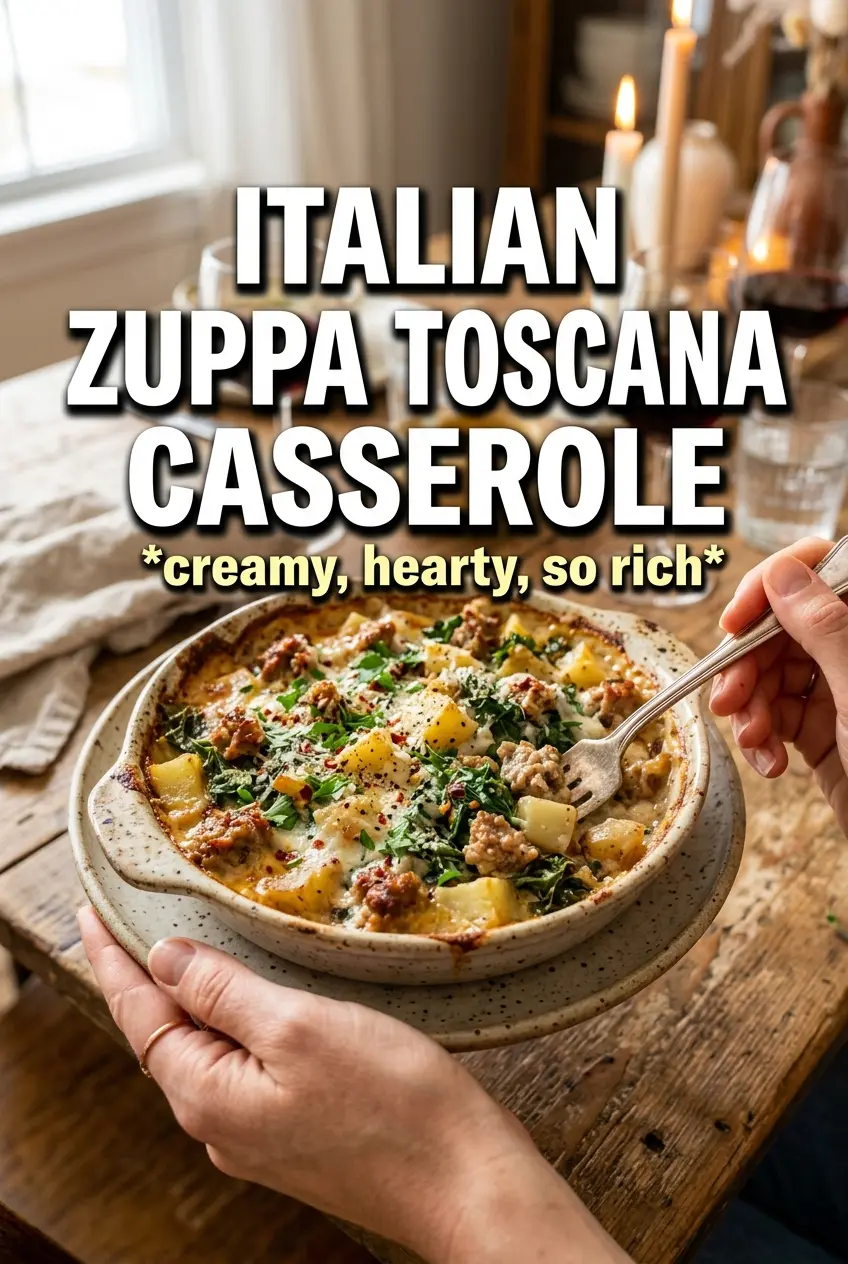
Italian Zuppa Toscana Casserole
Ingredients
Equipment
Method
- Preheat the oven to 375F.
- Brown the Italian sausage in a large oven-safe skillet, then drain the fat and set the sausage aside.
- Cook the bacon or pancetta until crispy, then remove and set it aside.
- Sauté the onion and garlic in the reserved sausage fat for 4 minutes.
- Add the chicken broth, heavy cream, whole milk, and red pepper flakes, and bring the mixture to a simmer.
- Add the sliced Yukon gold potatoes and simmer for 12-15 minutes until just tender.
- Fold in the kale and the sausage, then season with salt and pepper.
- Transfer to a 9x13 baking dish if needed, then scatter the shredded mozzarella and parmesan over the top.
- Bake at 375F for 20-25 minutes until golden and bubbling.
- Top with the crispy bacon or pancetta right before serving.


