Golden chicken breasts topped with a glossy jalapeño peach glaze earn their place fast because the sauce lands in that sweet spot between bright, sticky, and just a little fiery. The peaches soften into the skillet sauce, the jalapeños cut through the sweetness, and the chicken stays juicy if you pull it off the heat as soon as it’s cooked through. It’s the kind of dinner that looks like you worked harder than you did.
The trick here is building the glaze in the same pan you used for the chicken. Those browned bits left behind after searing carry a lot of flavor, and the vinegar plus soy sauce keep the peach and honey from turning flat or candy-sweet. Fresh peaches are wonderful when they’re in season, but frozen peaches work well too because they break down quickly and help thicken the sauce without extra fuss.
Below, I’ve included the small details that keep the glaze from getting watery and the chicken from drying out, plus a few ways to adjust the heat, sweetness, or ingredients depending on what you have on hand.
The glaze thickened up beautifully and coated every piece of chicken without turning watery. I kept the seeds in one jalapeño, and the sweet heat was perfect with rice.
Save this jalapeño peach chicken for the nights when you want a glossy skillet dinner with sweet heat and almost no cleanup.
The Reason the Glaze Stays Glossy Instead of Turning Watery
The biggest mistake with peach skillet chicken is rushing the sauce before the peaches have had time to collapse a little. If you add the chicken back too early, the pan sauce stays thin and the fruit tastes separate from everything else. Let the peaches simmer with the honey, soy sauce, broth, and vinegar until they soften and the liquid turns syrupy around the edges of the pan.
Medium-high heat is right for the chicken at the start because you want browning, not pale steamed meat. Once the glaze goes in, the heat comes down to a steady simmer. That keeps the honey from scorching and gives the peaches time to release their juices so the sauce thickens naturally.
- Don’t crowd the skillet — the chicken needs open space to brown. If the pan is packed, the breasts steam and you lose that golden crust that gives the finished dish its depth.
- Use a cast iron skillet if you have one — it holds heat well and helps the glaze reduce evenly. A heavy stainless pan works too, but a thin pan can make the sauce swing from too cool to too hot in a hurry.
- Keep the simmer gentle — a hard boil can break the peaches down into mush before the sauce has a chance to thicken properly.
What Each Ingredient Is Actually Doing in This Dish
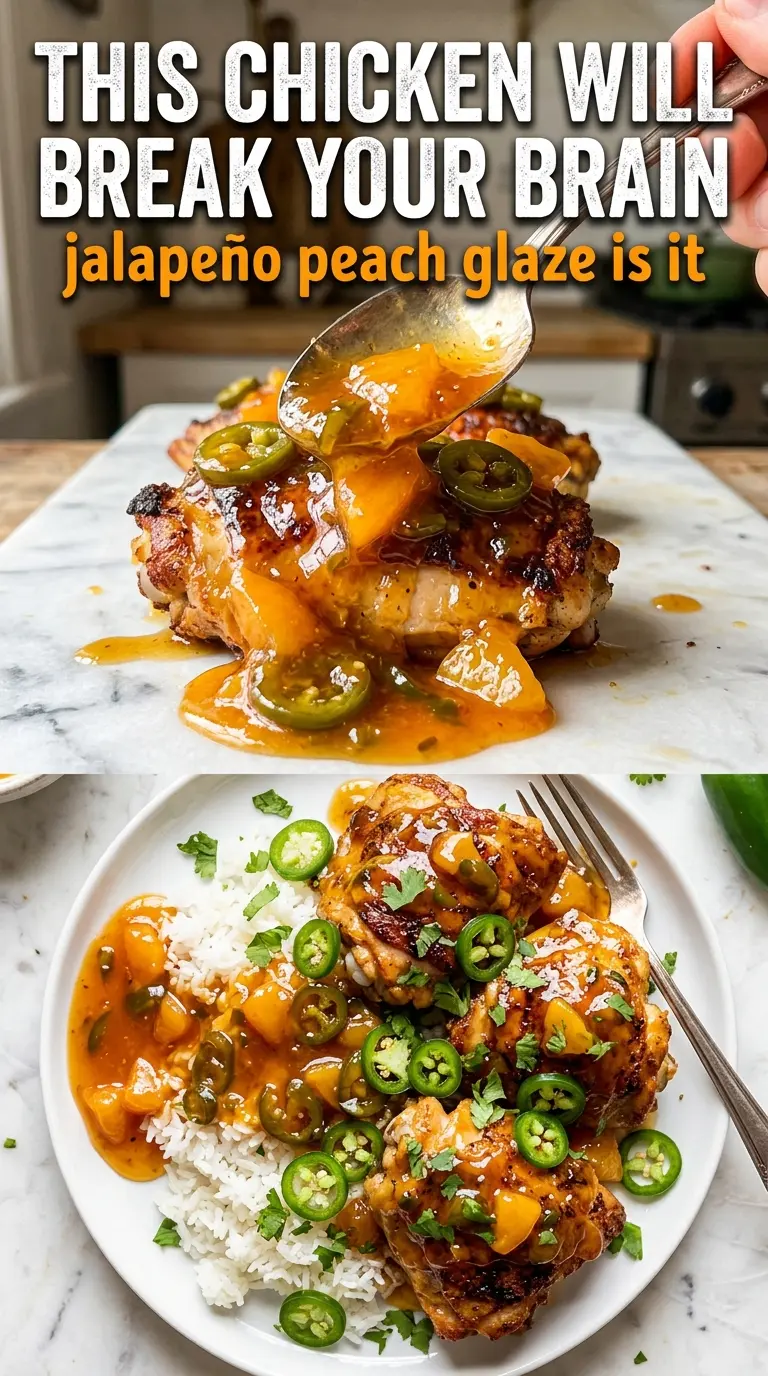
- Chicken breasts — These stay lean and slice cleanly once rested. Pound them lightly if one side is much thicker than the other so they cook at the same pace and don’t dry out before the center is done.
- Peaches — Fresh peaches give the brightest flavor, but frozen peaches are a smart backup because they soften fast and help the sauce thicken. If you use frozen, don’t thaw them first; add them straight to the pan so they hold their shape a little longer.
- Jalapeños — Seeds in mean noticeable heat, which balances the honey. If you want less bite, remove the seeds and membranes, but don’t skip the pepper entirely or the glaze turns one-dimensional.
- Honey, soy sauce, and apple cider vinegar — This is the balance point. Honey gives body, soy sauce adds salt and savoriness, and vinegar keeps the glaze from tasting heavy. If you use low-sodium soy sauce, the sauce will taste a little softer and you may want an extra pinch of salt at the end.
- Fresh thyme — It’s the finishing note that keeps the whole skillet tasting fresh instead of sticky. Dried thyme can work in a pinch, but use less, since dried herbs read louder in a quick sauce.
Getting the Chicken Seared Before the Glaze Goes In
Seasoning and Browning the Breasts
Pat the chicken dry first, then season both sides with salt and black pepper. Moisture on the surface fights browning, and browning is what gives this dish the savory base the glaze needs. Put the chicken into the hot olive oil and leave it alone long enough to build color; if it sticks for a moment, it usually just needs another minute. Turn it only when the underside is a deep golden brown.
Building the Peach Jalapeño Sauce
After the chicken comes out, drop the garlic and sliced jalapeños into the same skillet and cook for about a minute. They should smell fragrant, not dark brown. Add the peaches, honey, soy sauce, vinegar, and broth, then simmer until the peaches soften and the liquid looks slightly thicker and glossy, almost like a loose syrup. If the pan looks dry before the peaches break down, add a splash more broth.
Finishing the Chicken in the Glaze
Return the chicken to the skillet and spoon the sauce over the top. Two minutes is enough to warm the chicken back through and let the glaze cling to the surface. Don’t walk away here, because the honey can go from glossy to sticky-fast if the pan gets too hot. Finish with thyme and serve with plenty of sauce from the pan.
How to Tweak the Heat, Sweetness, and Pantry Swaps
Milder Jalapeño Peach Chicken
Remove the seeds and white ribs from both jalapeños, then slice them thinly as written. You’ll keep the pepper flavor without much heat, which is the best move if you want the peach to lead. The sauce will taste a little softer, so lean on the thyme and don’t cut back the vinegar.
Dairy-Free and Gluten-Free Version
This recipe already lands naturally in both camps as long as your soy sauce is gluten-free. Use tamari or coconut aminos in place of standard soy sauce. Tamari keeps the sauce closest to the original; coconut aminos will taste a touch sweeter, so the glaze may need an extra teaspoon of vinegar.
Using Chicken Thighs Instead
Boneless skinless thighs work well if you want a richer, more forgiving cut. They usually need a couple extra minutes in the skillet, but they stay juicy even if you let them go a little too far. The sauce doesn’t need to change, though thighs pair especially well with a slightly sharper vinegar finish.
Storage and Reheating
- Refrigerator: Store leftovers in an airtight container for up to 3 days. The sauce will thicken as it chills, and the peaches will soften more.
- Freezer: This freezes better than a cream sauce, but the peaches will lose some texture. Freeze in a sealed container for up to 2 months and thaw overnight in the fridge.
- Reheating: Warm gently in a skillet over low heat with a splash of broth or water. High heat can dry out the chicken and turn the glaze sticky before the center is hot.
Answers to the Questions Worth Asking
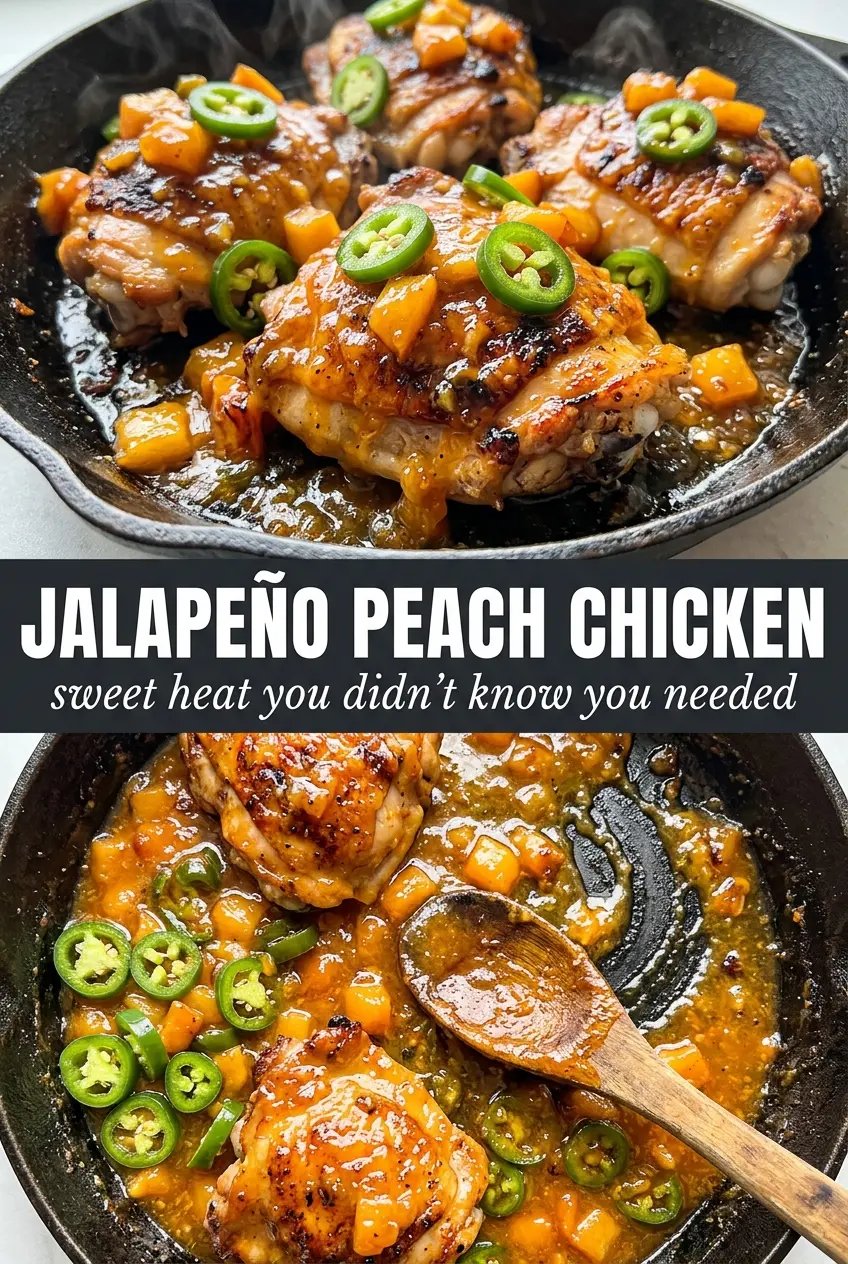
Jalapeño Peach Chicken
Ingredients
Equipment
Method
- Season the boneless skinless chicken breasts with salt and black pepper. Heat olive oil in a cast iron skillet over medium-high heat and sear chicken for 5–6 minutes per side until golden, then set aside.
- In the same skillet, add the garlic and jalapeños and cook for 1 minute. Add the peach slices, honey, soy sauce, apple cider vinegar, and chicken broth, then stir to combine.
- Simmer the glaze for 5–6 minutes, stirring occasionally, until the peaches soften and the sauce thickens.
- Return the chicken to the skillet and spoon glaze over the top, cooking for 2 more minutes to coat. Sprinkle with fresh thyme and serve with the pan sauce spooned over the top.