Jalapeño popper grilled cheese hits that sweet spot between gooey comfort food and a sandwich with enough bite to keep every bite interesting. The crust turns deeply golden in the skillet while the filling stays creamy and molten, with little pops of jalapeño and bacon cutting through all that cheese. It’s the kind of lunch that disappears fast, especially when you slice it in half and get that stretch of cheddar and cream cheese in the middle.
The trick here is building the filling before it ever hits the bread. Softened cream cheese binds the shredded cheeses together, so the filling melts into a thick, cohesive layer instead of sliding out of the sandwich. Medium-low heat matters more than people think; high heat browns the bread before the center has time to melt, and then you’re left with a beautiful shell around a chilly middle. Keeping the jalapeños thin and the bacon crumbled helps every bite stay balanced instead of bulky.
Below you’ll find the exact heat level I like, the bread that gives the best crunch, and a few swaps that still keep the sandwich tight and melty. If you’ve ever had grilled cheese split open in the pan, this version is the fix.
The filling stayed creamy instead of oozing out, and the jalapeños had just enough heat without taking over. I used sourdough, and the crust came out crisp and evenly browned in about 10 minutes.
Save this jalapeño popper grilled cheese for the nights when you want a crisp, melty sandwich with a little heat and a big cheese pull.
The Reason the Filling Stays Creamy Instead of Leaking Out
Most stuffed grilled cheese sandwiches fail because the filling is built like a pile, not a mixture. Once the heat starts working, the cheese softens and the whole center tries to escape. Here, the cream cheese acts like glue. It holds the cheddar, pepper jack, bacon, and jalapeños together long enough for the bread to crisp and the cheeses to melt into one thick layer.
Medium-low heat is the other part people skip. If the pan is too hot, the bread browns before the filling loosens, and the sandwich tears the moment you press it. A slower cook gives you a more even melt and a crust that stays intact when you slice it.
- Softened cream cheese is what makes the filling spreadable. Cold cream cheese leaves clumps that melt unevenly and can push the sandwich apart.
- Sharp cheddar brings the strongest cheese flavor. Pre-shredded works in a pinch, but freshly shredded melts smoother and clings better to the cream cheese.
- Pepper jack adds a little heat and helps the filling melt into a looser, silkier texture. If you want less spice, swap it for Monterey Jack and keep the jalapeños seeded.
- Thick bread matters because thin slices go soft before the center is ready. Sourdough gives the best structure, but sturdy white bread also works well.
What Each Ingredient Is Actually Doing in This Sandwich
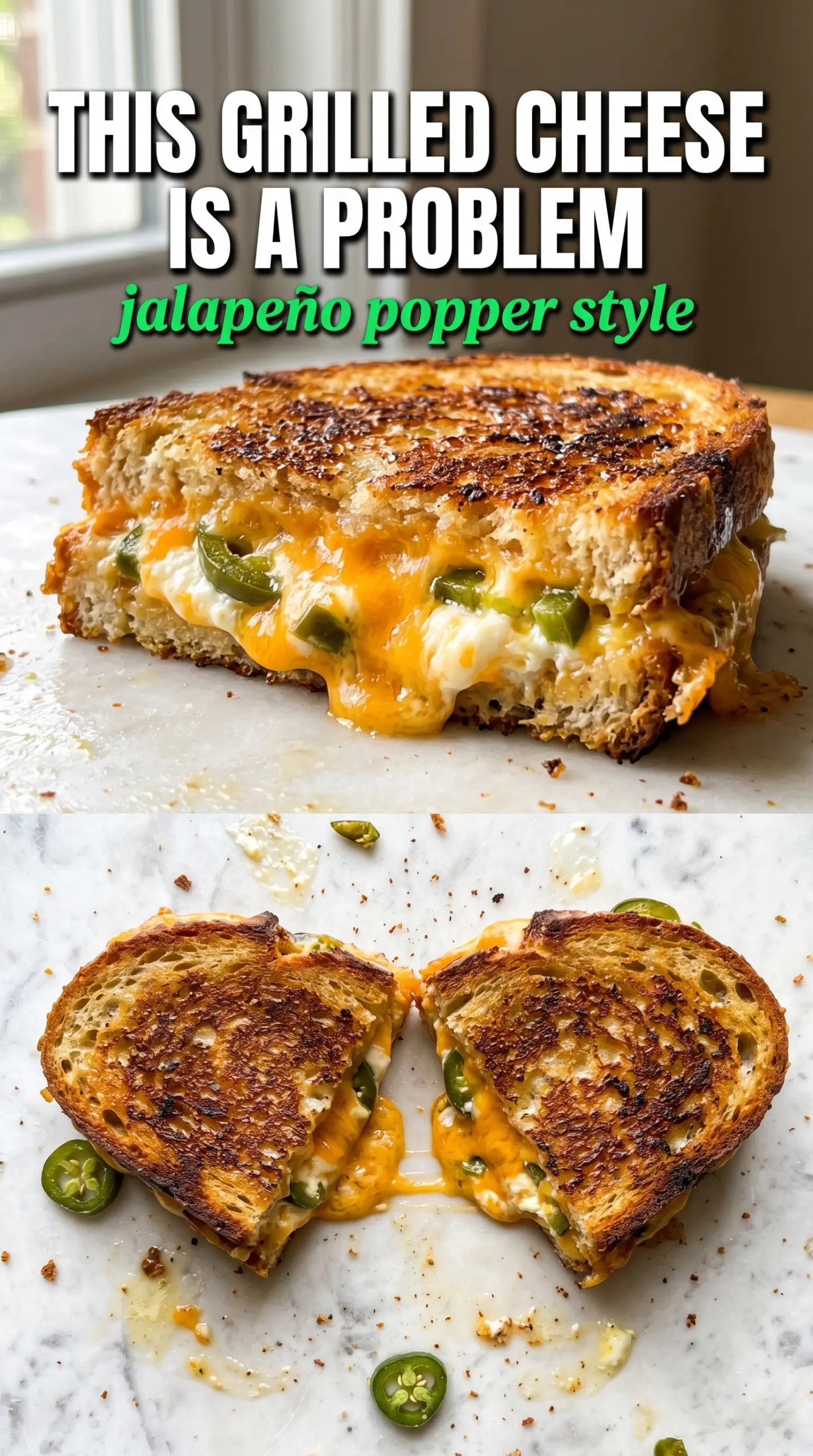
- Thick white bread or sourdough gives you a sturdy shell that can handle the filling without collapsing. Sourdough adds more flavor; soft white bread gives a more classic grilled cheese bite.
- Cream cheese is the binder and the richness. Don’t use it straight from the fridge, or it won’t mix smoothly and you’ll end up with uneven pockets in the sandwich.
- Sharp cheddar and pepper jack work together: cheddar for body and bold flavor, pepper jack for melt and a little background heat. Freshly shredded cheese melts more evenly than bagged cheese because it doesn’t have the same anti-caking coating.
- Jalapeños are where the sandwich gets its popper character. Seed them for a gentler bite, or leave a few seeds in if you want more heat without changing the texture.
- Bacon adds salt, smoke, and crunch. It needs to be fully cooked and crumbled small so it disappears into the filling instead of poking holes in the bread.
- Butter belongs on the outside of the bread, not in the pan. It helps the crust brown evenly and gives that classic grilled cheese flavor without burning as fast as oil.
How to Build the Sandwich So the Cheese Melts Before the Bread Burns
Mix the Filling First
Stir the softened cream cheese, shredded cheddar, pepper jack, bacon, and jalapeños together until the mixture looks thick and evenly distributed. It should hold together when you scoop it, not run across the bowl. If the cream cheese is still stiff, the filling won’t spread cleanly and the sandwich will have weak spots.
Butter the Bread, Not the Pan
Spread softened butter all the way to the edges of each bread slice on one side only. That edge-to-edge coating is what gives you an even golden crust. If the butter is patchy, the bread browns in spots and can stick before it’s ready to flip.
Cook Low and Slow
Set the skillet over medium-low heat and place the sandwiches in once the pan is warm, not smoking. Press gently with a spatula so the bread makes full contact with the pan, then let each side cook until deep golden and the filling is visibly melting. If the bread is coloring too fast, lower the heat immediately; that’s the signal the outside is outrunning the inside.
Slice After a Short Rest
Give the sandwiches about a minute after they come out of the skillet before cutting them. That tiny pause keeps the filling from flooding out the second the knife goes in. Use a sharp knife and cut straight through with one confident stroke for the cleanest cheese pull.
Three Ways to Adjust the Heat, the Cheese, or the Bread
Make It Milder
Remove all the jalapeño seeds and membranes, then use Monterey Jack instead of pepper jack. You’ll keep the creamy, gooey texture of the filling, but the heat drops way down and the sandwich tastes more like a classic popper without the burn.
Make It Gluten-Free
Use your favorite sturdy gluten-free sandwich bread and toast it a little more gently than regular bread, since gluten-free slices can brown faster and break easier. The filling stays the same, but the bread choice matters more here because you need enough structure to hold the hot center.
Skip the Bacon
Leave out the bacon and add a pinch of smoked paprika or a little extra cheddar for depth. You lose the salty crunch, but the sandwich still tastes rich and layered instead of flat.
Storage and Reheating
- Refrigerator: Store cooked sandwiches for up to 2 days. The bread softens a bit, but the filling still reheats well.
- Freezer: I don’t recommend freezing this one. The cream cheese filling can turn grainy and the bread loses its crisp texture after thawing.
- Reheating: Reheat in a skillet over low heat with a lid for a few minutes per side, or use a toaster oven until the bread crisps back up. Don’t use the microwave unless you want a soft, steamy sandwich, because it will melt the filling before the crust has a chance to recover.
Answers to the Questions Worth Asking
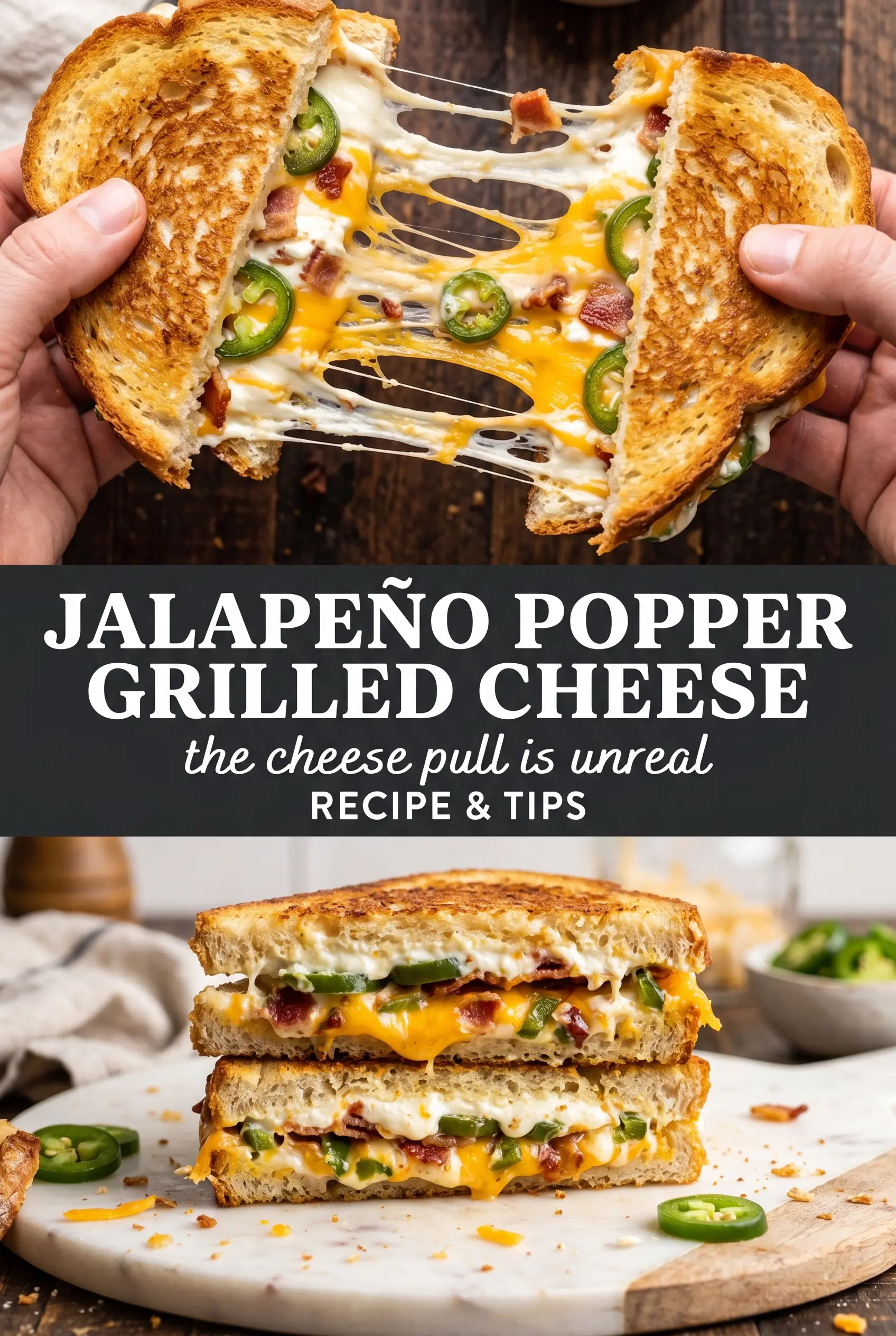
Jalapeño Popper Grilled Cheese
Ingredients
Equipment
Method
- Mix the softened cream cheese with the shredded cheddar, shredded pepper jack, crumbled bacon, and thinly sliced jalapeños until evenly combined.
- Spread the softened butter evenly on one side of each bread slice.
- Divide the cream cheese mixture between two bread slices on the unbuttered side, spreading thickly to the edges.
- Top with the remaining bread slices, buttered-side out, to form two sandwiches.
- Cook in a skillet over medium-low heat for 4–5 minutes per side, pressing gently with a spatula, until golden brown and cheese is fully melted.
- Slice each sandwich in half and serve immediately while the filling is molten.